Have you ever looked at the calendar and wondered, “What happened on this exact day centuries ago?” Every single date holds a mirror to the past, reflecting triumphs, tragedies, quiet scientific breakthroughs, and cultural shifts that shaped the world we live in today. May 8 is no ordinary day. It is a date that has seen empires fall, lethal diseases eradicated, and the birth of iconic figures who fundamentally altered the course of literature, science, and global diplomacy. From the fiery battlefields of 15th-century France to a quiet backyard in Atlanta where the world’s most famous beverage was brewed, May 8 is a monumental day in the archives of humanity.
Whether you are a history buff, a student doing research, or simply someone celebrating a birthday today, join us on a fascinating journey through time. Let’s dive deep into the major global events, South Asian milestones, famous birthdays, notable deaths, and international observances that make May 8 an unforgettable day in history.
Global Historical Events on May 8
The canvas of global history is incredibly vast, and May 8 has hosted some of its most dramatic brushstrokes. Below is a quick-glance table of major historical milestones, followed by an in-depth look at the events that changed our world.
Quick Glance: Major Historical Events
| Year | Event | Location | Impact / Significance |
| 1429 | Joan of Arc relieves the Siege of Orléans. | France | Turned the tide of the Hundred Years’ War. |
| 1541 | Hernando de Soto reaches the Mississippi River. | North America | First recorded European to see the river. |
| 1886 | Coca-Cola is invented by Dr. John S. Pemberton. | USA | Birthed the modern global beverage industry. |
| 1902 | Mount Pelée erupts, destroying St. Pierre. | Martinique | Killed 30,000; birthed modern volcanology. |
| 1945 | V-E Day (Victory in Europe) is celebrated. | Europe | Marked the end of WWII in Europe. |
| 1970 | The Beatles release their final album, Let It Be. | UK | The official end of the defining band of the 60s. |
| 1978 | First ascent of Mount Everest without oxygen. | Nepal/Tibet | Redefined human biological limits. |
| 1980 | Smallpox is officially declared eradicated. | Global (WHO) | First and only human disease wiped out. |
| 1984 | USSR announces a boycott of the LA Olympics. | USSR/USA | Hardened late Cold War cultural divides. |
Deep Dive: Moments That Shaped Humanity
The End of the European Nightmare: V-E Day (1945)
Perhaps the most universally recognized event associated with May 8 is V-E Day, or Victory in Europe Day. In 1945, the unconditional surrender of Nazi Germany’s armed forces was formally accepted by the Allies, ending the European theater of World War II. Millions of people flooded the streets of London, Paris, New York, and Moscow. The sheer outpouring of relief and joy was unprecedented. However, while the fighting stopped in Europe, the war would continue in the Pacific for several more months. V-E Day remains a profound reminder of the cost of tyranny and the ultimate triumph of democratic resilience.
A Backyard Brew Becomes a Global Giant (1886)
If you are sipping a Coke while reading this, you have May 8 to thank. On this day in 1886, Atlanta pharmacist Dr. John Stith Pemberton created a flavored syrup, took it to Jacobs’ Pharmacy, mixed it with carbonated water, and sold it for five cents a glass. Originally marketed as a patent medicine claiming to cure ailments like headaches and fatigue, Coca-Cola would eventually drop its medicinal claims. Today, it is arguably the most recognized brand in human history, shaping not just the beverage industry, but modern advertising, consumerism, and pop culture.
The Eradication of Smallpox (1980)
May 8 represents one of the greatest triumphs of modern medicine. In 1980, the World Health Assembly officially declared that smallpox had been wiped off the face of the earth. Before its eradication, smallpox had tormented humanity for over 3,000 years, killing roughly 300 million people in the 20th century alone. The global vaccination effort, spearheaded by the WHO, proved that when nations put aside geopolitical differences to focus on public health, the impossible becomes reality.
Defying Human Limits on Everest (1978)
For decades, medical professionals insisted that climbing Mount Everest (29,032 feet) without supplemental oxygen was a biological impossibility, warning it would lead to severe brain damage or death. On May 8, 1978, mountaineers Reinhold Messner and Peter Habeler proved the doctors wrong. Reaching the summit using only the thin, freezing air of the “Death Zone,” they permanently shattered our understanding of human endurance.
The Bangalee Sphere & South Asian Milestones
History is often overwhelmingly Western-centric, but South Asia and the Bengal region have experienced profound cultural, political, and scientific moments on this day.
The Cultural Anchor: Rabindranath Tagore
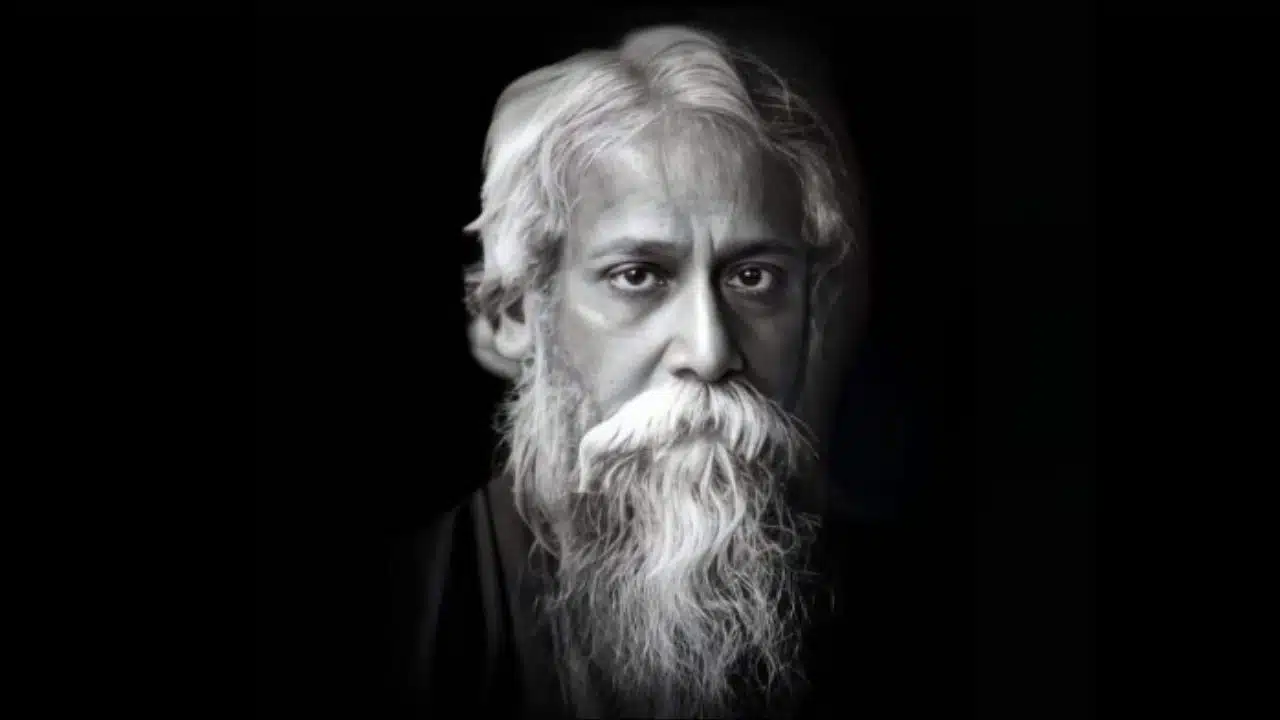
While the Gregorian calendar records Rabindranath Tagore’s birth on May 7, 1861, the cultural heartbeat of Bengal beats to the lunar-solar Bengali calendar. Thus, his birthday is celebrated as Pachishe Baishakh (the 25th of the month of Baishakh), which frequently falls on or around May 8.
Tagore’s legacy is woven into the very fabric of South Asian identity. He is the only person in history whose words have been adopted as the national anthems of two separate, sovereign nations: “Amar Sonar Bangla” for Bangladesh and “Jana Gana Mana” for India. Furthermore, his work deeply inspired the national anthem of Sri Lanka.
In 1913, Tagore won the Nobel Prize in Literature for his collection Gitanjali (Song Offerings), becoming the first non-European to achieve this honor. But his impact wasn’t just literary; it was heavily political. After the Jallianwala Bagh massacre in 1919, Tagore famously renounced his British knighthood in protest, standing firmly against colonial brutality. His birthday, celebrated as Rabindra Jayanti (usually falling around May 7-9 depending on the Bengali calendar), is a major cultural festival marked by poetry readings, music (Rabindra Sangeet), and dances across Bangladesh and West Bengal.
Gandhi’s Fast for Justice (1933)
On May 8, 1933, Mahatma Gandhi began a gruelling 21-day fast of self-purification. While imprisoned by the British, his fast was aimed primarily at the deep-rooted societal sin of “untouchability” within the Indian caste system, demanding better treatment for the Dalits, whom he called “Harijans” (Children of God). This act of profound physical sacrifice drew massive international attention to India’s internal social reform, proving Gandhi’s mastery of non-violent, moral resistance.
The Sylhet Earthquake (1997)
On May 8, 1997, a magnitude 5.6 earthquake hit the Sylhet region of Bangladesh. While not the most catastrophic quake in recorded history, its timing and location were pivotal. It served as a stark wake-up call for the rapidly urbanizing nation. The tremors exposed severe vulnerabilities in urban planning and ultimately forced the government to accelerate the implementation of the Bangladesh National Building Code (BNBC), saving countless future lives through better structural engineering.
Famous Birthdays on May 8
From global humanitarians to Hollywood stars and legendary broadcasters, May 8 has introduced some incredibly influential people to the world.
Quick Glance: Notable Births
| Name | Birth Year | Nationality | Profession / Claim to Fame |
| Henry Dunant | 1828 | Swiss | Founder of the Red Cross, 1st Nobel Peace Prize winner. |
| Harry S. Truman | 1884 | American | 33rd President of the United States. |
| Friedrich Hayek | 1899 | Austrian-British | Nobel-winning Economist, author of The Road to Serfdom. |
| Roberto Rossellini | 1906 | Italian | Pioneering film director of Italian neorealism. |
| Kalim Sharafi | 1924 | Bangladeshi | Legendary Rabindra Sangeet singer and activist. |
| David Attenborough | 1926 | British | Naturalist, broadcaster, and global environmental voice. |
| Thomas Pynchon | 1937 | American | Highly acclaimed, reclusive postmodern novelist. |
| Enrique Iglesias | 1975 | Spanish | International pop star, “King of Latin Pop.” |
| Stephen Amell | 1981 | Canadian | Actor, best known for starring in Arrow. |
Henry Dunant (1828 – 1910)
Jean Henry Dunant was a Swiss businessman whose accidental presence at the bloody Battle of Solferino in 1859 changed his life—and the world. Appalled by the sight of thousands of wounded soldiers left to die, he wrote A Memory of Solferino, advocating for a neutral, international relief organization. This vision birthed the International Committee of the Red Cross (ICRC). In 1901, Dunant became the recipient of the first-ever Nobel Peace Prize.
Harry S. Truman (1884 – 1972)
Thrust into the presidency following the sudden death of Franklin D. Roosevelt, Harry S. Truman took office during the final, fraught months of World War II. He is remembered for making the controversial and devastating decision to drop atomic bombs on Hiroshima and Nagasaki. Post-war, he shaped the modern world order by implementing the Marshall Plan to rebuild a shattered Europe and establishing the Truman Doctrine to contain Soviet expansion, effectively kick-starting the Cold War.
Sir David Attenborough (Born 1926)
If the Earth had a voice, it would likely sound like Sir David Attenborough. For nearly seven decades, the British broadcaster and natural historian has brought the hidden wonders of the natural world into our living rooms through landmark BBC documentaries like Planet Earth, Life, and Blue Planet. Today, he remains one of the world’s most vital advocates for climate action and wildlife conservation.
Notable Deaths on May 8
History is also shaped by those who leave us. May 8 marks the passing of brilliant scientific minds, renowned philosophers, and celebrated artists.
Quick Glance: Notable Deaths
| Name | Death Year | Nationality | Legacy / Cause of Death |
| Antoine Lavoisier | 1794 | French | “Father of Modern Chemistry”; executed by guillotine. |
| John Stuart Mill | 1873 | English | Philosopher and political economist; died of erysipelas. |
| Gustave Flaubert | 1880 | French | Novelist, author of Madame Bovary; cerebral hemorrhage. |
| Paul Gauguin | 1903 | French | Post-Impressionist painter; died in the Marquesas Islands. |
| Robert A. Heinlein | 1988 | American | Legendary science fiction author (Starship Troopers). |
| Luigi Nono | 1990 | Italian | Avant-garde classical composer. |
| Maurice Sendak | 2012 | American | Beloved children’s author (Where the Wild Things Are). |
Antoine Lavoisier (1743 – 1794)
Widely considered the “Father of Modern Chemistry,” Lavoisier discovered the role oxygen plays in combustion, named oxygen and hydrogen, and helped construct the metric system. Tragically, because of his role as a tax collector for the deeply unpopular Ferme Générale, he was branded a traitor during the French Revolution’s Reign of Terror and executed by guillotine on May 8. His contemporary, mathematician Joseph-Louis Lagrange, famously lamented: “It took them only an instant to cut off this head, and one hundred years might not suffice to reproduce its like.”
John Stuart Mill (1806 – 1873)
One of the most influential thinkers in the history of classical liberalism, John Stuart Mill’s writings on liberty, freedom of speech, and utilitarianism laid the philosophical groundwork for modern Western democracies. His essay On Liberty remains a cornerstone text defending individual rights against state coercion and the “tyranny of the majority.”
Paul Gauguin (1848 – 1903)
A close associate of Vincent van Gogh, Gauguin was a French Post-Impressionist artist whose bold use of color, Synthetist style, and fascination with “primitive” subjects heavily influenced modern art, including artists like Pablo Picasso. Disillusioned with European civilization, he spent his final years painting in French Polynesia, passing away on the remote Marquesas Islands on this day in 1903.
International Days, Holidays & Observances on May 8
May 8 is a day of profound international reflection, dedicated to health, humanitarianism, and remembrance.
1. World Red Cross and Red Crescent Day
Celebrated annually on May 8 to coincide with the birthday of founder Henry Dunant, this day honors the millions of staff and volunteers of the International Red Cross and Red Crescent Movement. These brave individuals provide life-saving assistance in conflict zones, during natural disasters, and amidst global health emergencies, guided by principles of neutrality and impartial humanity.
2. International Thalassemia Day
Thalassemia is an inherited blood disorder characterized by the body making an inadequate amount of hemoglobin. May 8 is dedicated to raising global awareness about this condition, which heavily impacts populations in South Asia, the Middle East, and the Mediterranean. The day emphasizes the need for accessible treatments, safe blood transfusions, and pre-marital genetic screening.
3. Time of Remembrance and Reconciliation for Those Who Lost Their Lives During the Second World War
Designated by the United Nations, May 8 and 9 are days of remembrance for the millions of soldiers and civilians who perished during WWII. It is a solemn plea to current and future generations to resolve disputes peacefully and prevent the horrors of global warfare from ever repeating.
4. Flora Day (Helston, UK)
On a lighter, more cultural note, May 8 (or the nearest Saturday) hosts the ancient “Flora Day” festival in the town of Helston, Cornwall. Celebrating the end of winter and the arrival of spring vitality, townspeople dress in formal attire and dance through the streets and shops in a centuries-old tradition known as the Furry Dance.
Interesting “Did You Know?” Trivia for May 8
Want to impress your friends at your next dinner party? Here are a few lesser-known facts about May 8:
-
The Mystery of the White Bird: Exactly twelve days before Charles Lindbergh made his historic solo flight across the Atlantic, two French aviators—Charles Nungesser and François Coli—took off from Paris on May 8, 1927, aiming for New York. Their biplane, L’Oiseau Blanc (The White Bird), vanished over the Atlantic. To this day, neither the plane nor the pilots have ever been found, remaining one of aviation’s greatest unsolved mysteries.
-
The Price of Saving the World: When the WHO declared smallpox eradicated on May 8, 1980, the total cost of the decade-long intensive global campaign was approximately $300 million. Health economists now estimate that by not having to treat the disease or administer vaccines, the global economy saves over $1 billion every single year.
-
Football’s Magic Window: Historically, the week surrounding May 8 falls squarely into the semi-final window of the UEFA Champions League. This narrow spring timeframe has been the stage for some of the most dramatic, historic football comebacks in the sport’s modern era, cementing legends and breaking hearts across Europe.
Final Thoughts
From the battlefields of Orléans to the peak of Mount Everest, and from the darkest days of World War II to the brightest triumphs of global healthcare, May 8 is a testament to the extremes of the human experience.
It is a day that reminds us of our fragility through devastating earthquakes and volcanic eruptions, but also of our boundless resilience and ingenuity. Whether we are celebrating the genius of Rabindranath Tagore, the humanitarian vision of Henry Dunant, or simply enjoying a glass of Coca-Cola, the echoes of May 8 are felt in our everyday lives.