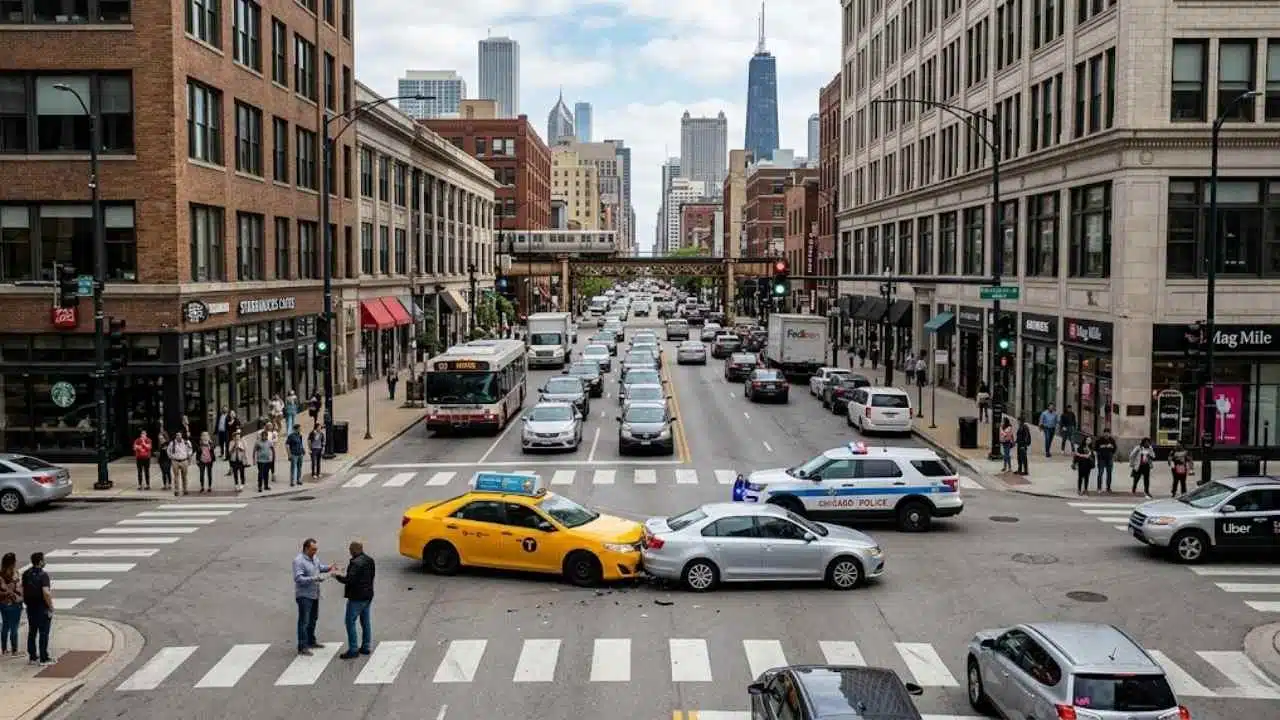
Chicago’s street grid is known for its order, but the activity within it is anything but predictable. High traffic volume, dense commercial corridors, and constant pedestrian movement create conditions where collisions are more likely to occur. While intersections and highways often receive the most attention, risk is also shaped by the surrounding environment—particularly in areas with fast-paced service activity, narrow sidewalks, and heavy customer turnover. These factors influence driver behavior, pedestrian decision-making, and overall traffic flow in ways that can increase the likelihood of accidents.
Downtown Corridors
The central business district presents a unique mix of congestion and urgency. Streets in this area often carry a high volume of taxis, delivery vehicles, buses, and rideshare traffic, all competing for limited space. Frequent stops, lane changes, and double-parking are common. Drivers are often navigating unfamiliar routes while responding to real-time demands from passengers or delivery schedules.
Sidewalks in these areas are typically crowded, especially during peak hours. Pedestrians may step into crosswalks quickly, sometimes before signals change, while others navigate around sidewalk obstructions such as outdoor seating or construction barriers. These conditions can lead to abrupt stops or turns by drivers, increasing the risk of rear-end collisions or side-impact crashes at intersections.
Commercial Strips
Busy commercial streets—lined with restaurants, retail stores, and service businesses—present another layer of complexity. These areas tend to have frequent curbside activity, including loading and unloading, short-term parking, and constant foot traffic entering and exiting storefronts.
Tight sidewalks can push pedestrians closer to the street, particularly when foot traffic builds or when physical space is limited by signage or temporary fixtures. In some cases, individuals may step off the curb to navigate around congestion, placing them in closer proximity to moving vehicles. Drivers, in turn, may be distracted by the need to locate parking or identify specific businesses, reducing their attention to surrounding traffic conditions.
The flow of customers in and out of these businesses creates an environment where movement is continuous and often unpredictable. Vehicles making quick stops or turns into narrow driveways add to the risk, particularly when visibility is limited.
Restaurant and Nightlife Areas
Neighborhoods known for dining and nightlife activity tend to experience elevated accident risk during evening hours. Traffic patterns shift as the day transitions into night, with increased rideshare usage, valet services, and pedestrian activity.
In these environments, curbside congestion is common. Vehicles may idle while waiting for passengers or parking assistance, leading to bottlenecks that affect through traffic. Drivers may attempt to navigate around stopped vehicles, sometimes moving into adjacent lanes without sufficient clearance.
Pedestrians in these areas often move in groups, which can slow crossing times and increase the likelihood of mid-block crossings. Lighting conditions, while generally adequate, can still create visibility challenges depending on weather and street design. These factors contribute to a higher incidence of low-speed collisions, including those involving turning vehicles and crossing pedestrians.
Transit Hubs
Areas surrounding major transit stations are characterized by constant movement and shifting traffic patterns. Buses pulling in and out, passengers boarding or disembarking, and vehicles dropping off or picking up commuters all contribute to a dynamic environment.
Drivers in these zones must respond quickly to changing conditions. A bus stopping unexpectedly or a pedestrian stepping into the street to catch a train can lead to sudden braking or evasive maneuvers. These reactions increase the likelihood of chain-reaction collisions, particularly during rush hour.
Sidewalk congestion near transit entrances can also spill into the street, especially when space is constrained. In some cases, individuals may navigate around crowds by stepping into traffic lanes, creating additional hazards for drivers who may not anticipate pedestrian movement outside designated crossings.
Industrial and Delivery Zones
Chicago’s industrial corridors and warehouse districts present a different type of risk. These areas often involve large commercial vehicles, including trucks making frequent stops or wide turns. Visibility can be limited due to the size of these vehicles, as well as the layout of loading docks and access points.
Delivery activity can disrupt normal traffic flow. Trucks may double-park or occupy travel lanes while unloading, forcing other vehicles to navigate around them. Drivers unfamiliar with these patterns may make abrupt decisions, such as sudden lane changes or turns, increasing the likelihood of collisions.
Pedestrian activity, while less dense than in commercial areas, still plays a role. Workers moving between facilities or crossing streets near loading zones may encounter limited visibility, particularly when large vehicles are in motion.
Residential Intersections Near Busy Streets
Residential neighborhoods that border major thoroughfares often experience spillover effects from high traffic volume. Drivers may use these streets as shortcuts to avoid congestion, leading to increased speeds and reduced attention to local conditions.
Intersections in these areas may not be designed to handle elevated traffic levels. Limited signage, narrower streets, and reduced visibility can contribute to collisions, particularly when drivers are unfamiliar with the layout.
Pedestrian activity, including children and local residents, adds another dimension. Sidewalk conditions, such as uneven pavement or obstructions, can influence where and how individuals move, sometimes bringing them closer to the street.
The Role of Environmental Design
Across all of these areas, environmental design plays a significant role in shaping risk. Narrow sidewalks, limited curb space, and high-density commercial activity create conditions where both drivers and pedestrians must make quick decisions. These decisions are often influenced by immediate pressures, such as time constraints, visibility limitations, or physical barriers.
Slip or trip hazards on sidewalks, while not directly related to vehicle collisions, can still affect traffic safety. A pedestrian who stumbles near a curb may enter the roadway unexpectedly, while drivers may react abruptly to avoid a perceived hazard. These interactions highlight how closely connected pedestrian conditions are to overall traffic risk.
Customer flow in service-heavy areas further complicates the picture. Continuous movement in and out of businesses creates a dynamic environment where predictability is limited. Drivers must account for this variability while maintaining awareness of other vehicles, signals, and roadway conditions.
Legal Context and Considerations
From a legal standpoint, accident risk in these environments often involves multiple contributing factors. Driver behavior, pedestrian actions, and environmental conditions all play a role in determining liability. Understanding how these elements interact is essential when evaluating incidents in high-density urban settings.
In some cases, discussions around these incidents may involve Chicago personal injury lawyers, particularly when questions arise regarding negligence or responsibility. However, the underlying issues typically extend beyond any single party and reflect the broader challenges of navigating complex urban environments.
Looking at the Bigger Picture
Chicago’s busiest areas are defined by movement—of people, vehicles, and goods. This constant activity is a key part of the city’s function, but it also introduces risk. High-traffic corridors, commercial strips, and service-focused environments all require careful attention from both drivers and pedestrians.
Reducing accident risk in these areas often comes down to awareness and adaptation. Recognizing how environmental factors influence behavior can help individuals make more informed decisions, whether they are behind the wheel or on foot. While the city’s layout provides structure, the activity within it requires ongoing attention to maintain safety.