
What Is Personal Branding?
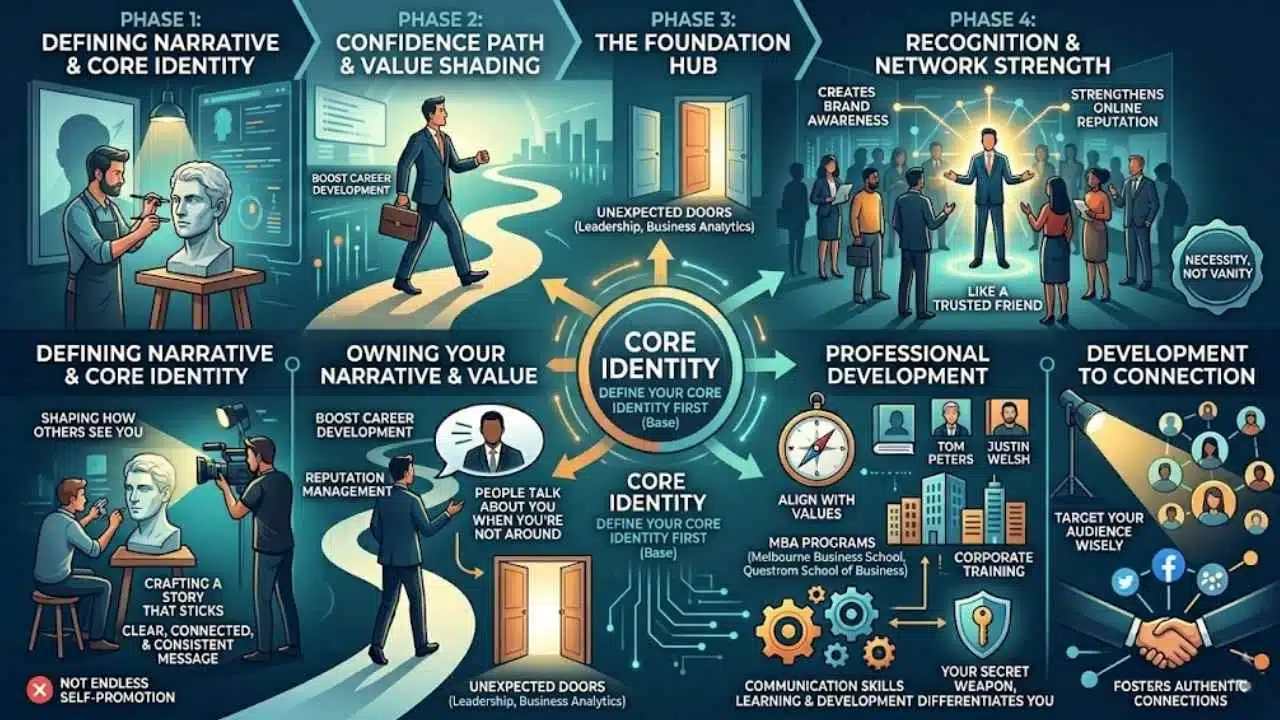
Personal branding means shaping how others see you, like crafting a story that sticks in people’s minds. You define your core identity first, as the base for everything else. This process builds on a clear, connected, and consistent message, not endless self-promotion.
Think of it as owning your narrative, showing your value to boost career development and reputation management. People talk about you when you’re not around, and a solid brand opens unexpected doors in leadership or business analytics.
It creates brand awareness and strengthens your online reputation, much like a trusted friend in a crowded room.
Building a personal brand is a necessity, not vanity, as it involves owning your story and showcasing your value to the world.
Folks often mix it up with vanity, but personal branding is key for career success and professional reputation. You align it with your values, perhaps drawing from experts like Tom Peters or Justin Welsh.
This approach helps in communication skills and learning and development, whether you’re at Melbourne Business School or Questrom School of Business. Think it as your secret weapon, differentiating you in fields like MBA programs or corporate training.
Target your audience wisely, and watch how it fosters authentic connections across social media platforms.
Why Personal Branding Matters
Standing out in a crowded job market, like Isaac Mashman did with his bold approach to career assistance. A strong personal brand unlocks fresh job chances, earns real trust from your target audience, and helps you shine apart from the pack, much like Mel Robbins does on YouTube.
Unlocking career opportunities
Personal branding opens doors you never knew existed. Think about it like this: it shapes how folks talk about you behind your back, and that chatter leads to surprise job offers or partnerships.
Take Isaac Mashman, for example; he built his brand by sharing insights on YouTube, and suddenly career assistance came knocking from all sides. Your brand acts as a silent ambassador, unlocking those hidden opportunities without you lifting a finger every time.
Build your brand by owning your story and showing your value to the world. Danish Khan stresses helping others learn through content creation, which grows your reach fast. Focus on your target audience, like Mel Robbins does with her motivational talks in Boston, MA.
This approach turns branding into a must-have tool, not just show-off stuff, and it lines up gigs that fit your skills perfectly. Stay consistent, and watch those doors swing wide.
Building trust and credibility
You build trust by sharing knowledge that helps people grow. Focus on aiding others in their learning journeys. This approach strengthens your brand far more than arguing to win points.
People start to see you as a reliable source. They talk about you positively even when you’re not around. A clear message connects you with folks on a deeper level. Keep it consistent across all your interactions.
Ditch the constant self-promo; it turns people off. Own your story instead. Show your true value to the world. Think of Nicola Lesley from Australia. She used the four pillar questions to shape her brand at MBS in the Rafik B.
Hariri Building. Her method followed the four laws of personal branding. It opened doors she never expected.
Your brand grows when you help others learn, not when you try to prove you’re right.
Credibility comes from real actions. Post content online that solves problems. Engage in communities where your audience hangs out. Stay true to your values every day. This builds a brand people trust without you forcing it.
Describing you as the go-to expert. That happens with effort over time.
Differentiating yourself in your field
Stand out in your field by defining your unique value proposition. This step sets you apart from the crowd. Think of it like being the only chef who mixes bold flavors in a sea of plain dishes.
Your core identity acts as the foundation here. Own your story, and showcase your value to the world. People will describe you in glowing terms, even when you’re not around.
Help others learn to grow your brand. Skip the constant self-promotion. Focus on a clear, connected message instead. Build that strong online presence. Share content that adds real value.
Doors open unexpectedly this way. It’s a necessity, not some vain pursuit.
Steps to Build a Personal Brand
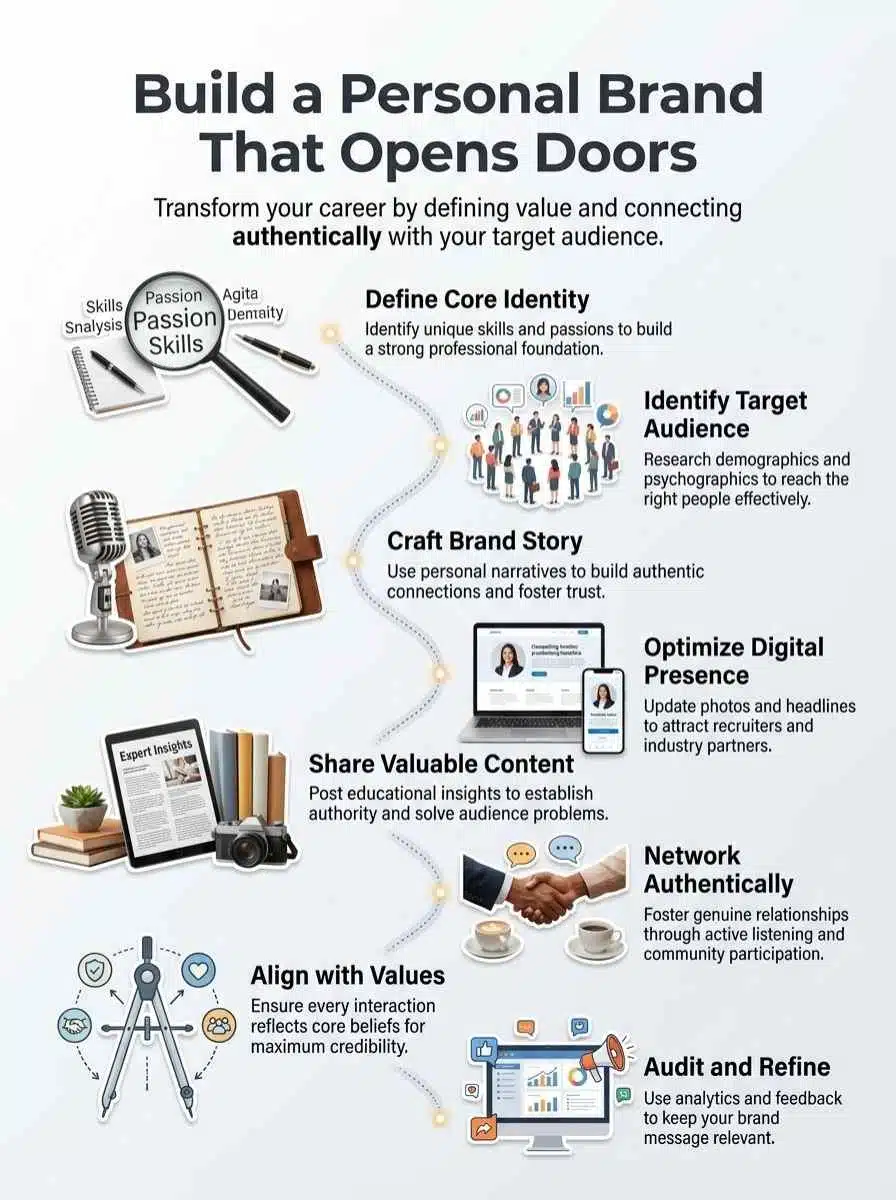
Start by figuring out what makes you stand out, like that special skill or passion that sets you apart from the crowd, then pinpoint the folks who’ll love what you offer, and weave it all into a story that grabs attention and sticks.
Ready to turn these ideas into action and watch doors swing open? Dive deeper into the full guide below!
Define your unique value proposition
Your personal brand starts with a clear unique value proposition that sets you apart. This step acts as the foundation, helping you own your story and showcase your value to the world.
- Personal branding demands that you define your core identity first, like laying the groundwork for a sturdy house. Think of it as the spark that ignites everything else. You pinpoint what makes you stand out, the skills and passions that no one else combines quite like you do. For example, a graphic designer might highlight their knack for blending bold colors with simple layouts to solve client problems fast. This core identity becomes your anchor, guiding every choice you make in branding.
- Identify your target audience early, because you can’t build without knowing who walks through the door. Envision chatting with a friend over coffee, figuring out who needs your expertise most. Are they busy entrepreneurs, creative freelancers, or tech enthusiasts? This focus sharpens your message, like a laser beam cutting through fog. It ensures you speak directly to their pains and dreams, making connections that stick.
- Defining your unique value proposition differentiates you from others in your field, much like a signature dish sets a chef apart in a crowded kitchen. You ask yourself, what problem do I solve better than anyone? Mix in your experiences, strengths, and quirks to craft this gem. Say you’re a marketer who turns data into stories that sell; that’s your edge. It helps people see your worth right away, opening doors you never knocked on.
- Craft your brand story to connect with your audience authentically, turning facts into a tale that resonates, like sharing a heartfelt anecdote at a party. Weave in your journey, the ups and downs that shaped you. This narrative owns your story, showing vulnerability and strength. For instance, talk about that time a failure taught you resilience, and tie it to how you help others now. People remember stories, not lists of achievements.
- Build a strong personal brand on a clear, connected, and consistent message, ditching constant self-promotion for something more genuine, like a steady conversation instead of a sales pitch. Focus on that thread running through all you do. It showcases your value without shouting. Posting tips that solve real issues; folks start describing you as the go-to expert when you’re not around. This approach turns branding into a necessity, not some vain pursuit.
Identify your target audience
Identifying your target audience sets the stage for a personal brand that truly connects. This step, like finding the right key for a lock, opens doors to real engagement and growth.
- Pinpoint who frame 1: This process demands clarity on who you aim to reach, since identifying your target audience is necessary before building your personal brand. Think of it as scouting the crowd at a party; you spot folks who vibe with your style, age, interests, and needs. Demographics like job titles or locations help here, but dig deeper into psychographics, those attitudes and values that match yours. For example, if you coach entrepreneurs, focus on ambitious starters craving growth tips. This focus sharpens your message, like a laser beam cutting through fog, and ties into defining your unique value proposition that differentiates you from others in your field.
- Research fuels this step, so chat with potential fans or survey online groups. It’s like being a detective, gathering clues from social media analytics or feedback loops. One pro shared an anecdote: she assumed her audience was all young pros, but data showed many were mid-career switchers hungry for her wisdom. This insight shifted her content, boosting shares and connections. Personal personal branding requires defining your core identity as a foundational step, and audience insights anchor that core. They ensure your brand story resonates, crafting authentic ties that feel like old friends reuniting.
- Customize your approach by creating personas, vivid profiles of ideal audience members. Sarah, a 35-year-old marketer juggling work and family, seeking quick branding hacks. This metaphor, like sketching a character in a novel, brings your audience to life and guides your choices. Building a strong online presence is essential for personal brand development, and knowing your crowd helps optimize platforms like LinkedIn for them. Plus, it aligns with crafting your personal brand story, crucial for connecting with your audience authentically, turning followers into loyal advocates.
- Test and refine as you go, since audiences evolve like seasons changing. Share a draft post and gauge reactions; if it flops with your group, pivot fast. A funny story: a blogger targeted tech geeks but found his humor landed better with creative types, so he adjusted and watched engagement soar. This ties into how a strong personal brand is built on a clear, connected, and consistent message rather than constant self-promotion. It shapes how people describe you when you’re not in the room and opens unexpected doors, proving building a personal brand is a necessity, not vanity, as it involves owning your story and showcasing your value to the world.
- Blend empathy into this, putting yourself in their shoes to grasp pains and dreams. It’s like a heartfelt chat over coffee, uncovering what keeps them up at night. Creating valuable content is a key component of establishing your personal brand, and audience knowledge ensures that content hits home, solving real problems. Your brand grows when you help others learn, not when you try to prove you’re right, so focus on their wins. This builds trust, unlocking career opportunities and differentiating yourself in your field through genuine service.
Craft your personal brand story
Start with your core identity, that foundational piece that defines who you are. Think of it like a campfire tale, one that draws people in and sticks with them. You own this narrative, and it showcases your value to the world, far from any hint of vanity.
Make it clear, connected, and consistent, because that’s what builds strength over constant self-promotion. Connect authentically with folks by weaving in your experiences, you know, those moments that shaped you.
People talk about you when you’re not around, and a solid story opens unexpected doors, like magic keys to new chances.
Your brand story as a bridge, linking you to your audience in real ways. Crafting it means pulling from your values and passions, creating something genuine that resonates.
Folks recall stories that feel true, not polished sales pitches. Share anecdotes from your journey, maybe that time a challenge turned into a win, to highlight your strengths. This approach shapes perceptions and fosters trust, turning casual connections into lasting ones.
Keep it simple, folks appreciate that direct vibe.
Building Your Online Presence
Your online profile as a digital handshake that grabs attention right away. Start by polishing your LinkedIn page with a sharp photo and punchy bio, then post articles on Twitter that spark real talks and keep your Instagram feed steady across all spots.
Optimize your LinkedIn profile
LinkedIn serves as your online business card. Make it shine to attract the right connections and chances.
- Update your profile photo with a clear, professional headshot that shows your friendly side, like a snapshot from a casual networking event where you chatted with industry pros, because people connect better with approachable faces.
- Craft a headline that grabs attention beyond your job title, such as “Marketing whiz who turns ideas into viral campaigns,” to highlight what sets you apart in a crowded field.
- Write a summary that tells your brand story in a genuine way, weaving in anecdotes from your career highs and lows, to build that authentic link with readers who value real journeys over polished resumes.
- List your experience with action-packed descriptions, focusing on wins like boosting team sales by 30 percent, to show your value without bragging, as your brand grows when you help others learn.
- Add skills and endorsements that match your core identity, picking ones like “content strategy” or “public speaking” that folks in your circle can vouch for, keeping things clear and connected.
- Share posts and articles regularly to create valuable content, maybe a quick tip on industry trends that sparks comments, since this establishes your voice without constant self-promotion.
- Join groups and follow influencers in your niche to build authentic professional ties, commenting thoughtfully to show you listen and add value, which opens unexpected doors.
- Keep your profile consistent with other platforms, using the same photo and bio tone everywhere, as this reinforces a strong online presence essential for your brand’s growth.
- Seek recommendations from colleagues that echo your values, like one praising your teamwork in a tough project, to boost trust and credibility among your target audience.
Content creation forms a core part of your personal brand. Share it to help others learn and grow your influence.
- Focus on making posts that teach something useful, like tips from your field, because your brand grows when you help others learn, not when you try to prove you’re right. People connect with clear messages that solve problems, so skip constant self-promotion and aim for a consistent tone across your updates. Think of it as planting seeds in a garden; each piece nurtures trust over time.
- Use platforms like social media or blogs to put out articles, videos, or infographics that showcase your skills. Creating valuable content is a key component of establishing your personal brand, and it builds a strong online presence essential for development. For example, share a quick story from your work life that ties into a lesson, making folks say, “Hey, that’s helpful.”
- Own your story by weaving in personal anecdotes that highlight your value to the world. Building a personal brand is a necessity, not vanity, as it involves owning your story and showcasing your value to the world, so let your content reflect that authentic side. Talking with a friend over coffee; keep it real and relatable to draw people in.
- Stay consistent with themes that match your core identity, since a strong personal brand is built on a clear, connected, and consistent message rather than constant self-promotion. Post regularly, maybe weekly insights on industry trends, to keep your audience engaged and coming back for more. This approach turns casual viewers into loyal fans who spread the word about you.
Maintain consistency across platforms
Keep your message the same on every site. Post with a clear, connected voice on LinkedIn, Twitter, and Instagram. People notice when your style flips from one spot to the next, like a chameleon that can’t pick a color.
Stay true to that voice, and folks will trust you more. A strong personal brand thrives on this steady beat, not endless self-promo. Your signature tune, playing across all channels without missing a note.
Mix up your posts, but tie them back to your core ideas. Share tips that help others learn, and watch your brand grow. Building a strong online presence demands this glue that holds everything together.
Your audience spots the links, feels the flow, and sticks around. Think of it like a reliable friend who always shows up the same way, rain or shine.
Networking and Collaboration
Build real bonds with pros in your field, like chatting over coffee at a trade show, to spark fresh ideas and open new paths. Join groups on platforms such as Meetup or attend industry meetups, where you might bump into that game-changing partner, and keep reading for tips on making those ties last.
Develop authentic professional relationships
Start with real talks at events. People spot fakes from a mile away, so share your true self. Your brand grows when you help others learn, not when you try to prove you’re right. A strong personal brand is built on a clear, connected, and consistent message rather than constant self-promotion.
Think of it like planting seeds in a garden; water them with genuine interest, and watch connections bloom. I once chatted with a colleague about shared hobbies over coffee, and that sparked a lasting partnership.
Personal branding shapes how people describe you when you’re not in the room and opens unexpected doors. Use tools like LinkedIn to send thoughtful messages, not sales pitches.
Focus on listening more than talking. Ask questions that show you care, like, “What challenges keep you up at night?” Building a strong online presence is essential for personal brand development, so tie your relationships to that digital space.
Join groups on platforms such as Twitter or industry forums to swap ideas. Personal branding requires defining your core identity as a foundational step, which helps in forming bonds that align with your values.
Yourself as a bridge builder; each authentic link strengthens your network. Creating valuable content is a key component of establishing your personal brand, so share articles that solve problems for your contacts.
Join relevant communities and events
Joining relevant communities and events boosts your personal brand by connecting you with like-minded folks. This step helps you own your story, showcase your value, and shape how people talk about you when you’re not around.
- Find groups that match your field, like industry forums or local meetups, to build authentic ties that open unexpected doors; think of it as planting seeds in a garden where helping others learn waters your own growth, not just proving you’re the smartest in the room.
- Attend events such as conferences or webinars to share your clear, connected message without constant self-promotion; think yourself chatting over coffee, turning strangers into allies who describe you glowingly behind your back.
- Engage actively in online communities, say on platforms where pros gather, to foster relationships that highlight your worth to the world; it’s like joining a club where owning your tale isn’t vanity, but a must-do for real progress.
- Seek out workshops or networking nights that align with your values, so you can contribute valuable insights and watch your brand flourish through genuine bonds; The thrill when a casual talk leads to career chances you never saw coming.
- Participate in virtual hangouts or panels to stay consistent and connected, reinforcing that your brand thrives on aiding others’ growth; it’s no joke, these spots turn everyday interactions into doors that swing wide open for you.
Staying Authentic and Consistent
Stick to your core beliefs, like a tree rooted deep in the soil, so your brand rings true to everyone you meet. Run quick checks on your profiles every few months, tweaking posts and photos to match that real you, and watch doors swing open wider.
Align your brand with your personal values
Align your personal brand with your core values to build trust that lasts. People see right through fake fronts, like a wolf in sheep’s clothing, so own your story from the start. A strong personal brand shapes how folks describe you when you’re not around, and it opens unexpected doors.
Think about it, your brand grows when you help others learn, instead of just proving you’re right. Personal branding requires defining your core identity as a foundational step. That means digging into what you stand for, like honesty or innovation, and letting it guide every post or pitch.
Craft your brand story to connect authentically with your audience, always tying back to those values. Building a personal brand is a necessity, not vanity, as it involves owning your story and showcasing your value to the world.
Focus on a clear, connected, and consistent message rather than constant self-promotion. You create that by sharing anecdotes from your life, say, how perseverance shaped your career path.
Readers, weaving your beliefs into content that sparks real conversations.
Regularly audit and refine your brand
Your personal brand needs regular check-ups to stay strong. Refine it often to keep opening doors and growing right.
- Check how people talk about you when you’re not around, as personal branding shapes those words and opens unexpected doors; ask friends or colleagues for honest feedback, like in a quick coffee chat, to spot gaps.
- Focus on helping others learn instead of proving you’re right, since your brand grows that way; review your content and tweak it to add more value, turning posts into helpful tips that spark real chats.
- Build on a clear, connected, and consistent message, not constant self-promotion, for a strong personal brand; scan your social media profiles with tools like Google Analytics to see what resonates, then adjust for better flow.
- Own your story and showcase your value to the world, because building a personal brand is a necessity, not vanity; set up a simple SWOT analysis to evaluate strengths and weaknesses, refining weak spots with fresh ideas from your core values.
- Use reputation management concepts to track online mentions; grab tools like Brandwatch for insights on engagement, then refine your approach to boost trust and credibility in your field.
Measuring the Success of Your Personal Brand

Your brand like a garden, you gotta watch what grows. Track shares on Instagram, gauge comments for real vibes, and shift your approach when numbers dip, it keeps things fresh and doors swinging open.
Track engagement and feedback
You measure your personal brand’s success by tracking engagement and feedback, which shows how well your efforts connect with people.
| Key Steps | How to Do It |
|---|---|
| Monitor interactions | Watch likes, shares, and comments on your posts. These metrics reveal what resonates. Your brand grows when you help others learn, not when you try to prove you’re right. Think of it as a garden; feedback waters the plants. |
| Gather opinions | Ask for direct input through surveys or chats. People will describe you when you’re not in the room, so listen closely. Personal branding shapes that talk and opens unexpected doors. |
| Use analytics tools | Grab data from platforms like Google Analytics or LinkedIn Insights. Track views and clicks to see patterns. Building a strong online presence is essential for personal brand development, and these numbers prove it. |
| Analyze content performance | Review which pieces spark the most buzz. Creating valuable content is a key component of establishing your personal brand. Adjust based on what works, like tweaking a recipe after taste tests. |
| Check audience fit | See if responses come from your target group. Identifying your target audience is necessary before building your personal brand. It’s like fishing in the right pond for the best catch. |
| Evaluate differentiation | Note how feedback highlights your edge. Defining your unique value proposition helps differentiate you from others in your field. One reader said, “Your tips stand out because they’re real.” |
| Assess story impact | Look at reactions to your narratives. Crafting your brand story is crucial for connecting with your audience authentically. A strong personal brand is built on a clear, connected, and consistent message rather than constant self-promotion. |
| Define core metrics | Set baselines for growth. Personal branding requires defining your core identity as a foundational step. Building a personal brand is a necessity, not vanity, as it involves owning your story and showcasing your value to the world. |
Adjust strategies based on outcomes
Track your personal brand’s progress with simple metrics, like likes, shares, and comments on your content. Notice how people respond, and spot patterns in what works best. Your brand grows when you help others learn, not when you try to prove you’re right, so use that feedback to tweak your approach.
Say engagement drops on certain posts; switch up your topics or style to match what your audience craves.
A strong personal brand is built on a clear, connected, and consistent message rather than constant self-promotion, but outcomes show where to pivot. Personal branding shapes how people describe you when you’re not in the room and opens unexpected doors, so refine based on real results.
Building a personal brand is a necessity, not vanity, as it involves owning your story and showcasing your value to the world; adapt your tactics, like posting frequency or collaboration choices, to keep that momentum going.
Final Thoughts
You’ve learned to define your value, spot your audience, and craft a story that sticks. These steps feel simple, yet they pack a punch in building your brand fast. A solid personal brand opens doors to jobs and trust, setting you apart like a beacon in a crowded room.
Check out books like “Building a StoryBrand” for more tips, or join LinkedIn groups to keep growing. Go ahead, own your narrative today, and watch opportunities knock. I once shared my quirks online, and bam, it landed me a dream gig, proving authenticity wins every time.
Frequently Asked Questions (FAQs) About Personal Branding Strategies
1. What steps kick off building a personal brand that opens doors?
Start by figuring out your core values, like the North Star guiding a ship; share them on platforms such as LinkedIn to connect with folks who vibe with you. Hey, remember that time a simple story turned a nobody into a networking magnet? Keep it real, and doors will swing wide.
2. How does authenticity help my personal brand stand out?
Authenticity acts like a secret sauce in a crowded room, drawing people in because they sense the real you. Skip the fake vibes; folks can spot them a mile away.
3. Why bother with an online presence for my personal brand?
An online presence is your digital handshake, opening doors to jobs and chats you never dreamed of. Build it on sites like Twitter or Instagram, share your wins and flops with a dash of humor, and watch connections grow like weeds in spring. It’s empathetic to admit, we all start small, but consistency turns that into something big.
4. Can networking boost a personal brand that opens doors?
Networking is the golden ticket, linking you to opportunities faster than a speeding bullet. Chat up industry pros at events or online, toss in an anecdote about your journey to keep it light, and soon enough, those doors creak open wide.