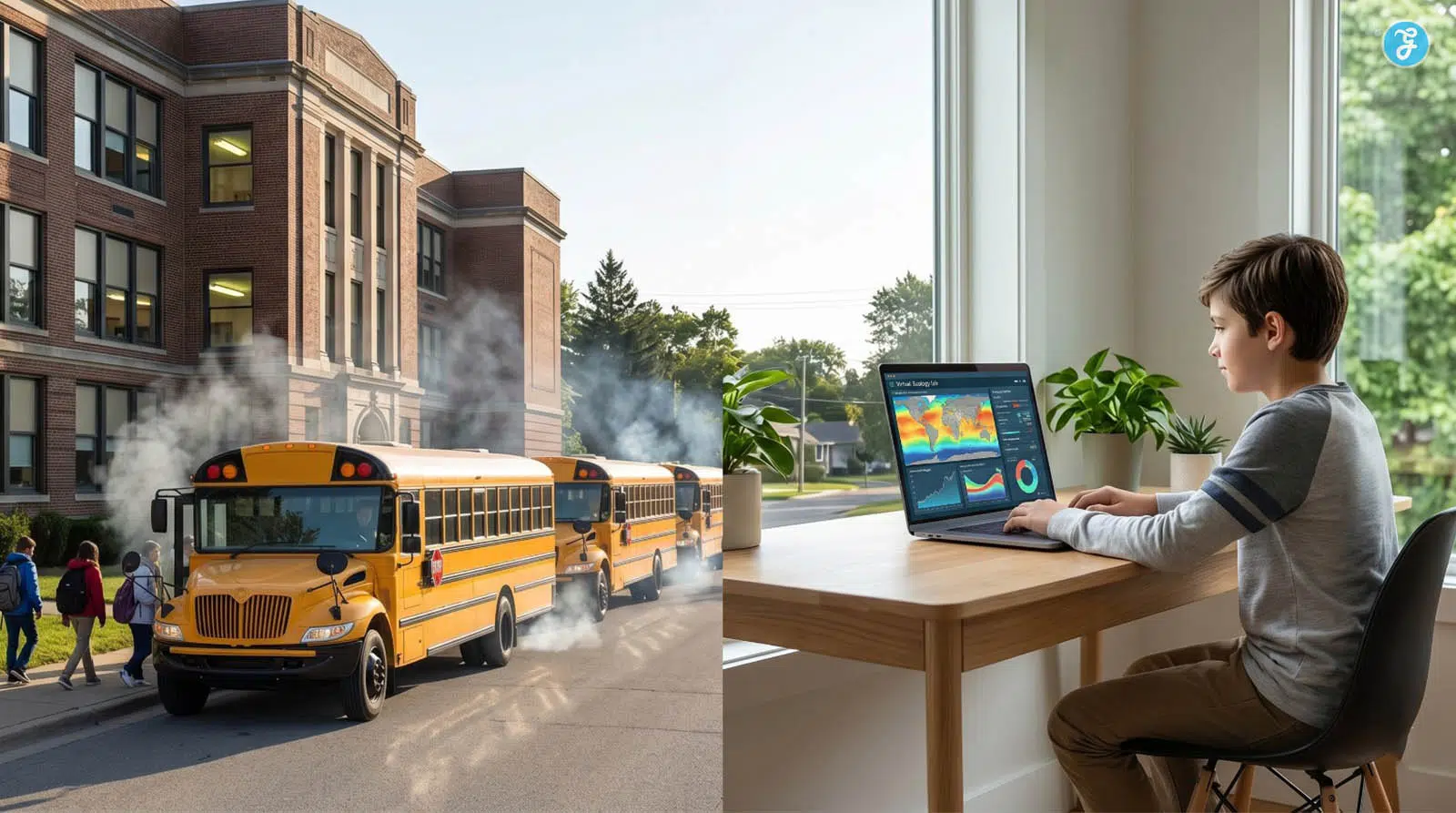
The morning sun hits the pavement as a line of yellow school buses idles at the curb. Each one puffs out plumes of exhaust while waiting for students to board. Inside the massive brick school buildings, industrial boilers hum and fluorescent lights flicker across hallways that require constant heating or cooling. For decades, this was the only way to learn. It was a high energy and high emission routine. This reality is shifting as we embrace Sustainable Digital Education to meet global climate goals.
Compare that traditional scene to a student today who sits at a desk in their living room. They are not waiting for a bus. Instead, they log into a virtual ecology lab. Within seconds, they are running simulations on ocean acidification or tracking real time reforestation efforts in the Amazon. This shift is not just about convenience or modern gadgets. It represents a fundamental change in our environmental strategy.
Digital platforms are quietly doing something remarkable. They are stripping away the heavy carbon cost of physical infrastructure. At the same time, they are rewiring how young people think about the planet. Technology has turned from a distraction into a primary tool for environmental survival. It is building eco-aware habits by making climate data interactive rather than abstract.
This story looks at the hard numbers behind our old schooling models. We will break down why the traditional classroom has such a massive carbon footprint. We will analyze verified data that shows how digital alternatives slash emissions by nearly ninety percent. Finally, we will explore how gamified learning creates a new kind of climate literacy. This is not just a change in where we sit. It is a transition toward a future where education and sustainability are inseparable. The future of the planet might just be found behind a green screen.
The Heavy Ecological Toll of the Traditional Classroom
The physical school system is a logistical giant with a hidden environmental cost. While we often focus on what happens inside the classroom, the act of maintaining that space is an ecological burden. Every desk and every hallway requires a massive amount of energy to stay functional. Moving millions of people to these hubs every day creates a footprint that is becoming harder to ignore.
Staggering Baseline Statistics
The numbers are difficult to wrap your head around at first. Research shows that physical schools generate between 2,300 and 3,500 kilograms of CO2 per student every year.
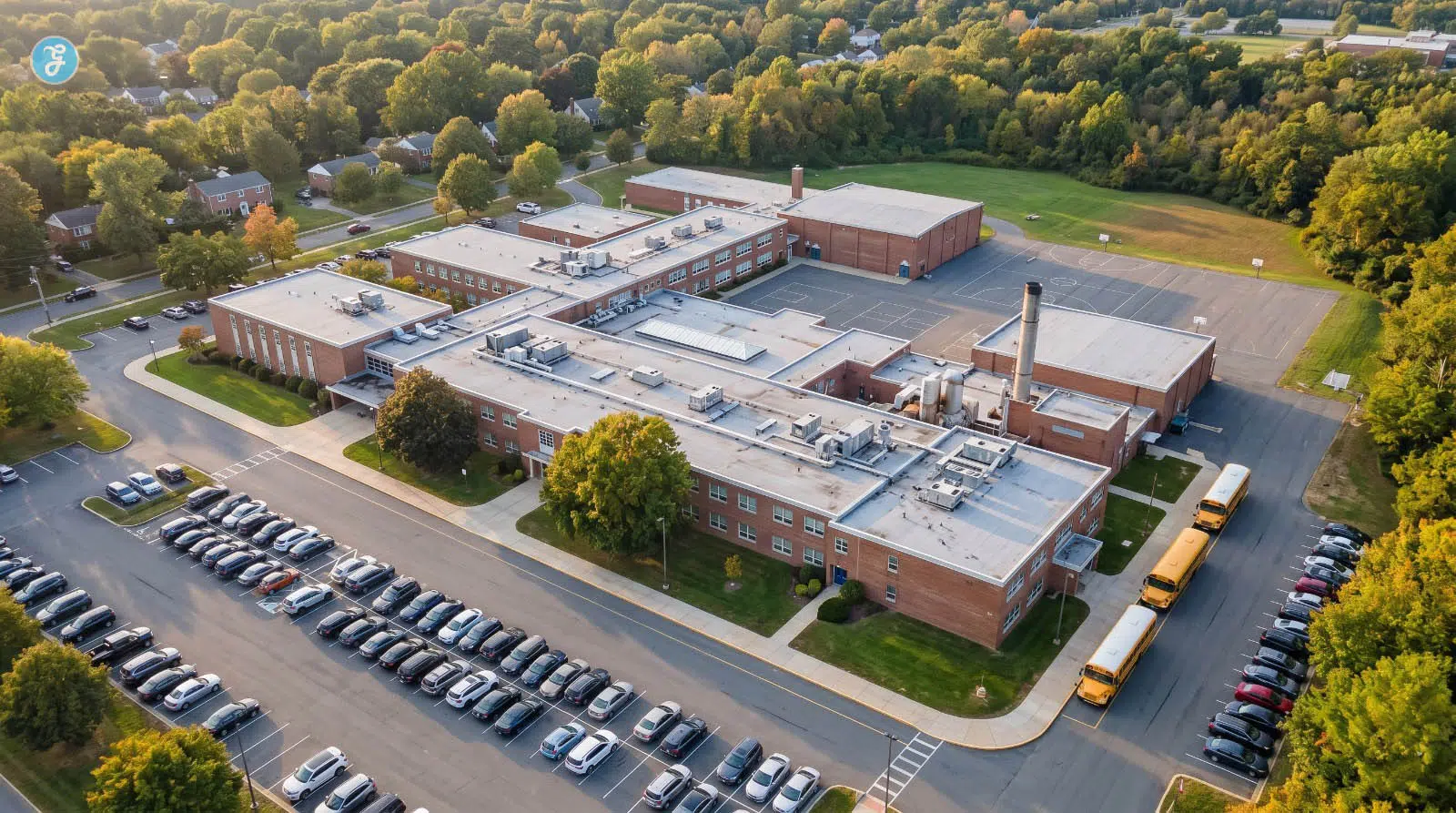
This is not just a local issue in one or two countries. It is a global reality for any nation relying on centralized learning hubs. When you multiply those kilograms by millions of students, the scale of the problem becomes clear. Traditional schooling is one of the most carbon-intensive daily activities in modern society.
The Commute and Carbon Exhaust
Transportation is the single largest contributor to this problem. In many developed nations, the daily commute accounts for roughly 25 to 30 percent of a typical school carbon footprint. Look at the United States as a prime example. Every morning, about 26 million students climb onto school buses. Most of these vehicles run on diesel fuel. They idle in traffic and navigate long routes through suburban and rural areas. This massive movement of people creates a constant stream of emissions that digital models simply do not have. Even in cities with public transit, the sheer volume of peak-hour travel adds significant strain to the environment.
The Energy Drain of Brick and Mortar
Once students arrive, the energy consumption continues. Physical buildings are notorious energy gluttons. A standard elementary school consumes between 50,000 and 100,000 kWh of electricity every single year. This power goes toward lighting massive gyms, running industrial kitchen equipment, and keeping old boilers humming. Heating and cooling these spaces often account for nearly half of a school’s total emissions. Many of these buildings are decades old and lack modern insulation. They lose heat in the winter and struggle to stay cool in the summer. This results in a cycle of waste that happens whether the rooms are full or empty.
A Logistical and Environmental Burden
The takeaway is clear. Physical attendance requires a massive logistical and environmental toll. It is an industrial age solution for a digital age world. Beyond the fuel and the electricity, there is the supply chain of physical materials. Tons of paper, plastic supplies, and food waste add to the pile. We are essentially spending a huge portion of our global carbon budget just to keep the lights on in physical buildings. As we look for ways to protect our climate, we have to ask if this centralized model is still the best way to educate the world. The data suggests it is time for a change.
The Data Behind the Digital Shift
The shift toward virtual learning environments offers a mathematical escape from the carbon-heavy traditional model. By removing the need for physical proximity, we eliminate the most taxing elements of the educational process. The data shows that moving bits is far more efficient than moving people. This transition is proving to be a cornerstone of Sustainable Digital Education on a global scale.
A Dramatic Drop in Emissions
The contrast in carbon output is nothing short of spectacular. While a physical school student might be responsible for thousands of kilograms of CO2, an online student produces only 80 to 150 kilograms per year. This represents a reduction of 94 to 96 percent. By cutting out the daily commute and the need to power massive institutional buildings, the personal footprint of a learner shrinks to a fraction of its former size. It is one of the most effective ways to lower the environmental impact of a modern lifestyle.
Global Evidence for Efficiency
This is not just theoretical math. Real world studies back these findings with hard evidence. Research from the University of Sydney found that distance learning courses require 87 percent less energy than on campus alternatives. The same study showed that these digital courses produce 85 percent fewer carbon emissions. Similar patterns appear in data from around the world. Whether in Australia or Europe, the results remain consistent. Virtual platforms provide a level of resource efficiency that physical classrooms simply cannot match.
The Pandemic Scale Proof
We already saw what happens when this shift occurs at scale. During the 2020 transition to digital platforms in China, the environmental impact was massive. Experts estimated that the shift saved approximately 200 million tons of CO2 in a single year. Most of those savings came directly from the halt in student and staff travel. This period served as a global proof of concept. It showed that the digital infrastructure is already capable of handling millions of users while simultaneously providing a huge relief to the atmosphere.
The efficiency of these digital shifts depends heavily on server-side optimization. Verified studies into cloud computing show that centralized data centers are often five times more energy efficient than on-premise school servers. When a school district moves its learning management system to a green-certified cloud provider, it effectively offloads its carbon responsibility to a facility powered by massive wind or solar arrays. This transition allows even small, underfunded districts to achieve a carbon-neutral digital presence that would be impossible to maintain with local hardware. It is a scaling of efficiency that traditional classrooms, bound by physical geography and local power grids, simply cannot replicate.
The Hidden Costs of the Digital Model
However, a truly balanced analysis requires us to look at the new costs we are creating. Digital learning is not a zero emission miracle. It creates its own set of environmental pressures. Students working from home typically use 2 to 4 hours of extra electricity every day for their devices and lighting. There is also the significant carbon cost of manufacturing laptops, tablets, and smartphones. Each device requires rare minerals and energy intensive production lines.
We also have to consider the back end of the internet. The data centers that power our clouds and the artificial intelligence models we use for tutoring are incredibly energy intensive. These facilities require massive cooling systems and constant power. As we move forward, the success of this model depends on the growth of renewable energy grids. To keep our digital screens truly green, we must ensure the power behind them comes from wind, solar, or hydro sources. The efficiency is there, but the infrastructure must remain clean to realize its full potential.
Gamification as a Tool for Lasting Change
The power of digital platforms extends far beyond saving energy on lighting or transportation. These tools are actively reshaping how the human mind processes the climate crisis. By turning abstract data into interactive experiences, we are moving from passive awareness to active participation. This is where technology becomes a catalyst for real world behavioral shifts.
Rewiring Daily Habits Through Data
Education is most effective when it leads to measurable action. A study published in the journal PLOS ONE found that graduates of comprehensive climate programs reduced their personal emissions by an average of 2.86 tons of CO2 per year. This is a massive shift in individual lifestyle.
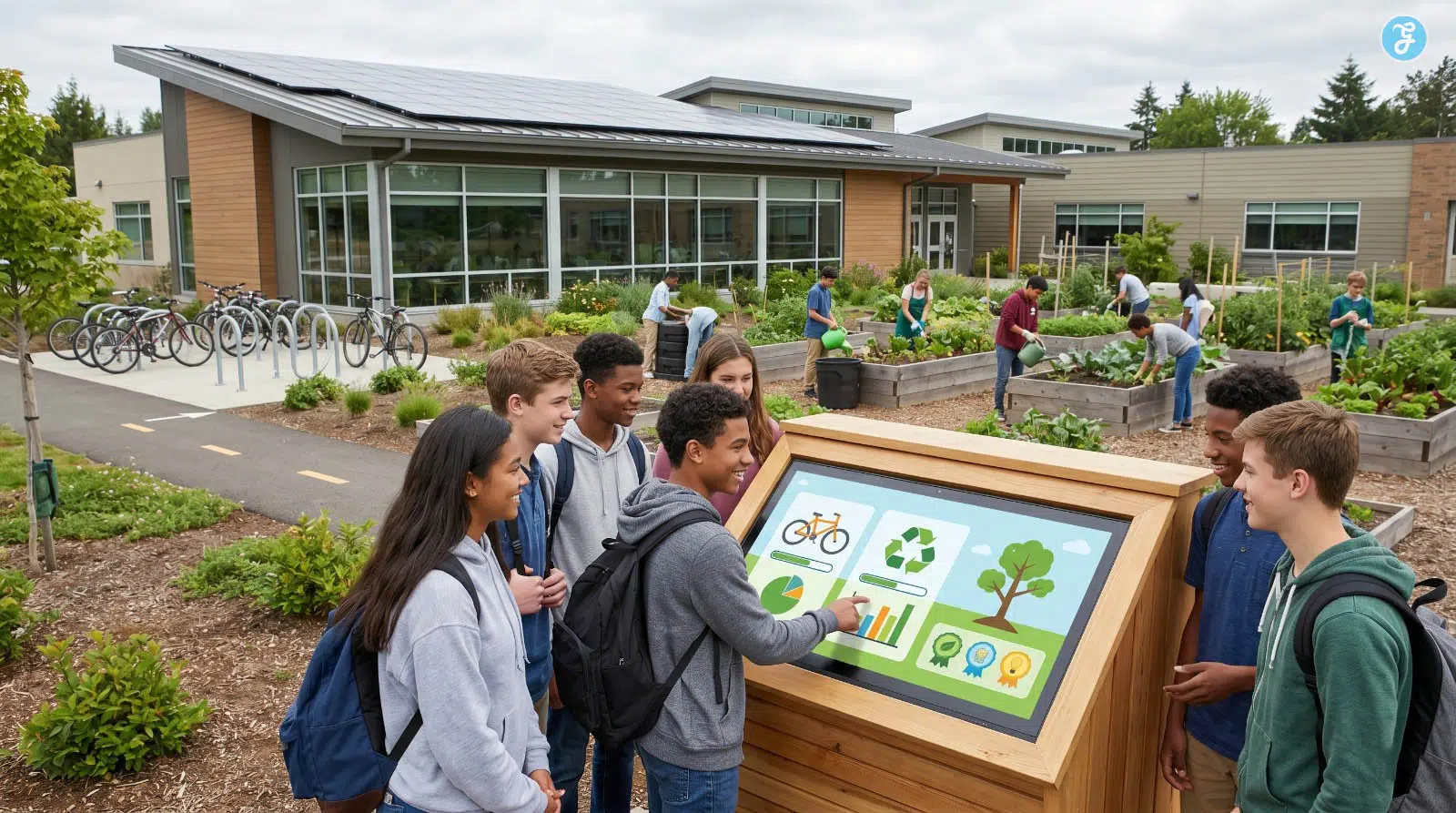
Digital tools make this possible by providing real time feedback on daily choices. When a student can see the immediate impact of their diet or travel habits on a screen, the lesson sticks. It turns a theoretical problem into a personal mission.
The Power of Interactive Engagement
Leading platforms are already proving that sustainability can be engaging. In Canada, the Carbone Scol’ERE program uses a digital environment to challenge students and their families to adopt new habits. Similarly, the Eco Champs initiative uses digital tracking to reward sustainable choices. These platforms use the same mechanics that make video games addictive. They use badges, leaderboards, and leveling systems to make saving the planet feel like a win. By making sustainability a social and competitive activity, these tools ensure that students stay focused long after the lesson ends.
Simulating Complex Global Systems
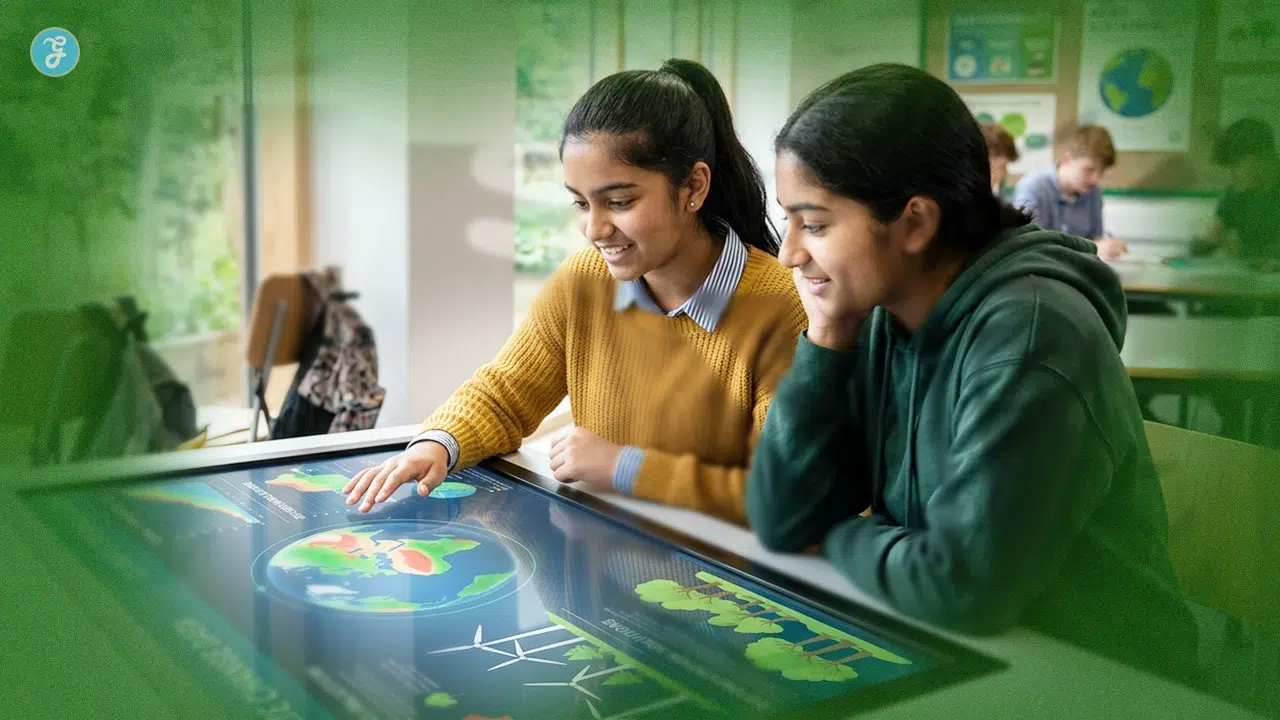
Climate change is often too big for the human brain to grasp in a traditional classroom. Virtual reality and cooperative digital games solve this by allowing students to step inside the problem. Students can role play as global leaders in climate negotiations or manage a virtual city facing rising sea levels. These simulations show the direct link between policy and outcome. They force players to make tough trade-offs and see the long term consequences of their actions. This creates an action-oriented mindset.
Beyond simple games, the use of “Digital Twins” is revolutionizing advanced climate education. A Digital Twin is a precise virtual replica of a real-world ecosystem, such as a local watershed or a city’s power grid. Students can manipulate variables within these digital mirrors to see how a new solar farm or a restored wetland would affect their specific local environment over fifty years. This removes the “distance” from climate change. It is no longer a global crisis happening elsewhere; it becomes a local puzzle that students can solve with data. This high-level immersion bridges the gap between scientific theory and community-based civil engineering.
Tracking Personal Carbon Scores
Tracking personal carbon scores in a virtual space is a bridge to real world stewardship. When students manage a digital avatar with a specific carbon budget, they begin to view their own lives through the same lens. They learn to identify hidden emissions and seek out low carbon alternatives. This digital training ground prepares them for the complexities of the modern world. It transforms environmental responsibility from a chore into a skill. By the time these students enter the workforce, they already have the mental tools to prioritize the health of the planet. These green screens are training the most ecologically literate generation in human history.
A New Path for Global Learning
The transition from the idling school bus to the virtual lab is more than a change in scenery. We are witnessing a massive move away from high emission traditional classrooms toward low impact digital spaces. This shift is proving that we do not need to burn fossil fuels to ignite curiosity. By shedding the weight of aging physical infrastructure, we have found a way to make education work for the planet rather than against it.
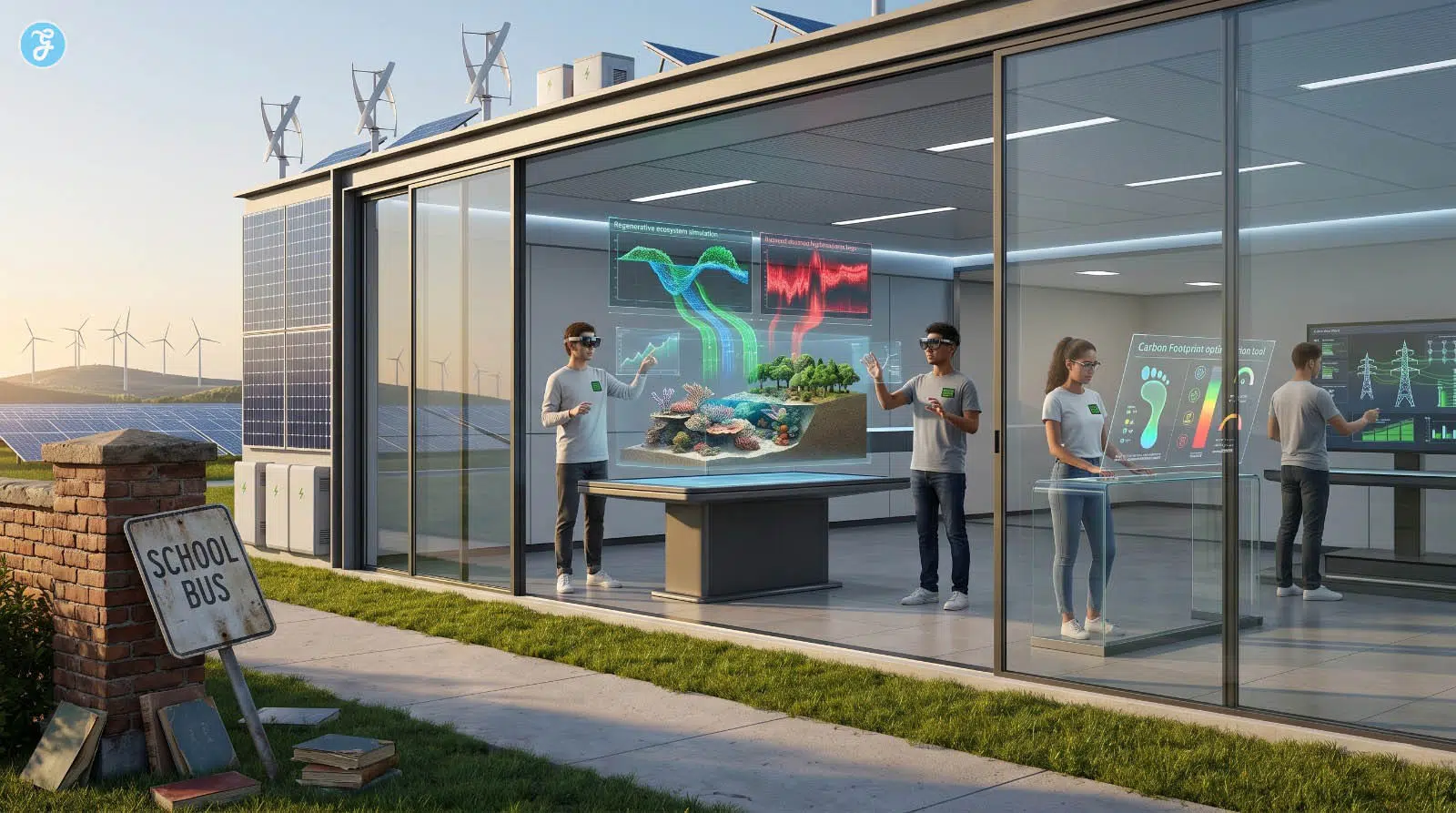
The impact of this change is twofold. In the short term, it provides immediate relief to our atmosphere by slashing logistical emissions by nearly ninety percent. In the long term, it is doing something even more profound. It is training a generation to think and act with a sustainable mindset. These students are not just reading about the environment. They are navigating it through simulations and mastering their own carbon data. They are becoming the most ecologically literate citizens our world has ever seen.
The responsibility now falls on those who build our future systems. Educators and tech developers must move beyond simply digitizing old textbooks. They must intentionally design learning environments that prioritize climate awareness and run on renewable energy. Policymakers have a duty to ensure that every student has the tools to join this digital shift. If we align our technological growth with our ecological needs, we can ensure that learning becomes a truly sustainable act. The green screen is no longer just a backdrop. It is the frontline of our climate strategy.
Frequently Asked Questions (FAQs) on Sustainable Digital Education
Can digital learning increase e-waste while lowering carbon footprints?
Digital learning significantly lowers immediate operational emissions, but it does contribute to the global e-waste stream. Most consumer electronics have a lifespan of only three to five years. For digital education to remain truly sustainable, institutions must adopt circular economy practices. This includes hardware refurbishment programs and choosing manufacturers that offer modular, easy to repair devices. Reducing the frequency of hardware upgrades is just as important as the electricity saved by staying home.
How does internet speed impact the sustainability of online classrooms?
Bandwidth efficiency is a hidden factor in the environmental cost of virtual learning. High definition video streaming requires more data processing and energy at the server level. Schools and developers are now looking at low bandwidth digital tools that provide high quality education without taxing the power grids of developing regions. Using audio-only modes or text based asynchronous platforms can further reduce the energy load of a digital session.
Does the shift to digital education affect local biodiversity near schools?
Emptying large physical school campuses can actually benefit local ecosystems. When school grounds are used less intensely, there is less noise pollution and chemical runoff from lawn maintenance. Some forward-thinking districts are now converting unused asphalt parking lots into community gardens or urban forests. This transition allows the physical land once used for car storage to become a carbon sink that supports local flora and fauna.
What is the phantom power cost of home-based learning?
When students learn from home, they often leave chargers, monitors, and routers plugged in all day. This creates phantom power or standby power waste. While one student using a laptop is efficient, millions of students with inefficient home setups can create a collective energy drain. Educators are now teaching energy hygiene as part of the curriculum. This helps students understand that true sustainability involves managing their personal digital environment and unplugging hardware when the school day ends.
Is there a link between digital literacy and climate resilience?
Digital literacy is becoming a primary tool for climate resilience. Students who are comfortable navigating digital platforms are better equipped to use early warning systems and disaster management apps. They can access real time weather data and global research during environmental crises. By building these digital skills early, we are creating a generation that can use technology to adapt to a changing climate and coordinate relief efforts more effectively across borders.