
You dream of studying abroad, packing your bags for adventure in places like Germany or the UAE. But then the bills hit, and suddenly, tuition fees feel like just the tip of the iceberg.
International students often overlook hidden costs, from visa fees to daily living expenses, that pile up fast and turn excitement into financial stress. Imagine you’re thrilled about experiential global learning, only to face a mountain of unexpected expenses like housing costs and local transportation that no one mentioned.
Take this fact, semester-long study abroad programs through third-party providers usually run between $15,000 and $22,000, but that’s before adding in health insurance, currency exchange fluctuations, and emergency funds.
Breaks it all down, sharing budgeting tips, scholarship ideas like UConn Global Affairs Foundation scholarships, and part-time work opportunities to ease the financial burden.
The True Cost of Studying Abroad
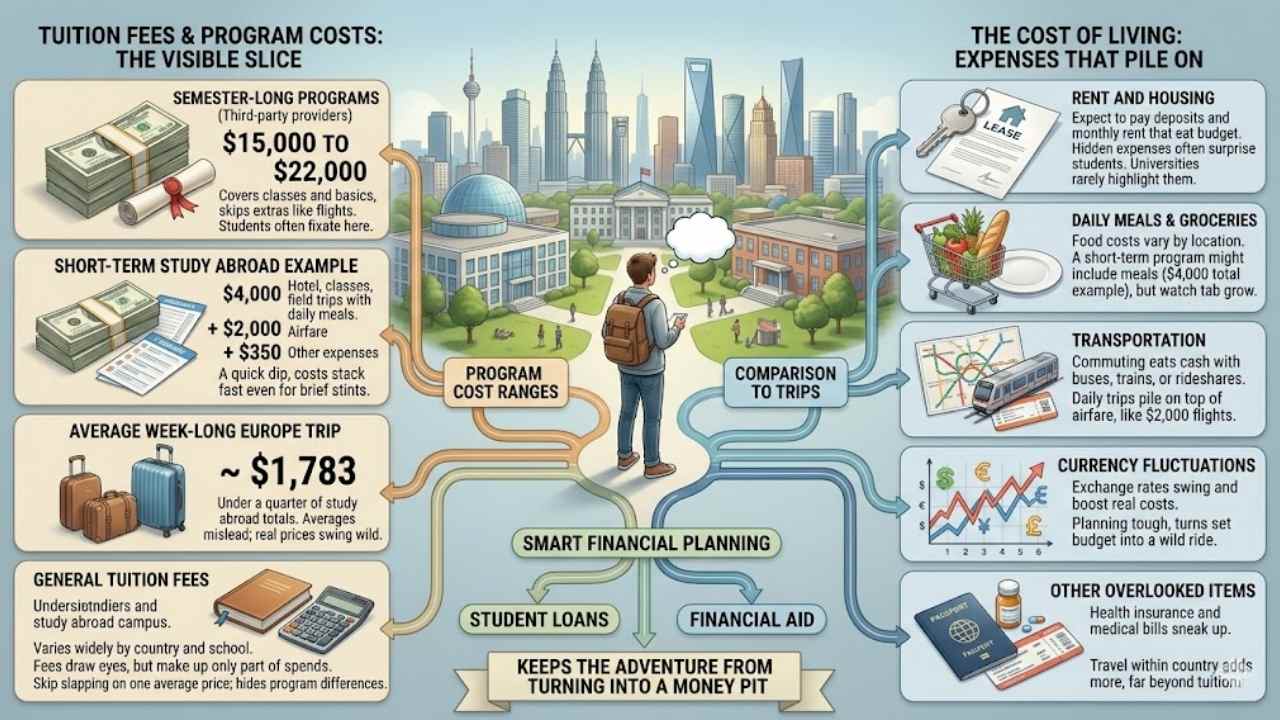
You dream of college classes in a foreign land, but tuition fees hit hard, and program costs pile on without warning. Factor in the cost of living there, like rent and groceries, and you’ll see why smart financial planning, maybe with student loans or aid, keeps the adventure from turning into a money pit.
Tuition fees and program costs
Tuition fees and program costs grab the spotlight in study abroad chats, yet they form just one slice of the full pie.
| Program Type | Typical Costs | Key Details |
|---|---|---|
| Semester-long programs via third-party providers | $15,000 to $22,000 | These sums cover classes and basics, but skip extras like flights. Students often fixate here, missing the wider picture. |
| Short-term study abroad example | $4,000 for hotel, classes, field trips with daily meals; add $2,000 for airfare and $350 for other expenses | Think of this as a quick dip, not the full swim. It shows how costs stack up fast, even for brief stints. |
| Average week-long Europe trip | About $1,783 | This figure sits under a quarter of usual study abroad totals. It highlights why averages mislead; real prices swing wild between nations and setups. |
| General tuition fees | Varies widely by country and school | Fees draw the most eyes, but they make up only part of total spends. Skip slapping on one average price; it hides the vast differences in programs like summer sessions or full degrees. |
Cost of living in the destination country
Living abroad hits your wallet in ways you might not expect, especially when daily expenses add up fast in a new country.
| Aspect of Cost of Living | Key Details and Tips |
|---|---|
| Rent and Housing | Expect to pay deposits and monthly rent that eat into your budget. Hidden expenses like these often surprise students. Universities rarely highlight them enough. |
| Daily Meals and Groceries | Food costs vary by location. A short-term program might include meals at $4,000 total for hotel, classes, and trips. Add your own eats, and watch the tab grow. |
| Transportation | Commuting eats cash with buses, trains, or rideshares. Factor in daily trips; they pile on top of airfare, like $2,000 for flights in one example. |
| Currency Fluctuations | Exchange rates swing and boost your real costs. They make planning tough, turning a set budget into a wild ride. |
| Other Overlooked Items | Health insurance and medical bills sneak up. Travel within the country adds more, far beyond tuition fees that grab most attention. |
| Program Cost Ranges | Semester programs run $15,000 to $22,000 through providers. Short trips hit $4,000 plus $2,000 airfare and $350 extras. Avoid average tags; they hide huge differences by country. |
| Comparison to Trips | A week in Europe averages $1,783. Study abroad costs more, often quadruple that for longer stays. |
The Hidden Costs of Studying Abroad
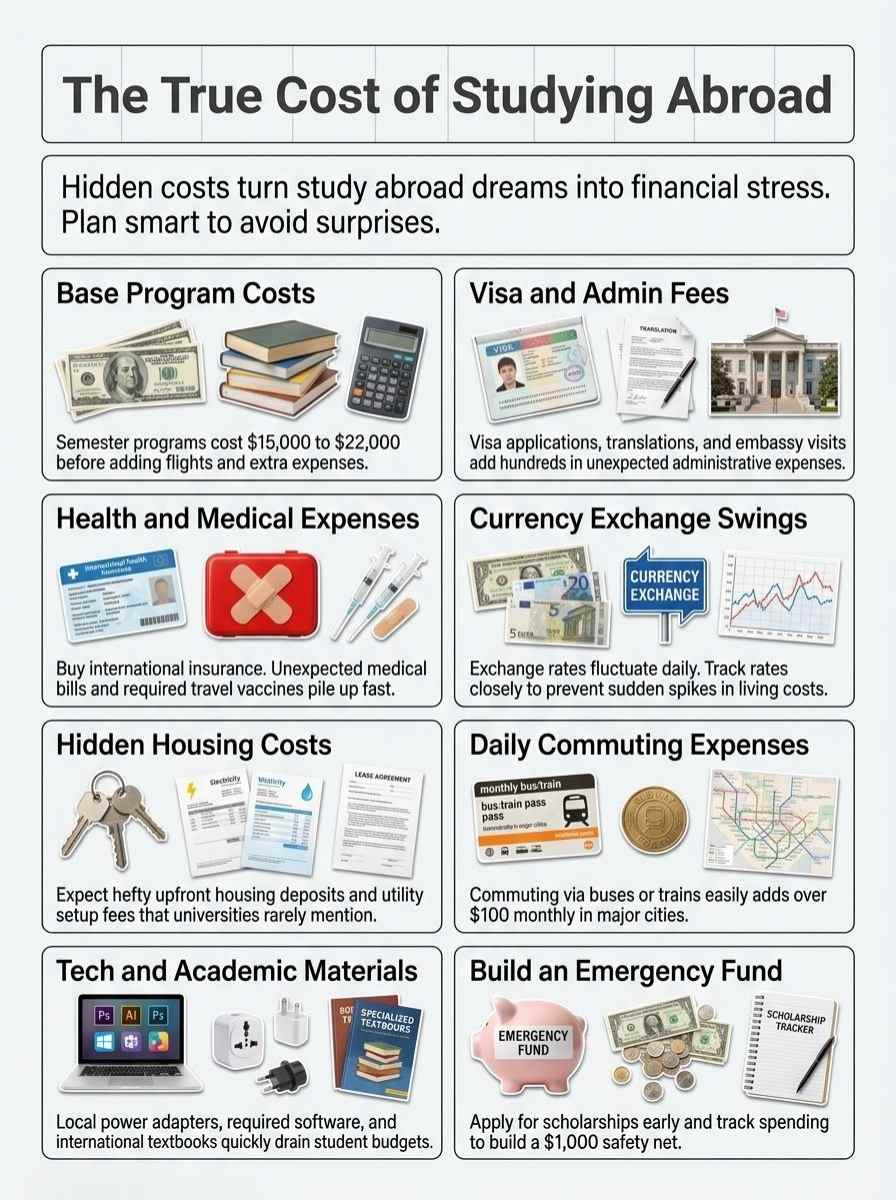
You think tuition covers it all, but those sneaky visa fees can hit your wallet hard, especially when you add in the paperwork from the U.S. Department of State. Don’t forget health insurance like CISI plans, they guard against surprise medical bills abroad, and currency swings can turn your budget into a rollercoaster ride—want tips to dodge these traps?
Visa applications and administrative fees
Visa fees hit hard when you plan to study abroad. Students often underestimate these costs, like the student visa application itself. For instance, applying through the U.S. Department of State can run you hundreds of dollars, plus extra for photos, translations, and interviews.
Imagine: you save for tuition, but then boom, administrative fees add up fast. They include things like document processing and embassy visits, which universities rarely mention upfront.
Hidden expenses, such as these, make budgeting a real puzzle.
Don’t forget programs like the Smart Traveler Enrollment Program for travel advisories; they help, but they come with their own small costs. Currency fluctuations can spike these fees too, turning a simple application into a budget buster.
Think of it as a sneaky toll on your adventure abroad. Many overlook health checks required for visas, adding to medical insurance needs. Stay sharp, folks, and factor in every dollar for that student visa process.
Health insurance and medical expenses
Health insurance hits hard as a hidden cost in study abroad plans. Many college students overlook it, thinking their home coverage works overseas. Schools often skip warnings about this, leaving you scrambling.
Picture landing in Belgium with a sudden illness, no plan in place. Costs for doctor visits or hospital stays pile up fast. Student health and wellness demands attention here. Grab CISI insurance to shield against big bills.
It covers emergencies, even mental health needs like those from Shaw Mental Health services.
Medical expenses sneak up too, beyond basic insurance. Think travel medicine services for vaccines before you fly. A quick checkup or unexpected prescription drains your budget. I once heard a student in India face a hefty fee for minor care, no emergency fund ready.
Daily living costs mix in, making health surprises sting more. Build that buffer, folks, it saves headaches later.
Currency exchange rate fluctuations
Currency exchange rates shift often, and they hit your wallet hard when you study abroad. Imagine planning your budget in dollars, only to find euros or pounds cost more by the time you arrive.
These changes make every expense, from rent to meals, feel like a moving target. Students face this unpredictability daily, turning a simple coffee run into a surprise splurge. Think about travel costs; a quick weekend trip might double if rates swing against you.
Financial aid helps, but it won’t shield you from these wild swings.
Imagine this: you lock in a budget for study materials and extracurricular activities, then bam, the exchange rate flips. Costs climb without warning, forcing you to scramble. Many overlook how these fluctuations eat into emergency funds too.
Sites like study.com offer tips on managing this, or check mpower financing for loan options that factor in rates. Path2success programs guide you through it, keeping your plans on track.
Stay alert, track rates weekly, and adjust your spending to dodge the drama.
Housing deposits and rental costs
Housing costs can sneak up on you like a surprise bill at the end of a fun night out. Students often pay hefty deposits to secure a place, and those can run hundreds of dollars upfront.
Rent in popular study spots, say in Europe or Asia, adds up fast, sometimes eating into your budget more than expected. Think about it, you might shell out $500 to $1,000 a month for a basic apartment, depending on the city.
Universities rarely highlight these hidden expenses, leaving you to figure it out solo. Mix in utilities and setup fees, and suddenly your dream abroad feels like a financial puzzle.
Picture chatting with a friend who studied in Spain; she forked over a $600 deposit just to lock in her spot, plus monthly rent that jumped due to currency shifts. These costs tie into the broader hidden expenses that include rent, as many overlook them next to tuition fees.
If traditional study abroad hits your wallet hard, consider online degree programs through providers like isbss for a cheaper path without the rental hassle. Budget smart by scouting shared housing early, and you dodge some stress.
Empathy kicks in here, folks, because no one wants to scramble for cash mid-semester.
Daily transportation and commuting expenses
Public transport hits your wallet hard when you study abroad. Buses, trains, and subways add up fast each day. You might spend $100 a month on a pass, or more in big cities like London or Tokyo.
Imagine you’re rushing to class, and those fares eat into your budget without warning. Students often forget these costs in their plans. They pile on top of tuition and rent, making the total bill soar.
Commuting surprises many with extra fees for bikes or rideshares. Apps like Uber help, but charges fluctuate with demand. In Europe, a daily train ride could cost $10, pushing your expenses beyond that $1,783 average for a short trip.
Currency swings make it worse; one day it’s cheap, the next it’s not. Talk about a bumpy ride, folks forget to factor this in, and it turns a dream semester into a financial headache.
Additional Expenses Students Overlook
You think you’ve budgeted for the big stuff, like flights and food, but what about those sneaky costs that pop up out of nowhere, catching even the savviest students off guard? Picture shelling out for a new laptop or joining a local festival that turns into a must-do adventure, and suddenly your wallet feels the pinch—keep reading to spot these traps before they hit.
Academic materials and technology requirements
Books and laptops add up fast when you study abroad. Envision this, you’re excited about classes in a new country, but then you realize your required textbooks cost hundreds of dollars more due to international shipping.
Students often forget these extras, like notebooks, software subscriptions, or even a new tablet for online lectures. Tuition grabs the spotlight, but these items represent hidden expenses that sneak into your budget.
One student I know landed in Europe, only to spend $500 on a mandatory e-reader and apps she hadn’t planned for. Universities rarely highlight this stuff, leaving you to foot the bill unexpectedly.
Tech needs can bite into your wallet too, especially with different power outlets or software versions abroad. Imagine scrambling for adapters and chargers that match the local system, costing an extra $100 or more.
Don’t overlook virus protection software or cloud storage fees, which pile on if your home setup doesn’t work overseas. These overlooked costs, part of the broad hidden expenses beyond tuition, make budgeting tricky.
A friend shared how she budgeted tight, yet ended up paying $200 for a required laptop upgrade mid-semester. Stay ahead by listing out your program’s tech must-haves early.
Social activities and cultural integration
Studying abroad means jumping into a new culture, and that often costs more than you think. You might join local festivals or club events to fit in, but those entry fees and group outings add up fast.
Imagine you’re at a street fair in Paris, sampling crepes with new friends, yet each bite dips into your budget. Students overlook these social spends, which can hit $200 or more per month, on top of tuition and rent.
Mix in language classes or cultural tours to blend in, and suddenly your wallet feels the pinch.
Hidden expenses creep in when you chase those authentic experiences abroad. Think about buying traditional clothes for a host family’s dinner or paying for museum passes to understand the history.
One student shared how she spent $150 on a single cooking class in Italy just to bond with locals. These moments build connections, sure, but they pile onto the total cost, much like those overlooked visa fees or currency swings that make everything pricier.
Plan for them, or you risk skimping on fun that makes the trip worthwhile.
Emergency funds for unexpected situations
Life throws curveballs, and studying abroad amps up the surprises. You might face sudden medical issues, like a trip to the doctor that healthcare costs turn into a budget buster. Many students skip planning for this, but universities often gloss over these hidden expenses.
Set aside cash in a savings spot for emergencies, say $500 to $1,000, to cover the unexpected without stress. Think of it as your safety net, catching you when things go sideways, like a lost passport or a family crisis back home.
Imagine: a student in Europe deals with currency swings that jack up daily costs, and bam, an unplanned flight home eats into funds. Healthcare stands out as a key overlooked expense, hitting hard if you lack insurance.
Build that emergency stash early; use apps to track spending and tuck away extras from part-time gigs. This approach keeps you afloat, letting you focus on adventures instead of financial woes.
Strategies to Manage Study Abroad Costs
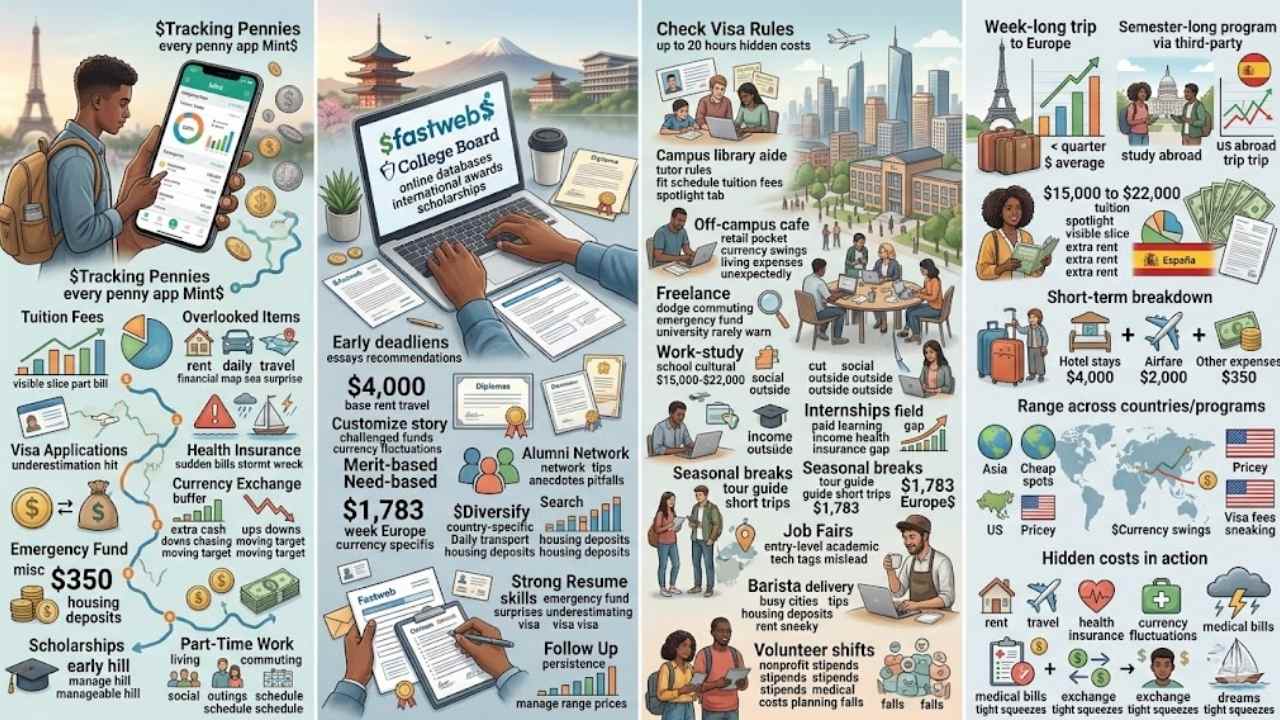
You know that feeling when your wallet cries out for mercy during a big trip? Smart planning, like using apps such as Mint to track every penny, can turn that stress into smooth sailing, and don’t forget, scoring aid through sites like Fastweb might just cover those surprise fees that pop up.
Budgeting tips for students
Studying abroad sounds like a dream, but those hidden costs can turn it into a nightmare if you don’t plan smart. Universities often skip the full story on expenses like visas, health care, and currency swings, leaving you scrambling.
- Track every penny from the start by listing out tuition fees, which get all the buzz but only cover part of the bill, plus overlooked items like rent and daily travel; think of it as building a financial map to avoid getting lost in a sea of surprise charges.
- Factor in visa applications as a big hidden hit, since students often underestimate them, and add health insurance costs that many forget, because a sudden medical bill abroad can wreck your budget like a storm hitting a sailboat.
- Watch currency exchange rates closely, as fluctuations can spike your real costs and make budgeting feel like chasing a moving target; set aside extra cash to buffer against these ups and downs.
- Build an emergency fund for the unexpected, covering things like those extra $350 in miscellaneous expenses from a short-term program example, or sudden housing deposits that pop up when you least expect them.
- Hunt for scholarships early to offset highs like the $15,000 to $22,000 range for semester-long programs through third-party providers, turning what seems like a mountain of debt into a manageable hill with some clever applications.
- Explore part-time work options in your host country to cover living costs, such as commuting expenses or social outings, and note that this can help without derailing your studies if you pick jobs that fit your schedule.
- Skip the trap of average price tags, since they hide the wild differences between countries and programs, like how a week in Europe runs about $1,783 versus a full study abroad trip that costs way more; tailor your plan to your specific spot instead.
- Budget for academic materials and tech needs right away, adding them to your list alongside cultural activities, because ignoring them is like forgetting fuel for a long road trip.
- Compare program types to save cash, such as opting for a short-term setup at $4,000 for hotel, classes, field trips, and meals, plus $2,000 airfare, rather than jumping into pricier semester deals without crunching the numbers first.
Finding and applying for scholarships
Scholarships can slash those hefty study abroad bills, like the $15,000 to $22,000 for semester programs through third-party providers. They help cover overlooked costs, from visa fees to currency swings that make budgeting a wild ride.
- Search online databases right away, folks, because sites like Fastweb or the College Board list thousands of awards suited for international study, and you might snag one that pays for tuition plus extras like the $2,000 airfare in a short-term program example.
- Check your school’s financial aid office first, as they often know about grants that offset hidden expenses, such as health insurance or the $350 in additional costs from that sample trip with hotel, classes, field trips, and daily meals.
- Apply early to beat deadlines, since many scholarships require essays or recommendations, and missing out could leave you stuck with the full $4,000 base for a short program, not to mention rent or travel fees that add up fast.
- Customize your applications with personal stories, like how you overcame a challenge, to stand out and grab funds that ease currency fluctuations, which can jack up your total spend in unpredictable ways.
- Look for merit-based options if your grades shine, or need-based ones if money’s tight, as these can cover a chunk of the $1,783 average for a week in Europe, far less than full study abroad tabs but still a budget buster without help.
- Network with alumni who studied abroad, ask them for tips on awards they scored, and use their anecdotes to boost your apps, turning potential pitfalls like overlooked medical expenses into covered perks.
- Diversify your hunt by targeting country-specific funds, say for Europe or Asia, which might pay for daily transport or housing deposits that universities often forget to warn about in their cost breakdowns.
- Prepare a strong resume that highlights your skills, because some scholarships demand it, and this step could unlock money to build an emergency fund for surprises, avoiding the trap of underestimating visa apps or living costs.
- Follow up after submitting, with a polite email or call, to show enthusiasm, as this persistence might tip the scales in your favor and help manage the extreme range of program prices that no average tag can truly capture.
Part-time work opportunities abroad
Many students dream of studying abroad, but the bills add up fast. Part-time jobs offer a smart way to ease that financial strain, letting you earn while you learn.
- Check your visa rules first, because some countries let international students work up to 20 hours a week, which can help cover hidden costs like visa fees that folks often underestimate.
- Look for campus gigs, such as library aide or tutor roles, since they fit your schedule and might offset tuition fees, which grab the spotlight but make up just part of the total tab.
- Hunt for off-campus jobs in cafes or retail spots, where you could pocket enough to handle currency swings that mess with your budget and jack up living expenses unexpectedly.
- Explore freelance work online, like graphic design or writing, to dodge commuting costs and build an emergency fund for surprises, keeping in mind how universities rarely warn about all those overlooked bills.
- Join work-study programs through your school, which tie into cultural events and might cut down on social activity spending, especially when semester programs run $15,000 to $22,000 through outside providers.
- Seek internships in your field, paid ones that blend learning with income, helping with health insurance gaps that many forget to budget for in their plans.
- Try seasonal jobs during breaks, like tour guiding in tourist areas, to cover short trips that average $1,783 for a week in Europe, far less than full study abroad totals but still a bite.
- Network at job fairs abroad for entry-level positions, which can fund academic supplies and tech needs, since placing one average price on studying abroad hides the wild cost differences across spots.
- Apply for barista or delivery roles in busy cities, earning tips to tackle housing deposits and rent, those sneaky expenses that pile on top of program fees.
- Volunteer-to-paid shifts in nonprofits often lead to stipends, easing medical costs abroad, an area where planning falls short for lots of students chasing international education.
Real-Life Examples of Study Abroad Costs
Let’s face it, real-life stories paint the best picture of study abroad costs, so check out these examples drawn from actual programs.
| Example | Details and Costs |
|---|---|
| Week-long trip to Europe | This quick adventure runs about $1,783 on average. It equals less than a quarter of a typical study abroad trip’s price. Students often overlook how such short jaunts add up, like drops in a bucket. |
| Semester-long program via third-party providers | These setups cost between $15,000 and $22,000. Tuition grabs the spotlight, but it forms just part of the total bill. Picture a student in Spain facing extra rent that balloons the figure. |
| Short-term program breakdown | One case hits $4,000 for hotel stays, classes, field trips, and daily meals. Add $2,000 for airfare plus $350 for other expenses. Universities skip warnings on these hidden hits, leaving you in a pickle. |
| Range across countries and programs | Average tags mislead you. They hide vast differences, from cheap spots in Asia to pricey ones in the US. Currency swings turn budgets upside down, and visa fees sneak in as big surprises. |
| Hidden costs in action | Rent, travel, and health insurance pile on. One student budgeted tight but faced medical bills abroad. Another saw exchange rates eat into funds, turning dreams into tight squeezes. |
Final Thoughts
Studying abroad hits your wallet with more than just tuition, think visa fees, health insurance, and those sneaky currency shifts that add up fast. You can tackle these costs head-on with smart budgeting, scholarship hunts, and part-time gigs that keep things simple and effective.
Have you tallied your own emergency fund yet, or scouted jobs in your dream spot? These steps cut risks and boost your adventure, turning potential headaches into smooth sails. Check out sites like StudyAbroad.com for extra tips and grants, then chase that global education with confidence, because the world waits for no one.
Frequently Asked Questions About the True Cost of Studying Abroad
You think tuition covers it all, but surprise, things like visa fees and health insurance sneak up on you like a bad blind date. They can add thousands to your budget, and no one warns you ahead of time. Picture this, you’re all excited about your adventure, then bam, those extras hit your wallet hard.
2. How do living expenses abroad stack up against what schools tell you?
Living costs abroad often blindside students; rent, food, and transport eat up more cash than expected. Don’t forget currency changes that turn your dollars into peanuts overseas.
3. Are there surprise fees for stuff like travel and settling in?
Oh yeah, travel expenses like flights and initial setup costs for a new place can shock you. Add in bank transfer fees or even lost luggage replacements, and it’s like your budget’s playing hide and seek. Empathy here, I’ve heard tales from friends who arrived broke because they skipped planning for these curveballs.
4. Does studying abroad mean dealing with unexpected emotional costs too?
Sure, the true cost includes homesickness that hits like a ton of bricks, making you splurge on calls home or comfort food. It’s not just money; that loneliness can lead to extra spending on social stuff to feel connected.