
Imagine: you’re staring at your bank statements, feeling lost about saving for retirement or investing wisely. Money matters can stress anyone out, and picking the wrong Financial Advisor might lead to costly mistakes, like hidden fees or poor advice that drains your savings.
It’s like trusting a mechanic who fixes your car with duct tape; you end up paying more in the long run. Many folks face this dilemma, wondering who really has their back in the complicated field of finances.
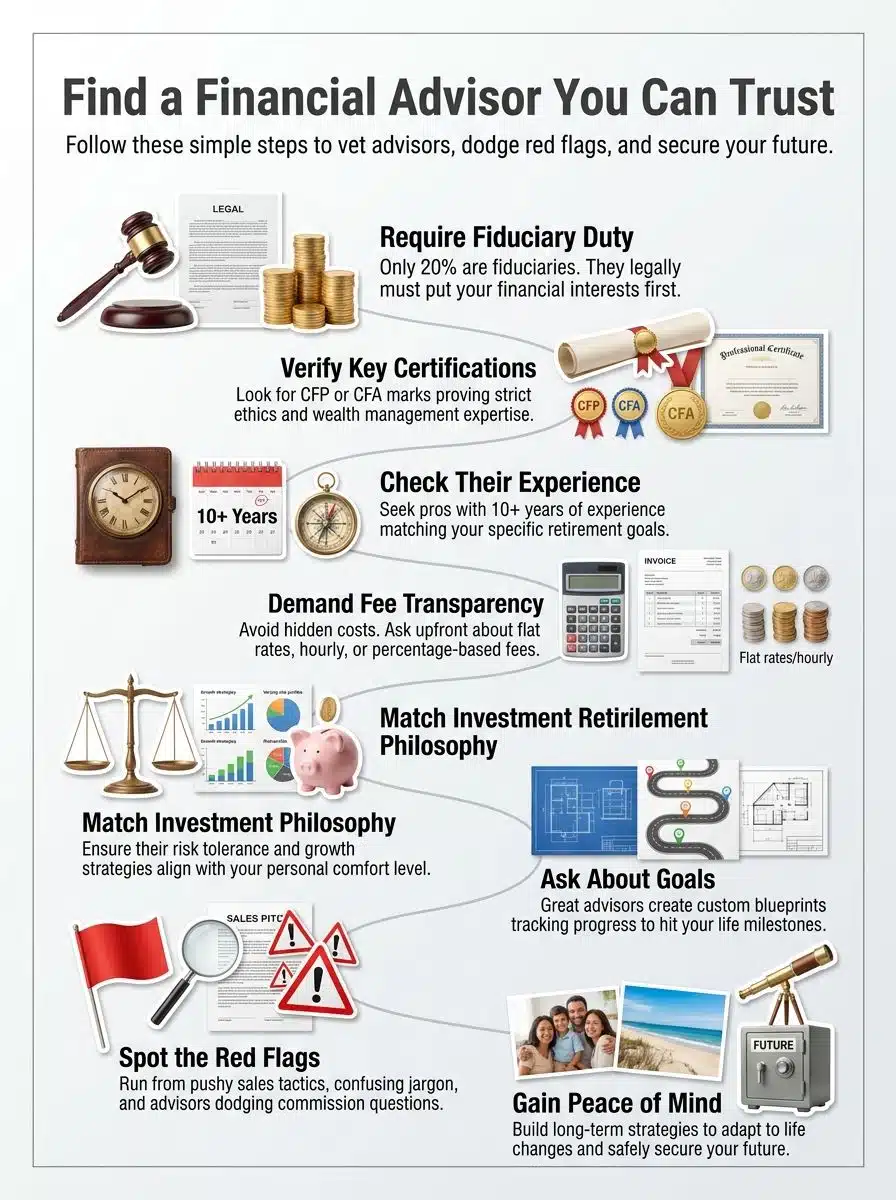
Did you know that only about 20% of financial advisors act as fiduciaries, meaning they must put your interests first? This fact shows why trust plays a big role. In this post, we’ll walk you through simple steps to spot a reliable advisor, from checking credentials to asking key questions and dodging red flags.
You’ll gain tools to build a strong financial future with confidence. Ready to find your perfect match?
What Does a Financial Advisor Do?
Picture a financial advisor as your money’s best friend, the one who spots pitfalls before you trip. They map out custom plans for your cash flow, pick winning investments, and steer you clear of tax traps while eyeing a comfy retirement.
Creating a personalized financial plan
A financial advisor builds your personalized financial plan by digging into your income, expenses, and dreams. They map out steps for saving, budgeting, and handling debt in ways that fit your life.
Think of it as a custom blueprint, one that boosts your financial literacy and sets clear goals. You get tools for everyday decisions, plus long-term strategies in wealth management.

The best financial planning starts with understanding your story, not just your numbers. – Anonymous advisor
Advisors also weave in fiduciary responsibility to keep things honest and aligned with your needs. This plan acts as your foundation. Now, let’s talk about providing investment strategies.
Providing investment strategies
Financial advisors craft investment strategies that fit your life goals. They look at your risk tolerance, time frame, and money needs. Imagine you want to grow your savings for a cozy retirement.
Your advisor might suggest a mix of stocks, bonds, and funds. This keeps things balanced. They use investment management tools to track markets. You get guidance on when to buy or sell.
Experience matters here; seasoned pros spot trends others miss. Smart advisors explain every step in simple terms. They avoid jargon that confuses you. Say markets dip; they help you stay calm, not panic sell. Compatibility counts too. Find one whose style matches yours.
Services often include regular check-ins. This builds trust over time. Wealth management pros customize plans to your unique situation. You end up with clear paths to your financial goals.
Offering guidance on tax planning and retirement
Beyond smart investment strategies, a good financial advisor steps in with solid guidance on tax planning and retirement. They help you cut taxes through smart moves like deductions and credits, keeping more money in your pocket.
Imagine you’re eyeing that dream retirement, and they map out ways to boost your savings without the taxman taking a big bite. Advisors often suggest Roth IRAs or 401(k)s to grow your nest egg tax-free.
This advice ties right into your big financial goals, like buying a home or funding college. They spot chances to defer taxes or use loopholes legally. You gain peace of mind, knowing your retirement plan stands strong against surprises.
Trust builds when they explain options in plain talk, avoiding hidden fees that could eat into your wealth.
Why Trust Matters in Choosing a Financial Advisor
Picture your finances as a ship sailing through rough seas; you need a captain who won’t steer you into rocks. Pick someone reliable, and they’ll guide you safely to your goals, dodging hidden fees and bad advice along the way.
The importance of fiduciary responsibility
Fiduciary responsibility means your advisor puts your needs first, always. They act like a loyal teammate in financial planning, focusing on your goals over their own gains. Trust builds when advisors follow this rule, as it guards against bad advice driven by hidden motives.
Imagine handing over your hard-earned cash; you want someone who treats it like their own. Credentials matter here, showing they meet high standards for investment management. This duty creates clear paths for wealth management, helping you sleep better at night.
Advisors with fiduciary duty disclose all fees upfront, avoiding nasty surprises. They tailor guidance to your life, like retirement dreams or tax strategies. Experience counts, as seasoned pros spot risks you might miss.
Communication flows easily with them, turning complex ideas into simple chats. Client reviews often highlight this trust factor, proving real results in personal finance. Compatibility shines through, matching your style for long-term success.
Transparency in fees and services
Trust plays a big role in picking a financial advisor, especially with fees and services. Imagine you hand over your hard-earned cash, and you want no surprises lurking in the shadows.
Advisors should lay out their fee structure right from the start, clear as day. They might charge a flat rate or take a cut from your assets, but you need to know upfront. Ask them straight up about any extra costs, like for investment management or tax planning.
This openness builds a solid bond, much like a friend who splits the bill without hiding the tip. Hidden fees can sting like a bee, eroding your wealth over time. Good advisors explain their services in plain talk, no smoke and mirrors. They detail how they handle financial planning or wealth management, matching your needs.
Check client reviews to see if others praise their clear communication style. Experience shows that transparent pros help you chase financial goals without nasty shocks. You deserve that peace of mind, don’t you?
Key Factors to Consider When Choosing a Financial Advisor
Picking the right advisor feels like finding a reliable co-pilot for your money journey, someone who steers you clear of pitfalls. Dig into their background, and you’ll spot the signs of a true pro, making your choice feel rock-solid and exciting.
Look for certifications and qualifications
Certifications signal a financial advisor’s skills in areas like investment management and financial planning. Check for key credentials, such as the Certified Financial Planner (CFP) mark, which shows they passed tough exams and follow strict ethics.
Advisors with Chartered Financial Analyst (CFA) status bring deep knowledge in wealth management and investment strategies. These qualifications build trust, as they demand ongoing education to stay sharp on topics like tax rules and retirement guidance.
Experience pairs well with those certifications, like a solid foundation under a house. Ask about their track record in client reviews and specialization, say in fiduciary responsibility for your financial goals.
Compatibility matters too; you want someone whose communication style fits yours, avoiding mismatches that sour the relationship. Think of it as dating for your dollars, where the right advisor offers clear services without hidden fees, making your path to financial literacy smoother and more fun.
Determine if they are a fiduciary advisor
A fiduciary advisor puts your interests first, always. They follow strict rules to avoid conflicts and act in your best interest. Think of them as a loyal teammate, not a sneaky opponent.
This fiduciary responsibility builds trust in financial planning and investment management. Ask them straight up if they serve as a fiduciary. Check their paperwork or website for clear signs of this commitment.
Many advisors wear this badge with pride, but some dodge it to chase their own profits. You deserve that level of trustworthiness in wealth management.
Spot the difference early to protect your financial goals. Fiduciary advisors disclose everything, from fees to potential biases. Non-fiduciaries might push products that benefit them more.
Dig into their credentials to confirm this key trait. It shapes how they handle your personal finance needs. Once you verify their fiduciary status, evaluate their experience and expertise.
Evaluate their experience and expertise
Experience counts a lot in financial planning. Check how many years the advisor has worked in investment management. Advisors with over 10 years often handle complex situations better.
Look at their specialization, too. Some focus on retirement, others on wealth management for families. Match their expertise to your financial goals. Imagine you wouldn’t hire a rookie coach for a big game, right? Go for someone with a proven track record in areas like tax guidance or estate planning.
Read client reviews to see real stories of trust and success. Compatibility matters here, so find an advisor whose style fits your needs.
Ask about their credentials from groups like the CFP Board. These show commitment to high standards in personal finance. Expertise builds trust, and you want someone who stays current with market changes.
Think of it as picking a mechanic who knows your car inside out. Now that you’ve sized up their background, let’s move on to some key questions to ask a potential financial advisor.
Questions to Ask a Potential Financial Advisor
5. Questions to Ask a Potential Financial Advisor: Hey, imagine you’re interviewing a co-pilot for your money journey, so fire away with pointed questions to reveal their true approach, like probing their fee setup or goal strategies, and trust me, it’ll save you headaches down the road—keep scrolling for the full scoop on spotting those perfect advisor matches.
What is your investment philosophy?
Ask your potential financial advisor about their investment philosophy right away. This question reveals how they handle investment management and build wealth. They might focus on long-term growth or prefer low-risk options for steady gains.
Picture it like choosing a coach for your money team; their style needs to match your comfort level and financial goals. Good advisors explain this in simple terms, showing trust and clear communication.
Listen for details on how their philosophy ties into your personal finance needs. Do they emphasize diversification to spread risk? Or do they chase hot trends? Probe deeper if their answer feels vague, as strong credentials and experience shine through here.

Compatibility matters too; you want guidance that feels right for your life, not a one-size-fits-all plan. This chat builds a foundation for solid financial planning together.
How do you charge for your services?
Financial advisors charge in different ways, and you need to understand their fee structure right away. Some take a cut of your assets under management, often around 1% per year. Others bill by the hour for specific services like financial planning or investment management.
Flat fees work well for one-time advice on retirement goals. Always ask for a clear breakdown to spot any hidden costs that could eat into your wealth.
Imagine: you’re chatting with an advisor who promises top-notch guidance but dodges details on fees. Dig deeper. Inquire if they earn commissions from products they sell, as that might create conflicts of interest.
Fiduciary advisors put your needs first, no matter the pay model. Match their approach to your comfort level for true trustworthiness in handling your personal finances.
How will you help me achieve my financial goals?
Ask this question to uncover how an advisor plans to guide you toward your dreams, like saving for a house or retiring early. A good one explains their approach step by step, matching it to your life goals.
They might talk about building a custom financial plan that includes investment strategies and tax tips. Picture them as your co-pilot on a road trip, adjusting the route as needed to dodge bumps.
Listen for details on how they track progress and adapt to changes, showing real compatibility with your needs.
Probe deeper if their answer feels vague; you want clear services that build trust. Advisors with strong experience often share examples of helping clients hit goals through smart wealth management.
This reveals their investment philosophy and how it fits your personal finance style. Spot any gaps in their response to avoid surprises later. Keep an eye out for red flags that could signal trouble ahead.
Red Flags to Watch Out For
Spotting trouble early saves you from financial headaches, like dodging a bad blind date before it starts. Keep your eyes peeled for signs that scream “run,” and you’ll protect your hard-earned cash from shady deals.
Lack of clear communication
Pay attention to how an advisor talks with you. They should explain financial planning in simple terms that make sense. If they use too much jargon or dodge your questions, that erodes trust fast.
Imagine trying to build a house on shaky ground; poor communication leads to misunderstandings about your financial goals. Clients often share stories of advisors who mumble through investment management details, leaving them confused and frustrated.
Spot red flags like vague answers on fees or services. A good advisor communicates with clarity, like a trusted friend sharing advice over coffee. Ask for examples of their communication style in past client reviews.
This helps you gauge compatibility and ensures they prioritize your wealth management needs. Bad communication can hide bigger issues, so trust your gut if things feel off.
High-pressure sales tactics
High-pressure sales tactics scream trouble in financial planning. Advisors who push you hard to sign up right away often hide bad motives. They might rush you into investment management deals without clear talks on fees or your financial goals.
Spot this by noticing if they ignore your questions about fiduciary responsibility. Trust your gut; a good advisor gives you time to think.
Imagine a car salesman who won’t let you leave the lot without buying. Financial advisors using these tactics focus on quick wins over your wealth management needs. They skip details on client reviews or their experience. Demand clear communication instead. Choose someone who builds trust through honest guidance, not force.
Hidden fees or conflicts of interest
Beyond dodging those pushy sales pitches, watch out for hidden fees or conflicts of interest that can erode your trust in a financial advisor. These sneaky charges might pop up as unexpected commissions or add-ons, quietly draining your investment returns without clear disclosure.
Imagine handing over your hard-earned money, only to find out later that your advisor earns kickbacks from pushing certain products. That setup screams conflict, right? Fiduciary responsibility demands they put your interests first, so demand full transparency on fee structures from the start.
Conflicts often hide in plain sight, like when an advisor recommends funds that benefit their firm more than your financial goals. You deserve straightforward communication about any potential biases, ensuring true compatibility with your needs.
Check client reviews and advisor qualifications to spot these issues early. A trusted advisor in wealth management will explain everything up front, building real peace of mind in your financial planning journey.
Stay vigilant, folks, because spotting these red flags keeps your investment management on solid ground.
Benefits of Working with a Trusted Financial Advisor
Picture a steady hand steering your money ship through stormy seas, spotting hidden treasures along the way. You sleep better at night, knowing someone’s got your back with smart moves that fit your life like a glove, ready for whatever twists come next.
Building a long-term financial strategy
A trusted financial advisor starts by mapping out your financial planning goals, like saving for a house or college. They craft investment management strategies that fit your life, turning big dreams into step-by-step actions.
Think of it as building a sturdy bridge over a river, one plank at a time, to cross safely to retirement. This approach keeps your wealth management on track, even when surprises pop up.
Your advisor checks in often, adjusting for changes like a new job or market shifts. They focus on fiduciary responsibility, putting your needs first without hidden agendas. Clients often share stories of how this guidance built real security, like one who grew a modest nest egg into a comfortable future through smart, steady choices.
Trust grows from seeing results, making the partnership feel like a reliable teammate in your personal finance journey.
Gaining peace of mind with professional guidance
Professional guidance from a trusted financial advisor brings real peace of mind, folks. Imagine sailing through stormy financial waters with a seasoned captain at the helm. You sleep better at night, knowing your investment management stays on track.
They handle the twists and turns of tax planning, so you focus on what matters most in life. Trust builds over time, like a solid friendship that grows stronger with each shared goal.
Imagine this: life throws a curveball, like a sudden job change. Your advisor jumps in with quick adjustments to your financial planning. Communication flows easily, keeping you in the loop without the stress.
Their experience shines through, offering services that fit your needs perfectly. You gain confidence, turning worries into wins with every smart move.
Adapting to life changes and unexpected events
Life throws curveballs, like a sudden job loss or a family health issue. A trusted financial advisor steps in with smart guidance. They adjust your financial planning on the fly. This keeps your investment management steady.
You gain peace of mind, knowing your wealth stays on track. Imagine: your advisor spots a market dip early, then tweaks your strategy. That move saves you big bucks. Empathy shines here; they get how stress hits hard during tough times.
Experience counts in these moments. Advisors with strong credentials spot risks fast. They offer clear communication about fees and services. Compatibility matters too; find one who fits your style.
Their expertise in financial goals helps you bounce back stronger. Think of it as having a co-pilot for your money journey. You adapt to changes with ease, thanks to their solid advice. Trust builds that safety net for whatever comes next.
Wrapping Up
You picked the right path to smart financial planning. Trust forms the core of any advisor relationship. Imagine: you team up with someone who gets your goals, like a co-pilot in your wealth journey.
They handle investment management with clear fees and strong credentials. Experience counts big time. Compatibility seals the deal, making sure their style fits yours.
Go ahead, start your search today. Chat with potential advisors about their services and guidance. Focus on communication that feels right. Wealth management thrives on fiduciary responsibility. Client reviews can guide you. Personal finance gets easier with the perfect match.
FAQs on How to Choose a Financial Advisor
1. How do I spot a trustworthy financial advisor?
Look for someone who acts as a fiduciary, putting your interests first like a loyal watchdog. Ask about their fees upfront, because hidden costs can bite you later. Trust your gut, if something feels off, walk away.
2. What questions should I ask when choosing a financial advisor?
Start by inquiring about their experience with clients like you. Probe into how they handle conflicts of interest, it’s like checking for cracks in a foundation.
3. Why check credentials before picking a financial advisor?
Credentials show they’ve earned their stripes through exams and ongoing education. Without them, you might end up with a rookie flying blind.
4. How does building trust work with a new financial advisor?
Share your goals openly, like spilling the beans at a family dinner, and see if they listen well. Over time, their advice should feel like a steady hand on the wheel, guiding you safely. If red flags pop up, like pushy sales tactics, it’s time to hit the brakes.