You’re a high-net-worth individual, and you’ve worked hard to build your wealth. But lawsuits, creditors, or even family disputes loom like dark clouds, threatening to wipe out everything.
You worry about financial security, right? Many folks in your shoes feel that pinch, searching for solid asset protection strategies to shield their hard-earned money from those risks.
Offshore trusts step in as a smart tool for legal wealth protection. Take this fact: These irrevocable entities, set up in places like the Cook Islands or Nevis, let you transfer assets to an independent trustee, pulling them out of U.S. courts’ reach and making creditor claims a tough battle.
Break down how offshore asset protection trusts work, from jurisdiction selection to tax compliance with the Internal Revenue Service, giving you clear steps for estate planning and peace of mind.
What Are Offshore Trusts?
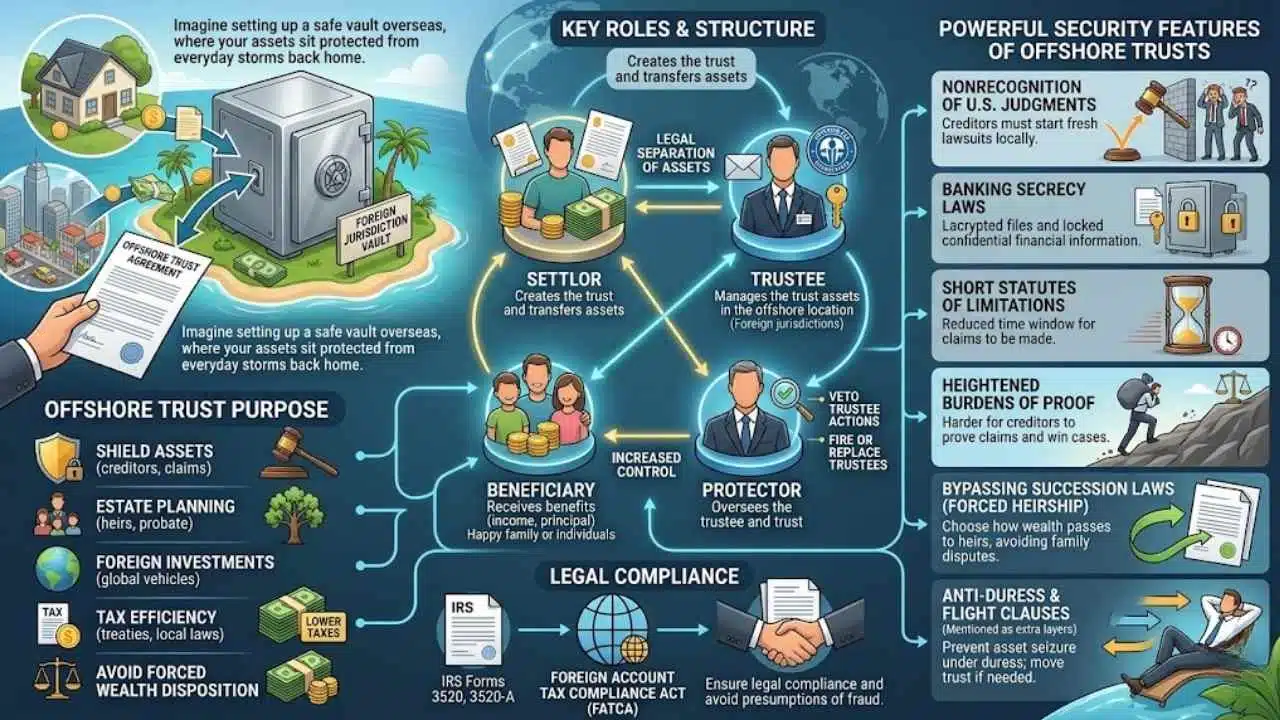
Imagine setting up a safe vault overseas, where your assets sit protected from everyday storms back home—that’s an offshore trust in a nutshell, a legal setup in places like Belize or the Bahamas that shields your wealth.
Folks often use these for asset protection strategies, with features like anti-duress clauses and flight clauses that add extra layers of security, making them a smart move for high-net-worth individuals facing uncertain times.
Definition and purpose
Offshore trusts sit in foreign jurisdictions, like Belize or the Bahamas, to shield your assets from creditors and legal claims. People set them up as separate legal entities. You transfer assets into them, and then you no longer own those assets personally.
This setup helps with asset protection, estate planning, and even tapping into foreign investment vehicles banned in the United States. High-net-worth individuals often use these for wealth management, dodging forced wealth dispositions, and guarding heirs.
Some folks turn to offshore trusts for personal reasons, say, relocating abroad or premarital planning. They cut tax liabilities legally through tax treaties and jurisdiction laws, boosting tax efficiency.
Grantors, beneficiaries, and trustees file IRS forms each year for legal compliance, dodging presumptions of fraud from the IRS and U.S. courts. Offshore corporations sometimes tie in, adding layers to asset protection strategies.
Think of it like hiding your nest egg in a distant safe, tough for domestic creditors to crack.
Offshore trusts offer robust legal separation of assets, making them a key tool for high-net-worth individuals facing potential claims, says Dr. Nick Oberheiden.
Domestic asset protection trusts, like those in Delaware or Alaska, work similarly but stay stateside. Offshore options ramp up protection with high burdens of proof in foreign spots, plus clauses like anti-duress or flight clauses.
You pick jurisdictions wisely, maybe St. Kitts, for statutes of limitations that favor you. Avoid fraudulent transfers, or courts might invoke the full faith and credit clause from the U.S. Constitution.
Tools like trust protector clauses add flexibility. Reporting under the Foreign Account Tax Compliance Act keeps everything above board. Firms like Shivers Law Group guide through this, blending elder law and probate avoidance.
Key features of offshore trusts
Offshore trusts offer smart ways to shield your wealth from risks back home. They act like a sturdy vault in a far-off land, keeping assets safe through clever legal setups.
- Nonrecognition of U.S. judgments stands out as a core feature, forcing creditors to start fresh lawsuits in the offshore spot, which ramps up their hassle and costs in asset protection strategy.
- Short statutes of limitations cut down the time window for claims, and banking secrecy laws add a layer of privacy, much like a secret handshake that keeps prying eyes away from your offshore business.
- These trusts demand at least three people to handle four key roles: the settlor who sets it up, the trustee for asset management, the beneficiary who gains from it, and the protector who watches over things, ensuring no one person calls all the shots.
- Heightened burdens of proof make it tough for creditors to win claims, imagine them climbing a steep hill with heavy packs, while you sit secure with international entities guarding your setup.
- Bypassing succession and heirship laws in some places lets you sidestep messy family disputes, offering a clean path for passing wealth, almost like rewriting the rulebook with a choice of law clause.
- Increased control over assets comes built-in, providing certainty in legal interpretations, so you avoid surprises, and it’s like having a trusty map for your financial journey without the detours.
- The protector role allows firing trustees or vetoing their moves as per the trust document, think of it as your personal referee in the game of wealth guardianship, keeping everything fair.
- Structuring keeps the protector from being a beneficiary to dodge conflicts or self-dealing, which preserves trust integrity, similar to separating the coach from the players in a spendthrift trust setup.
- Features like these often tie into tools such as oapts for streamlined handling, or even pdfwrite for document security in your ebook of estate plans, blending tech with legal fees to fortify your strategy.
How Offshore Trusts Protect Wealth
Imagine your assets tucked away in a fortress overseas, safe from local lawsuits that could grab them. These setups create a legal wall, make creditors jump through hoops in tough foreign courts, and keep your wealth out of reach—want the full scoop on building that shield?
Legal separation of assets
You place assets into an offshore trust, and they stop belonging to you. The trust owns them now. Think of it like handing over the keys to a safe deposit box; you can’t just grab what’s inside anymore.
Transfer ownership of items like cash, real estate, or business interests right into the trust. Offshore trusts stay irrevocable, so control shifts to the trustee. This setup makes assets inaccessible during legal disputes.
The trustee handles continuous review of asset management, keeping everything in check. Offshore trusts create a legal wall between you and your wealth, shielding it from storms back home.
Settlors can make gifts from the trust, but they relinquish some control to beneficiaries for tax minimization. Upon death, the estate might face an excise transfer tax after exemptions and credits.
Properly set up, these trusts follow rules like the Medicaid five-year look-back period. Trust property remains out of reach in disputes, easing worries. Imagine using tools like Ghostscript to manage digital documents in the trust; it processes files securely, adding another layer of protection.
Beneficiaries gain flexibility, while you step back from direct control.
Protection from domestic creditors
Offshore trusts shield your assets from domestic creditors in smart ways. They sit in foreign spots that ignore U.S. court rulings. Creditors chase you overseas instead. The Full Faith and Credit clause from Article IV, Section 1 of the U.S. Constitution skips these setups.
Think of it like a fortress abroad, keeping your wealth out of reach from local lawsuits. Asset protection trusts, or APTs, lock funds away to dodge debts and claims. Folks use them to guard against divorce hits or long-term care bills, too.
Creditors face tough hurdles in those foreign courts. They meet high burdens of proof and deal with short statutes of limitations. U.S. law bans fraudulent transfers that cheat creditors, so plan with care.
Leave enough money stateside to pay what you owe; that shows your trust stands legit. This setup complicates things for anyone trying to grab your stuff. Offshore spots make the chase feel like climbing a steep hill in the rain.
High burden of proof in foreign jurisdictions
Creditors face a tough climb in offshore jurisdictions. These places demand a high burden of proof from anyone chasing claims against your trust. Picture a creditor showing up empty-handed; they can’t just wave a U.S. judgment and win.
No, they must start fresh litigation right there, in that foreign court. U.S. courts often presume fraud on offshore trust creators, flipping the script so you prove everything’s legit.
Yet, the doctrine of comity offers no sure bet for recognizing those U.S. rulings abroad. Add in short statutes of limitations in spots like the Cook Islands or Nevis, and time runs out fast on their pursuits.
Banking secrecy laws act like a fortress wall, blocking creditors from digging up your info. Legal rules stay certain and predictable here, stacking the deck against hasty challenges.
Throw in a protector watching over the trustee, and you’ve got extra shields in place. It’s like telling creditors, “Bring your A-game, because easy wins don’t happen offshore.” These setups make asset protection feel solid, especially when domestic threats loom large.
Benefits of Offshore Trusts
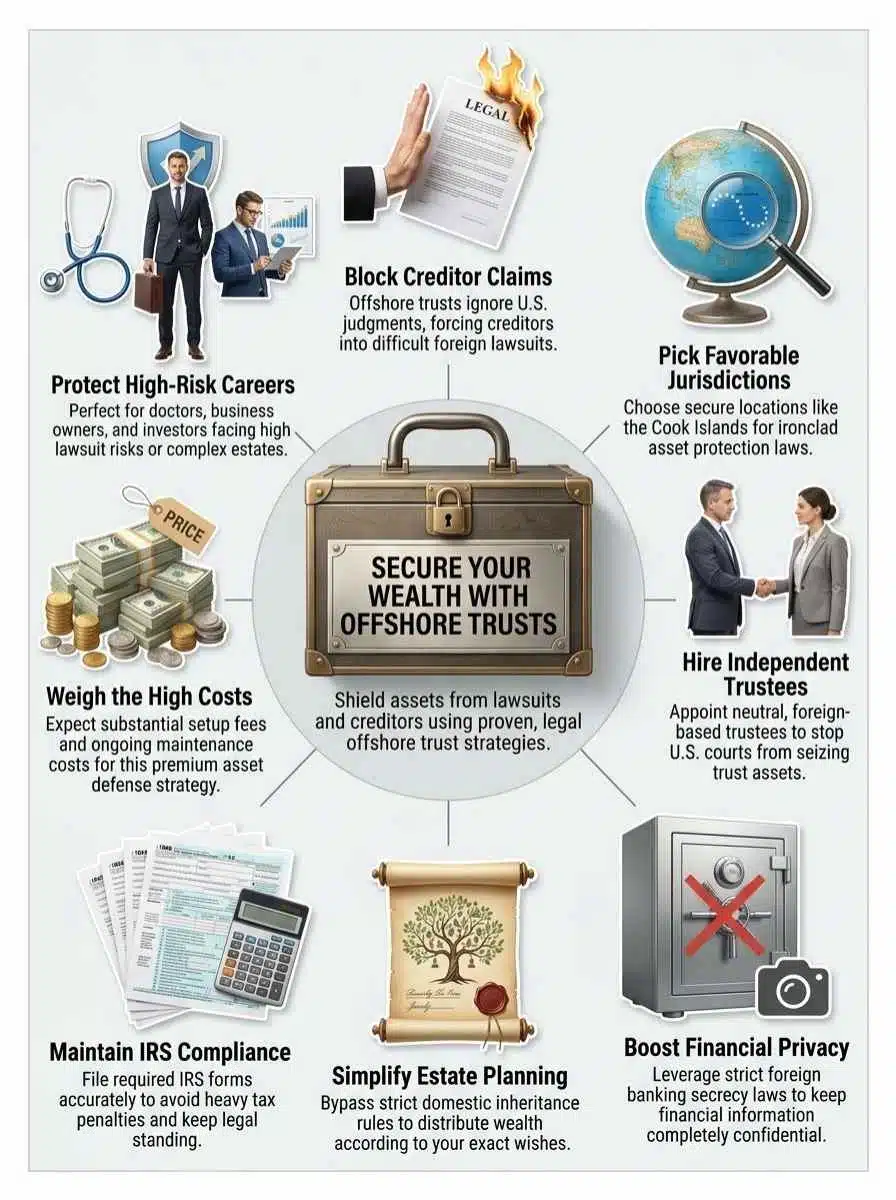
Imagine your assets tucked away like treasure in a far-off chest, safe from stormy seas back home, that’s the core appeal of offshore trusts for shielding wealth. They also let you pass on riches to your family with smart plans, much like handing over a well-mapped route to avoid pitfalls, and offer ways to juggle investments freely without constant worry.
Asset protection
Offshore trusts shield your assets from creditors, keeping them safe during tough spots like lawsuits or debts. High-net-worth folks often turn to these setups as their main way to guard wealth.
Picture your money tucked away in a foreign spot, far from prying hands back home. Asset Protection Trusts, or APTs, create that legal wall, making sure creditors can’t easily touch what’s inside.
Offshore versions amp up the privacy and protections over domestic ones, folks say it’s like adding an extra lock on your safe.
These trusts establish legal separation, so assets stay out of reach from claims tied to divorce or long-term care costs. You set up Offshore Asset Protection Trusts in places abroad just for this reason, blocking legal attacks from creditors.
They preserve your holdings even amid big financial messes, securing everything for your kids and grandkids down the line. Think of it as building a fortress around your fortune, one that stands strong against storms.
Estate planning advantages
Offshore trusts let you skip strict inheritance rules in your home country. You gain more say in how your assets go to loved ones. Imagine, you set it up so your kids get support without outside grabs at the money.
These trusts beat local ones for folks in the U.S., giving you tools to plan ahead. They fit your exact wishes better than home-based options. A protector steps in to watch the trustee, making sure your goals stick.
This setup aids in wedding plans too, shielding wealth for the next generation.
The Hague Convention lets you pick the trust’s ruling laws. You dodge forced wealth splits after you pass. Heirs or chosen folks benefit from this dodge. Assets stay safe from claims, yet they provide cash for daily needs.
Think of it as a safety net with a personal touch. You control distribution like a director guiding a performance on stage. Beneficiaries thrive, free from legal tangles back home.
Flexibility in wealth management
You know, managing your wealth can feel like juggling balls in the air, but offshore trusts make it easier with their built-in flexibility. They give you increased control over assets, letting you handle them just as the trust document spells out.
Imagine: you add more assets as your finances change, and the structure adapts right along. These trusts handle all sorts of things, like cash, real estate, business interests, investments, and intellectual property.
Plus, they let you appoint independent trustees and protectors, which boosts how you manage everything.
Different laws and tax rules in the offshore spot you pick add extra perks and ways to adjust. Say your life shifts, maybe you relocate or switch citizenship; these trusts flex to fit those personal changes.
They even open doors to foreign investment options that U.S. folks might not get otherwise. You can update them over time to match your evolving wealth goals, keeping things smooth and in your favor.
Key Considerations for Offshore Trusts
Imagine, you’re shielding your hard-earned cash from life’s curveballs, so start by picking a spot like the Cook Islands or Belize, where laws favor asset owners and make creditors sweat.
Grab an independent trustee, someone neutral who runs the show without your thumb on the scale, keeping things clean and protected. Oh, and watch those tax duties, report assets on forms like the FBAR to dodge fines from Uncle Sam, because slipping up there hits like a ton of bricks.
Setup fees bite too, so chat with a pro to map costs against gains.
Got questions on the upsides and downsides? Scroll down for the scoop!
Jurisdiction selection
Choosing the right spot for your offshore trust matters a lot, you know, like picking the perfect hiding place in a game of hide-and-seek. It can make all the difference in keeping your assets safe from prying eyes and unwanted claims.
- About a dozen places around the world welcome U.S. assets into offshore trusts, and they roll out the red carpet for strong protection. Think of these spots as friendly fortresses; they stand firm against outside threats. Folks pick them because local rules ignore U.S. court decisions, plus they come with quick time limits on claims, like a short fuse that burns out fast. The Cook Islands shines as a top choice here, offering ironclad shields that keep creditors at bay. You feel that sense of relief, right, knowing your wealth sits in a spot that’s tough to crack.
- Pick a jurisdiction based on its laws and tax rules tied to creditor grabs; it’s like choosing a lock that fits your door just right. These places often skip enforcing U.S. judgments, and they keep statutes of limitations short, giving you a head start in the race against claims. Offshore spots might add banking secrecy laws too, wrapping your privacy in an extra layer, much like a secret diary with a sturdy clasp. English as an official language eases things, dodging those pesky translation mix-ups that could trip you up. Imagine chatting with your trustee without playing charades; it smooths the path.
- Some locations give you more grip on your assets and clear legal rulings, like a steady hand on the wheel during a storm. This setup boosts your control, and it nails down what the law means without guesswork. Costs and hassle vary by choice; a fancy spot might hit your wallet harder but offer top-notch ease. Picture it as shopping for shoes – some fit perfect but cost more, while others pinch but save bucks. Jurisdiction picks shape the setup and upkeep bills, so weigh them like a pro.
- Favorable spots boast features that shield you well, including no nod to U.S. rulings and tight claim windows. They enhance privacy with banking secrecy, acting as a veil over your financial moves. Opt for English-speaking areas to skip language hurdles, keeping talks straightforward and fun. Certain places promise firm legal takes and asset control, handing you peace of mind like a warm blanket on a chilly night. Your selection tweaks the trust’s complexity and price tag, so choose wisely to match your needs.
Importance of an independent trustee
Offshore trusts need a trustee to handle assets, and this role often goes to a registered trust company in the offshore spot. That trustee keeps up with constant management and reviews of everything in the trust.
Picture it like a watchful guard dog, always on duty to protect your stuff. An independent trustee based there stops U.S. courts from grabbing control over the trust. Their freedom from ties helps follow foreign rules and boosts asset safety to the max.
You know, it’s like having a neutral referee in a game, keeping things fair and out of reach.
The protector steps in as a separate player, able to fire the trustee or thumbs-up their moves. Pick a qualified independent protector with zero U.S. links to dodge any court headaches.
Trustees must stick to the trust papers and local laws, no exceptions. Most setups call for at least three people handling four key jobs, which builds in checks and real independence.
Think of it as a team effort, where no one person calls all the shots, making the whole thing stronger against threats.
Tax compliance and reporting obligations
Grantors, beneficiaries, and trustees handle multiple IRS forms each year. This setup leads to self-disclosure, you know, like shining a light on your assets for the tax folks. The IRS demands you report foreign account interests right on Form 1040.
Imagine, that simple line could spark audit risks, catching you off guard if you’re not careful. IRS warnings stress full compliance with income, gift, and estate taxes tied to these trusts.
They base this on the Sixteenth Amendment, so no dodging U.S. taxes on your worldwide income and assets. Stay sharp, folks, accuracy in those forms matters a ton; slip-ups bring penalties or wipe out benefits.
You face no exemptions from those taxes with offshore trusts, that’s the straight truth. The IRS even rolled out amnesty programs for trust settlors and beneficiaries. These let you fix back taxes without harsh penalties, a real lifeline if you’ve lagged behind.
Performance results often skip full costs and taxes, messing with how you view historical gains. Chat with a tax professional, seriously, they unpack these implications like a pro.
It keeps you compliant and eases that worry, doesn’t it?
Pros and Cons of Offshore Trusts
Offshore trusts shield your assets like a fortress against lawsuits, offering privacy that feels like a secret hideout for high-net-worth folks. They come with steep setup fees and tricky rules, though, so weigh if the armor fits your wallet before you dive deeper.
Advantages of asset protection and privacy
Asset protection shines as a big win with offshore trusts. They build strong walls against creditors, thanks to high burdens of proof in foreign spots. U.S. judgments often get ignored there, keeping your stuff safe.
Imagine you’re facing a lawsuit back home, but your assets sit cozy overseas, out of reach. Banking secrecy laws add that extra layer of privacy, like a vault nobody can peek into.
An independent trustee and protector team up to boost security, giving you more control and peace of mind during disputes.
Privacy perks make offshore trusts a smart shield for your wealth. They dodge succession and heirship rules, so estate planning stays hush-hush. You gain access to foreign investment options, away from IRS eyes, creditors, or rivals sniffing around.
Favorable local laws help cut tax bills legally, no sweat. Think of it as a secret garden for your finances, blooming with certainty in tough times, and guarding against surprise claims that pop up.
Potential high costs and complexity
Offshore trusts come with hefty price tags, folks. You face big costs for drafting and setting them up, like steep legal fees and yearly upkeep bills. Imagine it’s like buying a fancy car that needs constant tune-ups, but this ride shields your cash.
These setups demand lots of planning to dodge expensive slip-ups, and that’s no joke.
The level of difficulty ramps up fast with these trusts. They involve key players, such as the settlor, trustee, protector, and beneficiaries, which piles on admin headaches. Laws vary by place, especially on creditor rights, so legal compliance stays vital.
Access to your funds gets tricky since assets sit outside U.S. reach, and electronic transfers might spark tax hits, thanks to tech advances. Add in IRS scrutiny, court eyes, language gaps, and time zone woes, and managing feels like juggling chainsaws, yet it keeps your wealth safe if you play smart.
Are Offshore Trusts Legal and Effective?
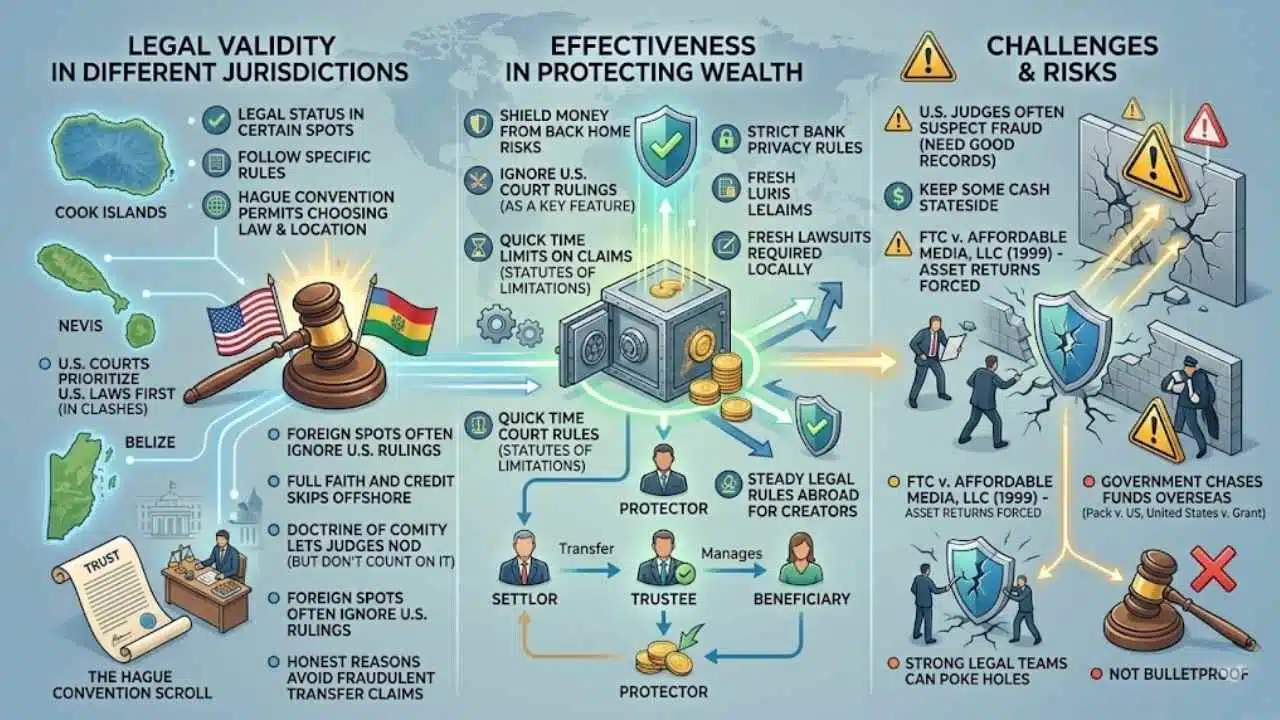
Offshore trusts hold up in court when set up right in spots like the Cook Islands or Nevis, where laws shield your assets from U.S. lawsuits. They work well for shielding wealth, but you need a solid plan to dodge any tax pitfalls, so let’s chat more about making them bulletproof for you.
Legal validity in different jurisdictions
Offshore trusts hold legal status in many places, folks, as long as you meet specific rules. About a dozen spots, like the Cook Islands or Belize, welcome U.S. assets with open arms.
The Hague Convention lets you pick the laws and location that fit your needs, giving you that extra edge. U.S. courts follow their own rules first, though, when foreign laws clash. Think of it like a picky eater at a buffet, they stick to what they know.
Foreign spots often ignore U.S. court rulings, forcing folks to start fresh in local courts. The doctrine of comity might let U.S. judges nod to overseas decisions, but don’t count on it every time.
Full Faith and Credit covers trusts inside the U.S., yet skips the offshore ones. Set up your trust with honest reasons to dodge claims of sneaky moves, and keep updating it as your money matters shift.
Effectiveness in protecting wealth
People set up offshore trusts to shield their money from risks back home. These trusts use features like ignoring U.S. court rulings, quick time limits on claims, and strict bank privacy rules.
Creditors must start fresh lawsuits in the foreign spot, which ramps up the hassle and cuts their odds of winning. The setup, with a settlor, trustee, protector, and beneficiary, builds extra walls against grabs.
You gain steady legal rules abroad, so you know what to expect as the trust creator.
U.S. judges often suspect fraud in these setups, but you prove it’s real with good records and some cash left stateside. Still, these trusts aren’t bulletproof. Take the FTC v. Affordable Media, LLC case from 1999, where the 9th Circuit Court brushed off claims of impossible tasks and forced asset returns.
The government chases funds overseas too, like in Pack v. the United States or United States v. Grant. Strong legal teams can poke holes, so think hard before you proceed.
Who Should Consider an Offshore Trust?
Picture a business owner, say a real estate developer, staring down lawsuit threats from unhappy clients–that’s when an offshore trust acts like a sturdy shield for hard-earned assets.
Or think of surgeons and attorneys, folks in high-stakes jobs where one wrong move sparks big claims, they often turn to these setups for that extra layer of security, sparking curiosity about how it all fits together.
Suitable candidates for offshore trusts
Offshore trusts offer smart ways to guard your wealth, if you fit the right profile. You might find them useful for keeping assets safe and planning ahead.
- High-net-worth folks often turn to offshore trusts to shield their money from creditors, lawsuits, or divorce fights; imagine a fortress around your fortune that makes it tough for anyone to grab it during tough times.
- People moving to a new country or switching citizenship use these trusts for tax perks and asset safety, like packing your valuables in a secure vault before a big trip.
- Families aiming to dodge forced wealth splits and care for heirs pick offshore trusts, think of it as a safety net that passes down riches without the usual hassles.
- Investors eyeing foreign options banned in the U.S. set up these trusts to participate legally, opening doors to global deals that boost your portfolio.
- Couples planning marriage rely on offshore trusts to protect family holdings in tricky estate setups, sort of like a prenup on steroids for your legacy.
- Owners of big assets spread worldwide choose offshore trusts to handle taxes across borders, easing the headache of juggling rules from different places.
- Anyone craving privacy from the IRS, old spouses, rivals, or bill collectors finds offshore trusts handy, acting as a curtain that keeps prying eyes away.
- People with lots of money and complex needs suit these trusts best, since the setup fees and steps match folks ready for that level of detail.
Final Thoughts
You’ve seen how offshore trusts, like those in the Cook Islands or Nevis, separate your assets from everyday risks, making it tough for creditors to touch them. These setups offer real protection with features such as high proof burdens and flee provisions, and they fit well into estate plans without much hassle once you pick a solid trustee.
Imagine dodging a lawsuit storm by moving your wealth to calmer waters; that’s the smart impact on your financial peace. Check out resources from the IRS on Form 3520 for tax tips, or talk to a trust expert for customized advice.
Go ahead, protect what you’ve built, because smart planning today keeps your legacy strong tomorrow.
FAQs
1. What exactly is an offshore trust and how does it tie into legal wealth protection?
Picture this, you’re safeguarding your hard-earned cash like a squirrel hiding nuts for winter. An offshore trust is a legal setup where you park your assets in a foreign spot, say the Cayman Islands, to shield them from lawsuits or creditors back home. It works by transferring ownership to the trust, keeping things private and secure, all while following the rules to avoid any shady business.
2. How can setting up an offshore trust help protect my assets legally?
Offshore trusts offer top-notch privacy, like a secret clubhouse for your wealth. They make it tough for folks to grab your stuff in legal battles.
3. Are there tax perks with offshore trusts for wealth protection?
You bet, many folks dive into offshore trusts to dodge hefty taxes legally, turning a potential money pit into a smart savings strategy. Think of it as giving Uncle Sam the slip without breaking a sweat, but always chat with a pro to stay on the right side of the law. That way, you protect your nest egg and sleep easy at night.
4. What risks come with using offshore trusts for legal wealth protection?
Watch out, because not all setups are foolproof; some countries might change rules overnight, leaving you high and dry. Plus, if you mess up the paperwork, it could trigger audits or penalties that bite hard.