The Irish venture capital scene has undergone a seismic shift as we move through 2026, transforming from a niche playground for the ultra-wealthy into a high-octane engine for any taxpayer looking to offset their 40% income tax bill. The Employment and Investment Incentive (EII) scheme is no longer just a “startup support” program; it is a sophisticated wealth management tool that allows you to essentially co-invest with the government. By subsidizing your entry price into Ireland’s most promising SMEs, the state is effectively de-risking your portfolio, allowing you to back high-growth innovation in medtech, AI, and green energy with a significant safety net built into your annual tax return.
How We Selected Our 10 Best Ireland EII Scheme Angel Investing Strategies
To identify the most effective ways to leverage the current framework, we analyzed the 2024–2026 Finance Act amendments and the specific “risk finance” categories defined by Revenue. Our selection criteria focused on the “weighted relief” model, which now rewards earlier-stage investments with higher percentage deductions. We prioritized strategies that capitalize on the increased €1 million annual investment limit and the standardized four-year holding period. Each of these 10 methods was chosen because it represents a specific technical advantage, whether it’s the 50% relief for pre-revenue companies or the synergy with the new 16% Angel Investor CGT relief, ensuring that your capital is working twice as hard for both the Irish economy and your personal net worth.
10 Strategic Pillars of EII Scheme Optimization
The following strategies detail how to navigate the current regulations to ensure maximum tax efficiency while supporting Ireland’s next generation of “unicorns.”
1. Target “Initial Risk Finance” for Maximum 50% Relief
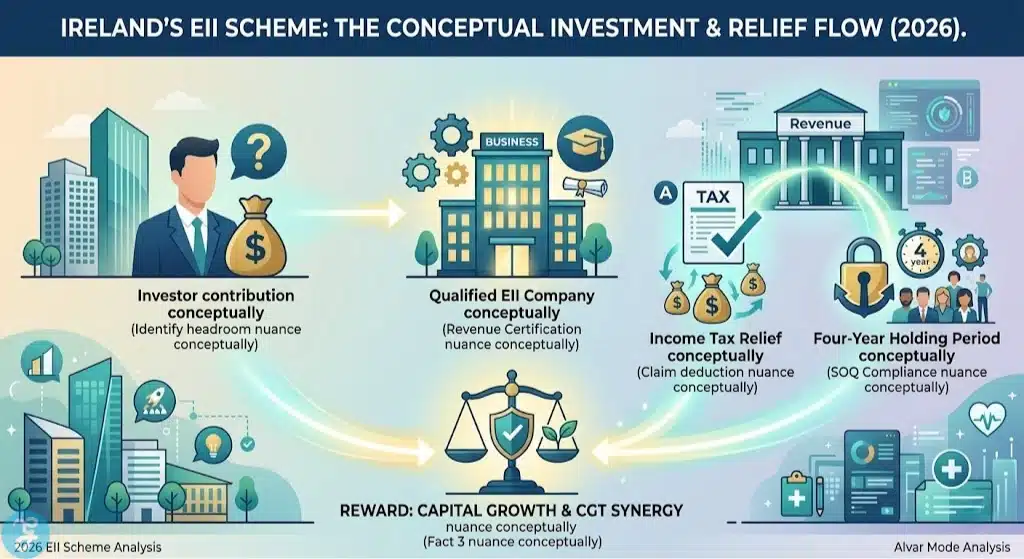
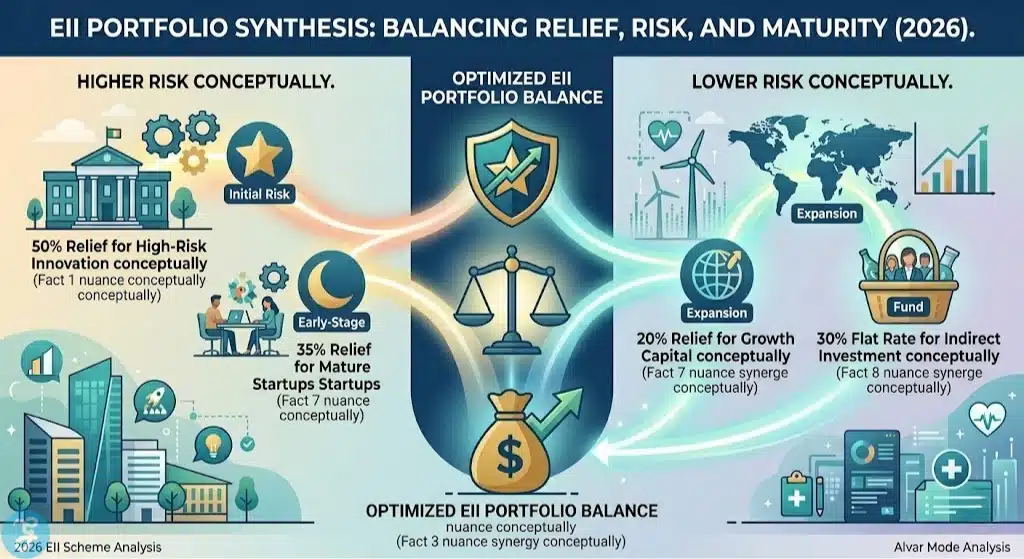
Under the 2026 rules, the highest tier of relief is reserved for companies that have not yet operated in any market or are within a very early lifespan. By focusing your angel capital here, you can claim a 50% income tax deduction in the year of investment. This effectively means a €100,000 investment only costs you €50,000 out of pocket, significantly lowering your breakeven point.
Best for: investors with a high risk tolerance seeking the absolute maximum tax write-off.
Why We Chose It:
-
It offers the most aggressive tax hedge available in the Irish market.
-
It incentivizes the funding of truly “disruptive” early-stage innovation.
Things to consider:
-
These companies often have the highest failure rate, though the 50% relief provides a substantial buffer.
2. Maximize the €1 Million Annual Investment Limit
The cap for EII investments was significantly raised to €1 million per individual in recent years. This allows high earners to offset massive income tax liabilities in a single year. If you have enough taxable income at the 40% rate, you can deploy significant capital across multiple SMEs while keeping the entirety of your relief within one tax cycle.
Best for: high-net-worth individuals and senior executives with large annual bonuses.
Why We Chose It:
-
It allows for much larger ticket sizes than previous versions of the scheme.
-
It makes EII a viable alternative to traditional property or stock market rebalancing.
Things to consider:
-
You must have sufficient taxable income in the year of investment to fully utilize the relief.
3. Synchronize with the 16% Angel Investor Relief (CGT)
While EII manages your entry (income tax), the Angel Investor Relief manages your exit (capital gains). If you invest in a “certified” innovative company and hold the shares for three years, you qualify for a reduced CGT rate of 16% on gains up to twice your investment. Using the EII Scheme for Tax-Efficient Angel Investing alongside Angel Relief creates a “double-tax-dip” that is virtually unmatched in Europe.
Best for: long-term wealth builders focused on the total net-of-tax return.
Why We Chose It:
-
It tackles both ends of the investment lifecycle: income tax on the way in and CGT on the way out.
-
It is specifically designed to support high-growth, innovative Irish firms.
Things to consider:
-
The company must apply for a specific “Certificate of Commercial Innovation” from Revenue.
4. Leverage the Standardized 4-Year Holding Period
The holding period for EII shares is now standardized at four years for all levels of relief. This provides a predictable timeline for your capital commitment. Unlike the older “split-relief” models, you now claim 100% of your relief in the year the shares are issued, making the four-year mark a clean exit point if the company is ready for a buyback or secondary sale.
Best for: investors who want a defined liquidity timeline for their tax-efficient portfolio.
Why We Chose It:
-
It simplifies the administrative tracking of multiple EII investments.
-
It aligns with the typical Series A fundraising cycle of a growing SME.
Things to consider:
-
Selling before the four-year mark will trigger a “clawback” of the tax relief you received.
5. Utilize the Statement of Qualification (SOQ) for Faster Claims
The removal of the mandatory advance approval regime means companies now self-certify via a Statement of Qualification (SOQ). As an investor, you should ensure the company issues this SOQ within four months of the year-end. This allows you to claim your relief via MyAccount or Form 11 much faster than under the old bureaucratic system.
Best for: proactive investors who want their tax refunds processed without multi-year delays.
Why We Chose It:
-
It shifts the administrative burden to the company and speeds up the investor’s cash flow.
-
It reflects the 2026 trend toward digitized, agile tax administration in Ireland.
Things to consider:
-
You are relying on the company’s warranty that they are compliant; due diligence is vital.
6. Prioritize Green and Sustainable “Innovation” Tiers
Revenue has introduced relaxed funding requirements for environmentally sustainable businesses. These firms often qualify for the 35% or 50% relief tiers more easily than traditional retail or services firms. Backing a company in the circular economy or renewable tech sector can often be a safer bet for EII qualification due to these prioritized definitions.
Best for: ESG-focused investors who want to align their tax strategy with climate goals.
Why We Chose It:
-
Green tech is a strategic priority for the 2026 Irish government, ensuring long-term policy support.
-
It offers a path to high-relief tiers with potentially more stable industrial business models.
Things to consider:
-
Ensure the business plan specifically outlines the environmental innovation to satisfy Revenue.
7. Diversify across Early-Stage and Expansion Tiers
Don’t put all your EII capital into one initial risk (50%) moonshot. A smarter 2026 strategy is to blend your portfolio with 35% relief (companies within 7 years of first sale) and 20% relief (established firms entering new markets). This tiered diversification spreads your risk across different maturity levels while still providing a weighted average relief of 30-40%.
Best for: conservative angel investors looking for a balanced risk/reward ratio.
Why We Chose It:
-
It prevents a single startup failure from wiping out your entire year’s tax-planning gains.
-
It allows you to back both growth and value SMEs within the same tax umbrella.
Things to consider:
-
The 20% expansion tier usually involves more established companies with lower failure risks.
8. Use Financial Intermediaries for a Flat 30% Relief
If you prefer a hands-off approach, you can invest via an EII Fund or Financial Intermediary. These funds manage the due diligence and spread your capital across 5-10 companies. Under the current rules, indirect investments via intermediaries usually attract a flat 30% relief, regardless of the individual company tiers.
Best for: busy professionals who want the tax relief without the homework of individual deal-sourcing.
Why We Chose It:
-
It provides instant diversification and professional management of the 4-year holding period.
-
It removes the need for the investor to personally verify SOQs and Revenue compliance.
Things to consider:
-
You will likely pay management fees and carry to the fund manager, reducing your net gain.
9. Combine EII with Revised Entrepreneur Relief
Following the 2026 Budget, the lifetime limit for Entrepreneur Relief (10% CGT) was increased to €1.5 million. For founders who are also angel investing in other firms, or for investors taking a significant active role, balancing EII on the entry with the revised Entrepreneur Relief on the exit is the ultimate method for compounding wealth in the private sector.
Best for: active angels and serial entrepreneurs with a high volume of local investments.
Why We Chose It:
-
It capitalizes on the most recent pro-enterprise tax changes in the Irish budget.
-
It rewards those who are both providing capital and strategic value to the SME.
Things to consider:
-
To qualify for Entrepreneur Relief, you must typically hold at least 5% of the ordinary shares.
10. Time Your “Statement of Qualification” for Year-End
Relief is claimed in the year the shares are issued. If a company is closing a round in December, ensure the shares are actually issued and the SOQ is planned for early the following year. Being precise with the calendar allows you to strategically bucket your investments into the tax years where your income (and therefore your tax liability) is at its highest.
Best for: investors with fluctuating annual income (e.g., consultants or those with variable bonuses).
Why We Chose It:
-
It allows for tactical tax planning based on your real-time financial performance.
-
It ensures you don’t waste relief in a year where your income is below the 40% bracket.
Things to consider:
-
Revenue approvals and share issuances can often take longer than expected during the Q4 rush.
An Overview of EII Scheme Potential Outcomes
The current iteration of the EII scheme marks a return to aggressive, pro-growth taxation. By moving away from the delayed relief models of the past and embracing a self-certification system, the Irish government has made it significantly easier for private capital to flow into the engine room of the economy. For the savvy investor, this is no longer just about saving tax; it’s about acquiring high-growth equity at a 20% to 50% discount, a margin of safety that traditional asset classes simply cannot replicate.
Relief Tiers and Strategic Outcomes
The comparative data below highlights the relationship between company maturity, potential tax relief, and the strategic purpose of each investment tier.
| Investment Tier | Typical Relief Rate | Max Annual Limit | Holding Period | Primary Goal |
| Initial Risk Finance | 50% | €1,000,000 | 4 Years | High-Growth Startups |
| Early-Stage Finance | 35% | €1,000,000 | 4 Years | Scale-Ups (<7 yrs old) |
| Expansion/Follow-on | 20% | €1,000,000 | 4 Years | Established SME Growth |
| Fund/Intermediary | 30% (Flat) | €1,000,000 | 4 Years | Managed Diversification |
Our Top 3 Picks and Why?
-
Initial Risk Finance (50% Relief): This is our top pick because a 50% reduction in entry price is a massive competitive advantage. Even if the company only returns your original capital, you have effectively doubled your net-of-tax investment.
-
Synchronized Angel CGT Relief: We chose this because it is the only way to protect your upside. Tax relief on the investment is great, but keeping your exit tax at 16% is how you turn a good return into a generational one.
-
The €1 Million Limit Expansion: This is an essential pick for 2026 because it allows for serious, institutional-scale tax planning. It transforms EII from a tax credit into a core component of a high-net-worth portfolio.
Investing in startups requires a different muscle than picking stocks. You are not just buying numbers; you are buying into a team and a business plan that must withstand the scrutiny of Revenue.
The Selection Framework
-
Audit the Business Plan: Does the plan specifically foresee the need for this EII capital and describe the innovation or market entry required for the 35% or 50% tiers?
-
Verify “Full Risk” Ordinary Shares: Ensure the shares you are buying don’t have preferential rights to dividends or capital. If they are too safe, they won’t qualify for EII.
-
Check the Lifetime Raise Cap: A company can only raise €16.5 million in its lifetime under EII. If they are close to this limit, your investment might not be eligible for relief.
-
Demand a Warranty: Always have the company warrant in the investment agreement that they will issue the Statement of Qualification (SOQ) on time and maintain compliance for the 4-year period.
The following choice matrix can help you align your specific risk profile with the current EII Scheme for Tax-Efficient Angel Investing opportunities.
Decision Matrix
| If your priority is… | Choose X if… | Choose Y if… |
| Maximum Tax Refund | Choose Initial Risk (50%) for high-deduction impact. | Avoid 20% Expansion as the relief is too low for your goal. |
| Risk Mitigation | Choose EII Funds for managed diversification. | Choose 20% Tiers for established companies with revenue. |
| Long-Term Capital Gains | Choose Angel-Certified SMEs to lock in the 16% CGT. | Choose Entrepreneur Relief if you own >5% of the firm. |
| Speed and Simplicity | Choose Intermediaries to skip the direct deal-sourcing. | Choose Firms with SOQ history for proven admin speed. |
The Final Checklist: 5-Point EII Readiness Plan
-
Calculate your total income likely to be taxed at 40% this year to determine your investment headroom.
-
Shortlist at least 3 companies or 1 EII fund that are actively raising capital in your target relief tier.
-
Review the investment agreement for the Ordinary Share and SOQ Warranty clauses.
-
Confirm the company’s age (from incorporation or first sale) to verify if they truly qualify for the 35% or 50% tiers.
-
Set a reminder for April 2027 to ensure you receive your Statement of Qualification for this year’s investment.
Securing the Future of Irish Innovation
The EII scheme in 2026 represents a mature, high-trust partnership between the Irish state and its private investors. By effectively pre-paying up to half of your investment cost through tax relief, the government has created an environment where the penalty for failure is minimized and the reward for success is amplified. For the proactive investor, mastering the nuances of initial risk tiers and synchronizing them with exit reliefs is the most powerful way to build a high-growth, high-alpha portfolio within the Irish ecosystem. As the economy continues to digitalize, those who use the EII scheme to back Ireland‘s innovators are not just saving on their tax bills; they are securing a front-row seat to the future of Irish enterprise.