

The Irish fiscal landscape has undergone a significant transformation to address rising costs and support both individuals and businesses. As we progress through 2026, the ripple effects of the 2025 budgetary decisions are fully visible in the net take-home pay of employees and the strategic planning of domestic firms. These Ireland tax changes 2025 were designed with a dual focus: providing immediate relief to households through credit expansions and maintaining national competitiveness by adjusting corporate and investment thresholds. Understanding these shifts is crucial for ensuring you are maximizing your entitlements and staying compliant with the updated Revenue requirements.
How We Selected Our 10 Best Ireland Tax Changes 2025 Facts
To curate this list of the most impactful adjustments, we analyzed the final Finance Act 2024 and the operational guidelines issued by Revenue for the 2025 and 2026 tax years. Our selection criteria prioritized changes that offer the most direct financial benefit to the widest range of taxpayers, such as the standard rate band adjustments and the Universal Social Charge reductions. We also included technical shifts in capital taxes and business incentives that impact long-term wealth transfer and entrepreneurship. Each point was chosen to reflect the government’s current strategy of balancing social supports with economic sustainability, providing a clear roadmap for anyone navigating the Irish tax system today.
10 Essential Updates on Ireland Tax Changes 2025
The following points break down the most vital modifications to the Irish tax code, highlighting how they affect your personal finances and business operations.
1. Standard Rate Cut-Off Point Expansion
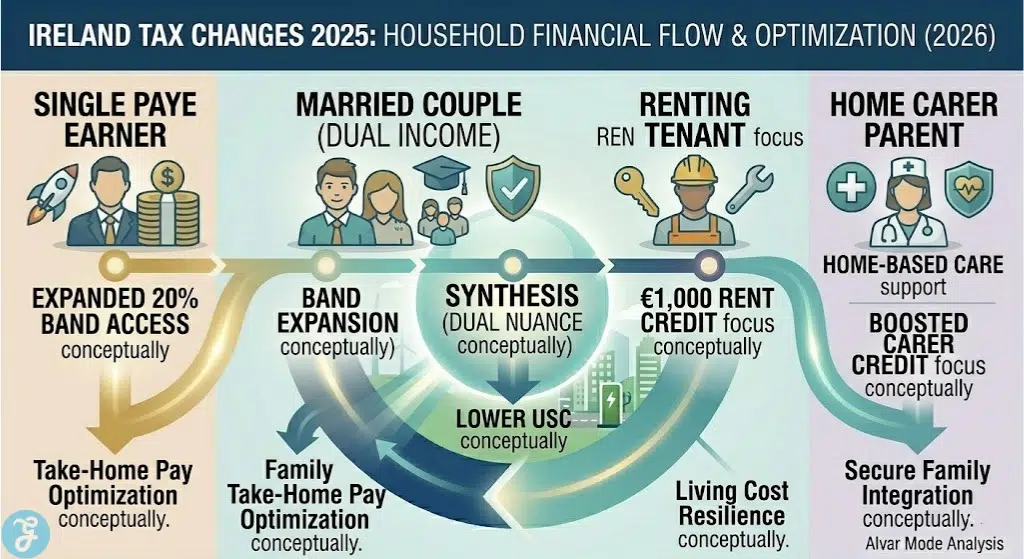
For 2025, the entry point for the higher 40% tax rate has been increased by €2,000. For a single person, the standard rate band is now €44,000, meaning more of your income is taxed at the lower 20% rate. This change is mirrored for married couples and civil partners, with the band for a one-income household rising to €53,000.
Best for: middle-income earners and dual-income households.
Why We Chose It:
-
It provides the most widespread income tax relief across the workforce.
-
It directly increases monthly net pay by reducing the amount of income subject to the higher tax tier.
Things to consider:
-
The increase is limited to the lower of €35,000 or the income of the second earner for jointly assessed couples.
2. Reduction of the 4% USC Rate to 3%
In one of the most significant moves to boost take-home pay, the middle rate of the Universal Social Charge has been cut from 4% to 3%. This is the second consecutive year this rate has been reduced, signaling a long-term goal of simplifying the USC structure while rewarding work.
Best for: all employees and self-employed individuals earning over €27,382.
Why We Chose It:
-
It creates an immediate percentage-based increase in take-home pay for hundreds of thousands of workers.
-
It lowers the overall effective tax rate for the vast majority of the Irish population.
Things to consider:
-
The entry threshold for the 3% rate has also increased to €27,382 to align with the new minimum wage.
3. Triple Hike in Personal Tax Credits
The three main personal tax credits—the Personal Tax Credit, the Employee Tax Credit, and the Earned Income Tax Credit—have all been increased by €125. Each of these credits is now worth €2,000 annually, totaling an extra €250 in tax savings for most employees compared to the previous year.
Best for: PAYE workers and small business owners.
Why We Chose It:
-
These credits are “bottom-line” reductions in tax, making them highly effective for lower and middle earners.
-
The equal increase across all three ensures fairness between employees and the self-employed.
Things to consider:
-
Tax credits are non-refundable, so you must have a tax liability to benefit from them.
4. Rent Tax Credit Boost to €1,000
The Rent Tax Credit has been significantly enhanced to €1,000 per person for the 2025 tax year. For a jointly assessed couple, this credit is worth up to €2,000, providing substantial relief for those paying for private rented accommodation or parents paying for their children’s student digs.
Best for: private tenants and parents of university students.
Why We Chose It:
-
It directly addresses one of the largest cost-of-living expenses in Ireland.
-
The inclusion of parents paying for student accommodation makes it a versatile support for families.
Things to consider:
-
The property must be registered with the Residential Tenancies Board (RTB) to qualify for the claim.
5. Inheritance Tax Threshold (Group A) Increase to €400,000
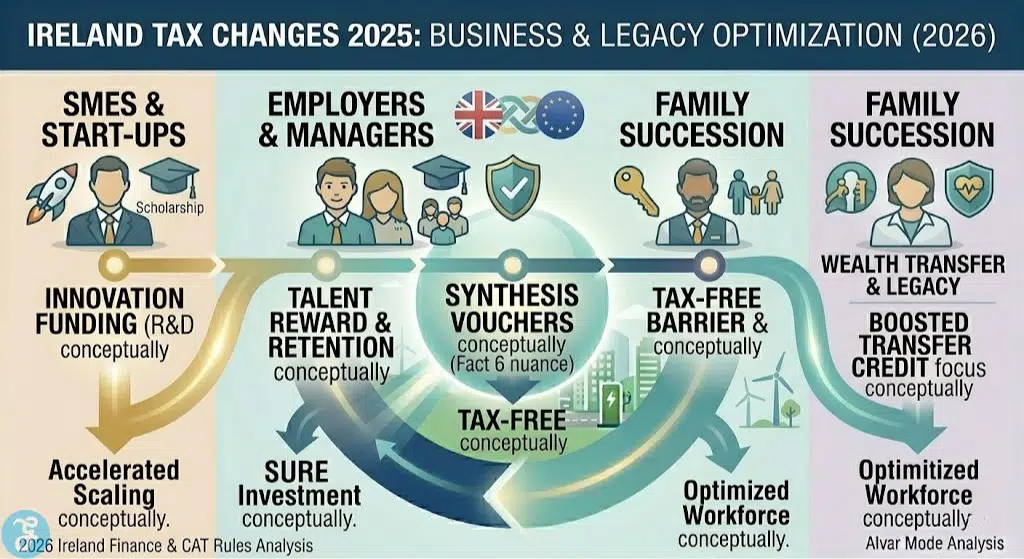
For the first time in several years, the Capital Acquisitions Tax (CAT) thresholds have been raised. The Group A threshold, which applies primarily to gifts and inheritances from parents to children, has increased from €335,000 to €400,000, allowing for larger tax-free transfers of wealth.
Best for: families planning succession and estate transfers.
Why We Chose It:
-
It reflects rising property values and helps prevent family homes from being lost to high tax bills.
-
The proportional increases in Groups B and C ensure that all beneficiaries see some benefit.
Things to consider:
-
Group B (siblings/nieces/nephews) is now €40,000, and Group C (non-relatives) is €20,000.
6. Small Benefit Exemption Increased to €1,500
The maximum value of the tax-free vouchers or non-cash benefits that employers can give to employees has risen to €1,500 per year. Additionally, employers can now provide up to five such benefits in a single year, up from the previous limit of two.
Best for: employers looking for tax-efficient ways to reward staff.
Why We Chose It:
-
It allows for flexible, tax-free bonuses that do not attract PRSI or USC.
-
The increased frequency (five benefits) allows for smaller, more regular rewards throughout the year.
Things to consider:
-
These must be non-cash benefits; cash bonuses are still fully taxable.
7. National Minimum Wage Increase to €13.50
To support low-paid workers, the national minimum wage has been increased by €0.80 to €13.50 per hour. This change is carefully balanced with the USC entry threshold increase to ensure that minimum wage earners do not find themselves paying more in social charges as their pay rises.
Best for: entry-level workers and hospitality staff.
Why We Chose It:
-
It ensures that the lowest-paid members of society see their purchasing power maintained against inflation.
-
It was a primary driver for the corresponding adjustments in the USC rate bands.
Things to consider:
-
Employers should audit their payroll systems to ensure they met this January 2025 deadline.
8. Enhancements to Carer and Child Tax Credits
The Home Carer Tax Credit has increased to €1,950, while the Incapacitated Child Tax Credit has seen a major boost of €300 to reach €3,800. These targeted supports are intended to assist families who have significant caring responsibilities or are managing life-long disabilities.
Best for: stay-at-home parents and families caring for children with special needs.
Why We Chose It:
-
It recognizes the immense social and financial value of home-based care.
-
The substantial hike in the Incapacitated Child credit provides meaningful relief for high-cost medical needs.
Things to consider:
-
The Blind Tax Credit has also been increased by €300 to reach €1,950.
9. Business Innovation and R&D Credit Shifts
The first-year payment threshold for the Research and Development (R&D) tax credit has been increased from €50,000 to €75,000. This change provides better cash-flow support for smaller companies and start-ups that are heavily invested in innovation but may not yet be profitable.
Best for: tech start-ups and SMEs focused on product development.
Why We Chose It:
-
It accelerates the tax benefit for innovative companies, encouraging local growth.
-
It aligns with Ireland’s goal of becoming a global hub for research and development.
Things to consider:
-
The Start-Up Relief for Entrepreneurs (SURE) has also seen its investment limit increased to €980,000.
10. Carbon Tax and Environmental Excise Duty
As part of Ireland’s climate commitments, the carbon tax increased to €63.50 per tonne. Furthermore, mid-2025 saw the introduction of a new excise duty on e-cigarettes, set at €0.50 per ml of e-liquid, representing a shift toward using the tax code for public health and environmental goals.
Best for: environmentally conscious citizens and public health advocates.
Why We Chose It:
-
It highlights the government’s use of “nudge” taxes to influence consumer behavior.
-
Revenue from the carbon tax is specifically ring-fenced for fuel poverty and retrofitting programs.
Things to consider:
-
The carbon tax increase applied to petrol/diesel in late 2024 but hit other fuels in May 2025.
Strategic Summary of the Irish Fiscal Landscape
The cumulative effect of these Ireland tax changes 2025 is a more progressive system that actively reduces the tax burden on labor while shifting focus toward environmental and wealth-based revenue streams. For the average worker, the combination of band shifts and credit hikes results in an estimated €800 to €1,000 in additional take-home pay per year. Businesses, meanwhile, benefit from higher VAT registration thresholds and more flexible employee benefit rules, allowing for better operational agility in a high-cost environment.
Comparative Analysis of 2025 Irish Tax Adjustments
The structured overview below provides a clear look at how the primary fiscal metrics have shifted from the previous year to help you visualize your potential savings.
Primary Tax and Credit Comparison
The following data outlines the key changes in thresholds and credits for the 2025 tax year.
| Tax Metric | 2024 Level | 2025/2026 Level | Benefit Type |
| Standard Rate Band (Single) | €42,000 | €44,000 | Income Protection |
| Standard Rate Band (Married) | €51,000 | €53,000 | Family Support |
| Middle USC Rate | 4% | 3% | Take-home Pay |
| Personal Tax Credit | €1,875 | €2,000 | Direct Relief |
| Rent Tax Credit | €750 | €1,000 | Living Cost Relief |
| CAT Group A Threshold | €335,000 | €400,000 | Wealth Transfer |
| Small Benefit Exemption | €1,000 | €1,500 | Workplace Reward |
Our Top 3 Picks and Why?
-
Standard Rate Band Increase: This is our top pick because it benefits the widest range of full-time workers. It ensures that cost-of-living raises don’t immediately get swallowed by the 40% tax bracket.
-
The 3% USC Rate: We chose this because the USC is often viewed as the most “painful” deduction. Lowering this rate by a full percentage point is a significant psychological and financial win for the workforce.
-
CAT Group A Threshold: This is an essential pick because property prices in Ireland have made the old thresholds outdated. Increasing this to €400,000 provides massive relief for families passing on a primary residence.
Buyer’s Guide: How to Optimize Your Irish Tax Position by Yourself?
Navigating the tax system in 2026 requires being proactive about your credits. Many people leave money on the table simply because they don’t know which reliefs have been expanded.
The Selection Framework
-
Review Your eFiling Profile: Ensure you have added the Rent Tax Credit if you are a tenant. It is not always applied automatically, especially for student-related claims.
-
Audit Your Payroll: If you are an employer, ensure you are utilizing the full €1,500 Small Benefit Exemption to give staff tax-free vouchers instead of taxable cash bonuses.
-
Plan Your Wealth Transfer: If you are considering a gift to a child, the new €400,000 threshold allows for more flexibility. However, remember this is a lifetime limit, not an annual one.
-
Calculate Your New Net Pay: Use an online tax calculator to see exactly how the USC and band changes affect your specific salary. This can help with personal budgeting for 2026.
To determine which credit or relief is most applicable to your current life stage, refer to the decision guide below.
Decision Matrix
This comparison matches common life scenarios with the most beneficial 2025 tax adjustment.
| If your situation is… | Choose X if… | Choose Y if… |
| Working in Dublin | Claim the Rent Credit if you pay for private housing. | Use a Travel Pass to reduce your taxable income further. |
| Running a Small Business | Utilize R&D Credits if you are developing new tech. | Enhanced SURE Relief if you are raising capital. |
| Caring for Family | Home Carer Credit if one spouse stays home. | Incapacitated Child Credit for high-care needs. |
| Receiving a Bonus | Ask for Vouchers to use the €1,500 exemption. | Request Pension Top-up for high-rate tax relief. |
The Final Checklist: 5-Point Ireland Tax Readiness Plan
-
Log into Revenue MyAccount and ensure all your 2025/2026 tax credits are active.
-
Verify your landlord’s RTB registration if you intend to claim the €1,000 Rent Tax Credit.
-
Check your USC categories on your most recent payslip to ensure the 3% rate is applied.
-
Document any “gifts” received this year to track them against your new CAT thresholds.
-
Review your Small Benefit Exemption balance to see if you have any of your five vouchers remaining.
The Ireland tax changes 2025 have created a fiscal environment that is more supportive of the average household while remaining competitive on the global stage. By moving the standard rate band and slashing USC rates, the government has provided a necessary buffer against inflation. For the proactive taxpayer, these changes offer a unique opportunity to restructure savings and wealth transfers more efficiently. As we look ahead through 2026, staying informed about these thresholds ensures that you remain in control of your financial destiny, turning the complexities of the tax code into a strategic advantage for your personal and professional growth.