Has a lawyer ever mentioned GDPR Compliance for European Startups, making your stomach instantly drop? Fast-growing startups often collect customer emails and store payment information. Many US founders face this exact moment when expanding into the European market. They rush to fix their data practices before European Union regulators step in.
Here is a hard fact.
Non-compliance can lead to fines of up to €30 million or 6% of global turnover. Real companies pay real money for getting this wrong. For example, the AI company Replika received a €5.64 million fine for processing personal data without a valid legal basis. No startup wants to become the next cautionary tale.
This guide breaks down the exact steps needed to get your GDPR Compliance for European Startups strategy on track.
What is GDPR and Why Does it Matter for Startups?
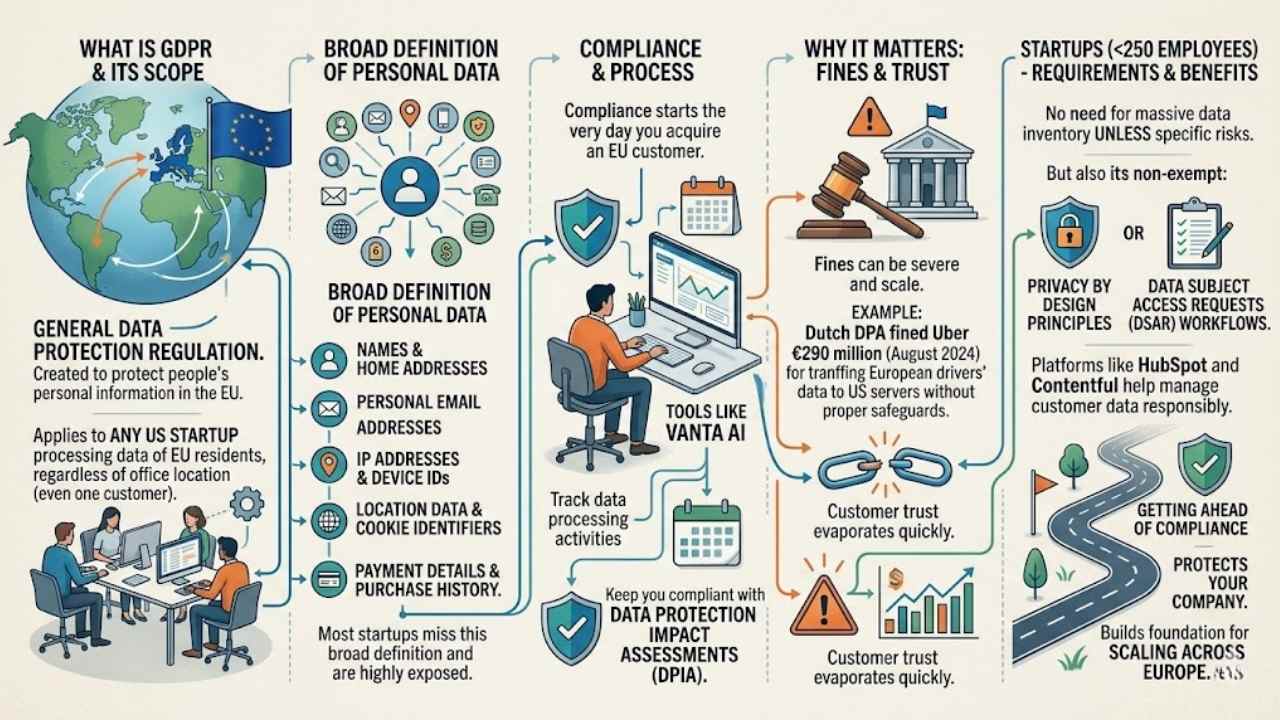
GDPR stands for the General Data Protection Regulation. The European Union created it to protect people’s personal information.
This regulation applies to any US startup processing personal data of EU residents. It does not matter where your office is geographically located.
If you have even one customer in Europe, these rules apply to you.
- Names, home addresses, and personal email addresses.
- IP addresses and specific device IDs.
- Location data and website cookie identifiers.
- Payment details and previous purchase history.
Most startups miss this broad definition. They think they are safe when they are actually highly exposed.
Compliance starts the very day you acquire an EU customer. Tools like Vanta AI help startups track their data processing activities. They keep you compliant with data protection impact assessments.
Do not assume this only affects massive corporations.
In August 2024, the Dutch Data Protection Authority fined Uber €290 million for transferring European drivers’ data to US servers without proper safeguards. While you might not be Uber, fines scale, and customer trust evaporates quickly.
Startups with fewer than 250 employees get a small break. You do not need to maintain a massive data inventory unless your processing poses specific risks.
Still, you cannot ignore privacy by design principles. You also cannot skip data subject access requests (DSAR) workflows.
Platforms like HubSpot and Contentful help you manage customer data responsibly. Getting ahead of compliance protects your company and builds a foundation for scaling across Europe.
GDPR compliance isn’t a box to check; it is a business necessity that separates startups that thrive from those that stumble.
Key GDPR Principles Startups Must Understand
Your startup must follow six core principles. These principles form the absolute backbone of data protection.
They shape exactly how you collect, store, and use customer data from day one.
Lawfulness, Fairness, and Transparency
Lawfulness is the absolute foundation of your compliance programme. You need a valid legal basis before collecting any personal data from users.
Without a specific legal ground, you cannot process data legally. Startups often skip this step and face serious penalties.
| Lawful Basis | Common Startup Example |
|---|---|
| Consent | A user explicitly agrees to receive your marketing emails. |
| Contract | Data is required to deliver a purchased software service. |
| Legal Obligation | Information is gathered for standard tax reporting. |
Fairness means you inform people upfront about why you collect their data. Transparency requires clear communication about how data flows through your systems.
Pre-checked consent boxes violate the rules entirely. Active opt-in is required instead.
All consents need timestamped logs to prove compliance during audits.
Purpose Limitation
You must define why you collect data the exact moment you gather it. Your startup cannot use that information for something else later.
For instance, if someone gives you their email for a newsletter, you cannot use it for sales calls. You need fresh permission for each new use.
This stops companies from hoarding data and figuring out what to do with it later. If you run email marketing campaigns, get consent just for that specific activity.
Data collected for one purpose should never become fuel for another fire without explicit customer permission.
Tools like Vanta API can help you track and document these specific consent decisions. Your documentation becomes concrete proof that you followed the rules.
Data Minimization
Less data simply means less trouble for your startup. The data minimization principle tells you to collect only what you absolutely need.
Do you really need a customer’s phone number, home address, and birthday? Probably not.
IBM’s 2024 Cost of a Data Breach Report showed the average US data breach costs a staggering $9.36 million. By cutting back on what you collect, you dramatically lower your cyber risk.
- Audit your signup forms and remove optional text fields.
- Delete historical data you have not accessed in over a year.
- Stop collecting location data if your app does not strictly require it.
- Use data mapping tools to spot rogue collection points.
Regular audits of your data collection practices keep things accurate. This approach aligns perfectly with frameworks like ISO 27001 and SOC 2.
Your Third-Party Risk Management (TPRM) efforts become much easier when you share less data. Smaller data sets also mean faster response times for data subject access requests.
Accuracy and Storage Limitation
Your data is only as good as its accuracy. Inaccurate records create compliance gaps and hurt your users’ experience.
Startups must build processes that let users fix wrong information easily. Your platform should include an account dashboard for quick profile updates.
Tools aligning with ISO 42001 and the NIST AI RMF help manage data quality across operations. These frameworks guide you toward building systems that catch errors fast.
Keeping outdated customer information does not help your marketing team, but it does create massive legal liabilities during a breach.
Your GRC strategy should include regular audits to spot inaccurate information. Data retention is where many startups stumble.
You should not keep personal information longer than you actually need it. Prolonged retention increases your risk and hurts HIPAA compliance if you handle health data.
Integrity and Confidentiality
Protecting your data means locking it down tight. Encryption scrambles your information so hackers cannot read it.
Access controls limit who sees what, keeping sensitive files away from prying eyes. The level of security you pick should match the data you hold.
A startup handling genetic information needs stronger locks than a WordPress blog tracking signups. CMMC, FedRAMP, and PCI DSS frameworks offer proven templates for building these protections.
- Store sensitive customer records using AWS AES-256 encryption.
- Implement mandatory two-factor authentication for all internal staff.
- Restrict database access to senior engineering team members only.
- Run simulated phishing tests to train your employees quarterly.
Data breaches happen fast, so you need a response plan ready. Report breaches to authorities within 72 hours to stay on the right side of the law.
Ben Martin and other compliance experts stress that preparation is crucial. An AI risk management framework can help monitor your systems constantly.
Accountability
Accountability means you must document everything your startup does with personal data. Your team needs to write down how you collect data, why you collect it, and who accesses it.
This documentation proves you follow the rules. Think of it as your startup’s safety net during an unexpected audit.
Conduct a Data Protection Impact Assessment for activities that carry high risk. New technologies or processing sensitive data at scale require these detailed assessments.
They help you spot privacy problems before they become complete disasters. An agentic trust platform can help manage these records and keep everything securely organized.
Steps to Achieve GDPR Compliance
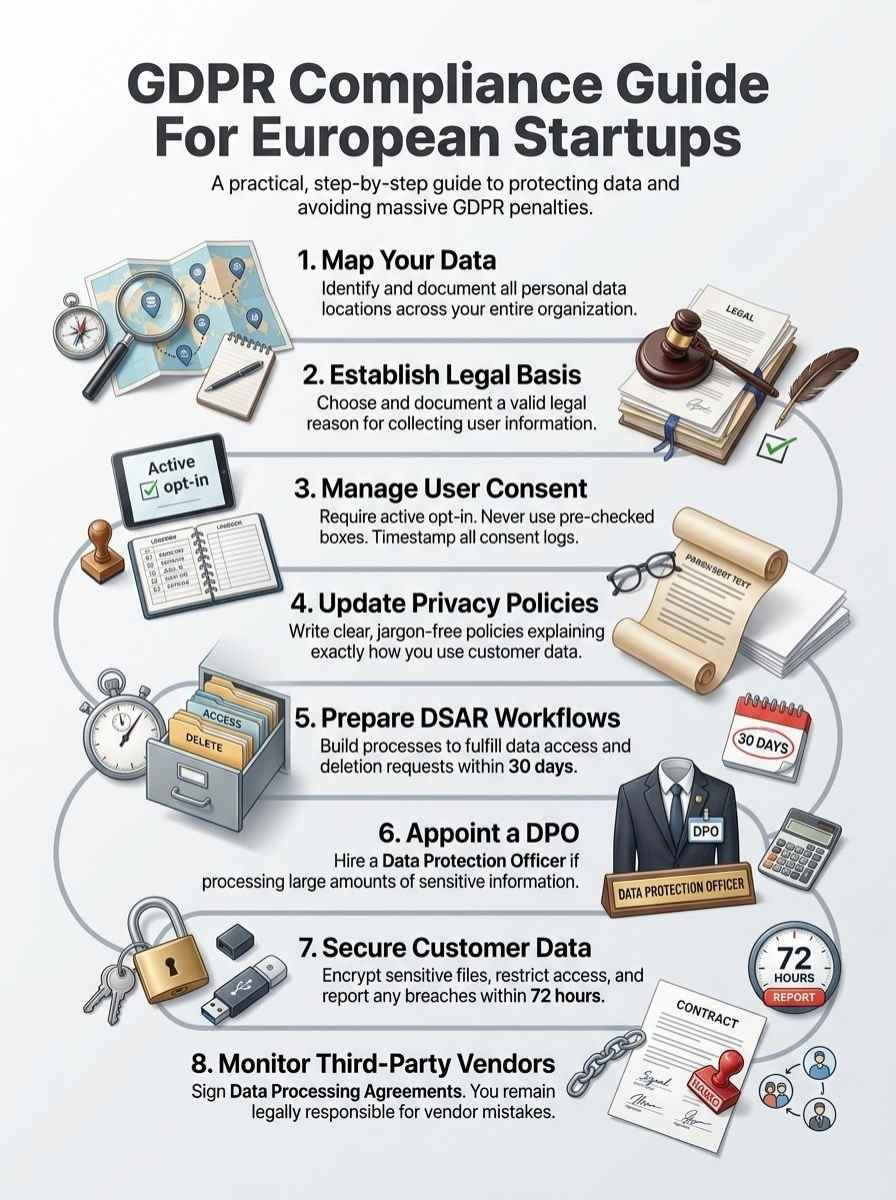
Getting your startup ready takes real work. These practical steps will guide you through the exact process.
They will help you build a strong foundation for long-term data protection.
Map and Inventory Personal Data
Data mapping forms the backbone of your compliance strategy. You cannot possibly protect what you do not know you have.
- Identify all personal data collected from customers and employees.
- Document every server location where you store this data.
- Track the exact flow of information through your entire organization.
- List every third-party tool that handles your customer details.
Maintain Your Data Inventory
A static list becomes useless very quickly as your business scales. You need to keep it updated constantly.
- Use automated tools to scan systems and identify new data locations.
- Implement privacy management platforms to maintain current inventories.
- Assign a specific team member to oversee the mapping process.
- Review your inventory quarterly to catch new collection points.
Establish a Lawful Basis for Data Processing
You need a solid legal reason to process data. Without it, you break the rules and face serious fines.
- Identify the specific lawful bases available to your startup.
- Choose consent when users actively agree to optional services.
- Use the contract basis to fulfill a direct software service agreement.
- Apply the legal obligation basis for required tax or employment reporting.
Implement Consent Management Mechanisms
Consent management builds direct trust with your users. Getting this right protects your business from regulatory action.
- Collect affirmative, informed consent before gathering any details.
- Avoid pre-ticked consent boxes completely across your entire site.
- Obtain separate, distinct consent for each unique processing activity.
- Allow users to withdraw their agreement easily and at any time.
Automate Consent Tracking
Manual tracking often leads to costly human errors. Automation keeps your records pristine and legally defensible.
- Deploy platforms like OneTrust or Cookiebot to automate collection.
- Log and timestamp all consents for specific, verifiable auditing purposes.
- Block non-essential cookies until users grant clear permission.
- Test your consent mechanisms thoroughly across different devices and browsers.
Update Privacy Policies and Procedures
Your privacy policy is your public commitment to data protection. It tells customers exactly what you do with their information.
- Place your policy where people actually see it, not buried in a footer.
- State clearly what personal data you collect and precisely why.
- Include the specific retention period for each individual data category.
- Describe complex user rights in simple, plain language.
Prepare Data Subject Rights (DSAR) Workflows
DSARs are formal requests from users asking for their personal data. Building solid workflows protects your startup and builds deep trust.
- Create a clear process for receiving requests through multiple support channels.
- Set up a strong identity verification system to prevent unauthorized access.
- Establish a central data location map to gather information quickly.
- Train team members to compile and send responses within one month.
Appoint a Data Protection Officer (DPO)
Your startup needs a Data Protection Officer if you process large amounts of sensitive information. You also need one if you monitor people systematically across the internet.
Startups with fewer than 250 employees typically skip this requirement, unless they hit those specific high-risk thresholds. Consulting legal resources from Edward Elgar Publishing can help clarify your specific situation.
Your DPO becomes your internal compliance backbone. They handle complex consent documentation, breach management, and subject rights requests efficiently.
Assigning a dedicated Data Protection Officer shifts compliance from an afterthought to a managed, strategic priority for your startup.
Secure Data and Manage Breaches Effectively
Data protection is the absolute foundation of customer trust. A single breach can destroy your reputation overnight.
- Encrypt all data in transit and at rest using strong AES-256 standards.
- Set up strict role-based access controls for all internal employees.
- Run regular penetration tests to find weak spots in your code.
- Create a detailed breach response plan before an actual incident happens.
Common GDPR Mistakes Made by Startups
Startups often trip over rules because they skip important planning steps. Small teams frequently miss critical details about sharing information with outside partners.
These oversights can turn into massive financial liabilities very quickly.
Overlooking Third-Party Compliance
Many startups hand off their data to vendors and think the job is completely done. That is a dangerous trap.
You stay legally responsible for what happens to your customer information. You must sign Data Processing Agreements with every cloud platform and CRM software you use.
Before you sign anything, dig into each vendor’s security practices.
- Ask for their most recent SOC 2 or ISO 27001 certification reports.
- Verify they have a tested incident response plan in place.
- Check if they transfer your data outside the UK or European Union.
- Require them to notify you of any breach within 24 hours.
Failing to Document Consent Properly
Startups often skip the paper trail when collecting user consent. You need concrete proof that users actually said yes to your data collection practices.
Your system must accurately log and timestamp every single consent action for compliance audits. If you cannot prove someone agreed, regulators will assume they flatly refused.
A user might accept your marketing emails but reject external analytics tracking. Your documentation becomes your primary shield during any regulatory investigations.
Technical measures must capture consent automatically and store it securely. Startups that treat consent documentation as an afterthought always discover the hard way that regulators do not accept excuses.
Benefits of GDPR Compliance Beyond Regulation
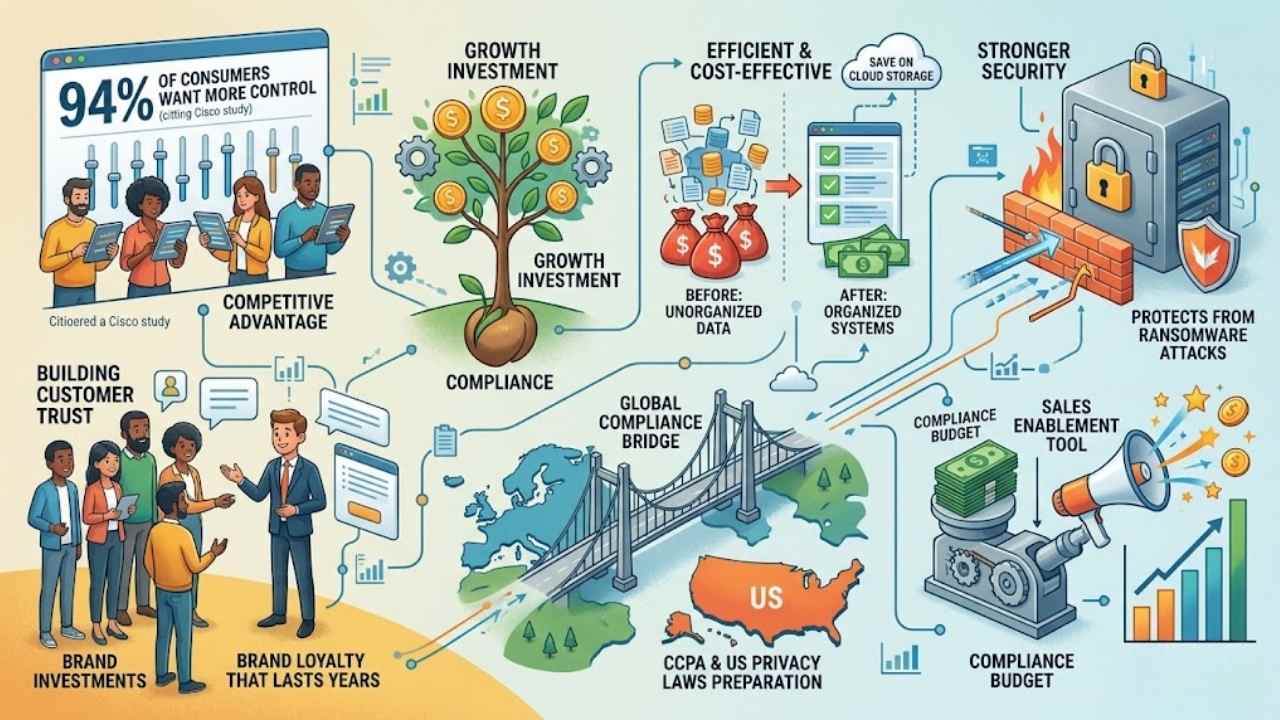
Your customers will trust you more when you follow these rules. This trust builds brand loyalty that lasts for years.
A 2024 Cisco study shows that 94% of consumers want more control over the information they share with companies. When you provide that control, you gain a massive competitive advantage.
Smart startups see privacy compliance as a growth investment.
- Organized data systems cost significantly less money to maintain.
- You spend less on cloud storage when you only keep necessary data.
- Stronger security protects your business from expensive ransomware attacks.
- Compliance perfectly prepares you for US laws like the California Consumer Privacy Act.
Leading with data privacy transforms your compliance budget from a sunk cost into a powerful sales enablement tool.
Final Thoughts
Getting your data practices in order does not have to feel impossible. You now understand the core principles, from data minimization to technical accountability. Taking action today helps you avoid massive fines and builds genuine customer trust. Start with a simple data inventory this week.
Sign those processing agreements with your vendors, and craft a clear privacy policy. Companies that build privacy into their foundation attract better talent and close enterprise deals much faster.