Losing clients feels like watching money walk out the door. Your agency works hard to land new business. But then, clients slip away before you can build real value together. You spend time and money to find them, only to start over again with fresh prospects. This cycle drains your team and hurts your bottom line. Keeping a client costs far less than finding a new one. Happy clients often bring referrals without you even asking.
I am going to walk you through client retention strategies and how to turn them into loyal partners. We will look at how to spot warning signs early and how to deliver real value.
Understanding Client Retention
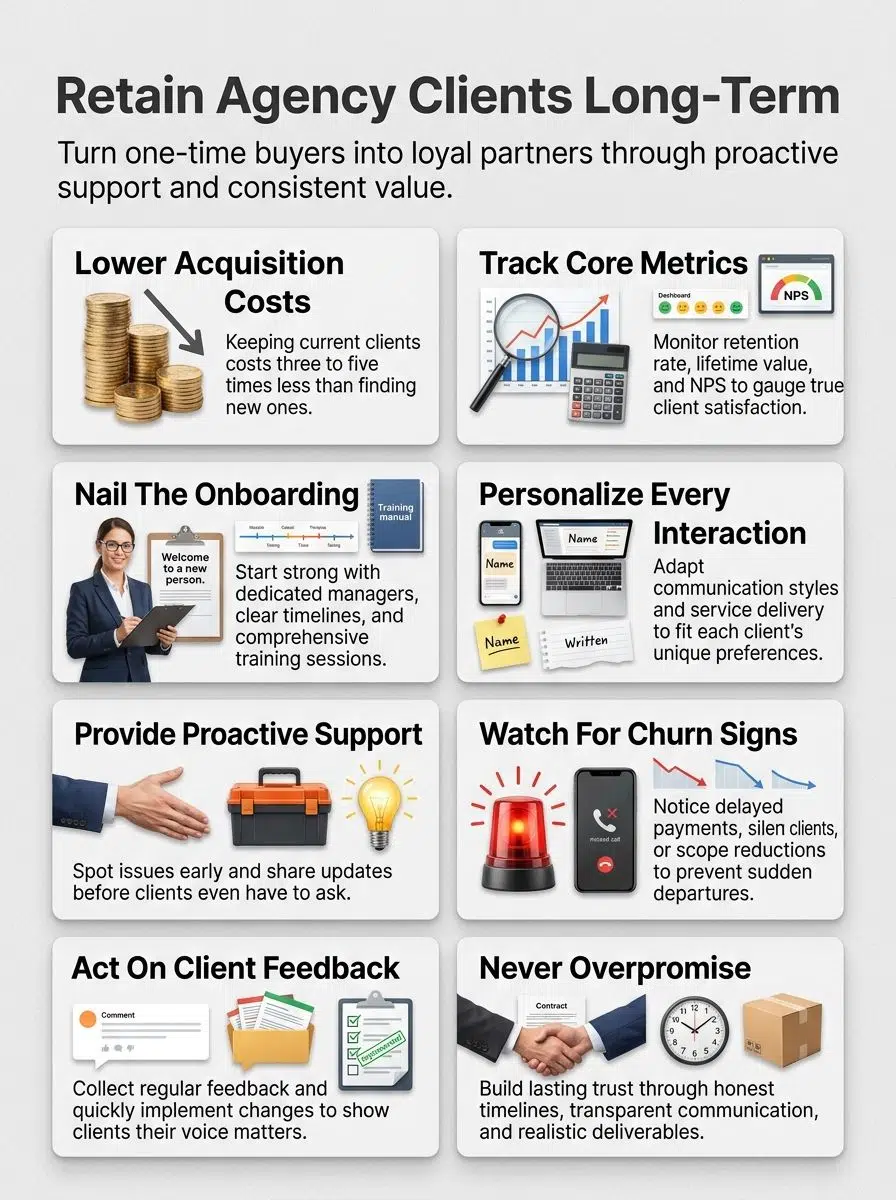
Client retention means keeping your current customers happy and engaged so they stick with your agency over time. It is the art of turning one-time buyers into loyal partners who come back again and again.
Your clients stay because you deliver real value, communicate clearly, and show them you care about their success. This approach costs far less than chasing new business constantly. It builds a foundation of trust that lasts for years.
Think of client retention as the difference between a quick handshake and a lasting partnership. Your relationship management efforts directly impact whether clients renew contracts, refer you to others, or jump ship to competitors.
Recent data from R3 shows that the average client-agency relationship lasts just 3.2 years in the US. For smaller shops, it is often under two years.
Strong client engagement happens when you listen to feedback, adapt to their changing needs, and prove your service excellence through consistent results. The companies that master this skill enjoy predictable revenue streams and a steady flow of repeat business that fuels long-term growth.
The Importance of Client Retention for Agencies
Keeping clients around costs far less than chasing new ones, and your bottom line feels the difference immediately. Stable, predictable revenue streams let you plan ahead and invest in your team.
Reducing Customer Acquisition Costs
Keeping your current clients happy costs far less than finding new ones. Studies show that acquiring a fresh client runs three to five times more expensive than retaining an existing one.
Your agency spends money on marketing, sales calls, proposals, and onboarding when you chase new business. Every dollar spent on client retention strategies pays dividends by keeping revenue flowing from accounts you already know well.
- Agencies spend 40% to 60% of a new client’s first three months of revenue just on onboarding and research.
- Your sales cycle shortens dramatically when existing clients have confidence in your work.
- Contract renewal becomes automatic when you deliver excellent service consistently.
Ensuring Predictable Revenue
Cutting your customer acquisition costs sets the stage for predictable revenue streams. Long-term client retention transforms your business from chasing new deals to counting on steady income.
Clients who stay with your agency month after month create a revenue foundation you can bank on. This stability lets you plan budgets, hire staff, and invest in growth without the constant pressure of filling your pipeline.
A widely cited Bain & Company study found that increasing retention by just 5% can boost profits by 25% to 95%. This long-term relationship building pays dividends because your client’s lifetime value grows with every successful project.
Predictable revenue is the heartbeat of a thriving agency; it transforms uncertainty into opportunity.
Enhancing Client Relationships
Steady revenue streams matter, but client relationships matter more. Strong partnerships transform clients into advocates who stick around for years.
According to a Promethean Research study, client referrals account for one-third of all new business for US marketing agencies. You build these relationships by showing genuine interest in their success, not just collecting paychecks.
Regular check-ins, honest conversations, and real problem-solving create trust that money cannot buy. Your clients feel valued when you ask about their goals, listen to their concerns, and adjust your approach based on what they tell you.
Essential Client Retention Metrics
You need to track the right numbers to keep clients happy and coming back for more.
Tracking Customer Retention Rate
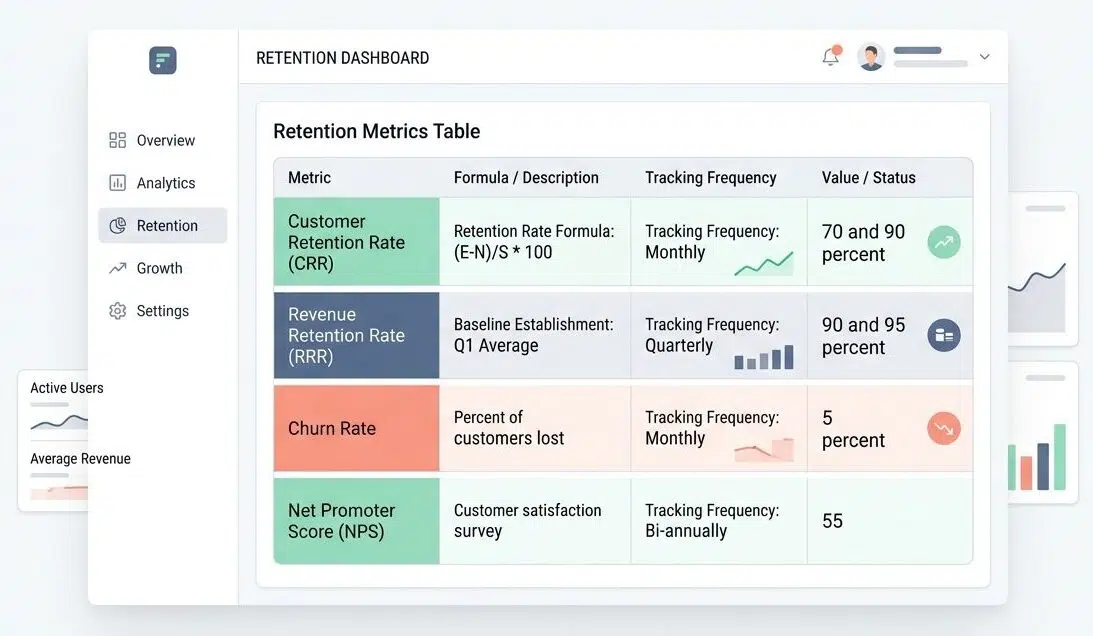
Measuring your customer retention rate tells you how many clients stay with your agency over time. Many US agencies in 2026 rely on tools like Usermaven or HubSpot CRM to track this automatically.
| Metric Component | Definition & Purpose | Key Takeaway |
|---|---|---|
| Retention Rate Formula | Take the number of clients at period end, subtract new clients acquired, then divide by clients at period start. Multiply by 100 for a percentage. | This calculation reveals the percentage of your existing client base that remained loyal, giving you a clear picture of stability. |
| Tracking Frequency | Monitor retention monthly, quarterly, and annually. Shorter intervals catch problems early; longer ones show broader trends. | Regular tracking prevents you from discovering major issues only after damage occurs. |
| Baseline Establishment | Identify your current retention rate first. This becomes your starting point for improvement efforts. | Without knowing where you stand, setting meaningful goals becomes impossible. |
| Segmentation by Client Type | Break retention rates down by client size, industry, or service type. Patterns emerge when you compare segments. | Certain client groups may churn faster, signaling where to focus retention efforts first. |
| Comparing Against Industry Standards | Agencies typically see retention rates between 70 and 90 percent. Compare your numbers to see competitive standing. | Benchmarking helps distinguish whether your retention challenges are normal or demand urgent action. |
| Linking to Financial Impact | Calculate what each percentage point means in revenue. A 5 percent improvement often translates to significant profit gains. | This connection makes retention feel less abstract and more tied to your bottom line. |
Calculating Customer Lifetime Value
Understanding what your clients will spend over time gives you real power in deciding where to invest your energy and resources.
| Key Points on Calculating Customer Lifetime Value | What This Means for Your Agency |
|---|---|
| Gather Historical Spending Data: Pull records from your past three to five years of client relationships. Look at how much money each client spent monthly or annually. Sort this data by client type or industry to spot patterns. | You will see which client segments bring the most revenue. This helps you focus your retention efforts on high-value relationships. Low-value clients might need different strategies altogether. |
| Calculate Average Contract Value: Add up the total revenue from all contracts. Divide by the number of clients you served. This gives you the average deal size your agency typically lands. | You can now benchmark new clients against your average. Knowing this number helps you set realistic retention goals. It also shows which clients punch above their weight in terms of spending. |
| Determine Average Customer Lifespan: Track how long clients stay with your agency on average. Calculate the mean by adding all client tenures and dividing by the total client count. | This reveals how stable your revenue streams really are. Longer lifespans mean more predictable cash flow. Short lifespans signal you need stronger retention strategies. |
| Factor in Profit Margins: Not all revenue is created equal. Subtract your costs from the contract value. Include salaries, software, office space, and any other expenses tied to serving that client. | A high-revenue client might actually be less profitable than a smaller one. True lifetime value shows profit, not just revenue. This changes which clients deserve your white-glove treatment. |
| Account for Expansion Opportunities: Many clients grow their spending over time. Track how often clients buy additional services from you. Note price increases clients accept year after year. | Growth potential matters when calculating lifetime value. A client who starts small but doubles their budget annually is worth more than a flat-spending client. This is where retention pays real dividends. |
| Use the Basic CLV Formula: Apply this math: (Average Contract Value) x (Average Customer Lifespan in years) x (Profit Margin). This gives you a single number representing what each client type is worth to your bottom line. | This formula keeps things simple and actionable. You can run it quarterly to watch trends. It becomes your north star for deciding where retention investments make sense. |
Assessing Net Promoter Score
Net Promoter Score tells you how likely your clients are to recommend your agency to others. In a December 2025 Survicate benchmark report, the median NPS for US Agency & Consulting firms was 59, which is considered quite strong.
| Key NPS Components | What It Means for Your Agency |
|---|---|
| The Core Question | Ask clients one simple thing: “How likely are you to recommend us on a scale of zero to ten?” This single question reveals client sentiment faster than a long survey. |
| Promoters (9-10) | These clients love your work, speak positively about your agency, and bring referrals your way. They are your growth engine. |
| Passives (7-8) | Passives stay with you but lack enthusiasm. They won’t advocate for your agency, yet they won’t leave either. Small improvements push them toward promoter status. |
| Detractors (0-6) | Detractors feel dissatisfied and may share negative experiences. They represent churn risk. These clients need immediate attention before they walk out the door. |
| Calculating Your Score | Subtract your detractor percentage from your promoter percentage. A score of fifty or higher indicates strong client health. |
Monitoring Churn Rate
Your churn rate tells you how many clients leave your agency over a specific time period. A 2026 survey by CustomerGauge notes that agencies utilizing AI-driven analytics tools like SentiSum often reduce their churn rates significantly by catching issues early.
Understanding your churn rate helps you fix problems before they spiral out of control. Most agencies aim for a churn rate below 10 percent annually. Lower churn means more predictable revenue and stronger customer loyalty.
Effective Long-Term Client Retention Strategies
You keep clients around by showing them you care about their success, not just your paycheck. Smart agencies build systems that make clients feel heard, valued, and genuinely supported every single day.

Strategy 01: Establishing a Strong Onboarding Process
A strong onboarding process sets the tone for your entire relationship. It determines whether clients stay engaged for the long term. According to a 2026 industry study by Wyzowl, companies using automated onboarding solutions report a 67% reduction in support tickets during the first 30 days.
You need to get this right to build a foundation for excellent service.
- Create a detailed onboarding checklist using software like ManyRequests or OnRamp to ensure nothing is overlooked.
- Assign a dedicated account manager so each new client has one clear point of contact from day one.
- Schedule an initial discovery meeting within the first week to discuss client objectives and success metrics.
- Document all client information in a centralized CRM system that your entire team can access.
- Provide clear training sessions specific to your client’s needs, covering the tools and workflows they will use.
- Establish clear communication protocols that define how often you will check in and which channels you will use.
Strategy 02: Personalizing Client Interactions
Once you nail your onboarding process, the real magic happens when you shift gears to personalizing interactions. Generic responses simply do not work anymore. Your clients crave attention that feels custom-made for their specific situation.
Start by learning what makes each client tick. Dig into their business goals, industry challenges, and past wins. A 2025 McKinsey report shows that personalized marketing and interactions can lift revenue by 5% to 15% and improve efficiency significantly.
“Personalization is about showing the client you are paying attention to their specific business, not just their checkbook.”
Call clients by name in emails and reference their past projects. Your team should track client preferences in a CRM like HubSpot or Salesforce so everyone stays informed. When a client prefers phone calls over emails, your account manager calls them.
Strategy 03: Providing Proactive Support and Communication
Your clients need support before problems pop up, not after they explode. Proactive support means you reach out first, share updates regularly, and spot issues coming down the road.
Your team should check in on a schedule and send progress reports without waiting to be asked. Tools like Slack Connect or Microsoft Teams shared channels make this incredibly easy to manage daily.
Good communication keeps everyone on the same page and makes clients feel valued. Share industry insights, offer advice before they request it, and celebrate wins together. When you deliver consistent value through steady contact, clients stick around.
Strategy 04: Recognizing and Addressing Churn Indicators
Spotting warning signs early saves your agency from losing valuable clients. Churn indicators tell you when a relationship needs attention before it falls apart. A 2026 report from a senior executive notes that the strongest churn signals often show up as silence, not anger.
- Watch for declining engagement, such as fewer questions or slower replies to your emails.
- Monitor payment delays, because financial friction often reveals deeper dissatisfaction.
- Look out for decreased project scope, which often means clients are testing other agencies.
- Pay attention if clients stop attending strategy sessions or skip regular review meetings.
- Notice if clients hire internal staff for work you previously handled.
- Track your support tickets; unresolved frustrations compound over time.
Strategy 05: Delivering Consistent Value in Services
Your clients stick around when you deliver real value every single time. Consistency matters more than flashy promises. You show up, do the work, and produce results that clients can measure.
This means hitting deadlines and maintaining quality standards. Service excellence is about being reliable. According to 2026 data from Outreach, 73% of CSOs and senior sales leaders are now prioritizing growth from existing customers over acquiring new ones. They know that consistent value delivery is the key to that growth.
Value delivery goes beyond the basic deliverables outlined in your contract. Clients appreciate it when you share industry insights or flag potential problems early. This proactive approach separates agencies that clients tolerate from agencies that clients love.
Strategy 06: Implementing Client Feedback Regularly
Client feedback shapes how agencies grow. Regular implementation of feedback transforms client satisfaction into lasting loyalty. You cannot just guess what your clients want.
- Create a structured feedback collection system using tools like Qualtrics or CustomerGauge.
- Schedule quarterly feedback sessions with each client to discuss what works and what needs improvement.
- Act on feedback quickly by assigning ownership to specific team members who track suggested changes.
- Build a feedback dashboard that displays client comments and ratings in one place.
- Share exactly how you have implemented client suggestions in your follow-up communications.
- Involve clients in problem-solving conversations when challenges arise.
Strategy 07: Celebrating Client Achievements
You have gathered feedback from your clients, and now it is time to show them you actually listened. Celebrating client achievements changes your relationship from transactional to genuinely invested.
Your clients hit milestones and accomplish wins. They deserve recognition for those moments. Highlight their success on your social media or feature them in your monthly newsletters. You can even host virtual celebrations using Zoom to mark a major launch.
Advocacy grows naturally when you celebrate wins with your clients. They will recommend you to peers because you showed up for their victories, not just their problems. This strategy strengthens your partnership and keeps clients engaged long-term.
Common Challenges in Client Retention
Keeping clients happy over time tests your agency’s ability to juggle competing demands. You will face real obstacles, from balancing personal touches with smart automation to holding client attention in a crowded market.
Balancing Automation and Personalization
Automation and personalization seem like they pull in opposite directions, but they actually work together beautifully. Your agency can use software tools to handle routine tasks like sending emails or generating reports. This frees up your team to focus on building real relationships.

“The best agencies use technology as a helper, not a replacement for human connection.”
Personalization makes clients feel valued. You might automate a monthly performance report using a tool like Mixpanel, but then add a handwritten note about a specific win your client achieved. This blend of efficiency and human touch keeps clients coming back.
Competing for Client Attention
Getting your clients’ attention takes real effort in today’s busy world. Your competitors fight for the same space in your clients’ inboxes and calendars. You need to stand out by showing value at every turn.
A 2026 study by Wyzowl found that using personalized video messages for client updates can increase retention by 50% compared to traditional text emails. You have to adapt your communication style.
- Send quick video updates using tools like Loom or Guided instead of long emails.
- Share clear, concise reports that highlight the exact metrics they care about.
- Host short, focused check-ins rather than long, wandering meetings.
- Reach out with specific, actionable ideas that solve their current problems.
Sustaining Long-Term Engagement
Grabbing your client’s attention is one thing, but keeping it alive is another battle altogether. Long-term engagement demands that you show up consistently, deliver results on schedule, and prove your value month after month.
Your retention strategy should include regular check-ins and strategic reviews that go beyond the typical status update. You build loyalty by making clients feel heard and valued. Treat each relationship as an investment.
Sustaining engagement means you actively listen to feedback. You celebrate their wins and show genuine interest in their business goals. Your team stays proactive by spotting trends and suggesting improvements before problems arise.
Developing Strong Client Relationships
Strong client relationships go far beyond transactional exchanges. You build real partnerships when you align your agency’s goals with what your clients actually need to succeed.
Partnering Beyond the Vendor Role
Your agency stops being just a vendor the moment you start thinking like your client’s business partner. You move from simply delivering services to actively contributing to their growth.
Your team asks better questions and offers solutions that align with their actual goals. Clients feel this difference immediately. They notice you care about their outcomes, not just your invoices. This approach builds loyalty that lasts for years.
You become woven into their business fabric. Sit down with your clients early to understand their market challenges. When both sides know where they stand, collaboration flows naturally.
Aligning on Goals and Values
Partnering beyond the vendor role means you show up as a true collaborator. Now comes the critical part: aligning on goals and values. This alignment forms the foundation of any long-term partnership.
You and your client must share the same vision for success. Talk openly about what matters most to each side. A US-based agency that clearly defines success metrics in the first 30 days is far more likely to retain that client for years.
- Define clear success metrics in the first 30 days.
- Establish an open dialogue about budget constraints.
- Schedule quarterly reviews to revisit core business values.
Fostering a Collaborative Environment
A collaborative environment transforms your agency from a vendor into a true partner. Your clients feel heard when you involve them in strategy sessions and treat their feedback as gold.
Create spaces where clients can brainstorm alongside your staff. Schedule regular check-ins that go beyond status updates. Use these moments to discuss goals and new opportunities together.
| Collaboration Method | Why It Works |
|---|---|
| Shared Workspaces | Using tools like Google Workspace or Notion allows clients to see progress in real-time, building trust. |
| Joint Brainstorming | Hosting quarterly strategy sessions makes the client feel like an active participant, not just a bystander. |
| Transparent Roadmaps | Sharing your 90-day plan ensures everyone is moving to the exact same finish line. |
Utilizing Technology for Enhanced Client Retention
Technology acts as your secret weapon to strengthen client bonds, track what matters most, and free up your team to focus on building real relationships.
Applying Data Analytics for Better Insights
Data analytics transforms how agencies track client satisfaction. Your data reveals which clients stay happy and which ones drift away.
Pull reports on project completion rates and communication frequency. Platforms like Usermaven or Mixpanel offer specialized cohort tracking that helps you spot behavioral trends before they turn into actual churn. Smart agencies use this data to make faster decisions.
Track your Net Promoter Score across different client segments. Compare retention rates month to month, and identify which account managers excel at building partnerships. This information shows you exactly where to invest your energy.
Employing Tools for Effective Collaboration
Your agency needs tools that bring teams and clients together in one place. Smart collaboration platforms turn scattered conversations into organized workflows.
- Use project management software like Asana or Trello to give clients visibility into your process.
- Deploy video conferencing platforms like Zoom to create face-to-face connections without the commute.
- Set up shared document platforms such as Google Workspace so clients can provide feedback easily.
- Create dedicated client portals using tools like Service Provider Pro to reduce back-and-forth emails.
- Utilize communication hubs like Slack to consolidate messages and keep responses quick.
- Implement CRM systems like HubSpot to track every interaction and contract renewal date.
Automating Processes to Enhance Client Focus
Automation tools help your team spend less time on repetitive tasks and more time building strong relationships. Smart systems handle routine work seamlessly.
- Set up automated reporting systems that send clients their performance data on a regular schedule.
- Use workflow automation to handle invoicing and contract renewals so nothing falls through the cracks.
- Implement scheduling software like Calendly to automatically book meetings and send reminders.
- Create automated email sequences that deliver helpful industry insights to keep your agency top-of-mind.
- Set up alerts in your CRM that flag potential churn indicators, like missed payments or declining activity.
- Establish automatic contract renewal reminders that prompt both your team and your clients well in advance.
Avoiding Common Client Retention Mistakes
Many agencies stumble when they fail to communicate clearly or overpromise on deliverables. Your clients need transparency about what you can deliver and honest conversations about what is realistic.
Ensuring Clear Communication and Transparency
Straight talk builds trust, and trust keeps clients around for the long haul. Your agency should share project updates regularly and explain pricing without hidden fees.
Clients hate surprises. Lay out timelines and expectations from day one. Open channels of communication mean your team responds to questions fast and clarifies confusion before it grows. This transparency prevents major misunderstandings.
Honesty about what you can deliver matters more than flashy promises. If a strategy needs adjustment, explain why and show the data backing your recommendation. Clients appreciate agencies that own their mistakes and fix them without excuses.
Adapting to Client Needs Effectively
Your clients change. Their goals shift, and their budgets move around. Your job is to move with them, not against them.
“Clear communication is the fastest way to build trust, and the easiest thing to lose if you are not careful.”
Successful agencies listen hard to what clients say they need, then adjust service delivery to match. This means checking in regularly and staying flexible. Engagement stays strong when you adapt your approach to fit each person’s situation.
Avoiding Overpromises and Underdeliveries
Adapting to what clients need sets the stage for real success, but making promises you cannot keep destroys everything you built. Overpromising happens when agencies get excited about landing new business.
You might say yes to timelines you cannot meet or results you cannot guarantee. The damage runs deep. Clients lose trust fast when reality does not match what you promised. That broken trust leads to churn and bad reviews.
Instead, be honest about what you can do. Build in buffer time for unexpected problems. The classic rule of “underpromise and overdeliver” remains a powerful secret for long-term partnerships. Tell clients exactly what results are realistic, and show them examples of past work so expectations match reality.
The Bottom Line
Learning how to retain agency clients long-term shapes your agency’s future. Strong relationships drive predictable revenue and build your reputation in the US market. Your team must commit to delivering consistent value and listening to client feedback. These actions transform clients into loyal advocates who refer new business to you.
Success in client loyalty requires you to move beyond transactional interactions. Invest in partnership development, align your goals with theirs, and celebrate their wins as your own.
Track your churn reduction efforts through retention metrics and use data analytics to spot problems early. Your agency grows when clients succeed. Make their achievement your mission too.
Frequently Asked Questions
1. How can I keep agency clients coming back year after year?
Start by listening to what your clients want and fixing any mistakes quickly, because honesty builds more loyalty than perfection. A recent Swydo report found the average agency-client relationship in the US lasts just 3.2 years, making your reliability incredibly valuable. Show up on time and answer questions fast to become the trusted partner they simply cannot replace.
2. What makes a client stick with an agency for the long haul?
People stay when they feel valued and see clear results, which is vital since a July 2025 vCita report noted that 40 percent of small businesses leave agencies quickly if they do not see actual revenue growth. Make each meeting count by bringing fresh ideas or solutions to the table every single time. Share wins often and tell stories about their progress to prove your worth as a strategic partner.
3. How do I handle tough feedback from a client without losing trust?
Take criticism as free advice and thank them for sharing, because the Edelman Trust Barometer highlights that making people feel genuinely heard is the absolute best way to build lasting business relationships.
4. Is regular communication really that important in keeping agency clients happy?
Absolutely, because a UPCEA study revealed that agencies providing structured, regular updates keep clients around 2.3 times longer than those with spotty communication. Check in even when there is no big news to share. A simple, friendly message asking how things are going keeps relationships strong and opens doors for new projects down the road.