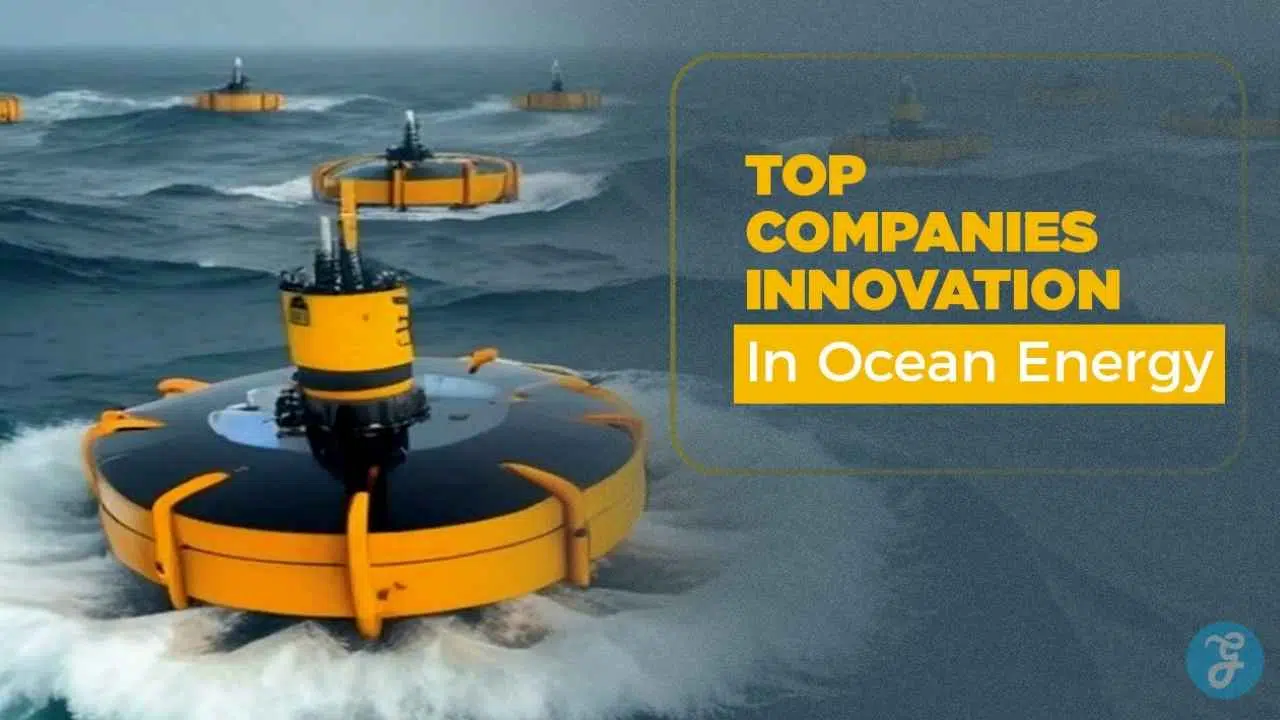
The ocean covers more than 70% of our planet, yet for decades, we’ve barely used it to keep the lights on. While solar panels and wind turbines have become common sights in our daily lives, the “Blue Economy” has often felt like a distant science experiment that never quite graduated to the real world. That changes now. As we move through 2026, we are witnessing a pivotal shift in the global energy matrix.
We aren’t just looking at computer simulations or small-scale tank tests anymore; we are seeing steel in the water and power on the grid. Ocean energy companies are finally cracking the code on reliability, survivability, and cost, addressing the critical gaps left by other renewables.
Why does this matter so much right now? Because the tides don’t stop when the sun sets, and waves don’t vanish when the wind dies down. To build a truly 24/7 green grid, we need the predictable power of the ocean. Recent breakthroughs in 2025 and early 2026 have proven that these technologies can survive harsh winters and deliver consistent energy. This article cuts through the hype to highlight the six players actually delivering results this year, moving beyond promises to tangible power production.
The Rise of Ocean Energy: Why Now?
You might be wondering, “If the ocean is so powerful, why didn’t we do this thirty years ago?” The honest answer is that the ocean is a brutal, unforgiving environment for machinery. Saltwater corrodes metal, biofouling clogs moving parts, and storms destroy hardware with terrifying ease. However, three specific factors have shifted in the last 18 months to make 2026 the breakout year for the industry. First, we have seen a massive leap in technological maturity. Companies have moved from “passive” devices that just bob up and down to “active” smart machines that tune themselves to the waves, much like noise-canceling headphones cancel sound. This “active control” allows them to generate power efficiently in small waves while surviving massive ones.
Second, there is unprecedented government backing. With initiatives like the EU Innovation Fund and the US Marine Energy Technologies Acceleration Act pumping millions into the sector, the financial risk for these projects has plummeted, encouraging private investment. Finally, there is a critical grid demand coming from the tech sector. Data centers and AI models are hungry for power, and they need it around the clock—something solar simply can’t provide without massive, expensive battery banks. Ocean energy provides that steady “baseload” profile that modern grids are desperate for.
| Factor | Description | Impact on Industry |
| Technological Maturity | Shift from passive to “active” control systems. | Increases energy capture by 300-500% and ensures storm survival. |
| Grid Needs | AI & Data Centers require 24/7 power. | Drives demand for predictable, non-intermittent renewable sources. |
| Policy Support | EU Innovation Fund & US Legislation. | De-risks early commercial projects and lowers capital costs. |
| Public Perception | Shift from “niche” to “necessary.” | Increases retail and institutional investment in blue economy stocks. |
Our Criteria for Selection
To keep this list unbiased, factual, and genuinely useful for investors and enthusiasts, we didn’t just pick the startups with the coolest concept art on their website. We looked for companies with “wet hardware”—actual machines operating in the ocean right now. We focused heavily on survivability because the history of wave energy is littered with devices that worked great until the first big winter storm tore them apart. We also looked for commercial viability, meaning are people actually paying for this power, or is it still just a grant-funded experiment?
We also analyzed recent momentum. A company might have had a great prototype in 2020, but if they haven’t done anything since, they aren’t leading the charge in 2026. The companies listed here have all achieved major milestones—be it grid connections, massive funding rounds, or successful long-term deployments—within the last 12 to 18 months. This ensures that the information you are reading is current and reflects the leaders who are actively shaping the future of the blue economy today.
| Metric | Definition | Why It Was Prioritized |
| Steel in the Water | Full-scale prototypes currently active at sea. | Proves the technology works outside of a laboratory tank. |
| Commercial Contracts | Signed Power Purchase Agreements (PPAs). | Indicates market trust and a path to revenue generation. |
| Storm Survivability | Proven ability to withstand 18m+ waves. | Ensures the investment won’t be wiped out by a single bad winter. |
| 2025/26 Activity | Major milestones hit in the last year. | Filters out “zombie” companies that are no longer innovating. |
1. CorPower Ocean (Wave Energy)
The Tech: Bio-Inspired Buoys
CorPower is arguably the leader of the pack right now, often described as the “Tesla of wave energy” for its sleek engineering and high efficiency. Their technology, the C4 Wave Energy Converter, is inspired by the pumping principles of the human heart. It uses a unique “WaveSpring” technology that pumps in phase with the waves, amplifying the motion and energy capture. Think of it like pushing a child on a swing—if you push at the exact right moment, they go higher with less effort. This phase control allows their buoys to generate five times more energy per ton than standard competitors. Crucially, in storm conditions, the device can “detune” itself, effectively going limp to let monster waves pass by without damage, solving the industry’s oldest problem.
Key Projects & 2026 Status
The big story here is their massive success in Portugal. In late 2025, CorPower secured a staggering €40 million grant from the EU Innovation Fund for the “VianaWave” project. This isn’t just a test; it is a full-scale 10MW wave farm deployment off the coast of Viana do Castelo. Furthermore, their device at the Aguçadoura site successfully survived the brutal Storm Domingos, shrugging off 18.5-meter waves. This real-world battle testing has proven their survivability claims were not just marketing fluff. They are now moving from single-device demonstrations to building “CorPack” arrays, which are clusters of buoys that plug into the grid just like a wind farm.
Why They Made the List?
They made the list primarily for solving the survivability equation. The biggest skepticism investors have about wave energy is, “Won’t it break in a storm?” CorPower proved in the harsh Atlantic waters that their kit can take a beating and keep working. Their ability to turn a destructive force into a manageable one sets them apart from 99% of historical wave energy concepts.
| Feature | Details |
| Core Technology | Point Absorber with “WaveSpring” Phase Control. |
| Key Location | Viana do Castelo, Portugal (VianaWave). |
| Recent Funding | €40 Million EU Innovation Fund Grant (Late 2025). |
| Key Advantage | Storm survivability via “detuning” mode. |
2. Orbital Marine Power (Tidal Stream)
The Tech: The Floating Superstructure
If CorPower is the heart, Orbital is the muscle. Their O2 turbine looks like a futuristic spaceship floating on the water’s surface. Unlike traditional tidal turbines that sit on the ocean floor and require expensive heavy-lift crane ships to service, the O2 floats. Two giant legs drop down from the main hull, holding rotors that capture the fast-moving tidal flow. The genius of this design is that you don’t need a submarine or a diver to fix it. The legs flip up to the surface, meaning a standard workboat and a crew with a wrench can do maintenance. This radically lowers the operating costs, which has always been the Achilles’ heel of tidal energy.
Key Projects & 2026 Status
Orbital closed 2025 with significant momentum, securing an €8 million investment round led by Scottish Enterprise to fuel their global expansion. They are currently doubling their order book and have moved aggressively into the Canadian market with new licenses in Nova Scotia, a region famous for having the highest tides in the world. In the UK, they hold contracts for 14.4MW of power, cementing their status as the heavyweight of tidal stream energy. Their technology is also being eyed for “island mode” applications, helping remote island communities switch off diesel generators.
Why They Made the List?
They made the list because of their focus on “OpEx” (Operating Expenses). Building a turbine is easy; fixing it underwater is a logistical nightmare. Orbital solved this by keeping the expensive bits accessible on the surface. This practical, maintenance-first approach makes them one of the most bankable companies in the sector.
| Feature | Details |
| Core Technology | Floating Tidal Stream Turbine (O2). |
| Key Location | Orkney, Scotland & Nova Scotia, Canada. |
| Recent Funding | €8 Million Growth Capital (Dec 2025). |
| Key Advantage | Low-cost maintenance (turbines flip to surface). |
3. Eco Wave Power (Onshore Wave)
The Tech: Smart Floaters
Eco Wave Power (NASDAQ: WAVE) takes a completely different approach that prioritizes safety and accessibility. Instead of going deep out to sea where the waves are roughest, they attach their floaters to existing man-made structures like piers, breakwaters, and jetties. The floaters move up and down with the waves, pushing hydraulic cylinders that pressurize a fluid. This fluid spins a generator that is kept safe and dry on land. This means no divers, no ships, and no undersea cables are needed for maintenance. It turns existing coastal defense structures into green energy power plants.
Key Projects & 2026 Status
This is the most accessible stock for public investors, and they have delivered strong data recently. Their site at Jaffa Port in Israel reported zero downtime in January 2026, generating over 2,300 kWh in just 11 days during winter swells. Even more historically significant was their launch at the Port of Los Angeles in September 2025—the first onshore wave energy pilot in the United States. This expansion into the US market is a massive signal that their technology can navigate complex regulatory environments.
Why They Made the List?
They made the list for their simplicity and cost-effectiveness. By piggybacking on existing structures, they avoid the massive capital costs of laying undersea cables miles offshore. It is a low-risk, high-visibility model that is easier for city planners and port authorities to approve compared to deep-sea projects.
| Feature | Details |
| Core Technology | Onshore Point Absorber (Attached to piers). |
| Key Location | Port of Los Angeles, USA & Jaffa Port, Israel. |
| Recent Data | Zero downtime in Jan 2026; >2300 kWh in 11 days. |
| Key Advantage | No underwater maintenance; uses existing infrastructure. |
4. Minesto (Tidal Kites)
The Tech: Underwater Kites
Minesto is the “wild card” entry with the most visually unique technology. Their device, the “Dragon,” doesn’t look like a turbine at all—it looks like a plane. It is an underwater kite that is tethered to the sea floor. It “flies” in a figure-eight pattern, steered by rudders and controlled by onboard computers. This flight path speeds up the water flowing over the turbine attached to the kite, allowing it to generate power in slow currents where traditional heavy turbines would stall. It effectively multiplies the speed of the water, unlocking vast areas of the ocean that were previously thought to be unusable.
Key Projects & 2026 Status
In May 2025, Minesto upgraded their “Dragon 12” kite in the Faroe Islands with a longer tether, which instantly boosted power production by 25%. They have also launched a clever “Space Program” marketing campaign with SKF, branding their tech as “Moon Energy” (since the moon controls the tides) to capture public imagination. Currently, they are leading a consortium with a 25 MSEK grant to build a tidal microgrid, proving that their kites can power entire communities independently.
Why They Made the List?
They made the list because of geography. Standard tidal turbines need very fast, aggressive water to work, which limits them to a few specific channels around the world. Because Minesto’s kites create their own speed, they can work in slower, deeper ocean currents, opening up a potential market that is ten times larger than what competitors can access.
| Feature | Details |
| Core Technology | “Deep Green” Underwater Tidal Kite. |
| Key Location | Vestmanna, Faroe Islands. |
| Recent Update | Tether upgrade yielded 25% power boost (2025). |
| Key Advantage | Operates efficiently in low-flow, deep-water currents. |
5. Ocean Power Technologies (Autonomous Maritime)
The Tech: PowerBuoy & WAM-V
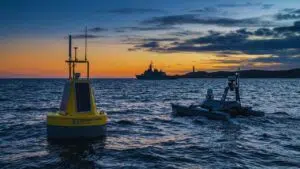
Ocean Power Technologies (OPT) realized early on that competing with the main power grid is incredibly difficult and capital-intensive. So, they pivoted to a smarter, higher-margin niche: “Data as a Service.” Their PowerBuoys are autonomous floating stations that generate solar and wave energy to power onboard cameras, radar, and 5G communications. They also produce the WAM-V, an autonomous surface vessel (drone boat). Instead of trying to power a city, they are powering the “eyes and ears” of the ocean for defense and scientific research.
Key Projects & 2026 Status
OPT has found its stride in the defense sector. In early 2025 and continuing into fiscal 2026, they have delivered multiple WAM-V vessels to Allied Forces and European offshore providers. Their backlog of orders has surged as navies and border patrol agencies look for persistent, unmanned surveillance solutions. They are effectively becoming the “charging station and sentry” of the ocean, providing power to underwater drones and transmitting data back to shore without any human intervention.
Why They Made the List?
They made the list for their successful pivot and niche dominance. They aren’t fighting the uphill battle of “Levelized Cost of Energy” against wind farms. They are selling mission-critical data and security services where price is less of an issue than reliability. It’s a smart, lucrative strategy that sets them apart from pure utility plays.
| Feature | Details |
| Core Technology | PowerBuoy (Wave/Solar hybrid) & WAM-V Drones. |
| Key Market | Defense, Maritime Security, Scientific Data. |
| Recent Status | Record backlog growth in Fiscal Q1 2026. |
| Key Advantage | Dominance in autonomous maritime power & data. |
6. Carnegie Clean Energy (AI-Driven Wave)
The Tech: CETO & MoorPower
Carnegie’s CETO device is unique because it sits completely underwater, invisible from the shore. It uses a giant submerged balloon-like actuator that moves with the orbital motion of waves. But the real magic isn’t the hardware—it’s the software. Carnegie is betting big on Artificial Intelligence. Their controllers use “Reinforcement Learning” to predict the shape and force of a wave before it even hits the device. This allows the machine to adjust its resistance in real-time, extracting the maximum possible energy from every single ripple and swell.
Key Projects & 2026 Status
Carnegie is currently executing the “ACHIEVE” program, a major initiative funded by EuropeWave. They are deploying their CETO technology at the BiMEP test site in the Basque Country, Spain. In 2025, they solidified a partnership with manufacturing giant SKF to refine their AI-driven controllers. This deployment in Spain is critical, as it serves as the final validation step before commercial rollouts. They are also marketing “MoorPower,” a smaller spin-off product designed to power aquaculture barges and fish farms.
Why They Made the List?
They made the list for their focus on intelligence. They are proving that software is just as important as hardware in the ocean energy game. By using AI to “outsmart” the waves, they can use smaller, cheaper hardware to generate the same amount of power as larger, “dumb” machines.
| Feature | Details |
| Core Technology | CETO (Submerged Point Absorber) & AI Controller. |
| Key Location | BiMEP, Basque Country, Spain. |
| Recent Partnership | SKF Partnership for AI Drive Systems (2025). |
| Key Advantage | AI prediction maximizes energy capture efficiency. |
Challenges Facing the Industry
Let’s not wear rose-tinted glasses—this industry is tough, and significant hurdles remain before we see ocean energy in every coastal city. The ocean tries to destroy everything you put in it, and that creates unique engineering and financial headaches. The first major challenge is the Saltwater Problem. Biofouling is a massive issue; barnacles and algae grow on moving parts within weeks, potentially jamming gears and reducing efficiency. Companies like CorPower have had to develop specialized composite hulls and cleaning protocols to fight this, but it remains a constant maintenance battle that adds to the bottom line.
The second hurdle is the “Plug-In” Cost. Generating power is one thing; getting it to your toaster is another. Laying undersea cables is incredibly expensive, costing millions of dollars per mile. This is why Eco Wave Power’s strategy of attaching to land is so financially smart—they skip this cost entirely. For offshore projects, the regulatory red tape is also thick. The ocean is a crowded place, shared by fishing fleets, shipping lanes, and naval defense zones. Getting a permit to drop a 100-ton machine into the water can take years of environmental impact studies and negotiations.
| Challenge | The Problem | The Emerging Solution |
| Biofouling | Marine life grows on gear, jamming it. | Ultrasonic anti-fouling & specialized smooth coatings. |
| Grid Connection | Undersea cabling costs millions per mile. | Co-locating with offshore wind farms to share cables. |
| Survivability | Storms can tear devices apart. | “Detuning” modes (CorPower) or submerging deep (Minesto). |
| Permitting | Years of delays for environmental approval. | Pre-permitted test zones like EMEC (UK) & BiMEP (Spain). |
Future Outlook: The Blue Economy in 2030
So, where is this all going? By 2030, don’t expect ocean energy to replace wind or solar. Instead, expect it to become their best friend. We are moving toward a future of Hybrid Systems. Imagine a massive offshore wind farm. Between the wind turbines, you have wave energy buoys floating in the water. They share the same power cable (saving millions) and when the wind stops blowing, the waves keep the power flowing. This “co-location” model is widely seen as the future of offshore energy.
We also expect a surge in “Island Mode” applications. Remote islands currently burn expensive, dirty diesel for power because it’s reliable. Ocean energy is the perfect replacement, providing steady, local power without the fuel import costs. By 2030, we predict that the “Levelized Cost of Energy” (LCOE) for ocean power will drop by 40%, making it competitive with offshore wind in many regions. As mass production kicks in, the companies listed above will likely be the ones setting the standards for this new era.
| Trend | Prediction |
| Cost Reduction | LCOE expected to drop by 40% as mass production starts. |
| System Integration | 50% of new projects will be hybrid (Wave + Wind) to save cabling costs. |
| Market Consolidation | Oil & Gas giants will likely acquire 2-3 of the top startups listed above. |
| Energy Security | Coastal nations will mandate ocean energy targets for grid resilience. |
Final Thoughts
The ocean is often called the “sleeping giant” of the renewable energy world. For a long time, it seemed like it would never wake up. But looking at the progress made by these ocean energy companies in 2026, the giant is stirring. From the storm-proof buoys of CorPower to the underwater kites of Minesto, the technology is finally catching up to the ambition.
We are entering a phase where the Blue Economy stops being a concept and starts being a utility. If you care about the future of clean energy, keep an eye on the water. The next revolution isn’t looking up at the sun—it’s looking down at the waves.