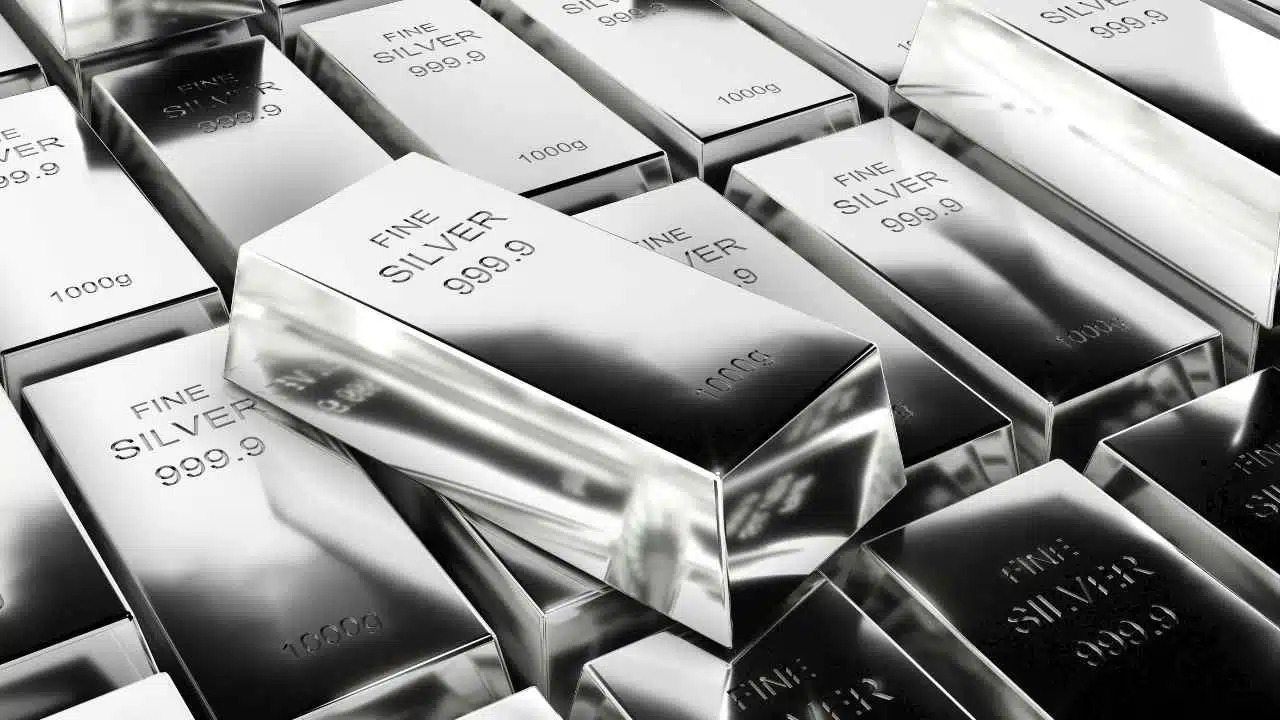
Silver surges past $80 per ounce on December 29, 2025, hitting a fresh record before turning volatile, as tight supply, rising industrial use, and shifting trade and rate expectations pull investors and manufacturers into a fast-moving market.
Silver breaks the $80 barrier and volatility spikes
Silver’s jump above $80 was more than a headline moment. It marked a psychological breakout that traders often watch because “round numbers” can trigger automatic buying, margin calls, and rapid profit-taking.
During the session, silver briefly pushed to an intraday record and then slid back, showing how quickly sentiment can shift once prices move into unexplored territory. When a market reaches new highs, some buyers rush in to avoid missing the move, while others sell to lock gains. That tug-of-war often produces sharp swings.
The surge also arrived alongside strength across precious metals. Gold stayed near record territory, and platinum and palladium also saw big moves. Even when the spotlight is on silver, many funds trade metals as a group, rebalancing positions based on macro signals like interest-rate expectations and currency moves.
Snapshot of the late-December metals move
| Metal | Key headline level | Example same-day pullback level | What it signaled |
| Silver | Above $80/oz | Back below $80/oz | Breakout + extreme volatility |
| Gold | Near record highs | Slight retreat | Continued safe-haven demand |
| Platinum | Record territory | Mild pullback | Tight supply narrative |
| Palladium | Large swings | Sharp drop | Thin liquidity and risk-off selling |
This kind of price action matters beyond trading desks. Silver is both a financial asset and a real-world input. When prices jump this fast, the effects can spread into manufacturing costs, supply contracts, and hedging decisions.
What’s driving the silver rally: demand, money flows, and psychology
Several forces are pushing in the same direction, making the rally feel powerful—and sometimes unstable.
First, silver is benefiting from renewed interest in hard assets. When investors expect easier monetary policy or worry about the purchasing power of currencies, they often increase exposure to assets that can’t be printed. Silver tends to amplify these moves because its market is smaller and can react faster than gold.
Second, silver has a unique advantage: it is widely used in industry. That means demand isn’t only driven by investors. When industrial buyers keep purchasing even at higher prices, it can reinforce the perception that the market is genuinely tight.
Third, momentum itself becomes a driver. Once prices start breaking prior highs, more trading strategies get activated. This includes trend-following funds, options activity, and short-covering. If many traders were positioned for a pullback, a sudden breakout can force them to buy back positions quickly, pushing prices higher in a feedback loop.
Finally, headlines about supply risks can hit silver harder than other metals because much of the world’s silver production is not “primary” silver mining. It is often produced as a byproduct of mining for other metals. That structure makes supply harder to ramp up quickly when demand surges.
The supply story: multi-year deficits, tight inventories, and limited flexibility
The most important фундамент behind the rally is the idea that the market has been running short—year after year.
Recent industry data shows strong industrial demand and a significant structural deficit, meaning total demand has exceeded supply. When deficits persist, inventories become more important. Even if the world produces large volumes each year, a market can still feel tight if the metal is already committed through industrial pipelines, locked in long-term holdings, or sitting in vaults that don’t easily flow into fabrication.
Global supply-demand picture (latest full-year data available)
| Metric | Approx. volume |
| Total demand | ~1.16 billion ounces |
| Industrial demand | 680.5 million ounces |
| Mine production | 819.7 million ounces |
| Recycling supply | 193.9 million ounces |
| Market balance | -148.9 million ounces (deficit) |
Industrial demand is doing much of the heavy lifting. Silver is used heavily in electrical and electronic applications because it conducts electricity extremely well. It is also central to solar technology, where it helps move electrons efficiently. As solar deployment expands and devices become more power-dense, demand pressure can build even if other categories such as jewelry fluctuate.
On the supply side, recycling helps, but it can be slow to respond. People and companies recycle more when prices rise, yet recycling depends on collection systems, processing capacity, and what scrap is actually available. Mine production is also constrained by geology, permitting, and investment cycles. And because so much silver is produced as a byproduct, higher silver prices alone don’t automatically translate into a quick supply surge.
This is why “inventory tightness” becomes a recurring theme in silver markets. When available stock looks thin relative to demand, buyers pay up for immediate delivery, and investors bid higher for exposure.
Policy and macro forces: rates, trade rules, and geopolitical risk
Silver’s move past $80 didn’t happen in a vacuum. Several policy and macro signals have strengthened the case for owning precious metals while raising concerns about future supply conditions.
One major tailwind is interest-rate expectations. When markets anticipate rate cuts, the relative appeal of holding non-yielding assets like precious metals tends to improve. Lower rates can also weaken the U.S. dollar, and a softer dollar often supports dollar-priced commodities because they become cheaper for non-U.S. buyers.
Another force is geopolitics and trade policy. When conflict risks rise or global trade feels less predictable, investors often seek hedges. Silver can benefit from this “safety bid,” but it also reacts to supply-chain fears because so much demand is industrial and time-sensitive.
In late 2025, policymakers also signaled that silver is strategically important. When governments classify minerals as critical, it can influence investment priorities, stockpiling discussions, and the public narrative around supply security. That doesn’t automatically change supply overnight, but it can change expectations—and expectations move prices.
At the same time, new trade and export administration rules can raise uncertainty in physical markets. When exporters must meet stricter qualification requirements, or when market participants fear tighter controls, buyers often try to secure supply earlier and in larger quantities. Even the possibility of restricted flows can lift prices because the market is pricing risk, not just current shipments.
Why “critical mineral” and export administration headlines matter
| Theme | What it can change | Why the market reacts |
| Critical-mineral designation | Investment focus, policy attention | Signals strategic value and potential supply-security actions |
| Export administration changes | Who can sell, and how much | Adds friction and uncertainty to cross-border flows |
| Rate-cut expectations | Dollar and real yields | Increases appeal of precious metals as an alternative asset |
| Geopolitical risk | Safe-haven demand | Encourages hedging and reduces risk appetite in other assets |
In short: silver is being pulled higher by both money and metal. Investors are buying because macro conditions look supportive, while the physical market is tight enough that industrial demand can’t easily step aside.
What to watch next—and what could cool the rally?
Silver’s move above $80 is a milestone, but the next phase will depend on whether fundamentals continue to justify today’s price level.
Three questions stand out.
1. Will physical tightness persist?
If supply remains constrained and deficits continue, any dip could attract buyers quickly. If recycling rises sharply or mine output surprises to the upside, pressure could ease—but those responses often take time.
Will industrial demand stay resilient at higher prices? Manufacturers don’t stop using silver overnight, but high prices can lead to efficiency improvements, substitution where possible, or delayed projects. If solar and electronics demand holds up, it strengthens the case that the rally is not only financial.
2. Will macro conditions stay supportive?
A change in rate expectations, a stronger dollar, or easing geopolitical tensions can reduce demand for hedges and trigger profit-taking. Silver tends to move faster than gold in both directions, so reversals can be swift.
What comes next: practical indicators to track
| Indicator | Why it matters | What to look for |
| Inventory trends in major vault systems | Signals real-world tightness | Sustained drawdowns or slower inflows |
| Industrial demand signals | Confirms usage strength | Solar deployment pace, electronics cycles |
| Policy and trade updates | Can reshape supply access | New export rules, compliance changes |
| Rate and dollar direction | Drives investor flows | Shifts in rate-cut pricing and USD strength |
| Volatility and options activity | Shows stress in positioning | Bigger daily ranges, rising hedging costs |
If silver stays elevated, expect a wider debate about long-term supply investment, recycling capacity, and strategic access to critical inputs. If the market cools, the pullback may still leave silver at a far higher “new normal” than earlier in the year—especially if deficits and industrial demand remain strong.