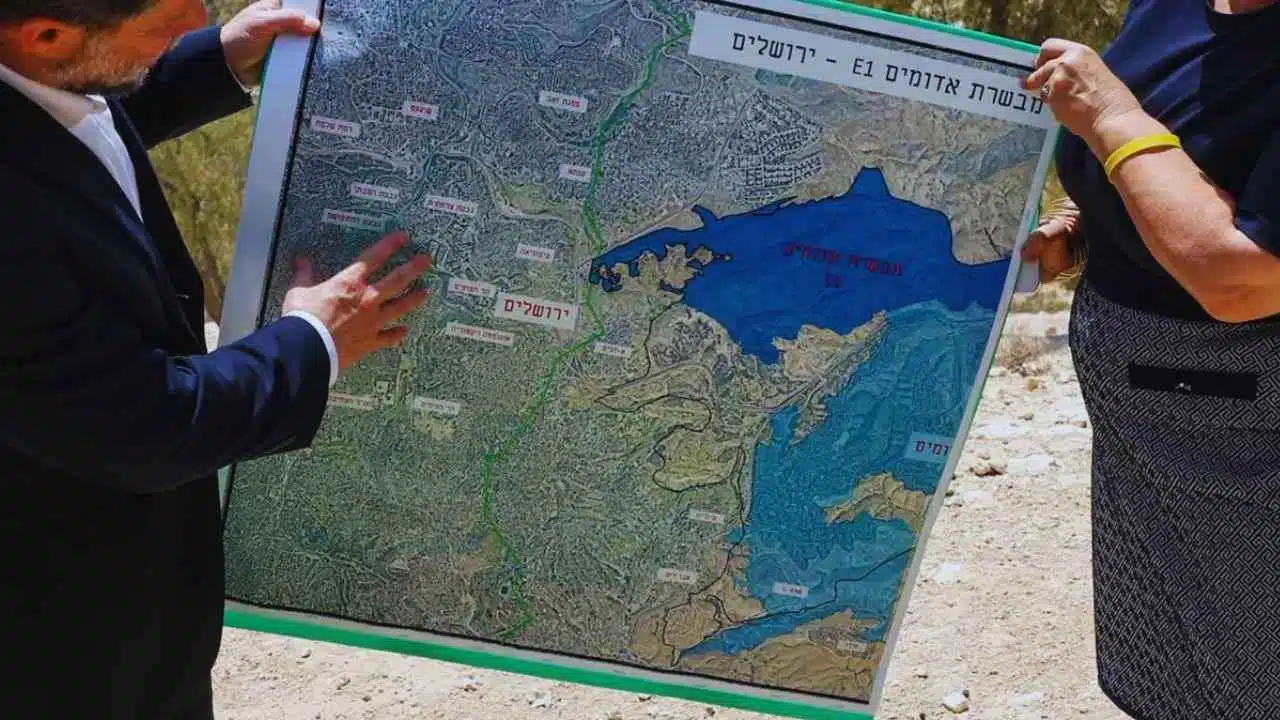
Israel has approved the establishment and/or formal recognition of 19 additional Jewish settlements in the occupied West Bank, a decision taken on Dec. 11, 2025, that officials say will strengthen Israeli presence while critics warn it further erodes prospects for a Palestinian state.
What Israel approved and why it is drawing attention?
Israel’s political-security cabinet approved a plan tied to 19 settlement locations in the West Bank. The decision was made Thursday, Dec. 11, 2025, and later publicly confirmed by senior officials who oversee settlement policy.
The approval is significant for three main reasons.
First, it goes beyond routine housing permits. Several of the 19 locations are described as outposts or sites previously treated as “neighborhoods” of existing settlements. When those sites are recognized as independent settlements, they typically gain a stronger administrative footing for infrastructure, budgets, security arrangements, and long-term planning.
Second, the decision fits into a broader acceleration. Over the last three years, Israel has taken multiple steps to increase the number of officially recognized settlements and normalize settlement planning processes that used to draw heavier political attention.
Third, two of the sites—Kadim and Ganim, near Jenin—are linked to areas dismantled during the 2005 disengagement. Their inclusion signals a push to rebuild a settlement presence in parts of the northern West Bank that had been politically sensitive and legally constrained for years.
Israel says the West Bank is disputed territory with deep historical and religious significance to Jewish identity. Palestinians seek the West Bank, along with Gaza and East Jerusalem, as the core of a future state. Many governments and international bodies view the West Bank as territory occupied by Israel since 1967 and consider Israeli settlements there illegal under international law.
The 19 approved settlement sites and where they are located
Because cabinet deliberations are not fully public, some site details are described as “likely” locations by settlement-tracking groups that map activity on the ground. Still, the list of names circulating widely is consistent across multiple credible reports.
Below is a consolidated view of the 19 approved sites and their described locations.
The 19 approved settlements/outposts (names and described locations)
| Approved site | Where it is described to be | Why it stands out |
| Kida | West of the Palestinian village of Duma (Nablus area) | Retroactive authorization of an outpost |
| Esh Kodesh | South of Jalud and Qusra, west of Duma (Nablus area) | Retroactive authorization of an outpost |
| Givat Harel | Between Sinjil and Lubban al-Sharqiya (central/north West Bank) | Split/upgrade tied to a previously approved settlement |
| Mishuol | East of Naaleh, between Ras Karkar and Deir Ammar (west of Ramallah) | Linked to a farm-style outpost location |
| Reihanit | Near Reihan and the area of Ya’bad (northwestern West Bank) | New/recognized site in the northwest |
| Rosh HaAyin East | Between Zawiya and Deir Ballut (Salfit area) | Linked to a newer farm site |
| Pnei Kedem | East of Sa’ir, near Mezad/Asfar (southeastern Etzion area) | Previously treated as a “neighborhood,” now independent |
| Yatziv (Shadma) | Adjacent to Beit Sahour (Bethlehem area) | Reported to be on or near a former military base site |
| Ya’ar al-Keren | Between Beit Ummar and Al-‘Arrub camp (south of Bethlehem) | New/recognized site along a sensitive corridor |
| Allenby | Near the Allenby crossing area (Jericho/Jordan Valley) | Location near a key crossing zone |
| Kokhav Hashahar North | East of Ein Samia area | Linked to a farm site; area associated with past displacement claims |
| Nof Gilad | Jordan Valley zone; also linked to areas near Bedouin communities | Tied to communities reporting pressure and access restrictions |
| Yitav West | Near Auja/Ras al-‘Ain area (Jordan Valley) | Area flagged for risk of Palestinian community displacement |
| Bezek | Har Bezek/Bezek farm area (ridge between Jordan Valley and Jenin hills) | High-ground location with strategic geography |
| Tamun | Hills near the Palestinian village of Tamun | Between Jordan Valley and Nablus region |
| Shalem | Near Beit Dajan and Beit Furik | Linked to an operating farm site |
| Nahal Doran | Between Shima and Adoraim, west of Dura (southern West Bank) | Uninhabited zone between existing settlements |
| Ganim | East of Jenin | Settlement dismantled in 2005, now slated for renewal |
| Kadim | East of Jenin | Settlement dismantled in 2005, now slated for renewal |
Many of these sites sit along corridors that shape day-to-day movement: access to agricultural land, routes between Palestinian towns, and the continuity of Palestinian-controlled areas. That is why settlement decisions often produce immediate political impact even before new construction becomes visible.
How settlement recognition works and what changes after approval?
A key point often missed in public debate is that “settlement expansion” can happen through legal and administrative upgrades, not only bulldozers.
In Israeli practice, several categories matter:
- Recognized settlements: Established or recognized by the government and connected to formal planning and municipal structures.
- Outposts: Built without full authorization under Israeli law, though some later receive retroactive recognition or are connected to utilities and roads.
- Neighborhoods: Sometimes used to describe new build-outs attached administratively to an existing settlement, even if geographically distinct.
When a site is recognized as an independent settlement, three shifts commonly follow.
What tends to change when an outpost becomes a recognized settlement?
| Area | Before recognition | After recognition (typical pathway) |
| Legal status (Israeli administrative) | Often contested; enforcement uneven | Stronger standing; harder to reverse |
| Planning and zoning | Limited or informal planning | More formal planning track and permitting |
| Infrastructure | Patchwork utilities/roads | Better access to budgets for roads, water, power |
| Security footprint | Variable; sometimes ad-hoc | More formal security coordination and protection |
| Political rollback | Easier to target legally | Politically and legally more difficult to evacuate |
Recognition also affects how disputes play out. A major legal difference is that removing an unauthorized outpost can be framed as enforcing Israeli law, while evacuating a government-recognized settlement is typically a high-stakes political event that requires major decisions and resources.
Implementation still depends on the state’s planning and budgeting machinery. Even after cabinet approval, the process usually runs through:
- boundary decisions and jurisdiction designations,
- planning committees and approvals,
- infrastructure tenders and financing,
- enforcement choices on the ground.
That is why approvals are often viewed as “locking in” a long-term reality even when immediate housing numbers are not announced.
Political and diplomatic stakes: competing narratives and international law
Inside Israel, supporters present the decision as a strategic and historical move. Many in the governing coalition argue that strengthening settlements improves security depth and reflects Jewish historical ties to the land. Officials also frame normalization of settlement governance—splitting “neighborhoods” into localities, funding roads, and approving public buildings—as ordinary administrative work.
For Palestinians, the decision is widely viewed as a direct blow to territorial continuity and statehood prospects. The West Bank is central to the two-state model: a Palestinian state is typically envisioned in the West Bank and Gaza with East Jerusalem as its capital. More settlement locations and settlement-linked infrastructure can fragment the territory into disconnected pockets.
Internationally, settlement policy remains one of the most contested issues in the conflict.
- The UN Security Council has repeatedly stated that Israeli settlements in territory occupied since 1967 have no legal validity and are a major obstacle to a negotiated solution.
- The International Court of Justice has addressed legal consequences arising from Israel’s policies and practices in the occupied Palestinian territory, adding to the legal and diplomatic pressure around settlement expansion.
Israel disputes key parts of the prevailing international legal view and argues that the territory’s status is unique and that Jews have enduring claims. Even among Israel’s partners, however, settlement growth has frequently been treated as an action that undermines diplomacy and increases instability.
In practical diplomatic terms, settlement announcements often trigger three immediate effects:
- sharper condemnation and calls for restraint,
- added friction in relations with allies and multilateral bodies,
- intensified pressure on Palestinians and Israel during any negotiation attempts.
Security and humanitarian context: why timing matters and what to watch next?
The cabinet decision arrives amid a tense West Bank environment marked by frequent raids, clashes, and a documented rise in settler-related incidents.
Humanitarian monitors have described 2025 as an exceptionally violent year in the West Bank, including record levels of settler attacks in some months. The olive harvest season—a critical economic period for many Palestinian rural communities—has been repeatedly cited as a flashpoint, with attacks and access restrictions affecting livelihoods and movement.
Supporters of the settlement decision argue that a stronger settlement presence and clearer legal status help security forces protect residents and reduce uncertainty. Critics argue the opposite: that recognition can encourage further outpost creation, intensify friction with nearby Palestinian communities, and expand security zones and access restrictions.
A separate point to watch is the northern West Bank. The inclusion of Kadim and Ganim connects today’s decision to long-running debates about the 2005 disengagement and subsequent legal changes that reopened pathways for Israeli presence in areas that had been off-limits. That region has also seen repeated cycles of militant activity, raids, and localized instability, making any settlement move especially sensitive.
What comes next will likely be less dramatic than the cabinet vote, but more revealing:
- publication of detailed maps or jurisdiction lines,
- planning committee agendas and approvals,
- tenders for roads and utilities,
- new security arrangements around the sites,
- court petitions or enforcement actions in contested areas.
In many past cases, the “real story” of settlement expansion has unfolded through these administrative steps, which determine whether an approval becomes a lived-in community with durable infrastructure or remains mostly symbolic for months.