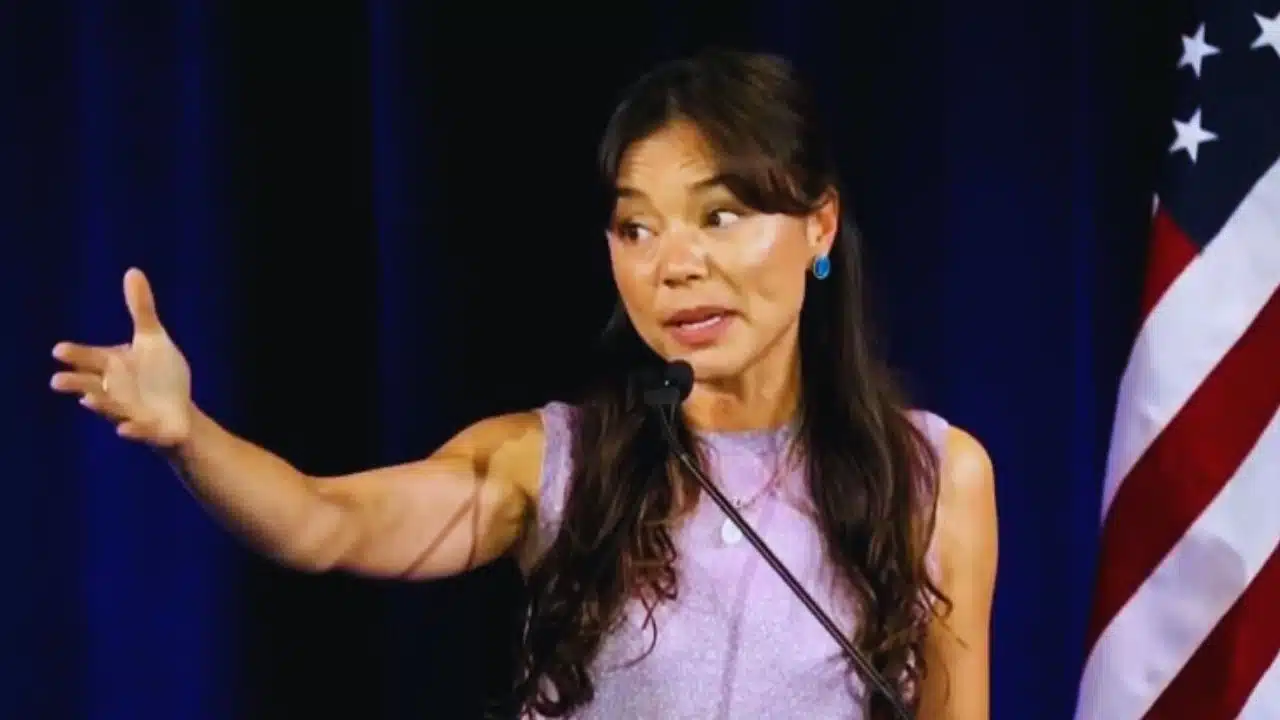
Attorney, entrepreneur, philanthropist, and former wife of Google co-founder Sergey Brin — has ignited a new wave of debate after claiming that Silicon Valley’s most influential donor circles, particularly the wealthy “tech wives,” were subtly directed toward funding global ideological agendas without their full awareness. Shanahan, who once distributed donations in the hundreds of millions, says she now believes that philanthropic guidance given to her and other women in similar positions came from tightly connected advisory networks that pushed them toward causes aligned with global institutions rather than grassroots needs.
Her remarks have gained attention because they come from someone deeply embedded in Silicon Valley’s highest financial and social spheres — someone with firsthand access to elite donor groups, foundation meetings, and advisory boards. Shanahan argues that despite good intentions, many of these women became conduits for initiatives shaped by NGOs, Hollywood figures, and organizations associated with gatherings like the World Economic Forum. She frames it not as a conspiracy, but as a quiet, structured ecosystem where wealth, influence, and emotional messaging intersected to shape philanthropic decisions in ways that most donors did not fully understand.
She Says Donors Were Steered Through a Powerful but Insular Social Network
According to Shanahan, the philanthropic world of Silicon Valley operates through an exceptionally small, tightly woven web of individuals — many of whom socialize in the same circles, serve on each other’s boards, attend the same global summits, and receive advice from the same consultants and nonprofits. She describes this group as a miniature ecosystem with massive influence, where a handful of decision-makers guide the charity priorities of an entire generation of wealthy families.
Within this system, Shanahan says, wealthy tech spouses were encouraged to believe they were supporting meaningful social improvements. Instead, she argues, much of their funding was channeled toward broad, ideological frameworks. She says many donors were unaware that their money was being folded into long-term global policy agendas rather than immediate community needs. She points to a pattern in which donors would be advised to support programs framed around large, emotionally charged themes such as racial justice or climate resilience — topics that made questioning the direction of funds difficult.
WOKE: Nicole Shanahan exposes how elite tech wives were steered by NGOs, Hollywood, Davos and their own companies into backing Great Reset policies, admitting they were “useful idiots.”
— @amuse (@amuse) November 29, 2025
Shanahan also emphasizes that many of these donors were overwhelmed by the lifestyle surrounding extreme wealth. She describes a world where women manage multiple homes, hire and supervise large household staffs, juggle demanding personal schedules, handle family pressures, and frequently experience high levels of anxiety and emotional stress. Some, she says, relied on medication just to manage the demands on their time and mental bandwidth. This constant pressure, in her view, created a climate in which donors looked to philanthropic advisors for direction, making them more vulnerable to subtle steering.
Philanthropy, She Now Claims, Failed the Very Communities It Was Intended to Help
Reflecting on her own years of major giving, Shanahan says she sincerely believed her donations would uplift marginalized communities, including Black and Indigenous populations. She says she was passionate about investing in projects that promised equity, opportunity, and long-term community change. However, she now argues that the outcomes often fell short — or, in some cases, worsened.
Shanahan claims that rather than solving problems, the philanthropic structure she participated in reinforced them. She points to rising inequality, worsening mental-health indicators, and increasing community instability as signs that the system was not functioning as advertised. According to her, the model of philanthropy focused too heavily on symbolic or ideological initiatives and not enough on practical, local solutions designed to create tangible, measurable improvements.
She describes a growing realization that large-scale donors were sometimes contributing to a cycle where money circulated between nonprofits, academic institutions, and policy networks without ever meaningfully reaching the people at the heart of the issues. She now believes that philanthropic systems were frequently more concerned with producing reports, framing narratives, and shaping policy language than with generating real-world outcomes. In her telling, the nexus of advisers, consultants, and boards ultimately benefited more from the flow of philanthropic dollars than the communities donors intended to help.
Climate Messaging and Social Justice Framing, She Says, Became Tools of Influence
Among Shanahan’s sharpest critiques is her claim that two themes — climate change and social justice — were consistently used as emotional triggers to influence wealthy donors. She argues that these overarching causes served as a universal persuasive mechanism. According to her, anytime a donor hesitated or questioned where money was going, the response was framed around climate urgency or moral responsibility.
She describes an environment in which climate messaging, in particular, became a kind of catch-all justification. If a donor expressed uncertainty, she says advisors would respond with variations of “but climate change requires immediate action,” making it socially difficult to appear resistant to the cause. This, she argues, resulted in large flows of funding toward programs aligned with global climate frameworks promoted by high-profile institutions.
Shanahan also ties these patterns to the broader global conversation surrounding the Great Reset — a real initiative launched by the World Economic Forum in 2020 to promote sustainable and systemic transformation in the post-pandemic world. While supporters argue that the initiative offers a practical roadmap for global cooperation, critics fear that it centralizes too much influence among global elites. Shanahan positions her experience within this debate, suggesting that Silicon Valley philanthropy inadvertently helped build the groundwork for such far-reaching frameworks through emotional persuasion and an unexamined trust in advisors.
Why Her Comments Are Resonating and What They Reveal About Power and Philanthropy
Shanahan’s statements have sparked discussion not only because of their content but because of who she is — someone with both the resources and firsthand exposure to observe the inner workings of the philanthropic elite. Her narrative taps into growing public concerns about transparency, influence, and the role of global institutions in shaping the priorities of private donors with enormous financial power.
Her argument is not framed as an accusation of malicious intent but as a systemic critique: that wealthy donors were encouraged to direct resources toward large-scale ideological visions without fully understanding the implications. She paints a picture of philanthropy that operates through subtle social pressure, emotional messaging, and elite networks rather than open debate and direct accountability. Whether one agrees with her interpretation of events or not, her perspective raises fundamental questions about how philanthropic decisions are made, who guides those choices, and whether the current model truly serves the communities it claims to help.
Her comments continue to circulate widely because they touch on a central tension in modern philanthropy: the balance between altruism and influence, between global agendas and local needs, and between emotional narratives and measurable outcomes. Shanahan’s remarks add a new voice to these debates — one from inside the world she is now criticizing.