

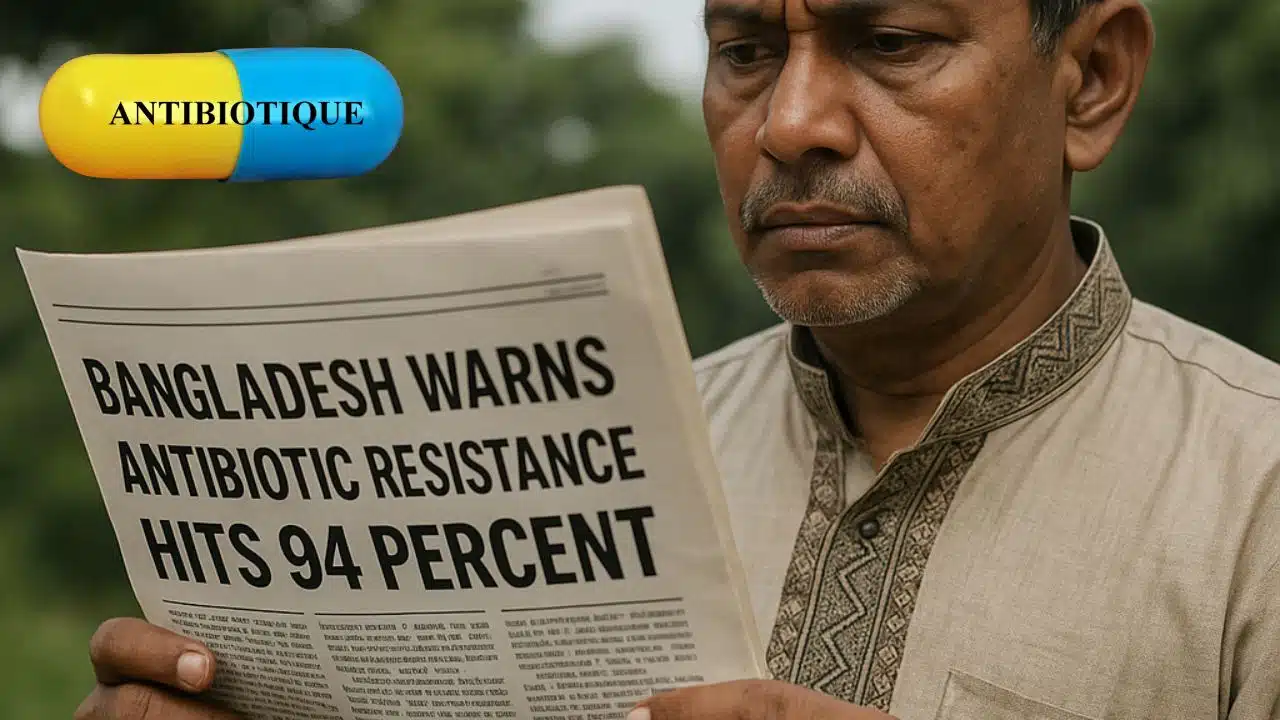
Bangladesh has raised an extraordinary public-health alarm after officials revealed that antibiotic resistance in the country has reached a staggering 94 percent. Speaking at a national seminar in Dhaka during World Antimicrobial Resistance Awareness Week, senior government advisers and global health experts warned that the rapid spread of resistant bacteria now poses a more severe and longer-lasting danger than many natural calamities the nation regularly faces.
This urgent message came from Farida Akhter, Adviser for Fisheries and Livestock Affairs, who warned that the reckless, widespread use of antibiotics across hospitals, farms, fisheries, and agriculture is fueling an unprecedented health emergency. She explained that while earthquakes, floods, and cyclones strike Bangladesh suddenly, antibiotic resistance grows silently every day and undermines the country’s entire health and food systems. Akhter referred to the 5.7-magnitude earthquake on November 20, which killed at least 10 people, and noted that although the tremor caused fear and sudden panic, the misuse of antibiotics is an even more destructive force because it threatens millions through long-term, unnoticed damage.
Akhter highlighted new data presented at the seminar revealing that nearly 77 percent of poultry farms in Bangladesh rely on antibiotics—often without veterinary supervision, proper dosage, or medical justification. These drugs commonly enter the food chain and the surrounding environment, exposing humans to resistant bacteria even if they never directly take antibiotics themselves. Officials warned that the situation has become so serious that resistance patterns once seen only in hospitals are now emerging in farms, fisheries, and soil, making the battle far more complex.
What especially disturbed experts was the dramatic rise in antibiotic-resistant infections among children. Akhter said parents often demand antibiotics for fevers that do not require them, contributing to a dangerous pattern in which infections that were once easy to cure no longer respond to treatment. She noted cases of infants as young as 11 months showing resistance to multiple antibiotics—a sign that the problem has moved far beyond isolated medical misuse and is now affecting entire communities from birth.
A recent World Health Organization assessment intensified these concerns. According to the review, several widely used antibiotics in Bangladesh now face resistance rates ranging from 79 percent to as high as 97 percent across key bacterial infections. Public-health officials said these figures place Bangladesh among the most vulnerable countries in South-East Asia, underscoring the need for urgent and coordinated intervention. Experts added that without immediate systemic change, common diseases could once again become lethal, and routine surgeries could become high-risk procedures.
The seminar, presided over by Dr. Md. Abu Sufian, Director General of the Department of Livestock Services, brought together senior representatives from global agencies including the Food and Agriculture Organization, the World Health Organization, and the World Organisation for Animal Health. WHO Bangladesh Country Representative Dr. Ahmed Jamsheed Mohamed and FAO Bangladesh Country Representative Dr. Jiaoqun Shi served as special guests and emphasized that Bangladesh’s situation mirrors a growing crisis across low- and middle-income countries where antibiotics are easily accessible and poorly regulated.
Akhter stressed that to reverse the trend, Bangladesh must commit to a unified “One Health” strategy—an approach that recognizes the deep connection between human health, animal health, plant health, and environmental well-being. She urged the public to demand safer food, saying, “We want antibiotic-free chicken, and we want antibiotic-free fish.” Officials at the event echoed these remarks, noting that without consumer pressure and strict regulation, producers may continue to misuse antibiotics to boost growth and prevent disease in animals rather than using safer, sustainable farming practices.
During her remarks, Akhter also connected antimicrobial resistance to the broader impacts of climate change. She explained that rising temperatures, shifting ecosystems, and emerging pathogens create new pressures that can increase the likelihood of resistant bacteria spreading. Drawing on her recent participation in a climate conference in Brazil, she said that as global warming expands the habitats of disease-carrying organisms and alters food-production patterns, countries like Bangladesh face even greater challenges in controlling infections.
The adviser added that public awareness campaigns must no longer be confined to a single annual observance. Schools, universities, community programs, health centers, and nationwide observances should integrate antimicrobial-resistance education throughout the year. She emphasized that changing behavior requires sustained, long-term engagement rather than short bursts of attention.
Experts also warned about the catastrophic global implications of inaction. WHO estimates that antimicrobial resistance could lead to as many as 39 million deaths worldwide between 2025 and 2050 if current trends continue. South Asia is expected to bear a significant portion of this burden due to high population density, limited regulatory enforcement, and the widespread availability of antibiotics without prescriptions. A global research initiative also predicts that annual deaths directly attributable to bacterial resistance could rise by nearly 70 percent by 2050 unless countries step up preventive measures and surveillance systems.
In Bangladesh, this rising threat affects more than health—it touches food security, economic stability, and national development. Resistant infections increase medical costs, prolong hospital stays, reduce worker productivity, and strain an already stretched healthcare system. Veterinary experts warned that resistant bacteria in livestock could harm the country’s agricultural exports if international markets begin imposing stricter safety standards.
At the close of the seminar, participants urged immediate action. They called for stronger regulations on antibiotic sales, better training for farmers and health workers, increased laboratory capacity to track resistance patterns, and a nationwide commitment to responsible antibiotic use. The message from experts was clear: Bangladesh stands at a decisive moment. Without swift, coordinated, and sustained action, antibiotic resistance could undermine decades of progress in public health and development.
The warnings delivered in Dhaka reflect a crisis that is no longer theoretical but deeply rooted in everyday life across Bangladesh. From farms and fish markets to clinics and households, antibiotics are being used far beyond their necessary medical role, often without proper diagnosis or consultation. This misuse creates an environment in which bacteria quickly learn to survive even the strongest medicines, turning ordinary infections into potential medical emergencies.
At the heart of the discussion was the urgent need to transform public attitudes. Health specialists explained that many people mistakenly believe antibiotics are a cure-all solution, leading them to pressure doctors or purchase drugs without prescriptions. This behavior, combined with the heavy use of antibiotics in food production, helps resistant bacteria spread silently through water, meat, soil, and even air. Experts emphasized that every unnecessary dose increases the long-term danger, because bacteria evolve faster than new medicines can be developed.
The “One Health” approach was repeatedly highlighted as the most effective way to respond. This strategy links human doctors, veterinarians, environmental scientists, farmers, and policymakers into a single coordinated system. By working across sectors, officials say they can reduce misuse, introduce safer farming practices, limit contamination, and strengthen surveillance. International partners at the event praised Bangladesh for adopting this model in policy but stressed that the challenge now lies in consistent implementation.
Participants also noted the complicated relationship between food production and antibiotic dependence. In many poultry and fish farms, antibiotics are used to prevent disease outbreaks, speed up growth, and compensate for poor hygiene standards. Experts warned that improving farm conditions, enforcing withdrawal periods, and promoting biosecurity measures could significantly reduce reliance on drugs. They urged immediate investment in training programs that help farmers understand practical alternatives.
Climate change added another layer of urgency to the discussions. Rising temperatures and shifting rainfall patterns can increase the spread of certain bacteria and disrupt traditional farming cycles. These changes may push farmers to rely even more heavily on antibiotics unless preventive strategies are introduced. Officials stressed that Bangladesh’s climate vulnerability makes addressing antimicrobial resistance even more essential to long-term national resilience.
As the seminar concluded, the tone was clear: the country is facing a silent, slow-moving crisis that could reshape its health landscape for generations. While earthquakes and storms strike with immediate force, antibiotic resistance grows steadily and invisibly, threatening to erode the effectiveness of modern medicine. Without action today, experts warned that future doctors may face infections that were once simple to treat but become nearly impossible to cure.
Bangladesh’s health leaders called for every sector—government agencies, hospitals, pharmacies, farmers, educators, and families—to work together. They emphasized that awareness is only the first step, and real change requires national discipline, strong regulation, and long-term commitment. The stakes, they said, could not be higher: preserving the power of antibiotics may determine whether future generations can survive common infections, deliver safe medical care, and maintain a stable food supply.
In the face of a 94-percent resistance rate, the message from Dhaka was urgent and unmistakable: if Bangladesh does not act decisively now, it risks facing a public-health emergency far more devastating than any recent natural disaster. The battle against antibiotic resistance is already underway—and the country must act to prevent it from becoming the next major national crisis.





















