In Morocco, architecture tells a lot of stories. Every wall, arch, and courtyard shows how the country’s long history has shaped its people and culture. From the strong Berber fortresses to the detailed art of Andalusian style, each place reflects the influence of different civilizations.
These buildings are not frozen in time as they remain full of life and meaning. This article explores how Morocco’s architecture keeps its heritage alive while growing with the modern world.
A Tapestry of Influences
Morocco’s architecture reflects a long and layered history shaped by many cultures.
Berber Foundations
Morocco’s earliest architecture began with the Berbers, whose strong fortresses, or kasbahs, stood as symbols of protection and unity. Built from clay and stone, these structures reflected a deep connection to the land and community life. Many of these ancient kasbahs can still be visited today through well-planned Morocco travel packages that bring travelers closer to the country’s origins.
Arab-Islamic Artistry
With the arrival of Arab influence came new forms of beauty and faith. Mosques, medersas, and homes featured detailed carvings, arches, and colorful tilework that expressed both devotion and creativity. This era shaped much of Morocco’s spiritual and artistic identity, visible across its historic cities.
Andalusian and Moorish Elegance
Artists and craftsmen from Spain’s Al-Andalus period brought graceful courtyards, fountains, and woodwork that blended art with comfort. Their influence gave Moroccan cities a rich mix of color and texture that continues to define their charm.
French Colonial Touches
In the twentieth century, French design introduced wide boulevards, modern buildings, and art deco styles, especially in Casablanca. These newer forms merged with traditional details to create a bridge between old and new.
A Living Blend
All these layers of history come together to form Morocco’s unique architectural style. Geometric patterns, ornate courtyards, and handmade details show how the past continues to live beautifully within the present.
Iconic Cities as Living Museums
Marrakech: The Red City
Marrakech captures the essence of Morocco through its clay-red walls, busy souks, and timeless architecture. The Koutoubia Mosque rises above the city as a symbol of faith and balance, while the Bahia Palace reflects the beauty of Islamic geometry mixed with the calm of Andalusian gardens. Behind the carved doors of traditional riads, courtyards filled with fountains and light tell stories of families and artistry passed down for generations.
Fes: The Spiritual Heart
In Fes, history flows through the narrow paths of its ancient medina, one of the best-preserved in the Arab world. Here stands Al-Qarawiyyin University, founded in the ninth century and recognized as the oldest in continuous use. Restoration projects have helped protect its carved woodwork, mosaic walls, and sacred atmosphere, keeping the city’s legacy alive.
Chefchaouen: The Blue Pearl
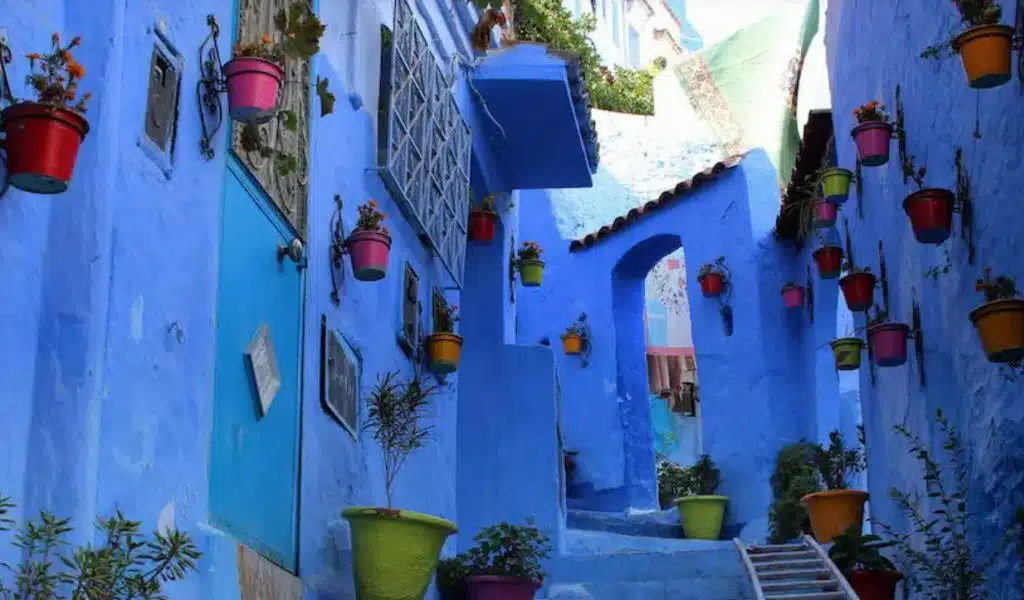
High in the Rif Mountains, Chefchaouen offers peace and beauty in shades of blue. Its painted streets, simple rooftops, and quiet corners reflect a harmony between nature and design, making the city a living canvas of serenity and tradition.
Casablanca: The Modern Metropolis
Casablanca stands as a link between Morocco’s past and future. The grand Hassan II Mosque combines modern engineering with sacred artistry, while art deco buildings and French-inspired boulevards show the city’s cosmopolitan character.
Travelers can immerse themselves in these timeless cities through Morocco tour packages that combine architectural discovery with authentic cultural encounters.
Symbolism in Stone: What Moroccan Architecture Teaches Us
Moroccan architecture is built on the idea that beauty and meaning belong together. Every surface, pattern, and space reflects a search for harmony, balance, and spiritual peace. While designs are decorative, they also express values that guide Moroccan life. The values are hospitality, reflection, and respect for tradition.
Some of the most powerful symbols include:
- Zellige tiles: Endless geometric shapes arranged with precision represent infinity and divine beauty. They reflect the idea that perfection belongs to the Creator, not to human hands.
- Stucco carvings and calligraphy: Walls and arches are covered with verses and patterns that honor knowledge and faith, turning buildings into spaces of learning and prayer.
- Courtyards and fountains: Central to many homes and palaces, they offer calm and coolness, creating a place for rest and gathering in the heart of daily life.
Each of these details shows how Moroccan design connects art with spirit. Here, architecture is about creating a sense of belonging and harmony between people and their surroundings.
Preserving the Past, Building the Future
Across Morocco, the past is carefully protected while the future is thoughtfully shaped. Cities such as Fes, Meknes, and Marrakech are recognized as UNESCO World Heritage sites, where centuries-old buildings continue to define daily life.
Efforts to restore historic medinas have revived traditional skills like zellige tilework, fine wood carving, and tadelakt plaster. These are crafts that might have disappeared without preservation projects and local apprenticeships.
At the same time, modern architects are finding ways to blend heritage with sustainability. Many new eco-friendly riads and guesthouses use traditional designs and local materials while adding energy-efficient systems. This approach honors Morocco’s identity while preparing for the future.
Experiencing Morocco’s Living Heritage Firsthand
To truly understand Morocco’s architecture, travelers must do more than admire it from a distance. Staying in a traditional riad, with its open courtyard and hand-carved details, reveals how design shapes daily life.
Exploring ancient medersas shows how learning and faith were built into the very walls, while walking through the souks brings the rhythm of history alive in every color and scent. With guided Morocco vacation packages, visitors can explore these architectural wonders with expert insight.
Each step becomes a dialogue between past and present, where travelers are not just observers but participants in a living story. In Morocco, architecture invites connection, turning travel into a bridge between cultures and time.
Takeaways
Morocco’s architecture stands as a mirror of resilience, artistry, and identity. It carries the marks of centuries yet continues to evolve with each new generation. Every archway, mosaic, and courtyard holds whispers of the past while opening its doors to new stories.
To explore Morocco is to walk through living history, where tradition and modern life exist side by side. Each city, palace, and street invites reflection and admiration, reminding visitors that heritage is not something preserved in silence. It is something that continues to breathe, create, and inspire.