

A car crash is stressful enough, but when the other driver speeds away, it leaves you feeling shocked, vulnerable, and uncertain about what to do next.
Hit-and-run accidents happen more often than many people realize, creating both practical and legal challenges for victims.
Are you wondering if you have any options when the person who hit you just vanished? Even though the driver fled, you still have rights and options for seeking compensation and justice.
In this article, we’ll guide you through the crucial steps to take immediately after a hit-and-run, how to protect your legal rights, and what to know about dealing with insurance and potential legal claims.
Priorities — Safety, Then Look for Injuries
Following a crash as a result of a hit-and-run, the first priority is your safety. You need to check yourself and any passengers in your car for injuries. If anyone is injured, you should call 911 without hesitation.
Even if you and your passengers think you weren’t injured, you should get medical attention, since adrenaline may have masked symptoms that might shock you the next day.
Have you ever felt like you wanted to chase the fleeing driver? That urge is completely normal, but it’s dangerous and could also present a legal complication for you. Instead, direct your efforts to calming down and securing some emergency assistance at the crash site.
What you really need, is to be safe. After that, their capture isn’t a big deal right at that moment.
Gather As Much Evidence at the Scene
If you are physically able, gather as much information as you can. It is smart to write down details about the fleeing vehicle, even down to the color and make/model, and license plate (even partial, and any descriptors).
If someone had a sticker on the back-or a dent, maybe they had a loud exhaust, don’t forget any of these things.
Try to take pictures of the damage to your vehicle, the location of your crash, skid marks, debris, and anything that may help investigators down the road. Lastly, look for witnesses, and if you can, ask for contact information and statements. If you could turn local businesses or residents into your ally, because they may have security cameras that captured the crash to review later, that would be smart.
Call the Police, and Ask to File a Report
Your next step is to CALL THE POLICE – every time you are a victim of a hit-and-run – no exceptions! Don’t avoid calling the police, even if the damage is not severe and there aren’t any injuries. If you are involved in a hit-and-run accident, a police report is typically crucial for insurance claims and future actions that you may have to take. Do not let anyone dissuade you from filing a report!
Please provide every detail that you can to the reporting officers about the incident but be very candid, if you do not have an idea of something you would be best to simply communicate “I am not sure” than to provide incorrect information that could detrimentally affect your case later. If you think you saw any cameras nearby, or you had contact with any witnesses, let the officers know!
When you report the accident, remember to ask and receive the police report number, and hopefully, you will also be able to get a copy to keep for your records.
You should then Contact Your Insurance Company.
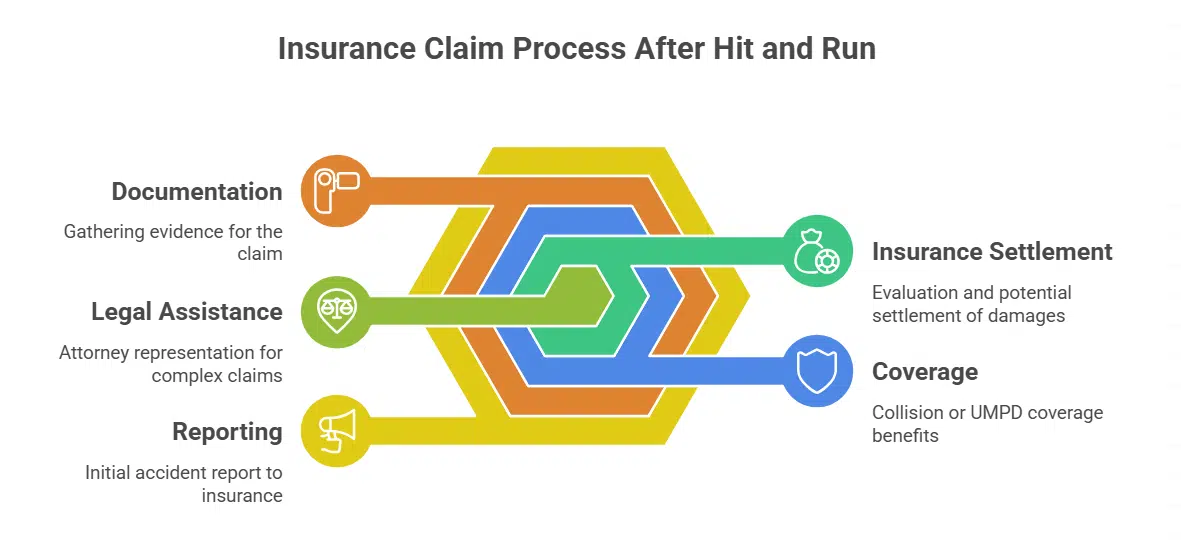
After reporting, you will need to contact your insurance company to report the hit and run accident.
When you report the accident to your insurance company please provide them with the police report number, pictures of the crash area and view angle, and any other witness information. If you have collision coverage (there is no way to file a damage claim if you do not have collision), or uninsured motorist property damage (UMPD), depending on your coverage they may pay for damage to your vehicle and medical costs on your behalf, primarily if the fleeing driver cannot be identified.
If the insurance company asks for a recorded statement from you, or if they make a prompt offer for settling the accident (especially if you have been injured) and they offer you a chance to accept it without understanding all of your rights, be careful!
Have you ever felt like insurance companies are using their own language? If your claim becomes complicated you might want to consider finding an attorney to represent your interests and interpret the insurance language!
Think About Obtaining Legal Advice for Your Claim.
Hit-and-run scenarios can be complicated whether the fleeing driver has been identified or not, or whether your insurance is refusing to pay your claim. A personal injury attorney can help you obtain any evidence, manage the insurance company obstacles, and hopefully obtain compensation for any medical needs, -lost wages- and pain and suffering (if established).
An attorney can be very creative too about the story of your circumstance – do you have access to read any state victim compensation situation for your injuries? Were there any third parties (and their insurance) identified if other entities contributed to the crash?
Obtaining legal advice early to understand your rights and ensure that you do is inconvenient and impactful, signifies that you do not miss any deadlines or opportunities to present your claim.
Conclusion
Being involved in a hit-and-run is scary and unfair, but it does not have to be hopeless. You can assert your rights following your crash by staying calm, documenting the accident circumstances, reporting or filing a police report, and documenting your insurance claim.
If you have potential significant injuries or losses, you should seriously consider obtaining legal advice to ensure that you were treated fairly and that you have thoroughly explored the available options for recovering what is owed to you.
Just remember, no one can take your justice away. There are still many avenues for you to seek recovery, even though someone else has chosen to leave the scene.