Alibaba International Digital Commerce Group has launched a game-changing tool for the global fashion industry—Fashion Reels, a new feature in its AI-powered design platform, PicCopilot. This innovative solution transforms basic product images into dynamic, virtual try-on videos that realistically depict how garments look and move on human bodies.
The move is part of Alibaba’s broader effort to empower small and medium-sized enterprises (SMEs) in the fashion sector to create high-quality digital content without the traditional burden of expensive video shoots or model hires.
What is Fashion Reels and How Does It Work?
Fashion Reels uses advanced artificial intelligence algorithms developed by Alibaba’s international commerce team. These algorithms analyze static images of clothing items and then generate short-form videos where the clothes appear worn by virtual models. These models can be adjusted to display various body types, offering a more inclusive representation of how each item fits and flows in motion.
Unlike simple image animations or basic 3D mockups, Fashion Reels delivers hyper-realistic rendering that simulates:
- Natural fabric textures
- Accurate movement and garment flow
- Proper body alignment
- Realistic lighting and shadows
This realism bridges a major gap in online fashion shopping, where customers often struggle to imagine how clothes will look and fit in real life. With Fashion Reels, online retailers can now deliver a shopping experience that mirrors in-store try-ons—visually and interactively.
Why This Tool Matters for the Fashion Industry
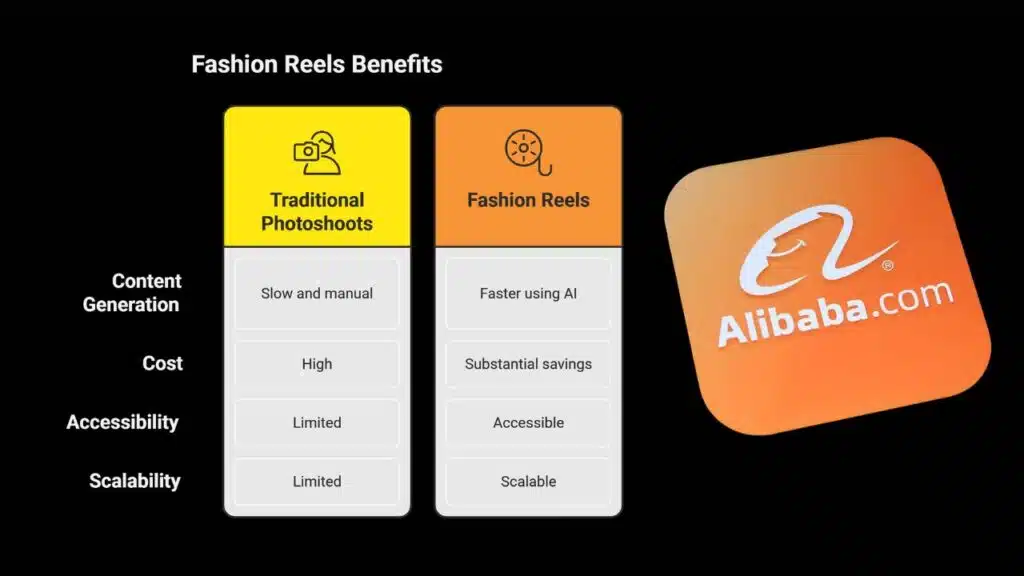
Traditional product photoshoots for fashion are time-consuming and cost-prohibitive—especially for independent labels and SMEs that operate with limited budgets. Producing high-quality video content often requires hiring professional models, makeup artists, videographers, set designers, and post-production editors. The cost can easily run into thousands of dollars per product line.
Fashion Reels eliminates much of this complexity by providing:
- Faster content generation using AI
- Substantial cost savings by removing the need for physical shoots
- Accessibility for small businesses to compete with larger brands
- Scalability for uploading and converting large product catalogs quickly
According to Alibaba, the tool is designed to democratize fashion content production and ensure that even small retailers can harness the power of visually-rich, AI-enhanced video assets for marketing and product display.
Proven Performance: Conversion Rates and Cost Reduction
Alibaba’s internal testing has shown impressive results. According to the company, Fashion Reels improved conversion rates by more than 150% compared to listings that used only static product images.
This means customers were significantly more likely to engage with and purchase items showcased through try-on videos rather than flat photos. For e-commerce platforms, where customer trust and visualization are major purchasing factors, this performance boost can have a direct impact on sales.
Additionally, early adopters of the technology have reported marked reductions in production costs. Since no physical materials, venues, or human models are needed, many businesses find themselves saving both time and budget—while producing better marketing visuals than before.
Broader Implications: Alibaba’s Push for AI-Driven E-Commerce
The introduction of Fashion Reels is part of a larger AI strategy at Alibaba International. The company has increasingly invested in tools that enhance user engagement, product discovery, and brand visibility for global merchants.
PicCopilot itself is a multi-functional AI design platform that also includes:
- Background removal and replacement
- Text-to-image generation
- AI avatars and models
- Multilingual dubbing and voiceovers for product videos
By integrating these tools, Alibaba is attempting to make end-to-end product marketing not only faster but smarter. Fashion Reels extends these capabilities to fashion—a sector that heavily relies on visual appeal and presentation.
According to Selina Yuan, President of Alibaba International Digital Commerce, “Our goal is to use AI to make global e-commerce more inclusive, efficient, and innovative.” With Fashion Reels, the company hopes to level the playing field for emerging fashion brands competing in a saturated digital marketplace.
A Boost for Inclusivity and Consumer Confidence
Beyond conversion metrics and operational ease, Fashion Reels also improves shopping inclusivity. By allowing retailers to visualize garments on diverse body types—not just idealized or standard models—the tool helps address long-standing concerns in the fashion industry about size representation and body positivity.
This added realism not only enhances transparency but builds customer trust, reducing the likelihood of product returns due to unmet expectations. For many online fashion platforms, returns due to inaccurate sizing or poor fit representation are a major cost burden. By solving this challenge at the visualization stage, Alibaba’s tool could lead to both improved customer satisfaction and more sustainable e-commerce practices.
Future Outlook and Competitive Landscape
Alibaba is not alone in exploring virtual try-on technologies. Competitors such as Amazon, Shopify, and Zalando have also introduced 3D fitting room tools or AR-based try-ons for shoes and accessories. However, Alibaba’s edge lies in its AI-first, cost-effective approach that minimizes infrastructure needs and supports sellers of all sizes—particularly in emerging markets.
As fashion retail becomes increasingly digital and mobile-first, tools like Fashion Reels are expected to gain wider adoption. Industry analysts see this as a critical step in the evolution of AI-enhanced e-commerce, particularly in a post-COVID world where online shopping is the norm.
A Smart Innovation for Fashion’s Future
Fashion Reels by Alibaba’s PicCopilot is more than a marketing tool—it’s a strategic innovation aimed at transforming how fashion is visualized, sold, and consumed online. By making virtual try-ons more accessible, Alibaba is empowering fashion retailers—especially small and medium-sized businesses—with the tools they need to thrive in a visual-first digital economy.
From boosting conversion rates to reducing production costs, this AI-driven tool could help reshape the digital shopping experience for millions of consumers and sellers alike.
The Information is Collected from Yahoo Finance and MSN.