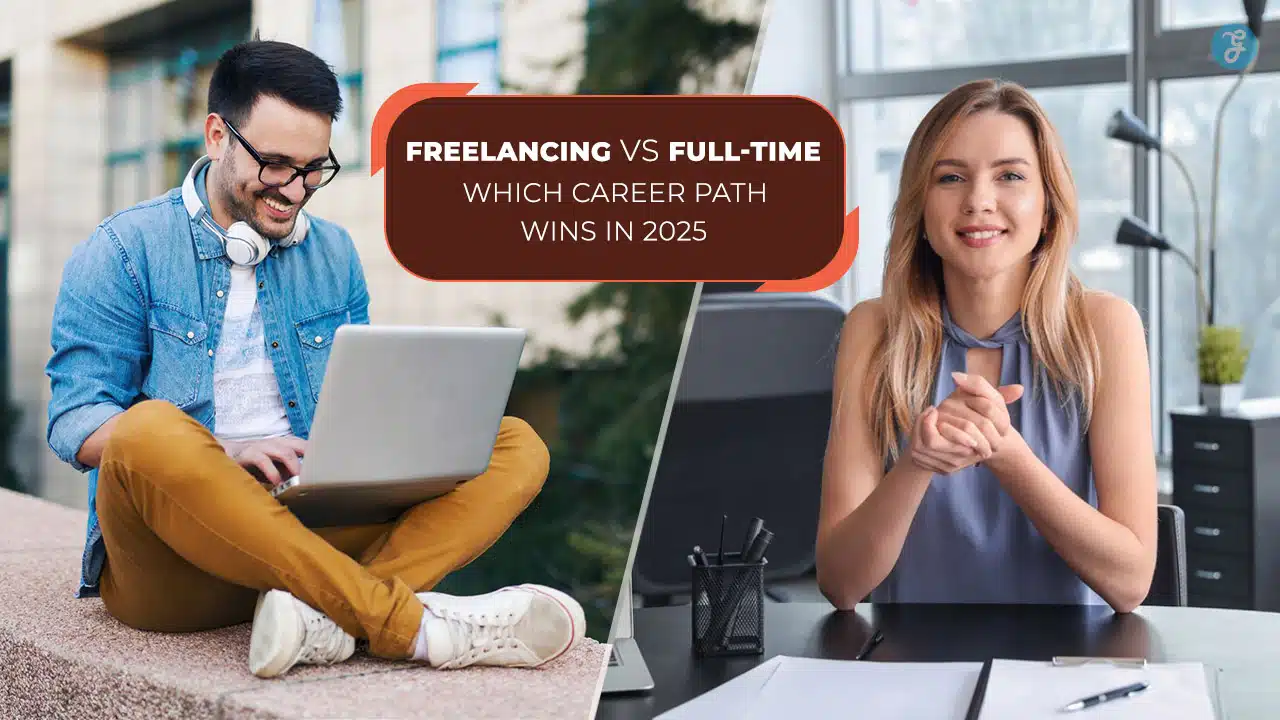
Are you stuck choosing between freelance work and a full-time job? Many people feel torn between the freedom of being their own boss and the safety of a steady paycheck. This choice gets harder as work keeps changing.
You want to pick the path that will make you happy and pay your bills.
The job world is changing fast. Did you know there are over 76 million freelancers in the U.S. right now? That number will grow to 90 million by 2028. This blog will help you see the pros and cons of both paths.
We’ll look at work-life balance, money, and growth chances for each option. Your best choice depends on what you want from life.
Key Takeaways
- Freelancing will grow from 76 million workers now to 90 million by 2028, with 60% of Gen Z choosing this path by 2025.
- Freelancers earn more ($70,000+ median) than full-time workers ($54,000 median), with some making 2-5 times more in fields like AI and design.
- Full-time jobs offer health plans, paid time off, and steady pay that comes on a set schedule.
- Freelancers control their hours and can work from anywhere, while full-time jobs now often use hybrid models.
- Many workers now mix both paths by holding a steady job while taking side gigs for extra money.
Key Factors to Compare: Freelancing vs Full-Time
Let’s look at what makes freelancing and full-time jobs different in 2025. These key factors will help you pick the right path based on what matters most to you.
Flesch-Kincaid Level: 5.0
Flexibility and Work-Life Balance

Freelancing wins big in the work-life balance game. You set your own hours and work from anywhere – no more 9 to 5 grind! Many digital nomads run their business from beach towns or cozy coffee shops.
This freedom lets you pick up kids from school, hit the gym at noon, or take a Monday off without asking for permission. Gen Z workers clearly love this perk, with 53% choosing freelance work in 2023.
This number will jump to 60% by 2025, says Upwork.
Full-time jobs now offer more options than before. Many companies use hybrid work models where staff split time between home and office. This gives some breathing room but still has rules.
You must log in at set times and may need to join team meetings. Your boss still controls most of your day. For those who need clear lines between work and home life, this structure helps.
But if you crave total control of your time, freelancing might be your best path.
Income Potential and Financial Security
Money talks in the job market of 2025. Full-time jobs offer a fixed salary with clear limits – the median sits at $54,000 per year. You get your check on time, every time. Freelancers can earn much more based on their skills and hustle.
The median freelance income has jumped to $70,000+ yearly. In hot fields like AI, design, and marketing, freelancers often make 2-5 times what their office-bound peers earn. The gap grows wider each year.
Job security looks different too. Full-time roles come with health insurance, paid leave, and pension plans. Your bills stay paid even during slow weeks. Freelancers face ups and downs but gain control over their earning ceiling.
Those who work in AI, blockchain, digital marketing, and video can now charge 30% more than they did in 2023. With 76.4 million Americans already freelancing and numbers set to hit 90 million by 2028, the gig path shows strong staying power for those with high risk tolerance and in-demand skills.
Career Growth and Skill Development
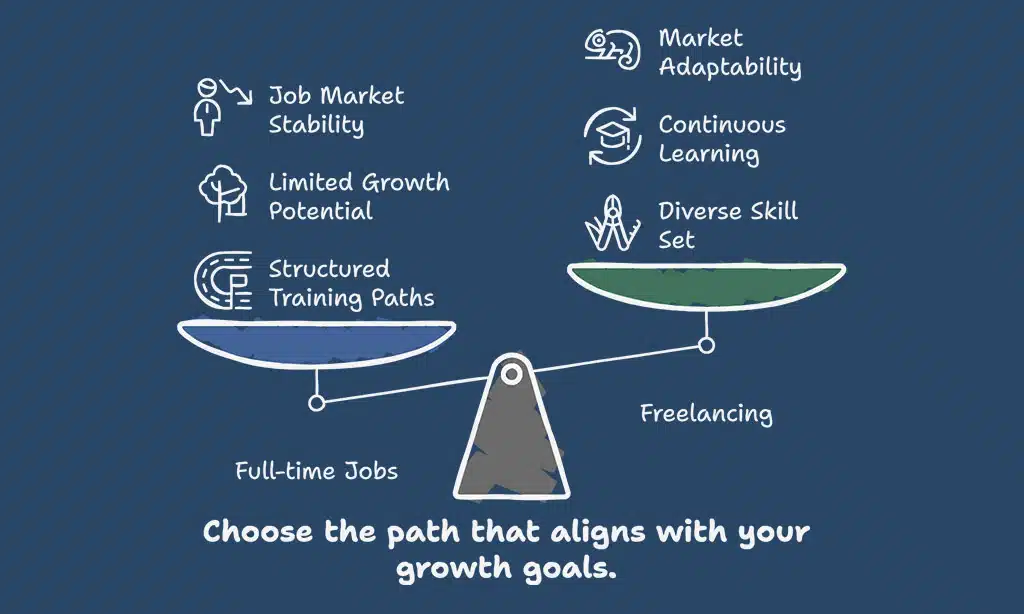
Full-time jobs offer clear paths with set training. You get defined roles and learn from team members daily. But your growth might hit a wall after mastering your position. Many workers find their skills stop growing in year three or four.
In contrast, freelancing pushes you to learn fast. You tackle new tasks across different clients and industries. This variety builds a wider skill set than most office jobs can offer.
The job market favors those who keep learning. IT, data work, and health jobs will grow 22% each year, says LinkedIn. Freelancers often stay ahead in these hot fields. They must master new tools to win clients.
They also need to use AI now or fall three years behind others. Many join co-working spaces where they share ideas with other smart people. This mix of freedom and pressure makes freelancers strong at both job skills and business smarts.
Takeaways
Your best career path in 2025 depends on what matters most to you. Freelancing gives you freedom and higher pay in hot fields like AI and design, but lacks steady checks and health plans.
Full-time jobs offer stable income and clear paths up the ladder, with the bonus of paid time off. Many smart workers now mix both worlds – holding a steady job while taking side gigs for extra cash.
Think about your money goals, how much risk you can handle, and what kind of life you want to build. The right choice isn’t the same for everyone, but the good news is you have more options than ever before.
FAQs
1. Which offers better job security: freelancing or full-time employment in 2025?
Full-time jobs still win for job security. You get steady payroll, paid leave, and clear job markets to grow in. Freelancers face more risks but can build safety nets through multiple clients.
2. How do health insurance and retirement plans compare between these career paths?
Full-time workers typically receive employee benefits like health insurance and pension schemes from employers. Freelancers must handle these costs alone, which takes a bite from their income stability.
3. Can remote work options balance the scales between freelancing and full-time jobs?
Yes! Both paths now offer chances to work remotely. Full-time jobs increasingly allow hybrid models, while digital nomads thrive in the gig economy with complete location freedom.
4. What about career growth and mentorship opportunities?
Full-time employment often provides structured training and mentorship programs that boost your skills. Freelancers must seek growth themselves through online courses, networking, and self-motivation.
5. How do Gen Z workers view the freelance versus full-time debate?
Gen Z shows higher risk tolerance than older workers. They value work-life balance and creativity over traditional job perks. Many start with side hustles in freelance writing or social media marketing before deciding their path.
6. Is there a middle ground between freelancing and full-time work?
The modern workforce is creating new options. Some people combine part-time employment with freelance projects. Others negotiate flexible arrangements with employers that offer both stability and freedom.