In a move that could significantly impact international students and higher education in the U.S., the administration of former President Donald Trump has paused all new student visa appointments at U.S. embassies and consulates around the world. This decision comes as part of a wider effort to increase scrutiny of foreign applicants by expanding the use of social media vetting.
New Visa Interviews Halted Indefinitely
According to a confidential State Department memo obtained by CBS News, embassies have been instructed to stop scheduling any new visa interviews for international students. The order affects three major visa categories:
-
F visas for academic students,
-
M visas for vocational students, and
-
J visas for foreign exchange visitors.
The pause will remain in effect “until further guidance is issued,” the memo states. However, appointments that were already booked before the directive was issued are still permitted to go forward.
The pause is intended to give the State Department time to implement a new framework for expanded social media screening of student visa applicants. This change signals a significant shift in U.S. immigration policy, one that could have lasting implications for international education and diplomatic relations.
Social Media Vetting: What’s Changing?
Under the Trump administration’s planned changes, student visa applications will now undergo deeper social media screening. While the memo didn’t outline exactly what will be analyzed, previous policies give some insight.
The Department of Homeland Security has previously collected applicants’ usernames across platforms like Facebook, Instagram, X (formerly Twitter), TikTok, and others. Officials could review posts, likes, associations, or perceived ideological views — including any content interpreted as antisemitic, extremist, or politically controversial.
Though officials have claimed this is part of national security efforts, civil rights groups have raised alarm about the vague criteria and potential misuse. Critics say this could lead to discrimination against students based on their political beliefs, religion, or affiliations.
A Blow to American Universities
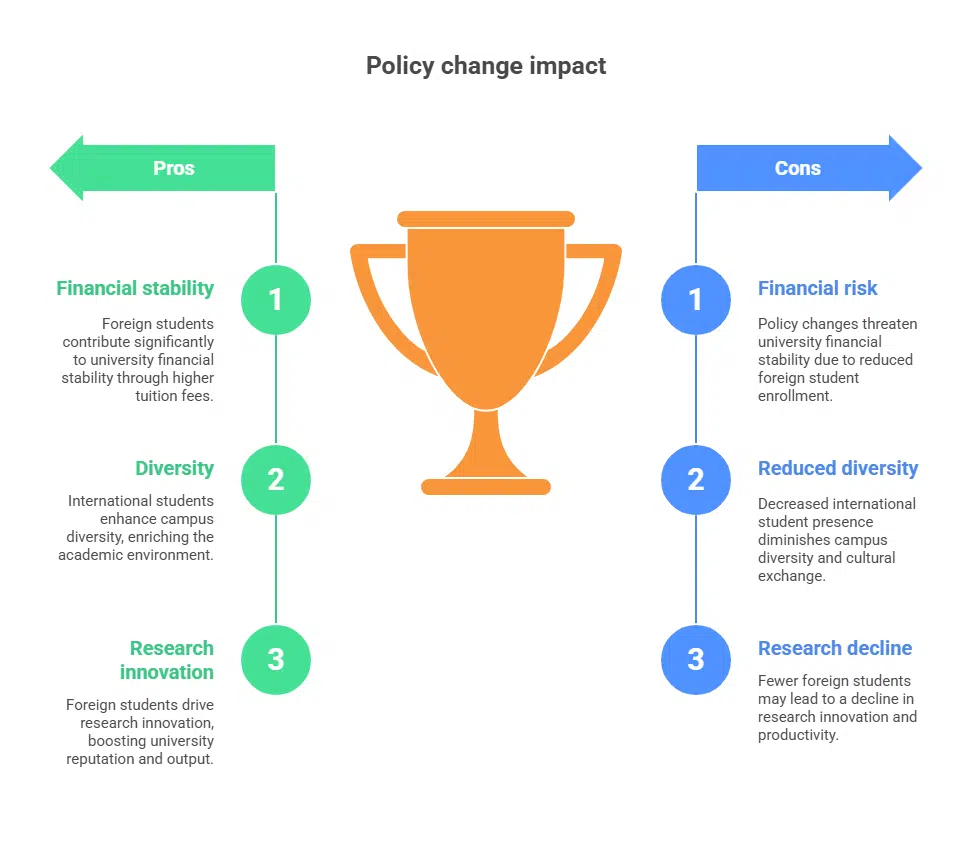
The sudden policy change has sparked concern across the academic world. American colleges and universities — especially elite institutions like Harvard, Columbia, and Stanford — depend heavily on foreign students, who often pay higher tuition fees and contribute to campus diversity and research innovation.
The decision comes amid an ongoing feud between Donald Trump and top universities, particularly Harvard University. The former president has accused Ivy League institutions of promoting left-wing ideologies, harboring pro-Palestinian protests, and failing to combat antisemitism.
Recently, the Trump administration moved to revoke Harvard’s ability to enroll international students or host foreign researchers. Although this decision was quickly blocked by a federal judge, the policy signals a broader confrontation between the government and academic institutions.
Political Tensions and Allegations of Antisemitism
Trump’s push for tougher screening is tied to his belief that some U.S. colleges enable antisemitism, especially in light of recent pro-Palestinian demonstrations on campus. The White House has accused several universities of allowing activism that crosses the line into hate speech or harassment of Jewish students.
In response, some universities and advocacy groups argue that the administration is using this issue as a pretext to restrict free speech and suppress student movements. Legal scholars warn that punishing institutions for campus expression — without proof of institutional misconduct — could set a dangerous precedent.
Harvard, in particular, has drawn the ire of the Trump administration. More than 25% of Harvard’s student body consists of international students. If new visa restrictions continue or intensify, it could severely affect the university’s academic programs, global partnerships, and financial model.
Civil Liberties and Legal Pushback
The expanded social media screening policy is already facing criticism from civil rights and immigration advocacy groups. Many argue that the lack of transparency around the vetting process raises major concerns about privacy, free expression, and fairness.
Legal experts caution that there are few checks on how an applicant’s social media history may be interpreted — or misinterpreted. For instance, posts that are satirical, political, or taken out of context could be wrongly flagged as “red flags.”
Moreover, the use of AI and algorithm-based vetting has been criticized as flawed and biased. Earlier this year, over 300 student visas were revoked as part of what Senator Marco Rubio called a “catch and revoke” strategy. The strategy involves scanning applicants’ digital footprints to identify any association with extremist views or online activity deemed controversial.
What’s Next for International Students?
For now, students who already have appointments scheduled can proceed with their interviews. But for thousands of others planning to study in the U.S. this year or next, the situation remains uncertain.
The State Department has not provided a clear timeline for when the freeze on visa appointments will be lifted or what the final guidelines for social media screening will look like.
Prospective students are being advised to:
-
Monitor embassy and consulate websites regularly,
-
Stay in touch with their host universities for updates, and
-
Seek legal guidance if they are worried about visa eligibility or online content.
Meanwhile, many colleges and universities are likely to challenge the policy in court, just as they did during Trump’s earlier attempts to restrict foreign student visas. These legal battles could define the future of international education in the United States.
This policy change adds another layer of uncertainty for international students at a time when global education is already recovering from post-pandemic disruptions and increasing geopolitical tension.
While the Trump administration claims this is a step toward ensuring national security, critics see it as part of a wider political agenda that risks undermining U.S. academic leadership, stifling free expression, and alienating future global talent.