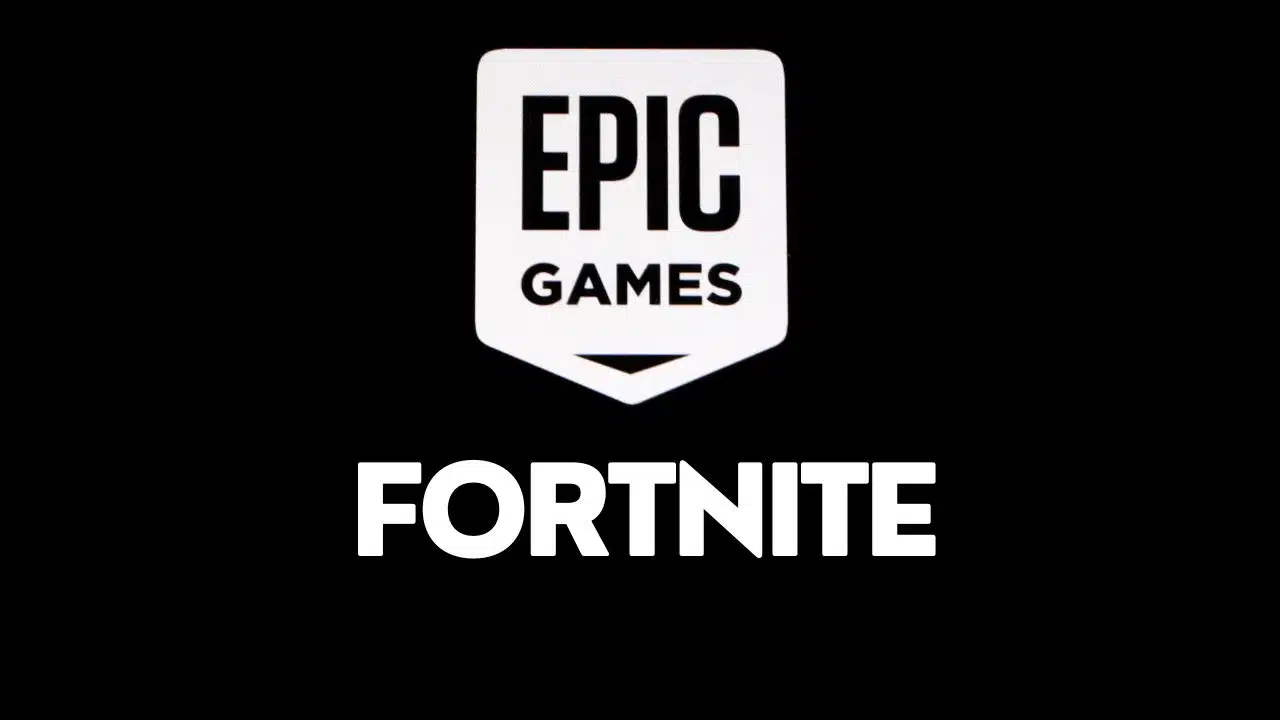
Fortnite, the globally recognized multiplayer shooter game developed by Epic Games, has officially made its return to Apple’s App Store in the United States. The move ends a near five-year-long ban that began in 2020 and marks a significant victory for Epic in its prolonged legal standoff with the tech giant.
As of Tuesday, the wildly popular game is once again accessible for iPhone and iPad users in the U.S., rekindling access to millions of potential players on Apple devices. The development also coincides with the title’s availability through alternative app marketplaces in the European Union, including the Epic Games Store and AltStore.
Why Fortnite Was Banned From Apple’s Ecosystem
The ban traces back to August 2020, when Epic Games attempted to bypass Apple’s in-app payment system by introducing its own direct payment option within Fortnite. This move violated Apple’s App Store guidelines, which require developers to use its payment system — one that includes a 30% commission on in-app purchases. In response, Apple promptly removed Fortnite from its platform.
Epic responded with a lawsuit, accusing Apple of monopolistic practices. This initiated a lengthy and highly publicized legal battle that attracted global attention and brought scrutiny to Apple’s control over its App Store and its policies regarding developer fees and competition.
A Long Legal Road and a Turning Point in 2025
After years of courtroom proceedings, the legal stalemate reached a pivotal moment in April 2025. A U.S. federal judge, Yvonne Gonzalez Rogers, ruled that Apple had failed to comply with an earlier injunction that required the company to allow alternative payment methods on its platform. As a result, the court referred Apple to the Department of Justice for a potential criminal contempt investigation — a rare and severe move that underscored the gravity of Apple’s non-compliance.
Judge Gonzalez Rogers’ decision emphasized that Apple deliberately delayed implementing the court’s order, undermining the original intent of promoting fairness and competition in the digital marketplace.
Epic Games Celebrates Return, But Fortnite’s Popularity Faces New Challenges
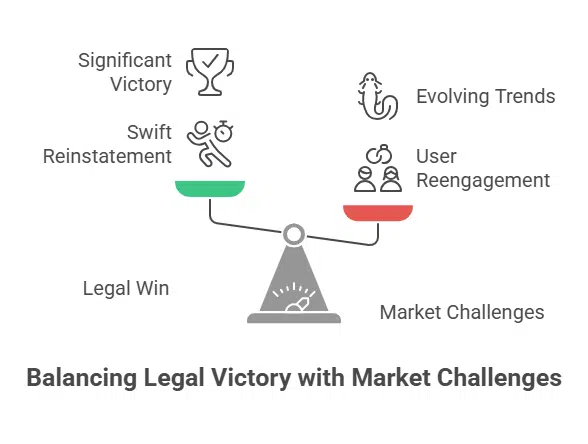
With the court’s backing, Epic Games swiftly moved to reinstate Fortnite on the iOS platform in the U.S. Speaking to fans via social media platform X (formerly Twitter), the company confirmed the game’s return and thanked users for their patience.
However, analysts caution that while the legal win is significant, Fortnite may now face a more challenging market landscape. Since its removal from the App Store in 2020, user behavior and mobile gaming trends have evolved. At the time of its removal, Fortnite boasted over 116 million registered users on iOS alone — a staggering figure that highlighted its dominance on Apple devices. But reengaging those users after such a long absence won’t be simple.
European Users Already Had Access — Thanks to Regulatory Pressure
Interestingly, Fortnite had already returned to Apple devices in the European Union in 2024. This was possible due to the Digital Markets Act (DMA), a sweeping regulation that forced Apple to allow third-party app stores and alternative payment systems in the region. Under the DMA, Epic launched Fortnite via the Epic Games Store and AltStore, giving EU users renewed access to the game ahead of their American counterparts.
This staggered re-entry highlighted the difference between regulatory approaches in the U.S. and the EU — with the latter being more aggressive in tackling alleged anti-competitive behavior by Big Tech companies like Apple and Google.
What This Means for App Developers and Consumers
Fortnite’s return signals more than just the end of a ban — it may also reshape the broader app economy. The court ruling has opened the door for developers to bypass Apple’s commission-heavy payment system, a move that could benefit smaller developers and large companies alike.
Apps like Spotify and Netflix — both vocal critics of Apple’s App Store rules — may now find new avenues to offer subscriptions and services at lower prices or with alternative billing methods. Additionally, consumer advocates see this as a step toward greater choice and flexibility for users, who previously had limited ways to transact on iOS.
How to Download Fortnite on Your iPhone or iPad
As of May 21, 2025, Fortnite can be downloaded from Apple’s U.S. App Store. The process requires users to install a lightweight launcher, which then downloads the full game package (approximately 13GB). This method aligns with Epic’s strategy to maintain control over the game’s core functionality while still complying with Apple’s infrastructure.
The iOS version of Fortnite has also launched with exclusive in-game promotions, including a 20% bonus when players use Epic’s direct payment system. The game’s latest season, themed around the Star Wars universe, went live on May 2 and features new characters, skins, and map changes — enticing both returning and new players to dive back in.
Apple’s Silence and Industry-Wide Implications
Apple has not publicly responded to the court’s latest ruling or the reinstatement of Fortnite. However, the tech industry is watching closely. The outcome of this dispute — one of the most high-profile antitrust cases involving a U.S. tech giant — could influence future regulatory policies, especially concerning digital marketplaces.
The case has also drawn attention from U.S. lawmakers and international regulators who are actively considering ways to curb the monopolistic tendencies of app platform operators. As similar cases unfold globally, Fortnite’s return may become a pivotal example of how legal action can lead to meaningful change in Big Tech’s business practices.
A Cautious Victory
Fortnite’s reappearance on the U.S. App Store is undeniably a major milestone for Epic Games. It demonstrates how persistence and legal recourse can challenge dominant digital gatekeepers like Apple. Still, the road ahead is uncertain — for both Epic and other developers seeking greater autonomy in the app ecosystem.
As digital competition intensifies and courts, regulators, and consumers push for more fairness and flexibility, this case could very well shape the future of app distribution for years to come.