

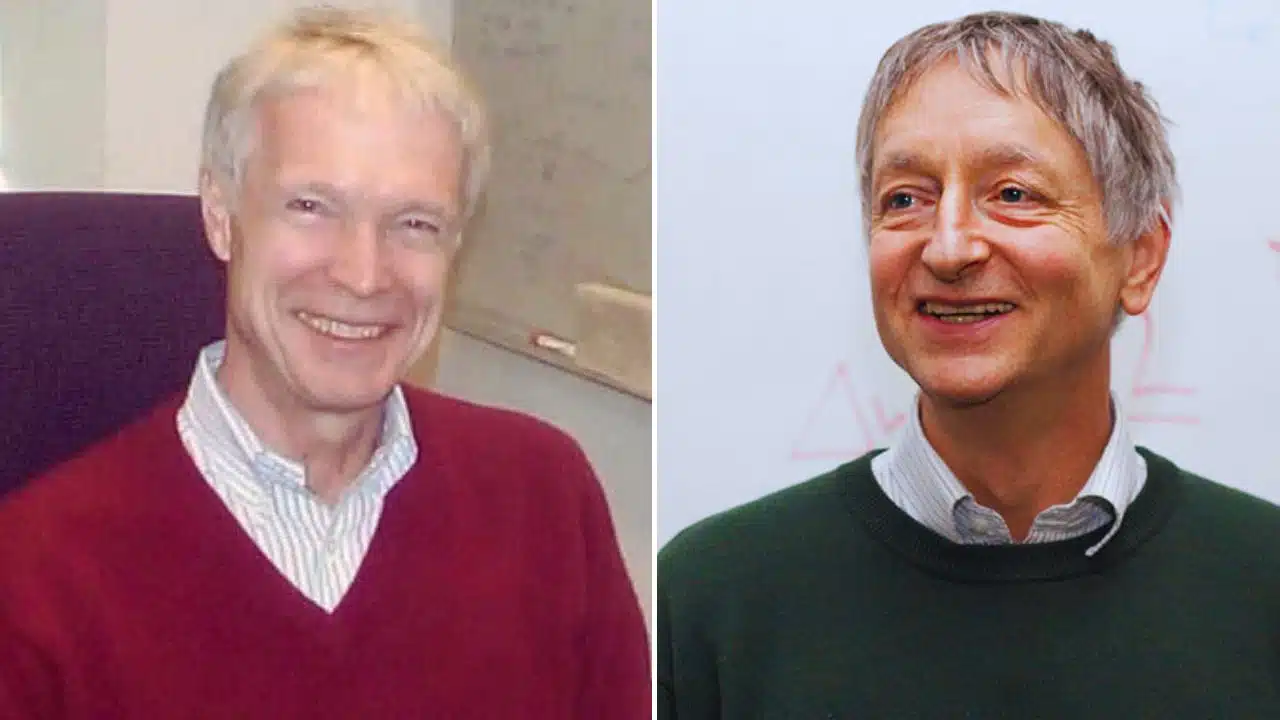
In a remarkable recognition of their groundbreaking contributions to the field of artificial intelligence (AI) and machine learning, John Hopfield and Geoffrey Hinton have been awarded the prestigious 2024 Nobel Prize in Physics. Their pioneering work on artificial neural networks has revolutionized how machines learn and process information, laying the foundation for significant advances in various scientific disciplines and industries.
Celebrating the Unique Learning Capabilities of Humans
The Nobel Committee for Physics, in its announcement, praised Hopfield and Hinton for their contributions, which were inspired by the unique cognitive abilities of the human brain. Ellen Moons, chair of the Nobel Committee, emphasized the unparalleled learning ability of humans. “We, as humans, possess a distinct and unmatched ability to recognize images, understand speech, and associate them with memories and experiences,” she said. “These remarkable capabilities are made possible by the billions of neurons in our brains, intricately connected to create a vast network of cognitive processes.”
The committee highlighted that artificial neural networks are modeled after the complex structure of the human brain. These networks attempt to replicate how neurons communicate and process information, forming the foundation for advanced AI systems capable of mimicking human learning patterns.
The Early Pioneers of Artificial Neural Networks
Hopfield and Hinton’s work, dating back to the 1980s and 1990s, introduced some of the earliest concepts of artificial neural networks, co-opting statistical physics and computational techniques to build systems that could store, retrieve, and recreate information. The duo drew from various disciplines to craft models capable of learning from data, making predictions, and improving their accuracy over time.
Hopfield, a trained physicist, focused on using principles of statistical mechanics to model neural networks, while Hinton, a cognitive psychologist and computer scientist, expanded these concepts and made them practically usable through his deep learning innovations. Together, their work has had far-reaching implications, particularly in how machines can now mimic human learning and decision-making processes.
Revolutionizing Multiple Fields with AI and Neural Networks
The impact of Hopfield and Hinton’s work extends far beyond the realm of computer science. Their development of artificial neural networks has transformed industries such as healthcare, climate science, and even fundamental physics. The healthcare sector, for instance, has benefited immensely from the application of AI and machine learning algorithms to analyze vast amounts of medical data, enabling faster and more accurate diagnoses. Hospitals and medical research facilities around the world are now relying on AI-driven tools to detect diseases such as cancer, heart conditions, and neurological disorders with unprecedented precision.
In climate science, machine learning models have significantly enhanced the accuracy of predictions and simulations. Neural networks are now able to process huge datasets from satellite imagery, atmospheric sensors, and other environmental data sources to provide more reliable climate projections. These advancements are crucial in efforts to combat climate change, as they allow scientists to develop better mitigation and adaptation strategies.
Moreover, in the realm of fundamental physics, AI is being used to analyze and interpret massive datasets generated by experiments in fields such as particle physics and cosmology. Neural networks are able to sift through vast amounts of data—often far too complex for the human brain to process efficiently—helping physicists make new discoveries about the nature of the universe.
Moons on the Ethical Implications of AI Development
While celebrating the monumental achievements of Hopfield and Hinton, Ellen Moons also addressed the ethical challenges posed by the rapid development of AI technologies. “As with any powerful technology, machine learning and AI come with significant responsibilities,” she said. “We must ensure that the advancements we make are used ethically and for the benefit of humanity. The technology has the potential to revolutionize industries and improve lives, but it also poses risks if not handled with care.”
Moons’ remarks echo growing concerns among experts about the unintended consequences of AI development. With the increasing capabilities of AI systems, there is a rising need for transparent guidelines and regulations to ensure that these technologies are not misused or allowed to operate without human oversight. From data privacy to job displacement and the possibility of autonomous systems making life-altering decisions without human intervention, the ethical dimensions of AI are becoming more prominent in public discourse.
Hinton’s Response: ‘Flabbergasted’ and Hopeful for the Future
Geoffrey Hinton, the British-Canadian cognitive psychologist often hailed as the “Godfather of AI,” expressed his surprise and excitement upon receiving the news of the Nobel Prize. “I am flabbergasted,” Hinton told reporters during a press conference. “I had no idea this would happen. I am very surprised.”
Like all Nobel laureates, Hinton was informed of his award just before the official public announcement. The secrecy surrounding the selection process is designed to ensure that the recipients remain confidential until the exact moment of the announcement.
Hinton shared his thoughts on the profound impact that artificial neural networks and machine learning will have on the future. “The advancements we are witnessing today will shape the future of humanity in ways we can’t yet fully comprehend,” Hinton said. “This will be comparable to the Industrial Revolution. Machine learning will surpass human intellectual abilities in many areas, and its influence will be felt across every sector of society.”
He elaborated on the various applications of AI that are already transforming industries, from AI-powered assistants to productivity tools that are streamlining workflows and enhancing efficiency. However, like Ellen Moons, Hinton also stressed the importance of ensuring that AI technologies are developed and used responsibly. He warned that if humans lose control of these powerful systems, the consequences could be dire.
Hinton even shared his personal experience using ChatGPT-4, a popular AI language model, in his daily work. “I use it often, but I don’t completely trust it,” Hinton admitted, referencing the tendency of AI models to produce incorrect or nonsensical outputs, a phenomenon known as “hallucination.” This highlights one of the ongoing challenges in developing AI systems that are both reliable and trustworthy.
BREAKING NEWS
The Royal Swedish Academy of Sciences has decided to award the 2024 #NobelPrize in Physics to John J. Hopfield and Geoffrey E. Hinton “for foundational discoveries and inventions that enable machine learning with artificial neural networks.” pic.twitter.com/94LT8opG79— The Nobel Prize (@NobelPrize) October 8, 2024
AI, Machine Learning, and Deep Learning: A Brief Explanation
In the announcement of the Nobel Prize, several key terms such as artificial intelligence (AI), machine learning, and deep learning were prominently featured. For those unfamiliar with these concepts, Hans Ellengren, Secretary-General of the Royal Swedish Academy of Sciences, provided some context during the press briefing.
Artificial intelligence (AI) is the overarching term used to describe systems that simulate human intelligence. It encompasses a broad range of technologies and methods that allow machines to perform tasks that traditionally require human cognition, such as visual perception, speech recognition, and decision-making.
Machine learning, a subset of AI, refers to the ability of systems to learn from data and improve over time without being explicitly programmed. By analyzing patterns in data, machine learning models can make predictions, detect anomalies, and adapt to new information.
Deep learning, a specialized area within machine learning, involves the use of artificial neural networks modeled after the human brain. These networks are composed of layers of nodes—much like neurons in the brain—that process information. A simple neural network may have just a few layers, but more complex networks, known as deep learning models, contain multiple layers that enable them to solve increasingly complex problems.
Expert Reactions: ‘Courageous and Justified’ Nobel Choice
The Nobel Prize decision to award two figures from different backgrounds—physics and computer science—was met with widespread approval from the scientific community. Theoretical physicist Tilman Plehn from the University of Heidelberg praised the committee’s bold choice. “It’s a courageous decision, but one that is totally justified,” Plehn remarked. “Hopfield is a trained physicist, but Hinton comes from a different background. Despite that, Hinton has been a visionary in deep learning, taking ideas from physics and making them applicable to computer science.”
Plehn further credited Hinton with pushing forward ideas in the 1990s when neural networks were still considered a niche and largely untested field. “Hopfield laid the groundwork, and Hinton made it practical,” Plehn said. “He never gave up on this field, even when others were skeptical.”
Marumi Kado, a particle physicist, added that deep learning is now a crucial tool in his field. “I use neural networks to interpret billions of images from particle collisions,” Kado said. “These collisions happen at scales too small for the human eye to detect, but AI helps us process the data and make discoveries.”
Despite the excitement around the potential of AI, experts also emphasized the need for transparency and ethical considerations. Michael Krämer, a theoretical physicist from the University of Aachen, stressed that the rapid development of AI must be accompanied by political and social discussions to address potential risks.
Geoffrey Hinton: The “Godfather of AI” and His Ongoing Legacy
Geoffrey Hinton’s journey in AI research has earned him the title of “Godfather of AI,” a recognition of his immense contributions to the field. In 2017, Hinton co-founded the Vector Institute in Toronto, a leading research organization dedicated to advancing AI and machine learning. He also became its chief scientific advisor, continuing his groundbreaking research alongside other leading scientists.
A year later, Hinton, along with Yoshua Bengio and Yann LeCun, received the Turing Award, often referred to as the “Nobel Prize of Computing.” The trio, dubbed the “Godfathers of Deep Learning,” played an instrumental role in the development of neural networks and deep learning, technologies that are now integral to AI systems used across the world.
In 2023, Hinton made headlines when he resigned from his long-standing position at Google. He explained that he left the tech giant so he could freely express his concerns about the rapid advancements in AI and the potential risks it posed. Hinton has since become a vocal advocate for establishing ethical guidelines in AI development and ensuring that the technology is used for the greater good.
Hinton’s concerns revolve around the possibility of AI being misused, as well as the potential for widespread job displacement due to automation. He has also warned of existential threats that advanced AI systems could pose in the future if left unchecked.
Ethical AI for the Benefit of Humanity
The Nobel Prize awarded to John Hopfield and Geoffrey Hinton serves as a reminder of the transformative potential of AI and machine learning. As these technologies continue to evolve, the challenge will be ensuring that they are used in ways that benefit society while minimizing the risks. Both Hopfield and Hinton’s contributions have shaped the present and future of AI, and their work will undoubtedly continue to influence generations of scientists, engineers, and policymakers.
As Ellen Moons and Geoffrey Hinton both emphasized in their remarks, the future of AI is filled with promise—but also requires careful and responsible stewardship to ensure that its benefits are realized for the greater good of humanity.
The recognition of Hopfield and Hinton’s work in artificial neural networks follows the announcement of the Nobel Prize in Physiology, awarded to Victor Ambros and Gary Ruvkun for their work on microRNAs. The Nobel Prize for Chemistry will be revealed next, in what promises to be another exciting announcement from the Royal Swedish Academy of Sciences.
























