
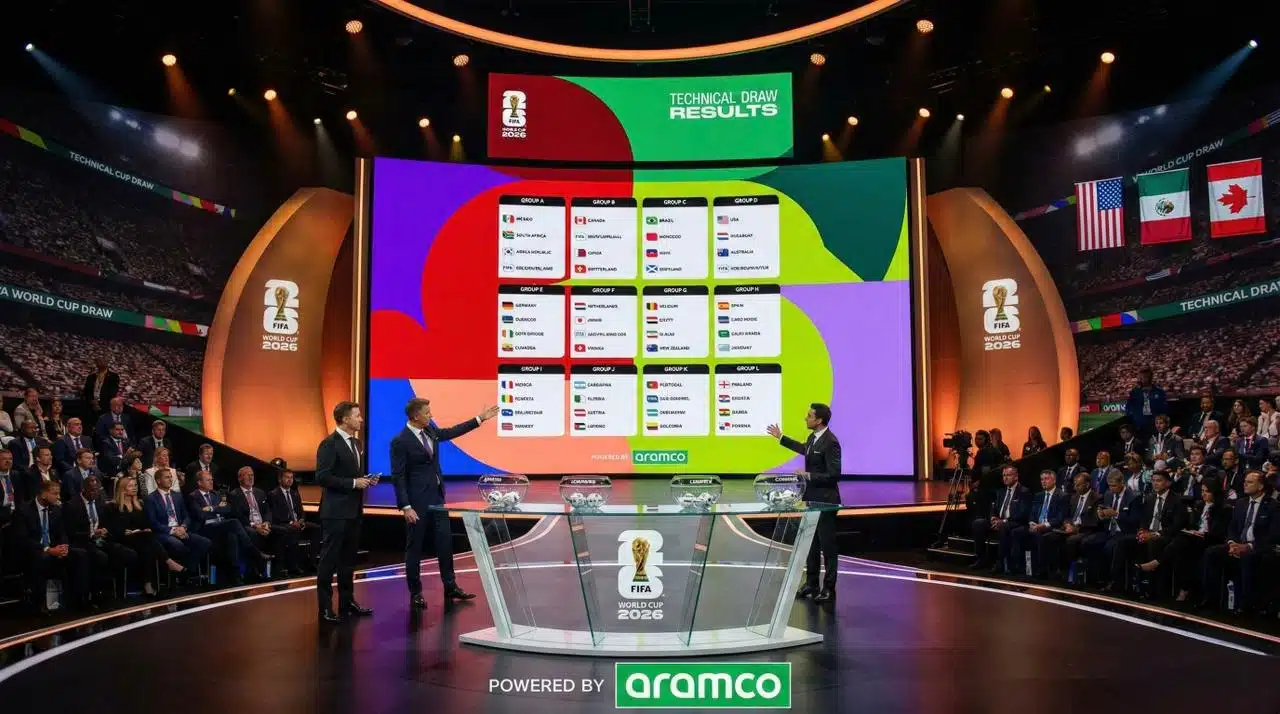
The 2026 FIFA World Cup fixture has officially been released, with the highly anticipated tournament set to take place across North America. Teams from around the globe will compete starting in June 2026, following a historic joint-hosting arrangement between the United States, Canada, and Mexico.
Along with the fixture, the draw results reveal the groups and matchups for this expanded edition, which will see 48 teams vying for the world’s most coveted football trophy.
Overview of the 2026 FIFA World Cup
The 2026 edition will mark an important anniversary in World Cup history, as it will be the first to feature 48 teams instead of the traditional 32. The expansion aims to increase global representation and give more countries the opportunity to showcase their talent on football’s biggest stage. This change will make the 2026 World Cup the largest sporting event in history, with more games, more teams, and a wider range of nations participating.
Matches will be held across 16 cities in three host countries: the United States, Mexico, and Canada. The tournament will take place from June 8 to July 3, 2026, and it will be a unique spectacle due to the collaborative hosting by these three North American nations, each contributing their own distinct culture, football history, and fans to the event.
Tournament Dates and Venues
The tournament will kick off on June 11, 2026, and conclude on July 19, 2026, with the final match scheduled to take place at the MetLife Stadium in East Rutherford, New Jersey. Other notable venues include Mexico’s Estadio Akron and Canada’s BMO Field in Toronto. A complete list of venues is as follows:
| Venue | City | Country |
| AT&T Stadium | Dallas | USA |
| Estadio Banorte | Mexico City | Mexico |
| MetLife Stadium | New York/New Jersey | USA |
| Mercedes-Benz Stadium | Atlanta | USA |
| GEHA Field at Arrowhead Stadium | Kansas City | USA |
| NRG Stadium | Houston | USA |
| Levi’s Stadium | San Francisco | USA |
| SoFi Stadium | Los Angeles | USA |
| Lincoln Financial Field | Philadelphia | USA |
| Lumen Field | Seattle | USA |
| Gillette Stadium | Boston | USA |
| Hard Rock Stadium | Miami | USA |
| BC Place | Vancouver | Canada |
| Estadio BBVA | Monterrey | Mexico |
| Estadio Akron | Guadalajara | Mexico |
| BMO Field | Toronto | Canada |
These stadiums will host matches throughout the tournament, providing fans with exciting venues and unique atmospheres for each encounter. The joint-hosting arrangement also allows for diverse matchday experiences across regions, from the bustling cities of the U.S. to the football-crazy environment in Mexico and the passionate support in Canada.
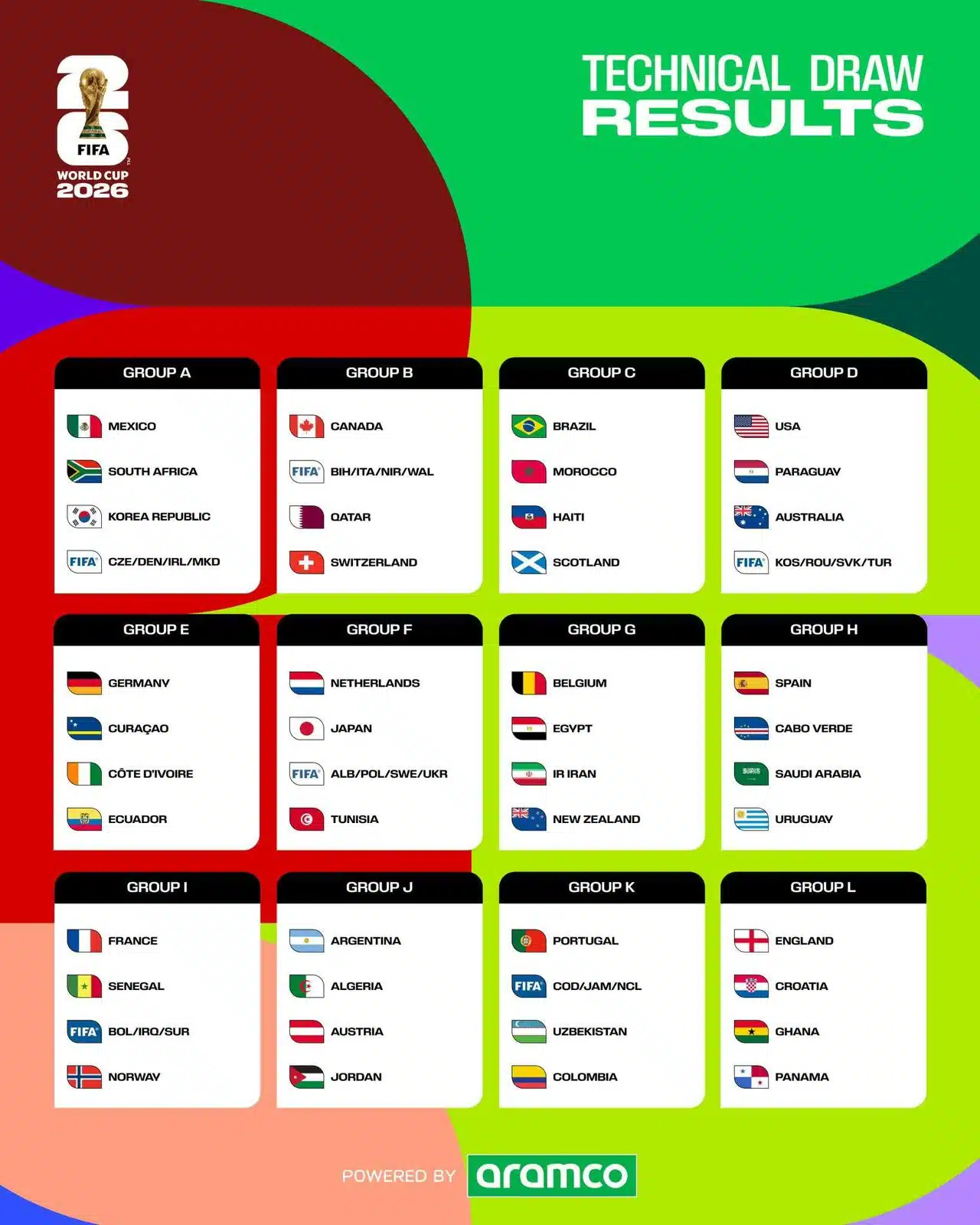
2026 FIFA World Cup Draw Results
The draw for the 2026 FIFA World Cup, which took place on 5th December 2025, reveals the groups and matchups that will shape the tournament’s early stages. For the first time in World Cup history, the draw introduced a new format that features 48 teams divided into 12 groups of three. This creates a new structure where teams must deliver their best performance from the beginning, as only the top two teams from each group will advance to the knockout rounds.
Key Groupings and Matchups
The top-seeded teams have been placed into the following groups, and some exciting matchups are already guaranteed:
Group A
- Mexico
- South Africa
- Korea Republic
- To Be Decided
Group B
- Canada
- Qatar
- Switzerland
- To Be Decided
Group C
- Brazil
- Morocco
- Haiti
- Scotland
Group D
- USA
- Paraguay
- Australia
- To Be Decided
Group E
- Germany
- Curacao
- Côte d’Ivoire
- Ecuador
Group F
- Netherlands
- Japan
- Tunisia
- To Be Decided
Group G
- Belgium
- Egypt
- Iran
- New Zealand
Group H
- Spain
- Cape Verde
- Saudi Arabia
- Uruguay
Group I
- France
- Senegal
- Norway
- To Be Decided
Group J
- Argentina
- Algeria
- Austria
- Jordan
Group K
- Portugal
- Uzbekistan
- Colombia
- To Be Decided
Group L
- England
- Croatia
- Ghana
- Canada
The inclusion of historically strong teams such as Germany, Brazil, and France, paired with emerging football nations like Cabo Verde, Uzbekistan, Jordan, Curacao, and Haiti ensures a competitive and unpredictable tournament.
Fifa 2026 World Cup: New Format Impact
The new group-stage format, with only four teams in each group, significantly changes how teams will approach the tournament. With two top teams from each group and the eight best third-placed teams progressing to a new round of 32, each match is critical. As such, there will be no room for slip-ups, especially for smaller nations looking to make a mark on the global stage. The intensity of the group stages will undoubtedly raise the stakes for every team involved.
How the Draw Affects the Tournament
The results of the 2026 FIFA World Cup draw have sparked a mix of excitement and anticipation as teams prepare for their group-stage fixtures. While there will be more games overall, this setup means teams have to perform at their peak from the outset, with fewer chances to recover from early setbacks.
Each group will see a total of six matches in the round-robin format, with the top two teams from each group advancing to the knockout stage along with the eight best third-placed teams. This format will allow for more chances of upsets and surprises, as less experienced teams will have the opportunity to face off against heavyweights in key matchups.
Additionally, the introduction of more teams allows for new countries to enter the fold. Nations like Canada, which have historically been less competitive at the global level, now have a legitimate chance to make a strong run at the tournament, benefiting from the expanded qualification system and the passionate fanbases of their home countries.

Qualification Process: A Wider Field of Competition
The 2026 FIFA World Cup marks the first time in history that the tournament will feature 48 teams, and this change is already having a significant impact on qualification. While the exact qualification process varies by region, the expanded number of teams in the tournament provides more nations with the opportunity to qualify.
For example, in the previous World Cup, only 32 teams participated, meaning that many nations had to fight for limited spots. In the 2026 edition, the number of teams from Africa, Asia, and North America has been increased, giving more nations an equal chance to qualify.
Each region will follow its specific qualification format, with Asia (AFC) and Africa (CAF) having additional spots compared to previous tournaments, and North America (CONCACAF) benefiting from three automatic spots as co-hosts. With fewer eliminations from stronger teams, more countries will enjoy the chance to compete, ensuring a wider array of styles, talent, and footballing cultures on display.
Ticket Sales and Travel
With the World Cup now only a few months away, ticket sales have already started. FIFA has made significant efforts to make attending the tournament accessible to a global audience, with affordable pricing tiers for fans from all nations. Travel logistics have also been a topic of discussion, as the vast geographical spread of venues will require careful planning for both teams and supporters. FIFA has partnered with airlines and travel agencies to offer packages for the games, ensuring a smooth experience for visitors.
Fans eager to attend the tournament have already begun planning their trips, with many looking for travel packages that allow them to experience multiple matches across different cities. FIFA has also introduced ticketing tiers designed to accommodate a wide range of budgets, from affordable options for families and students to premium tickets for those looking for a more exclusive experience.
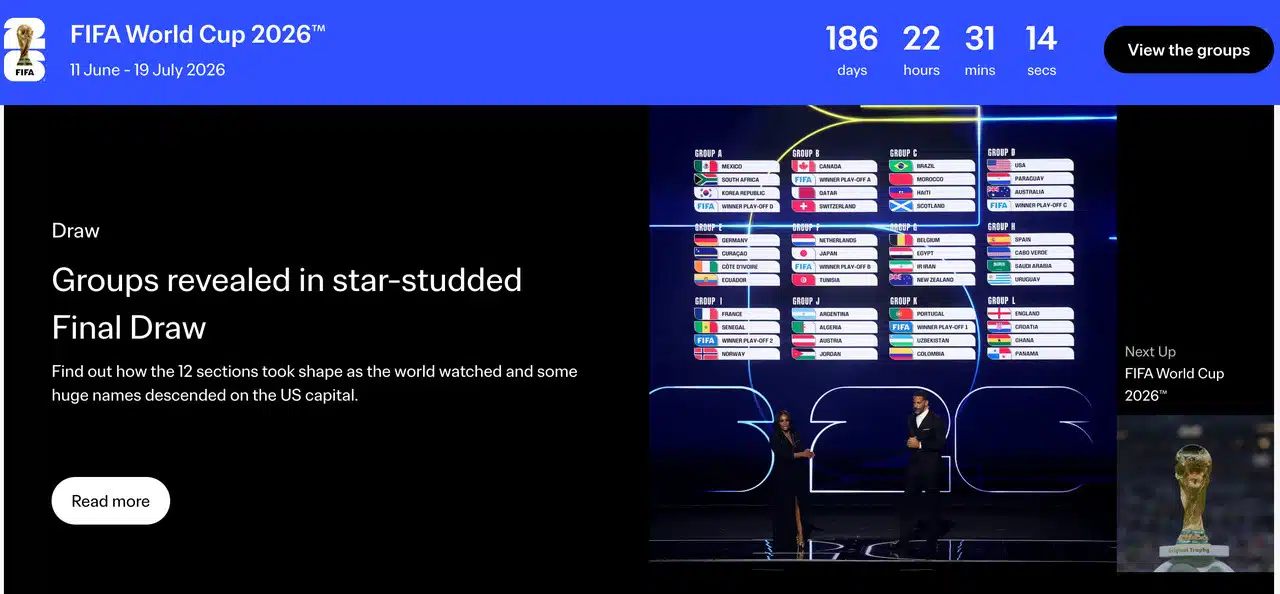 Screenshot from FIFA.com
What’s Next for the 2026 FIFA World Cup?
Looking ahead, the focus shifts toward team preparations, qualification, and pre-tournament friendlies. The final rounds of qualifying matches will take place in 2025 and early 2026, determining the final spots for the tournament. Teams will then ramp up their training and friendly matches to fine-tune their strategies and ensure peak performance by June 2026.
With the world watching, the 2026 FIFA World Cup is shaping up to be one of the most exciting and diverse tournaments in the history of the sport. The increased number of teams, along with new formats and venues, promises to deliver captivating football and unforgettable moments for fans around the world.
Takeaways
As the 2026 FIFA World Cup fixture and draw results come into focus, anticipation builds for what promises to be a groundbreaking tournament. With 48 teams ready to compete, fans can look forward to more matches, more teams, and more footballing history being made. The expanded format will bring fresh excitement to the sport, and the event promises to leave a lasting impact on football’s global stage.
With the tournament now just a few years away, teams will continue to prepare for the challenge ahead, and fans across the globe will be counting down the days until the first whistle blows in June 2026. As the world gears up for the most inclusive and expansive World Cup yet, the 2026 FIFA World Cup is set to showcase the beautiful game like never before.