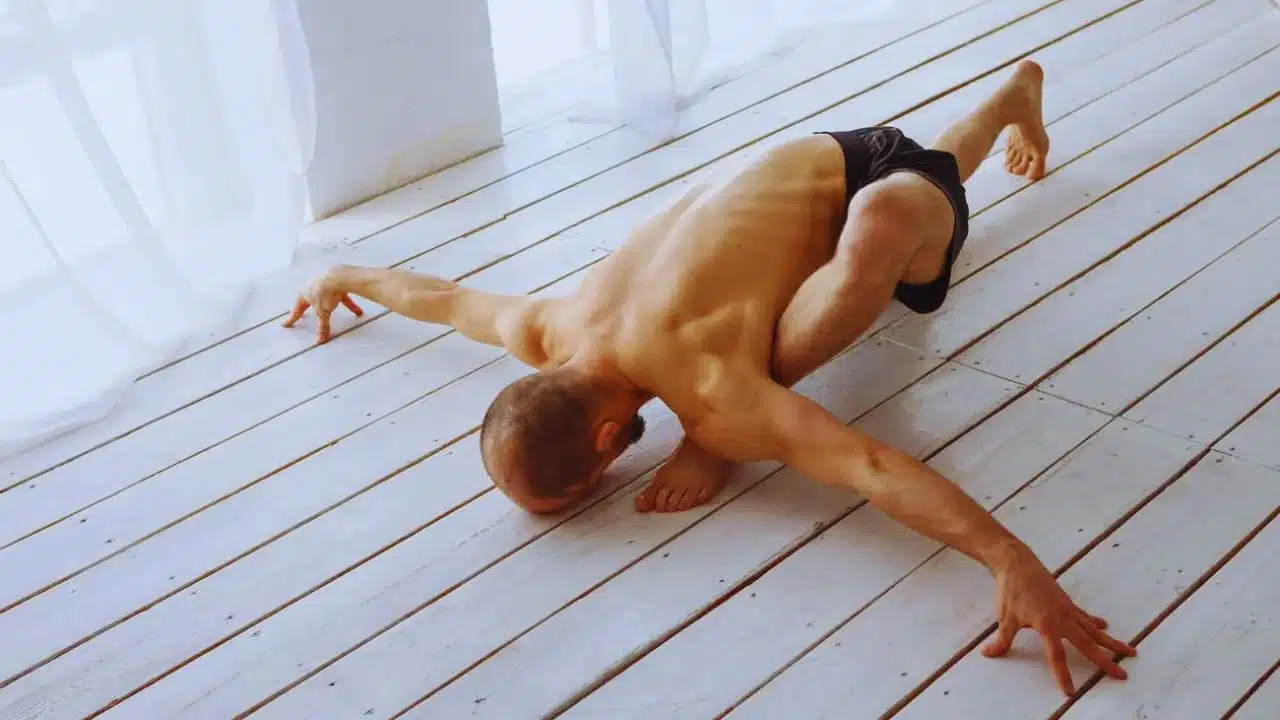
In the fast-paced modern world, maintaining physical flexibility can greatly enhance overall well-being and prevent injuries.
Yoga, a practice that combines physical postures, breathing exercises, and meditation, has proven benefits for flexibility, strength, and mental clarity. Here are 15 yoga poses specifically beneficial for men to improve flexibility.
1. Butterfly Pose (Baddha Konasana)
How to Do It:
Start by sitting with a straight back and bring your feet closer to your hips. Interlace your fingers around the pinkie-toe side of your feet and press the soles together.
For a deeper stretch, lean forward from your hips and extend your hands before you. Relax your legs and spine, holding the pose for at least 3 minutes.
Benefits:
- Stretches the inner thighs, groin, and knees.
- Helps in opening the hips.
- Reduces stiffness and improves flexibility.
Read More: Philosophy Behind Yoga
2. Bridge Pose (Setu Bandhasana)
How to Do It:
Lie on your back with your knees bent and feet flat on the ground. Extend your arms out to the sides with palms facing down.
Keep your feet hip-width apart and your fingertips grazing the back of your heels. Slowly lift your hips off the ground, interlace your hands beneath you, and press down to lift your torso. Hold this pose while breathing deeply.
Benefits:
- Stretches the chest, neck, spine, and hips.
- Strengthens the back, glutes, and hamstrings.
- Improves spinal flexibility and alignment.
3. Crescent Moon Pose (Anjaneyasana)
How to Do It:
Start by placing your right foot forward and your left knee on the mat. Ensure your right knee is directly above your right ankle, and place your hands on your right knee.
Inhale deeply, raise your arms above your head, and keep them aligned with your ears. Press your feet slowly and allow your hips to shift forward slightly. Hold this position for 1 to 3 minutes.
Benefits:
- Stretches arms, shoulders, neck, abdomen, quadriceps, and pelvic muscles.
- Improves balance and stability.
- Enhances flexibility in the hips and legs.
4. Squat Pose (Malasana)
How to Do It:
Stand with your feet hip-width apart and squat down, keeping your heels on the ground. Press your elbows against the inner knees and bring your palms together in a prayer position. Hold the pose while keeping your spine straight.
Benefits:
- Targets core muscles like the obliques.
- Strengthens the spine and lower body.
- Improves flexibility in the hips, knees, and ankles.
5. Cobra Pose (Bhujangasana)
How to Do It:
Lie on your stomach with your legs extended and the tops of your feet on the ground. Place your hands under your shoulders, elbows close to your body. Inhale and lift your chest off the ground, extending your back. Keep your shoulders relaxed and hold the pose.
Benefits:
- Stretches and strengthens the spine.
- Opens the chest and shoulders.
- Enhances flexibility in the back and abdominal muscles.
6. Downward-Facing Dog (Adho Mukha Svanasana)
How to Do It:
Start on your hands and knees, with your hands shoulder-width apart and your knees hip-width apart. Lift your hips up and back, straightening your legs and arms to form an inverted V shape. Press your heels toward the ground and relax your head between your arms.
Benefits:
- Stretches the hamstrings, calves, shoulders, and spine.
- Strengthens the arms and legs.
- Improves overall body flexibility and posture.
7. Warrior II (Virabhadrasana II)
How to Do It:
Stand with your feet wide apart, turn your right foot out 90 degrees and your left foot in slightly. Extend your arms out to the sides, parallel to the ground. Bend your right knee so it is directly over your ankle. Hold the pose and switch sides.
Benefits:
- Stretches the hips, groin, and shoulders.
- Strengthens the legs and core.
- Improves balance and stability.
8. Pigeon Pose (Eka Pada Rajakapotasana)
How to Do It:
Start in a tabletop position, bring your right knee forward towards your right wrist. Extend your left leg back, keeping the top of your foot on the floor. Lower your hips and chest towards the ground. Hold the pose and switch sides.
Benefits:
- Opens the hips.
- Stretches the thighs, groin, and back.
- Relieves tension in the lower back.
9. Child’s Pose (Balasana)
How to Do It:
Kneel on the floor, touch your big toes together, and sit on your heels. Separate your knees about hip-width apart and lay your torso down between your thighs. Extend your arms forward on the floor.
Benefits:
- Stretches the hips, thighs, and ankles.
- Calms the mind and relieves stress.
- Improves flexibility in the back and shoulders.
10. Seated Forward Bend (Paschimottanasana)
How to Do It:
Sit with your legs extended straight in front of you. Inhale and reach your arms up. Exhale and bend forward from the hips, reaching for your feet. Hold the pose while keeping your spine straight.
Benefits:
- Stretches the spine, shoulders, and hamstrings.
- Improves flexibility in the back and legs.
- Calms the mind and reduces stress.
11. Cat-Cow Pose (Marjaryasana-Bitilasana)
How to Do It:
Start on your hands and knees. Inhale and arch your back (Cow Pose), lifting your head and tailbone. Exhale and round your spine (Cat Pose), tucking your chin to your chest. Repeat the movements with each breath.
Benefits:
- Increases flexibility in the spine.
- Stretches the back and neck.
- Improves circulation and posture.
12. Triangle Pose (Trikonasana)
How to Do It:
Stand with your feet wide apart. Turn your right foot out 90 degrees and your left foot slightly in. Extend your arms out to the sides and bend from your hips to the right, placing your right hand on your shin or the floor. Extend your left arm upwards.
Benefits:
- Stretches the legs, hips, and spine.
- Strengthens the legs and core.
- Improves balance and stability.
13. Plank Pose (Phalakasana)
How to Do It:
Start in a push-up position with your arms straight and your hands under your shoulders. Keep your body in a straight line from head to heels. Engage your core and hold the pose.
Benefits:
- Strengthens the arms, shoulders, and core.
- Improves overall body stability.
- Enhances flexibility in the wrists and forearms.
14. Tree Pose (Vrksasana)
How to Do It:
Stand with your feet together. Shift your weight onto your left foot and place your right foot on your inner left thigh. Bring your palms together in a prayer position at your chest. Hold the pose and switch sides.
Benefits:
- Strengthens the legs and core.
- Improves balance and stability.
- Enhances flexibility in the hips and groin.
15. Reclining Spinal Twist (Supta Matsyendrasana)
How to Do It:
Lie on your back and bring your knees into your chest. Extend your arms out to the sides and drop your knees to the right, keeping your shoulders on the floor. Hold the pose and switch sides.
Benefits:
- Stretches the spine, shoulders, and hips.
- Improves flexibility in the back.
- Relieves tension and promotes relaxation.
Incorporating these yoga poses into your daily routine can significantly improve your flexibility, strength, and overall well-being.
Whether you are new to yoga or an experienced practitioner, these poses are accessible and beneficial for men looking to enhance their physical health.