

Curious about body piercings but unsure what a Christina piercing is? This lesser-known type of female genital piercing has sparked interest due to its unique placement below the pubic mound, where the outer labia meet.
While it’s not as common as ear or nose piercings, many are drawn to it for aesthetic reasons.
A Christina piercing, also called a Venus piercing, doesn’t enhance sexual pleasure—unlike other genital piercings—and may not suit everyone due to anatomy differences. In this post, you’ll learn what makes this piercing special, how it’s done, its risks, and proper aftercare tips.
Keep reading—you might discover something new!
What Is a Christina Piercing?
A Christina piercing is a type of female genital piercing. It sits where the outer labia meet, right below the pubic mound or mons pubis. This surface piercing is purely decorative and does not enhance sexual stimulation.
It works best on bodies with enough tissue at this area to hold the jewelry securely. The most common jewelry for this piercing includes curved barbells or surface bars made from implant-grade titanium.
Why Is It Called a Christina Piercing?
This piercing got its name from the first person to receive it, Christina. It became known during the 1990s. The placement sits at the cleft of venus, near the mons pubis, making it a surface piercing.
Unlike clitoral hood piercings or labia majora piercings, this one does not provide sexual stimulation.
The unique location makes this piercing different from other female genital piercings. Learn next about who is suitable for getting a Christina piercing.
Who Is Suitable for a Christina Piercing?
A Christina piercing works best for people with enough soft tissue on the mons pubis. The area above the clitoral hood must also have a clear divot to hold the jewelry securely. Not everyone’s anatomy can support this surface piercing.
Those with thin or tight skin near the pubic mound may face difficulties. A piercer consultation helps determine if your body suits this female genital piercing. Proper placement reduces risks like piercing rejection and ensures faster healing time.
How Is the Piercing Done?
The piercing process is precise and done by a trained piercer. It involves several steps to ensure safety and comfort.
- Show your ID and complete the required paperwork before the procedure.
- The piercer examines the mons pubis to check if it’s suitable for a surface piercing.
- They clean and disinfect the pubic mound area to prevent infection.
- A small mark is placed on the skin to guide the piercing placement.
- Using a sterile needle, they make a small hole through the tissue at the marked spot.
- Jewelry, like a curved barbell or surface bar, is inserted into the opening right away.
- Bleeding might occur, so pressure is applied, and it’s cleaned properly after the procedure.
- Aftercare instructions are explained step by step, including using saline solutions for cleaning.
Christina Piercing: Does It Hurt?
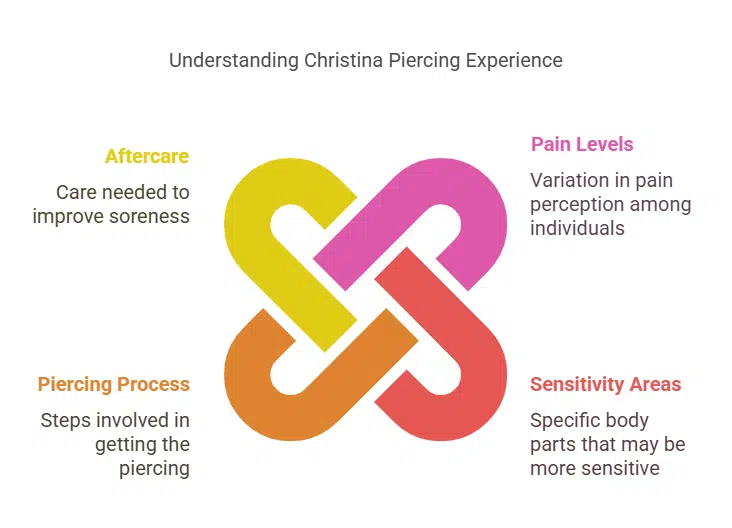
Pain levels vary from person to person. Most rate the pain between 3 and 4 out of 10. The Christina piercing is a surface piercing, so it might feel like a pinch or pressure during the process.
Some spots on the pubic mound may be more sensitive. A skilled piercer will work quickly, making it as smooth as possible. Afterward, soreness in the mons pubis area can last for a few days but improves with proper aftercare.
Christina Piercing Jewelry Options
Explore unique jewelry styles like curved or straight barbells, crafted from safe materials for comfort and healing—read on to find your perfect match!
Types of Jewelry
Jewelry for a Christina piercing comes in many types. It is chosen based on comfort, style, and healing needs.
- Curved Barbells: These are the most common option. They fit well with the anatomy of the mons pubis. Sizes usually range from 12 to 14 gauge.
- Surface Bars: This jewelry has a flat or slightly curved shape. It reduces pressure on the skin, lowering the chance of piercing rejection.
- Metal L-Bars: These are shaped like an “L.” They work best for specific placements and provide a snug fit.
- Circular Barbells: This type looks like a horseshoe. It offers flexibility in movement but may not suit everyone during the healing process.
- Straight Barbells: Though less common, straight barbells can work depending on anatomy and placement preferences.
Each type is unique in style, but curved barbells are ideal for healing time due to their shape.
Best Materials for Initial Jewelry
Choosing the right material for initial jewelry is crucial. It helps avoid problems like infections or allergic reactions.
- Implant-grade titanium is a top choice. It is safe, lightweight, and does not cause metal allergies. Look for ASTM-F136 or ISO-5832-3 standards.
- Implant-grade stainless steel works well too. It must meet ASTM-F138 or ISO-5832-1 standards to ensure safety and quality.
- Solid 14-karat gold is another option. Avoid gold-plated types as they can irritate the skin.
- Avoid nickel-containing materials. They often trigger allergic reactions, especially for sensitive skin.
- Select a smooth surface bar or curved barbell design. These reduce pressure on healing tissue and lower rejection risks.
- Always choose hypoallergenic options like implant-certified metals for peace of mind during healing stages.
Christina Piercing Healing Process and Aftercare
Healing takes patience and care for a Christina piercing. Follow these steps to promote faster recovery and avoid issues.
- Clean the area with saline solution two to three times daily. Saline helps remove bacteria without irritation.
- Avoid touching the piercing unless cleaning it. Unwashed hands can transfer germs and cause infections.
- Refrain from sexual activity during the healing time. Movement can irritate the area and slow down recovery.
- Stay away from public pools, hot tubs, or natural water bodies until fully healed. Water exposure raises infection risks.
- Wear loose-fitting clothing to reduce friction against the piercing site. Tight clothes may delay healing or cause discomfort.
- Use a sanitary pad if needed to prevent rubbing on underwear fabric. Pads help keep the area clean as well.
- Watch for signs of rejection or infection like redness, swelling, or blisters around the pubic mound or mons pubis. Contact your piercer if you notice anything unusual.
- Stick to implant-grade titanium jewelry while healing. It reduces risks of metal allergies such as nickel allergy.
- Healing time is usually 2-4 months but could take up to a year in some cases depending on skin type and aftercare consistency.
- Follow all aftercare instructions given during your piercing consultation thoroughly for best results.
Next, learn about possible risks and complications linked to Christina piercings!
Christina Piercing Risks and Complications to Consider
Improper aftercare can lead to infections. Swelling or redness might happen if the area gets irritated by sweat or tight clothes. Piercing rejection is also common with surface piercings like this one, as the body may push out the jewelry over time.
Allergic reactions to metals, especially nickel, are a risk. Choose safe materials like implant-grade titanium or stainless steel (ISO-5832-1). Tearing or catching on clothing can hurt and slow healing.
Blood-borne diseases like hepatitis B or C could occur without proper sterilization at a piercing shop.
Cost of a Christina Piercing
A Christina piercing usually costs between $50 and $100. This price depends on the piercing shop and location. Starter jewelry adds an extra $20 to $60. Curved barbells or surface bars made of implant-grade titanium are good starter options.
Some shops charge consultation fees, so ask about this before your appointment. Tipping is common, with 20% being the standard amount for piercers. Check if aftercare products like saline solution are included or need to be purchased separately.
Takeaways
Christina piercings are unique and eye-catching. They work best for those with the right anatomy. Healing takes effort, but proper care helps avoid issues. Always choose a skilled piercer and safe jewelry.
Research well before deciding if it’s right for you.
FAQs on Christina Piercing
1. Will a Christina piercing show under my clothes?
Usually only a little. Christina piercings are fairly discreet because they sit high on the pubic mound, but tight pants, thin fabrics, and larger jewelry can make them more noticeable.
2. What Happens If I Remove My New Christina Piercing Too Early?
It can close quickly, sometimes within days, and removing it too soon can also leave the channel irritated or increase the chance of scarring. If removal is needed before healing is complete, a professional piercer is the safest option.
3. Will a Christina Piercing Affect My Fertility or Pregnancy?
There is no strong evidence that a Christina piercing affects fertility, but pregnancy can make the area expand, increase friction, and raise the risk of irritation or rejection. That is why many piercers recommend reassessing or removing it as the pregnancy progresses.
4. What If My Christina Piercing Closes Up? Can I Repierce?
Yes, repiercing may be possible if the tissue has healed well enough and there is enough healthy anatomy left. A professional piercer should check the area first to see whether repiercing is safe and likely to succeed.
5. How Often Should I Change My Christina Piercing Jewelry?
Do not change it until the piercing is fully healed, because even if it looks healed outside, the channel may still be fragile. After healing, jewelry changes are usually based on comfort, wear, or style rather than a strict schedule.
6. Can I Get a Christina Piercing If I’m Pregnant or Breastfeeding?
Most reputable sources advise against getting any new genital piercing while pregnant, and it is best to wait until after pregnancy and breastfeeding unless a qualified medical professional says otherwise. Hormonal and tissue changes can make healing less predictable and increase complications.
7. What’s the Success Rate for Christina Piercings?
There is no universal success-rate number, but Christina piercings are known to be more anatomy-dependent and more prone to migration or rejection than many other piercings. Success is usually better when the anatomy is suitable, the placement is correct, and aftercare is followed carefully.