

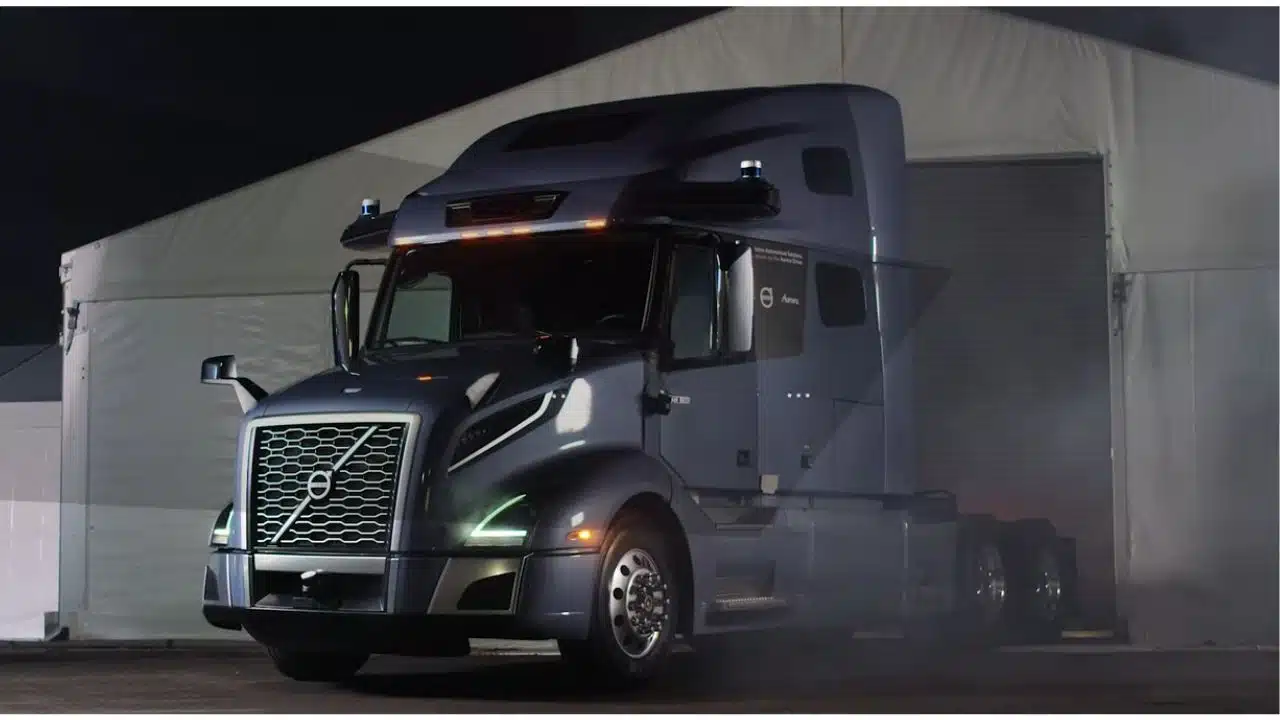
Volvo has unveiled its first “production-ready” self-driving truck, developed in collaboration with Aurora, a leading autonomous driving technology company.
This significant development marks a milestone in the journey towards fully autonomous commercial transportation. The truck, based on Volvo’s new VNL model, is a Class 8 semi truck specifically designed for long-haul transportation.
Innovative Design and Technology
The autonomous version of the VNL features an array of advanced sensors and cameras integrated to support Aurora’s Level 4 autonomous driving system.
This system allows the truck to operate without human intervention under specific conditions.
The companies have highlighted that the truck is “purpose-designed and purpose-built” for Aurora’s self-driving hardware and software stack, ensuring seamless integration and optimal performance.
Strategic Vision for Autonomous Solutions
Nils Jaeger, president of Volvo Autonomous Solutions, emphasized the strategic importance of this launch.
“This truck is the first of our standardized global autonomous technology platform, which will enable us to introduce additional models in the future, bringing autonomy to all Volvo Group truck brands, and to other geographies and use cases,” he said in a statement.
This vision indicates Volvo’s commitment to expanding autonomous driving technology across its product line and into various markets.
Aurora’s Deployment Plans
Aurora plans to deploy 20 fully autonomous trucks this year, with ambitions to expand this fleet to approximately 100 trucks by 2025.
The company’s long-term vision includes scaling up operations and eventually selling autonomous trucks to other companies. In addition to its collaboration with Volvo, Aurora is working with German auto supplier Continental to deploy driverless trucks at scale by 2027.
Challenges and Industry Context
Similar to the difficulties faced by robotaxis and privately owned autonomous vehicles, autonomous trucks have encountered numerous obstacles on their way to widespread adoption.
While autonomous trucks were initially anticipated to lead the way in commercial deployment, the industry has faced obstacles such as technological hurdles, regulatory issues, and funding constraints.
Some companies have gone out of business, and others have delayed or scaled back their autonomous truck plans. Public opinion on autonomous vehicles has also fluctuated, partly due to high-profile missteps by companies like Tesla and Cruise.
Cruise, in particular, faced significant scrutiny and was forced to pause operations nationwide after an incident involving one of its vehicles and a pedestrian.
Despite these setbacks, several automakers remain optimistic about the future of autonomous trucks, continuing to design and develop their own models with set deployment timelines.
Aurora’s Market Position
Aurora has managed to avoid the negative publicity and governmental scrutiny that some of its peers have faced.
The company has maintained a relatively clean track record, which could be advantageous as it seeks to build trust and credibility in the autonomous vehicle market.
Financially, Aurora reported a net loss of $165 million in the first quarter of 2024, which is a 16 percent improvement compared to the same period the previous year. This improvement indicates progress in managing its operational costs and investments in technology development.
Future Outlook
The introduction of the autonomous VNL truck by Volvo and Aurora represents a significant step forward in the development and deployment of autonomous commercial vehicles.
As both companies continue to innovate and refine their technologies, the potential for autonomous trucks to revolutionize the logistics and transportation industries becomes increasingly tangible.
With strategic partnerships, advanced technology, and a clear vision for the future, Volvo and Aurora are well-positioned to lead the way in the autonomous trucking sector.
The success of their initiatives will depend on overcoming the remaining technical and regulatory challenges, as well as gaining public trust in the safety and reliability of autonomous vehicles.
The collaboration between Volvo and Aurora to create a production-ready autonomous semi truck is a promising development in the field of autonomous transportation.
As the industry continues to evolve, the successful deployment and acceptance of these technologies will be crucial in shaping the future of commercial logistics and transportation.
With continued innovation and strategic partnerships, the dream of fully autonomous trucks operating on our highways may soon become a reality.
The Information is Collected from Engadget and The Verge






















