Have you ever wanted to take your students on an amazing adventure, but the school budget just said no? Field trips can be tricky for teachers and students right now. Maybe the bus rental is too expensive, or maybe you simply cannot leave the building today. Many classes wish for fun adventures but feel stuck inside four walls. Now, technology has made some truly amazing things possible. Virtual Field Trips: exploring the world from class is entirely possible today. Digital tours let you travel the world without moving from your desk.
Did you know that with a computer or tablet, kids in New York can visit rainforests in Brazil or art museums in Paris? I am going to walk you through the exact steps to find the best online adventures. So, grab a cup of coffee, and let us go through it together. I will show you everything you need to know.
What Are Virtual Field Trips?
Virtual field trips use technology to bring the outside world directly into your classroom. With just a screen, students can visit faraway places and learn in ways that really stick.
Definition and Overview
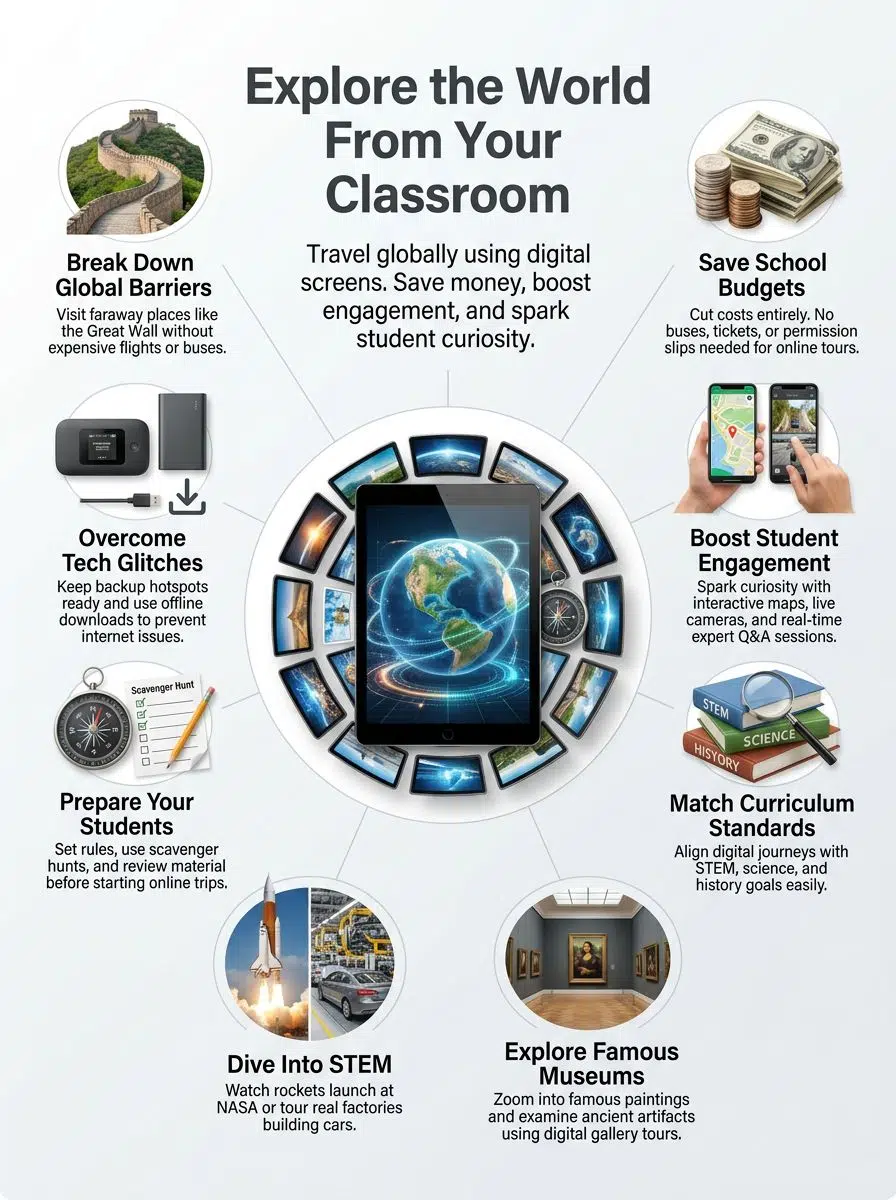
Digital field trips let students visit places using computers or tablets. These trips use high-definition videos, 360-degree online tours, and interactive maps to bring museums or faraway countries into the classroom. Teachers guide these sessions with just a stable internet connection and basic tech tools.
“It is like packing your bags for Paris without ever leaving your seat,” said one middle school teacher.
A 2025 EdTech Magazine report noted that nearly 75% of US public schools now use digital field trips to supplement regular lessons.
Online learning platforms make these adventures possible for kids who might never travel in person. Each click opens doors to new locations while keeping everyone safe at their desks. This is global exploration made simple and fun.
How They Work in Classrooms
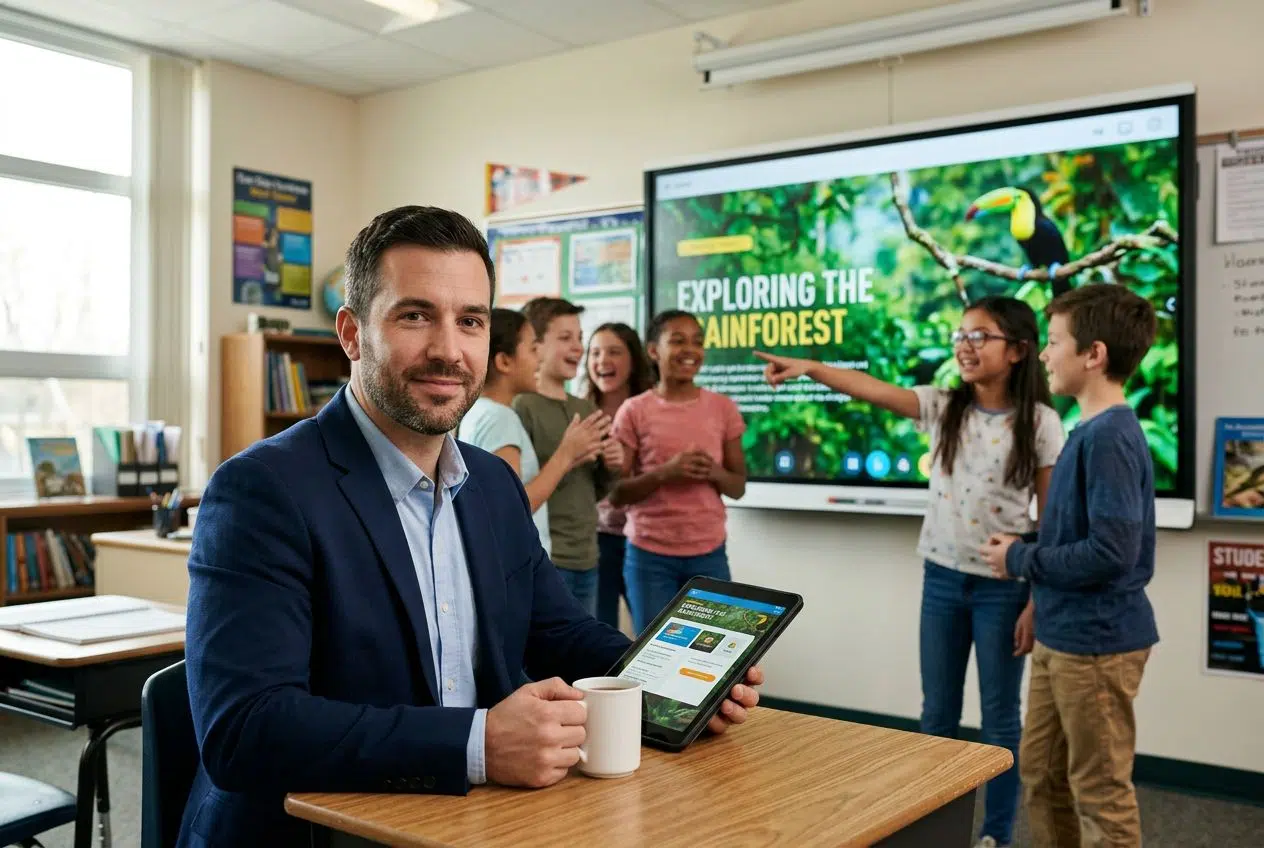
Teachers use computers, tablets, or smartboards to guide students on online tours. Students use headphones and watch virtual learning videos together or in small groups. The class might visit the Great Wall of China or explore nature with rainforest adventures.
A popular insider tip from the r/Teachers community suggests a specific setup for the best results:
- Project the main visual tour on a large front-of-room smartboard.
- Have students use personal Chromebooks to answer live poll questions.
- Use a tool like Nearpod to sync the student screens with your main presentation.
This hybrid approach keeps everyone engaged. Teachers tie each trip to science education or cultural discovery lessons. Kids see real images and hear stories from experts around the globe through multimedia resources.
Benefits of Virtual Field Trips
Virtual field trips open doors that traditional yellow buses simply cannot. These online adventures spark curiosity and keep kids glued to their screens.
Accessibility to Global Destinations
Kids can explore the Great Wall of China or swim with fish in coral reefs. Teachers use online tours, live cams, and interactive maps to open doors to places many students may never visit. Students can walk through ancient pyramids, peek inside NASA labs, and watch elephants roam African plains. Even small schools in rural towns now bring nature exploration right into class screens.
Cost-Effectiveness Compared to Traditional Field Trips
Virtual learning is much less expensive than in-person class trips. According to a 2024 survey by the School Superintendents Association, renting a single charter bus in the US costs between $300 and $600 per day. There is no need to rent buses, buy admission tickets, or pay for food. Schools can save thousands of dollars each year with online tours.
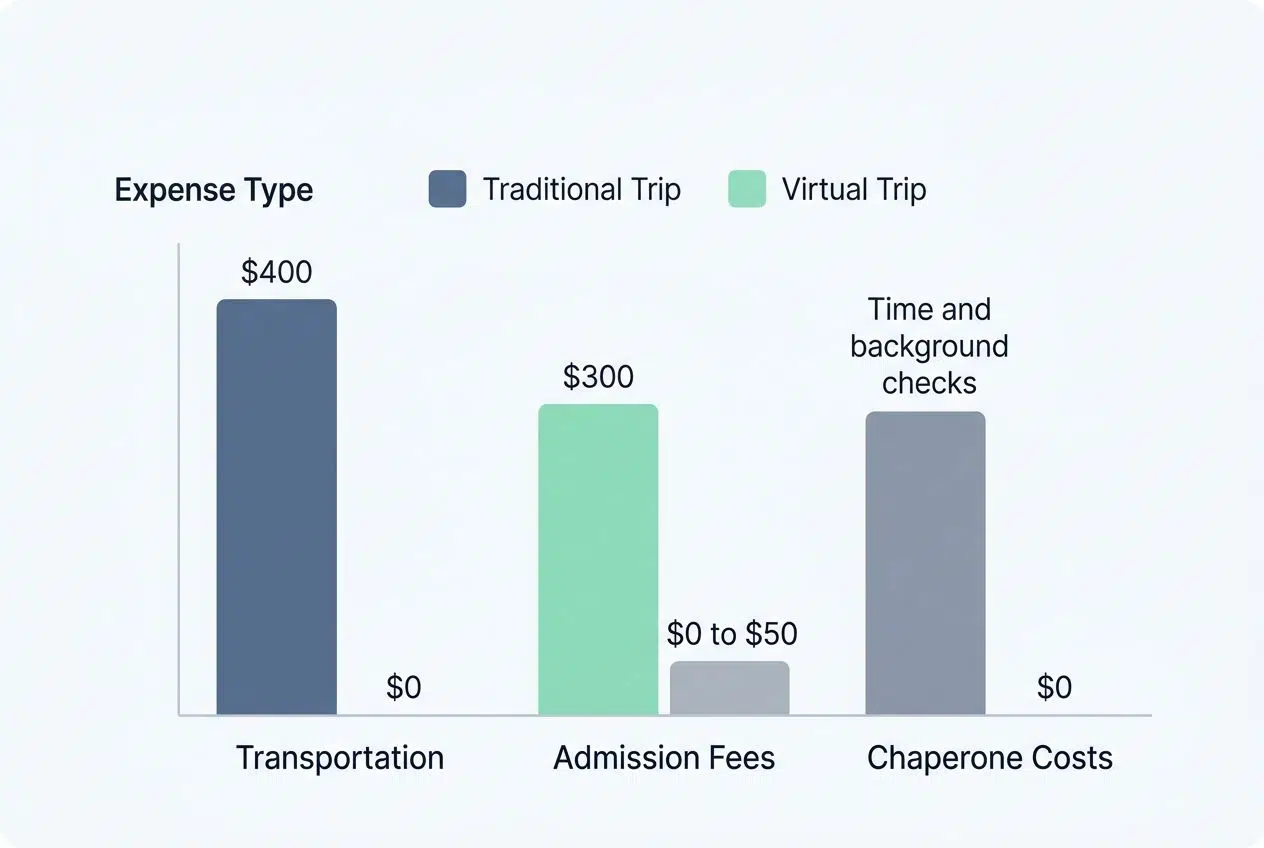
Here is a quick comparison of average costs for a class of thirty students:
| Expense Type | Traditional Trip | Virtual Trip |
|---|---|---|
| Transportation | $400 (Bus Rental) | $0 |
| Admission Fees | $300 ($10/student) | $0 to $50 (Platform fee) |
| Chaperone Costs | Time and background checks | $0 |
Many digital field trips are completely free. Students only need a computer and internet access, making global exploration open to more classes.
Enhanced Student Engagement
Kids light up as they zoom through online tours of places like the NASA Space Center. Interactive experiences, such as watching a museum guide explain ancient artifacts, keep students focused. No one has to whisper or wait in a long line at a crowded exhibit. With virtual learning tools, every child can answer questions in real-time polls or chat boxes.
A 2025 study published in the Journal of Educational Technology found that interactive digital trips increase student participation rates by up to 45%.
Alignment with Curriculum Standards
Curiosity draws kids into new worlds, but lessons must still meet school goals. Virtual field trips easily match learning targets found in state and national curriculum standards. Teachers can link online tours with specific benchmarks for each grade level.
- Life Science: A digital journey through the Amazon Rainforest fits perfectly with Next Generation Science Standards (NGSS) for habitats.
- STEM: Visits to NASA centers support engineering and space exploration topics.
- Social Studies: Touring ancient ruins helps meet Common Core history requirements.
These interactive experiences check off many global awareness boxes for teachers.
Types of Virtual Field Trips
There are so many amazing places you can visit virtually today. You will want to keep reading to see where your next adventure takes you.
Historical Sites and Landmarks
Kids can explore big wonders like the Roman Colosseum or Egyptian pyramids. For US history, platforms like Mount Vernon offer incredible interactive tours of George Washington’s estate. These online tours let students walk through ancient cities and famous buildings right from their desks. Teachers guide classes with live videos, pictures, and stories about each spot.
Museums and Art Galleries
Art museums and galleries offer incredible online tours. The Metropolitan Museum of Art in New York offers the highly rated #MetKids program, which includes:
- An interactive map of the museum.
- Behind-the-scenes videos of how exhibits are made.
- Fun facts about ancient artifacts.
Google Arts & Culture hosts more than 2,000 collections worldwide, helping teachers build lessons about artists like Vincent van Gogh. Virtual field trips bring art to life through videos and quizzes that boost classroom engagement.
National Parks and Wildlife
Students can walk through Yellowstone or Yosemite with just a click. Online tours let classes spot bison, wolves, and geysers right from their desks. Kids get up close to bears or bald eagles thanks to live cameras.
The San Diego Zoo offers fantastic free live cams where students can watch penguins and polar bears in real time. Ranger talks on video, shares fun facts and science about nature, animals, and habitats.
Factories and Businesses
Many virtual field trips let classes peek into real factories and businesses. Students can watch how toys, cars, or chocolate bars are made right on their screens. For example, the Amazon Future Engineer program offers a free, highly popular virtual tour of their fulfillment centers.
- Students learn how computer algorithms sort packages.
- They see real robotics in action on the factory floor.
- The tour aligns perfectly with middle school computer science standards.
Experts often answer questions live, making it feel like you are actually there. These online tours help with classroom engagement in science and social studies.
Popular Virtual Field Trip Topics
Some online trips spark wide-eyed wonder and curiosity instantly. Others bring big questions right into your class, without moving an inch.
Climate Change and Environmental Conservation
Global Exploration lets students see melting glaciers in Alaska or shrinking coral reefs. Virtual Tours of rainforests show animals losing their homes. Organizations like The Nature Conservancy offer fantastic free virtual field trips specifically designed for US classrooms.
Kids watch ice sheets disappear using online maps from NASA, while interactive learning tools let learners track sea turtle numbers and discuss plastic waste. Science Education grows stronger by linking these real-world examples with lessons about weather and pollution.
Space Exploration and Astronomy
From studying our own planet, students can look out into space. NASA offers online tours that take you to places like the Johnson Space Center. Students can see:
- Rockets preparing for launch.
- Where astronauts sleep in zero gravity.
- The massive training pools are used for spacewalk practice.
The Jet Propulsion Laboratory in California provides an amazing virtual tour where kids can see where Mars rovers are built. Satellites send back real images from Mars, Jupiter, and deep space, making science education an adventure beyond Earth.
Cultural Heritage and Global Diversity
Students can walk the streets of Tokyo or admire ancient temples in Mexico through digital field trips. Online tours show different foods, music, art styles, and traditions from many places.
Programs like the Global Nomads Group help US students connect directly with peers in the Middle East and Africa. Learning about daily lives builds global awareness and respect for differences, opening doors to cultural exchange and exploration.
STEM-Focused Topics
After learning about world cultures, science education can spark a big curiosity. Virtual field trips let classes watch robots build cars in Detroit. Boeing offers an incredible virtual series where students can step inside their massive aerospace factories. Teachers use these digital field trips to make technology fun and hands-on.
Here are a few ways STEM tours help students:
- They show real-world applications of math and engineering.
- They introduce students to diverse careers in technology.
- They demystify complex topics like renewable energy and robotics.
Visiting wind farms or solar plants helps them learn about climate change solutions.
How to Incorporate Virtual Field Trips into Teaching
Mix up your teaching with some online journeys this week. Give students a peek into new worlds, all from their seats, and watch curiosity bloom.
Choosing the Right Platform
Pick a virtual learning platform that matches your class goals. Since Google Expeditions retired, Google Arts & Culture has become the go-to free tool for immersive 360-degree experiences. Discovery Education Virtual Field Trips lets students try science education with live Q&A sessions.
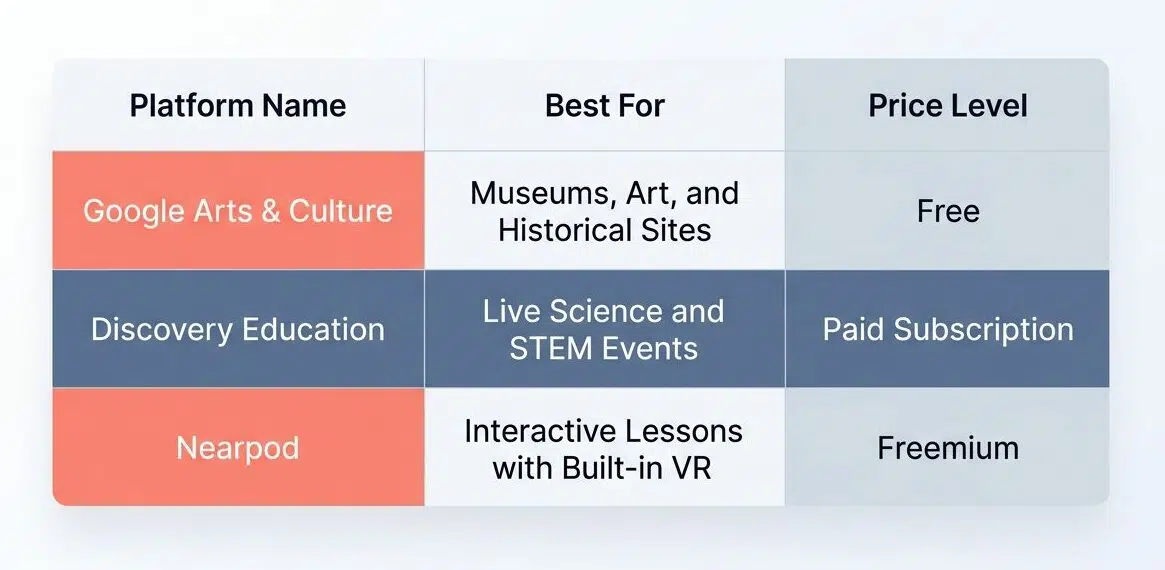
Here is a quick look at the top platforms for US schools:
| Platform Name | Best For | Price Level |
|---|---|---|
| Google Arts & Culture | Museums, Art, and Historical Sites | Free |
| Discovery Education | Live Science and STEM Events | Paid Subscription |
| Nearpod | Interactive Lessons with Built-in VR | Freemium |
Make sure students can access the platform on their specific classroom devices. Check if your choice has closed captions for students who need them.
Preparing Students for the Experience
Start with a quick talk about the virtual trip. Share some photos or short teaser videos to grab everyone’s attention. A proven strategy is to use a KWL chart before logging on. Having students outline what they know and what they want to know builds massive anticipation for the lesson.
Set clear rules for behavior during the online tour and explain how to ask questions. Give each student a simple worksheet or scavenger hunt list to keep them focused.
Integrating Activities Before and After the Trip
Teachers can boost classroom engagement by starting with small group discussions.
Try these simple activities before and after a tour:
- Use simple games to spark curiosity before logging on.
- Have students write down three things they hope to see.
- Use a video reflection tool like Flip to record their thoughts afterward.
Having them articulate their favorite discovery on video helps cement the new knowledge. Fun review activities and class discussion forums keep science education fresh in their minds.
Examples of Recommended Virtual Field Trips
Teachers absolutely love to share trips where students can explore new places. There are so many exciting options that open windows to far-off lands.
The Great Wall of China
Students can explore the Great Wall of China from their screens, zooming in on ancient stonework or watching videos about Ming dynasty soldiers. Platforms like YouVisit offer stunning panoramas of the wall.
“The 360-degree view made my students gasp out loud. It felt like we were really standing on the watchtower,” shared a 6th-grade history teacher.
This massive wall stretches over 13,000 miles and took more than 2,000 years to build. Virtual tours let students walk along its winding paths and see watchtowers up close, turning a famous landmark into a vivid lesson about history and engineering.
Coral Reefs of Palau
After traveling through China, classrooms can swim into the blue waters of Palau. These vibrant reefs stretch across more than 500 islands and hold over 1,400 fish species.
The Nature Conservancy provides an amazing guided video tour of this exact location. Bright clownfish dart between soft corals while turtles glide by giant clams.
Virtual tours show how locals protect reefs with strict marine laws. Teachers use interactive maps to highlight why these ecosystems help fight climate change.
NASA Space Center Tours
NASA Space Center online tours beam students straight into space labs. Kids can watch rocket launches and peek inside astronaut living areas. The Space Center Houston offers a free interactive app with audio tours and augmented reality features.
Future scientists get to zoom through the Solar System with interactive videos. Virtual NASA trips connect classrooms to STEM experts at Johnson or Kennedy Space Centers, using cool visuals to boost science education for every curious mind.
Amazon Rainforest Exploration
Students can travel online to the Amazon Rainforest with just a click. High-quality videos and 360-degree tours show giant trees and fast rivers. The “Under the Canopy” project by Conservation International offers a spectacular 360-degree virtual reality film.
“Seeing the rainforest in 360 degrees completely changed how my 4th graders understood deforestation,” shared a recent reviewer on an educator forum.
Guides explain why the rainforest holds 10 percent of all plant and animal species in the world. Through interactive activities, kids learn about climate change and rare plants. This kind of global exploration brings science education right into every classroom screen.
Challenges and Solutions for Virtual Field Trips
Teachers sometimes run into tech hiccups or trouble keeping kids on track. With a bit of patience, you can turn these bumps into smooth rides.
Technical Issues and Connectivity
Virtual field trips completely rely on a strong internet connection. Glitches can freeze screens or kick students out of the tour entirely. Thankfully, the US FCC E-Rate program has helped connect over 99% of American schools to high-speed broadband as of 2025.
However, a poor connection can still make videos blurry and interactive activities lag. Some schools use backup cellular hotspots to keep things moving. Many virtual learning sites now offer downloadable video content for teachers to use offline if the school network goes down.
Keeping Students Focused During the Trip
Short, clear directions work best for keeping students on task during online tours. Sitting and watching a screen for thirty minutes is passive and leads to boredom.
To fix this, smart teachers use interactive tools to force participation:
- Embed the video tour into an interactive Pear Deck presentation.
- Pause every five minutes to have students answer a multiple-choice question.
- Use a digital whiteboard where kids can draw their reactions.
Shifting activities often helps busy minds switch gears smoothly.
Ensuring Educational Value
Keeping eyes on the screen is only half the job. Making every minute count for learning matters most. Teachers should tightly link online tours to classroom goals and state standards. Many virtual field trips offer ready-made grading rubrics and worksheets that check student understanding.
Choosing age-appropriate content helps all learners feel included and appropriately challenged. Pause videos often to spark group talks, share facts, or simply ask what they notice. This way, students stay active in each lesson while building real-world knowledge.
Finally: Live Your Virtual Field Trips
Step up your classroom game today and trade the bus for a screen. You can open doors to amazing places like Machu Picchu or the NASA Space Center. Students get to explore coral reefs or peek inside ancient tombs before they even go to lunch. Virtual Field Trips: Exploring The World From Class gives every single student a front-row seat without anyone needing a signed permission slip.
Pull out those headphones, turn on the captions, and invite lots of questions as you go. Ask your students what surprised them the most about the Amazon rainforest. Science education feels totally different when you can zoom into outer space right from a desk. You do not need a rocket ship, just a little curiosity.