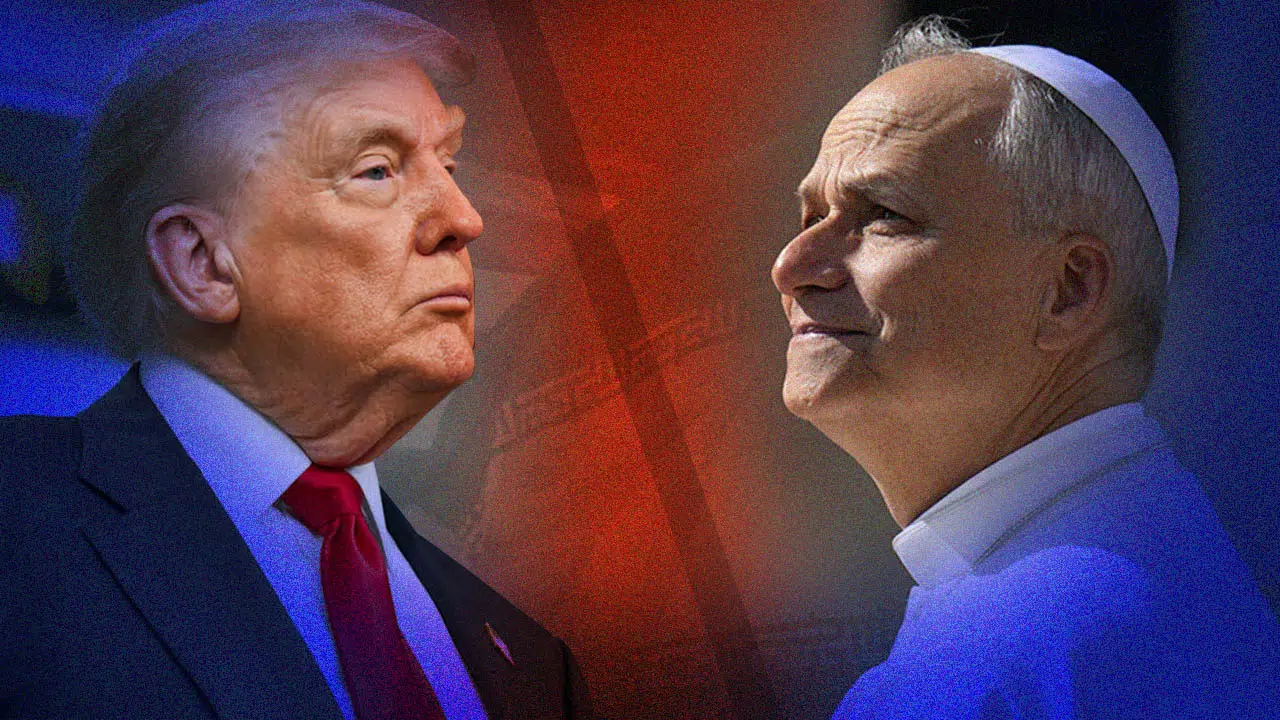
Trump vs the Pope is the phrase no one expected to dominate the Iran war debate. In Washington, the usual checks are missing. In Rome, an American pope has stepped into the gap. His name is Leo XIV, and he is calling out Donald Trump like no religious leader has done in decades.
As of early April 2026, President Trump has publicly threatened to obliterate an entire Iranian civilization if Tehran does not reopen the Strait of Hormuz. That line did not come from a think tank or a cable news panel. It came directly from the President in a digital ultimatum that blurred the line between deterrent and war crime.
Congress has not passed a clear de‑escalation resolution. The press has not forced a course correction. Even prominent Republican allies have issued courtesy warnings, not concrete constraints. The result is a president who speaks about wiping out a civilization as if it were a policy option, not a moral abyss.
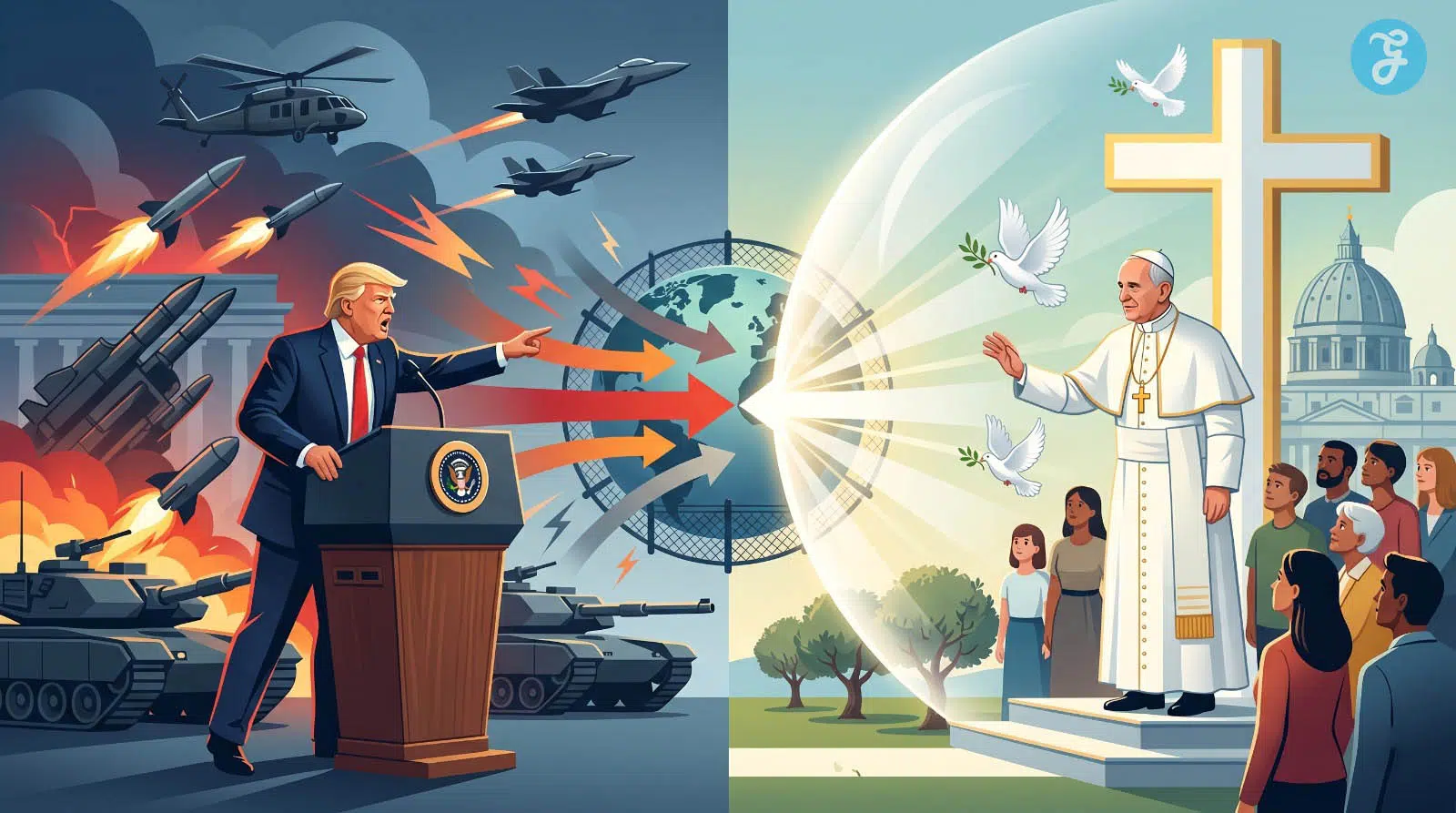
Enter Pope Leo XIV, the first American born pontiff. He has broken precedent by issuing what amounts to the most direct condemnation of a sitting U.S. president since the Second World War. In a public address, Leo called Trump’s Iran threat truly unacceptable. He did not couch it in diplomacy. He did not say “we encourage restraint.” He said the threat itself is morally indefensible.
That is the core of Trump vs the Pope. One man sits in the White House, surrounded by generals and nuclear codes. The other sits in the Vatican, clothed in silk and centuries of moral teaching. In a moment when courts, legislatures, and newsrooms seem to have lost their grip, Leo is trying to restore a different kind of check: the conscience of a faith community that spans borders.
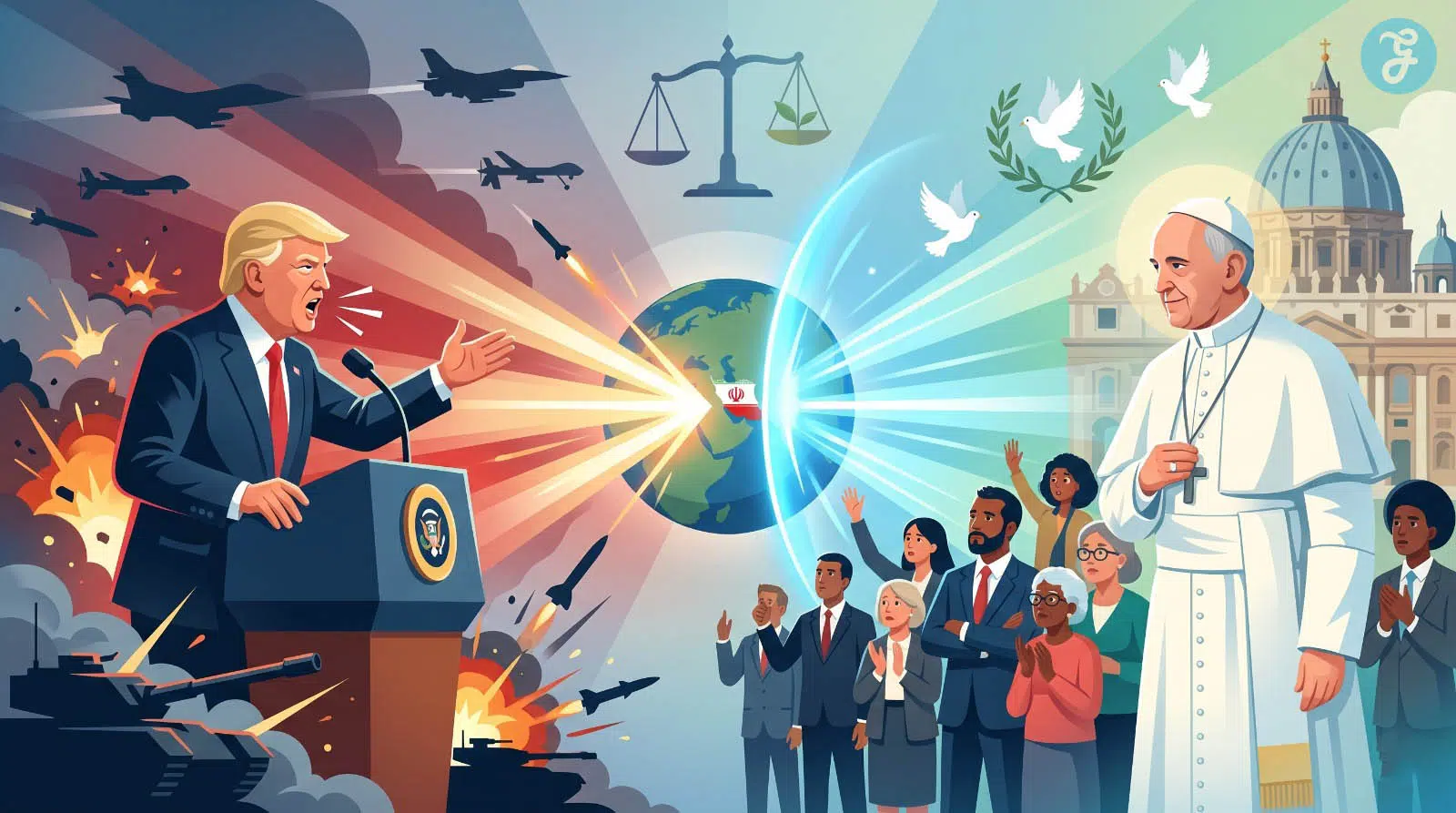
Trump vs the Pope is more than a headline. It is a clash between threat and counsel, between fire and prayer, between a president who measures power in destruction and a pope who measures it in restraint. For the first time in this war, the moral question is not hiding in the background. It is on the front page, in the pope’s words, and in the name of every civilian who lives downstream from Trump’s threats.
Facts of the Iran War and Trump’s Rhetoric
The standoff between the White House and the Vatican is anchored in a specific sequence of strikes and threats that began in early 2026.
How the Iran War Began
On February 28, 2026, the United States and Israel launched a joint military campaign inside Iran, targeting sites linked to the regime’s leadership and nuclear infrastructure. The stated aim was regime change, not just limited strikes. The campaign followed months of escalating proxy clashes, drone attacks, and sabotage across the Middle East. Iran had already launched drones and ballistic missiles at Israel and U.S. bases in the Gulf, in what it described as defensive retaliation.
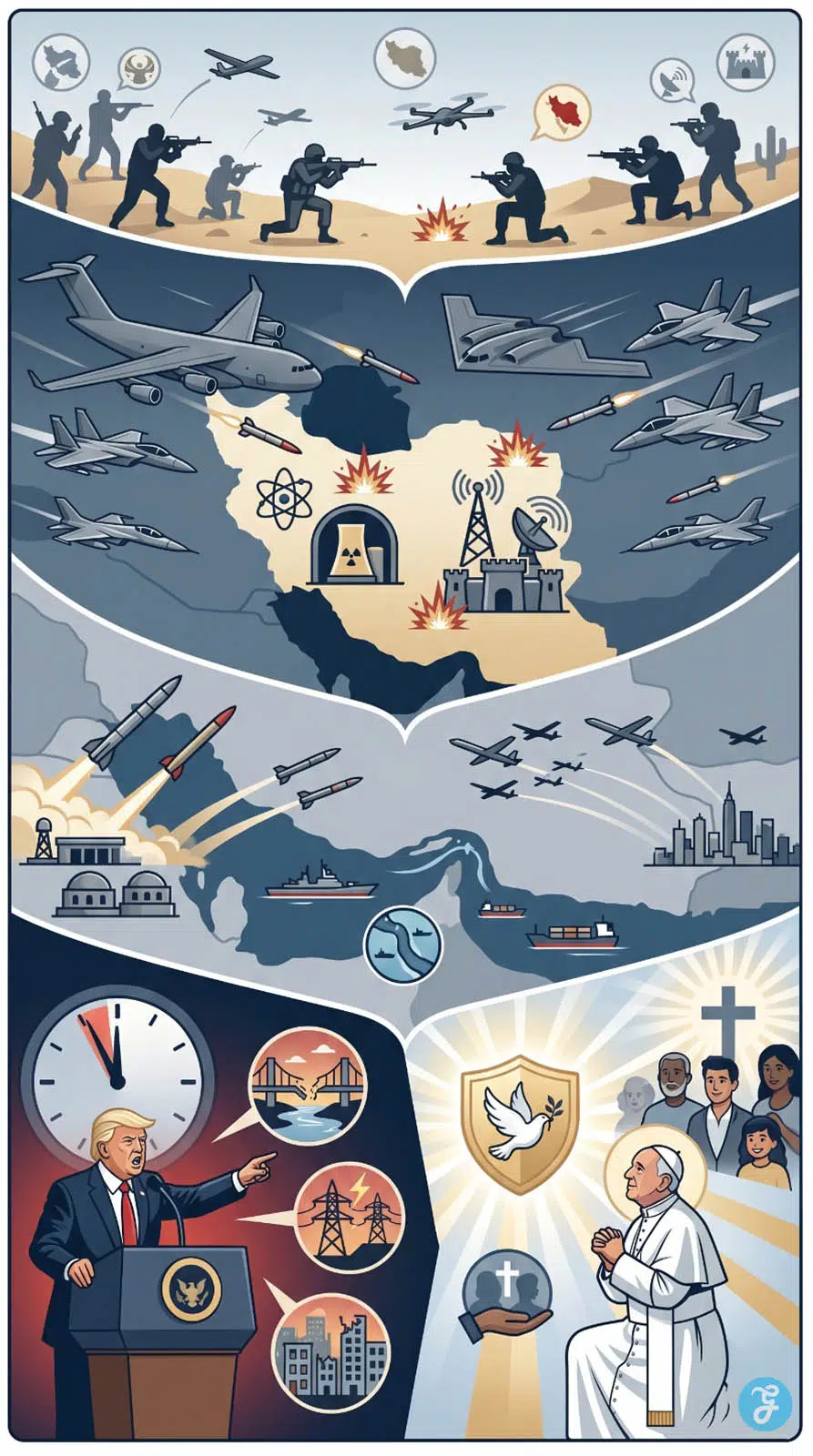
Each side tried to frame the war as a response, not the first strike. In practice, the February 28 operation opened a new phase. The Pentagon reported that U.S. forces hit command centers, air defenses, and missile storage facilities. Iranian state media showed footage of damaged buildings and civilians near targeted sites. The risk of a wider regional conflagration grew real, not hypothetical.
Trump’s “Obliterate a Civilization” Threat
Shortly after the campaign began, President Trump raised the stakes via social media. In a series of Truth Social posts, he warned that “a whole civilization will die tonight” if Iran did not meet a deadline to reopen the Strait of Hormuz. He explicitly threatened to decimate the nation’s bridges and put its power plants “out of business,” language that security and legal analysts immediately flagged as a possible war crime. Experts noted that attacking infrastructure essential for civilian survival goes beyond deterrence and enters the territory of collective punishment, crossing clear red lines under the Geneva Conventions. Even some American lawyers who generally support a strong national defense called the phrasing reckless and legally dangerous.
Limited Domestic Pushback
Within Washington, reactions were muted. Some members of Congress, including Republicans, issued statements that Trump’s rhetoric was too harsh or too blunt. A few senators called for hearings or briefings, but none moved a binding resolution to restrict presidential authority over Iran. Media coverage focused on strategy, not law. Editorials questioned tactics, not the moral or legal framework.
The result is that no major legislative or institutional brake has yet forced Trump to de-escalate. The machinery of checks and balances looks more like a series of small corrections than a hard stop. Courts have not rushed to block any actions. The press has not united behind a clear demand for restraint. In that vacuum, the first American pope has become Trump’s most prominent American critic, even though he lives in Rome, not in Washington. His words are not backed by tanks or budgets. They are backed by moral authority and global reach.
Trump vs the Pope: The Vatican’s intervention
Trump vs the Pope is not a joke line in a late night monologue. It is a real, unfolding standoff between the White House and the Vatican. In early April 2026, Pope Leo XIV broke decades of diplomatic caution and issued a direct rebuke of President Trump’s Iran war rhetoric. What he said and how he said it matters precisely because the usual checks have gone quiet.
Pope Leo XIV’s Public Statements
On April 6, 2026, Pope Leo XIV called Trump’s threat to “wipe out an entire civilization” truly unacceptable. He said the phrase was not just legally troubling but morally toxic for the entire population. He stressed that no civilian should have to live under the shadow of a president’s promise to erase a people from the map.
Leo also urged politicians, including U.S. lawmakers, to seek peace, not violence, and to reject war. He described the Iran conflict as an unjust war that was not solving any core security problem. He said military action had not produced stability, only more fear and displacement. His language left no room for ambiguity. This was not a gentle nudge. It was a condemnation.
“God Does Not Bless Any Conflict”
In the same address, Leo said that God does not bless any conflict. He added that God does not listen to the prayers of those who plan and wage war. He framed Trump’s rhetoric as a spiritual failure, not just a policy error. The message was clear: no religious blessing will cover these threats.
That line has been widely quoted by Catholic and secular outlets. Analysts called it one of the most explicit moral vetoes on a U.S. president’s direct message in living memory. Vatican watchers noted that Leo had chosen to speak in plain moral terms, not in the cautious language of diplomacy. The phrase “God does not bless any conflict” became a slogan in religious and peace circles, not just in Rome.
Soft Power Versus Brute Force
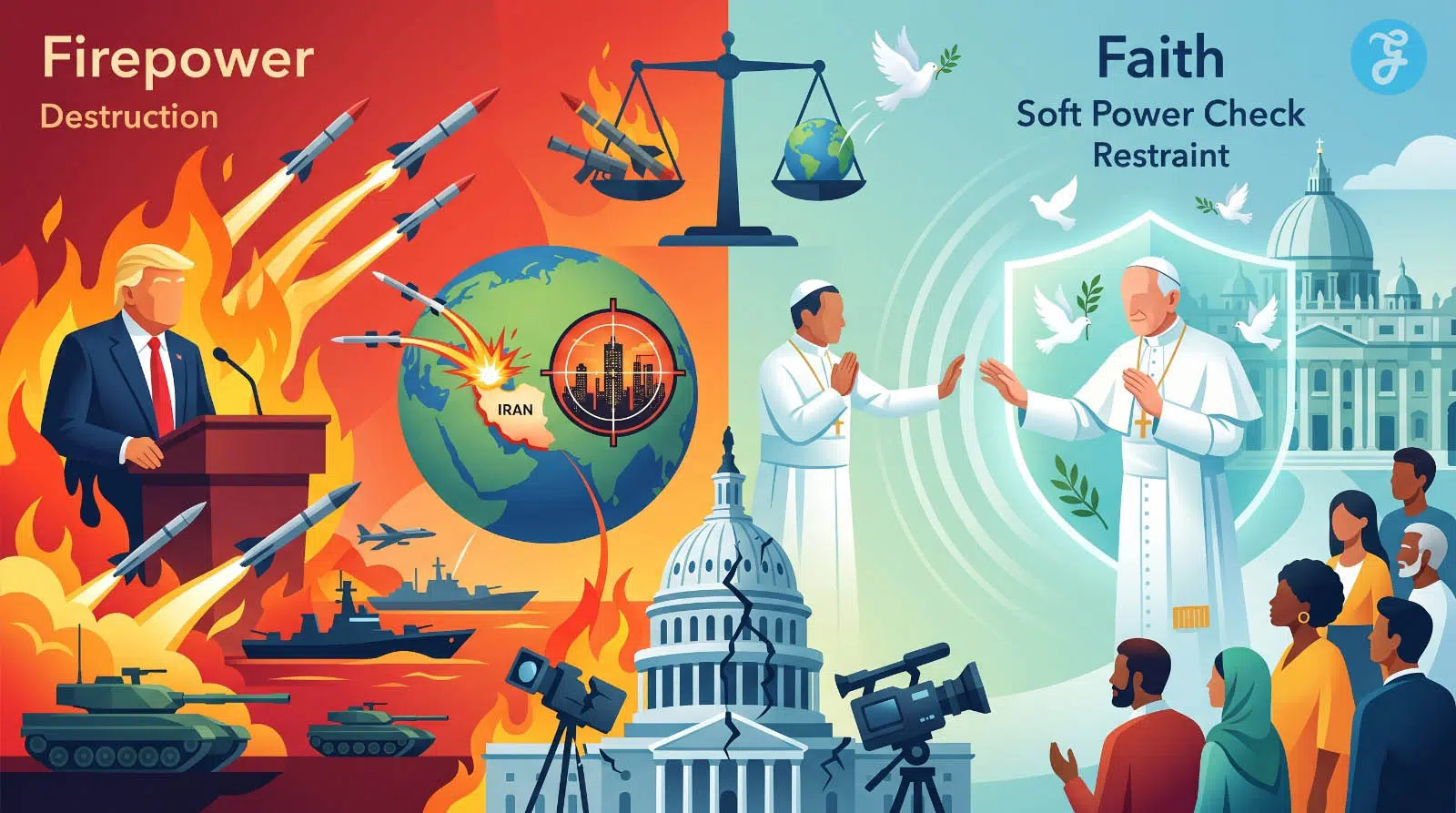
The Vatican has no army or nuclear weapons, but Leo is leveraging “soft power”: influence rooted in moral authority and the global reach of a 1.3 billion member Catholic community. By using persuasion rather than force, he aims to unsettle Trump’s war calculus and shift the ground on which the conflict is debated. His goal is to shift public opinion, rattle allies, and give other leaders permission to speak out.
This is where Trump vs the Pope finds its real meaning. On one side, a president who talks about obliteration and civilization-level threats. On the other, a pope who insists that faith forbids such language and such plans. The core is simple. Brute force versus a moral veto. Trump can still launch a strike. Leo cannot stop it with a decree. But he can change the conditions in which it is launched.
Trump’s Response Signals a Deeper Clash of Power and Belief
Donald Trump did not soften his words. He went straight at Pope Leo XIV with language that sounded more like a campaign rally than a diplomatic response. The criticism was direct. Personal. And revealing.
He called the pope “weak on crime” and “weak on nuclear weapons.” He also suggested that the Vatican chose Leo because he is American and therefore easier to influence. In another remark, Trump said Leo would not be in the Vatican “if it weren’t for President Trump.” The line carried a clear message. Power, in his view, is earned through leverage. Not moral authority.
A Refusal to Step Back
When pressed on whether he owed the pope an apology, Trump did not hesitate. He said he does not owe the Pope an apology. There was no attempt to walk it back. No diplomatic softening. The refusal matters. It signals how Trump frames authority. Religious leadership does not sit above politics in his worldview. It sits alongside it. And at times, beneath it.
This is not new. Trump has often treated institutions as negotiable. Influence is transactional. Respect is conditional. His response to the pope fits that pattern.
Religion as Rival Power
The language used here is telling. Calling a pope “weak” is not just criticism. It is a reframing of spiritual leadership as political vulnerability. Trump’s remarks suggest he views the Vatican less as a moral center and more as another global actor. One that can be pressured. One that can be influenced. This puts religious authority in direct competition with political power. Not as a guide. But as a rival.
Two Worldviews, One Flashpoint
What makes this moment significant is the contrast.
- Trump speaks the language of strength. Control. Deterrence. His framing of crime and nuclear policy reflects a belief in dominance as stability.
- Pope Leo XIV speaks differently. His public messages have leaned toward restraint, non violence, and moral responsibility. His authority comes from persuasion. Not force.
This is not just a disagreement over policy. It is a deeper divide. One side believes power must be projected. The other believes it must be restrained.
Soft Power as a Check on President
Trump vs the Pope is not just a headline. It is a test of whether moral influence can still bend a president’s war talk. In a moment when Congress, courts, and even parts of the press have not stopped Trump’s Iran rhetoric, soft power from the Vatican is one of the few visible checks left. The pope cannot veto a strike. He can, however, change the ground on which it is debated.
What “Soft Power Check” Means
His strategy is not to command. It is to censure. He says Trump’s threat to wipe out an entire civilization is truly unacceptable. He says the Iran war is unjust and unresolved. That kind of language does not shut down a drone strike. It does, however, make it harder for allies and lawmakers to stay silent. It turns moral discomfort into a public question.
Historical Echoes of Papal Restraint
Popes have tried to temper war rhetoric before. John Paul II urged restraint during the Iraq buildup in 2003. Benedict XVI warned against the logic of pre-emptive war and unchecked military power. Those interventions did not stop invasions, but they gave a moral framework for critics.
Leo XIV’s move is sharper. He names Trump directly. He calls out the obliterate‑a‑civilization line. He links Trump’s threats to the broader Iran war. This is unusual for a modern pope speaking about a sitting U.S. president. Past clashes with Pope Francis were over immigration, climate, and economic justice, not explicit war threats against civilians. Now the subject is more urgent and more dangerous.
Effect on Catholic and Global Opinion
U.S. bishops and Catholic leaders have echoed Leo’s condemnation. They say threatening to destroy a civilization and targeting civilians cannot be morally justified. Some have gone further, calling Trump’s rhetoric a violation of just war principles and international law. That push is not mass media campaigning. It is quiet, institutional dissent from within the Church.
At the same time, Leo has become one of the most viewed and cited global religious figures of 2026. His statements on the Iran war have been replayed on news channels, quoted in opinion columns, and shared across social media. That reach multiplies the soft power of his words. He does not need a fleet. He needs a microphone, a clear message, and a public that is still listening.
Trump vs the Pope is not a fantasy. It is a real test of whether moral authority can still dent the logic of a war‑driven presidency. No one expects Leo XIV to order the Pentagon to stand down. Trump controls the military. But moral authority can still shape the ground around that control. It can erode legitimacy, give cover to critics, and shift the global mood.
Can the Pope Really Stop a War?
Pope Leo cannot stop a missile or call back a drone. The Iran war will not end because one man in Rome speaks. That is the blunt reality. But moral authority does not work like a veto. It works like a slow burn. It questions the language of war, it shames the worst excesses, and it makes it harder for leaders to pretend their choices are normal.
Leo’s words can erode public legitimacy for Trump’s Iran plans. They can give dissenting politicians a reason to speak out, even if they have stayed quiet so far. They can influence global opinion in ways that constrain Trump’s room to maneuver. That is not a magic shield. It is a check that works in the background, not the headlines.
Symbolic Importance of “Trump vs the Pope”
Trump vs the Pope is also a symbol. If faith‑based soft power cannot check Trump’s Iran war, it may be harder for any moral authority to rein in hyper‑nationalist strongmen elsewhere. Autocrats watch what works and what fails. If Leo’s voice is ignored, they may conclude that moral risk is low.
Leo’s willingness to speak out, even when mocked by Trump, makes him a rare example of unself‑censoring moral leadership. He does not withdraw. He does not soften his language. He calls the threat to obliterate a civilization truly unacceptable and leaves the costs to others. That is not preaching. It is clear‑sighted dissent.
The Dilemma for Catholics and Americans
Trump vs the Pope is not just a foreign story. It is a domestic one. It forces American Catholics and voters more broadly to ask what kind of power they are willing to endorse. Trump talks about strength. Leo talks about restraint. The gap between them is not just political. It is spiritual.
Catholic Voters and Trump
Many U.S. Catholics have supported Trump in recent elections. They backed his nationalism, his immigration hard‑line, and his judges. They saw him as a defender of conservative values. Leo’s outspoken criticism of Trump’s Iran war now forces them to reconcile that loyalty with religious teaching on peace and the sanctity of life.
Can they support a president who frames war‑criminal‑scale threats as strength? Can they accept a leader who says an entire civilization will die if it does not obey? Leo’s line that God does not bless any conflict is not just a sermon. It is a direct challenge to that loyalty.
Broader American Public and Moral Legitimacy
Even many non‑Catholics find the pope’s language morally resonant. The line “God does not bless any conflict” has been repeated beyond Church circles. It has become shorthand for a simple idea: not every war can be justified, and not every threat can be called strength.
In that sense, Trump vs the Pope has become a proxy debate about what kind of power Americans are willing to accept as legitimate. Is power measured in obliteration or in restraint? Is strength defined by who can threaten the most, or by who can refuse to cross the line? Those questions are not partisan. They are civic. And they are now being asked in the shadow of an Iran war that Trump has framed as civilization versus submission.
Trump vs the Pope: The Moral Test of Our Time
Trump vs the Pope is not a religious dispute. It is a power dispute dressed in robes and rhetoric. In a moment when Congress has not moved, when the press has not united, and when even close allies have held back, the most direct restraint on Trump’s Iran war talk comes from a figure in Rome who controls no army and issues no sanctions.
Pope Leo XIV has called Trump’s threat to obliterate an entire civilization truly unacceptable. He has said the Iran war is unjust and unresolved. He has insisted that God does not bless any conflict. This is not nostalgia. It is a clear‑sighted refusal to bless the language of obliteration.
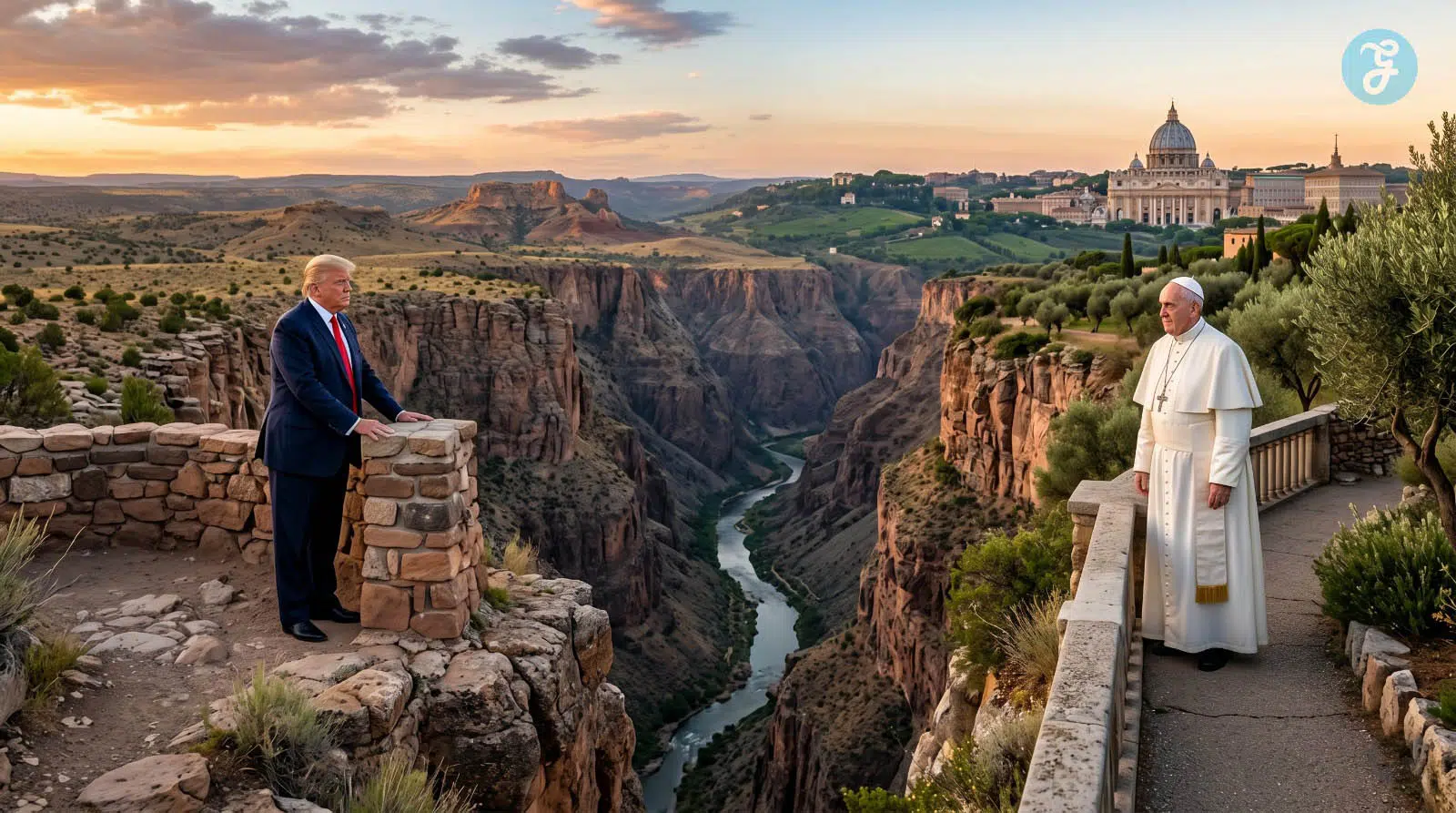
Trump vs the Pope reveals two irreconcilable visions. Trump’s faith in intimidation, in obliteration, in the idea that strength is measured by how much a leader can threaten to destroy. Leo’s faith that God does not bless conflict and that moral authority still has a role in the politics of war.
If Trump vs the Pope is the moral drama of this era, the real question is whether soft power can still unsettle the politics of obliteration. Not whether a pope can stop a war. But whether a moral voice, amplified by global attention and by a 1.3 billion member religious platform, can still make the president pause, even for a moment, before he speaks of wiping out a civilization. That is the test. And right now, only one man in that story is openly refusing to bless the fire.