The rise of Web3 has revolutionized the digital landscape, introducing decentralized networks, blockchain-based governance, and tokenized economies.
However, one of the most crucial elements for any Web3 project’s success is creating a thriving community in Web3. Unlike traditional online communities, Web3 communities rely on active participation, decentralized decision-making, and incentive-driven engagement to grow and sustain themselves.
A strong Web3 community fosters innovation, builds trust among participants, and drives the adoption of blockchain-based applications. Without an engaged and dedicated community, even the most promising Web3 projects can struggle to gain traction.
This article explores five tips for creating a thriving community in Web3, providing practical insights, case studies, and actionable steps to help Web3 projects build strong, engaged, and sustainable communities.
1. Understand Your Web3 Audience

Building a strong Web3 community starts with understanding your audience. Unlike Web2 users, Web3 participants are often early adopters, privacy-conscious individuals, crypto enthusiasts, and decentralized governance advocates. Understanding what motivates and interests them is crucial for effective engagement and long-term retention.
Research and Identify Target Participants
To ensure success in creating a thriving community in Web3, it is essential to first understand who your potential members are. A deep dive into audience demographics, preferences, and motivations can help shape strategies that attract and retain engaged participants. Before launching community-building efforts, Web3 project owners must:
- Conduct surveys and polls to understand user interests and expectations.
- Analyze on-chain data to track user engagement and activity patterns.
- Study competitor communities to identify key trends and best practices.
- Utilize sentiment analysis tools to gauge community sentiment and feedback.
Table: Key Factors to Identify Your Web3 Audience
| Factor | Description |
| User Demographics | Crypto investors, developers, NFT enthusiasts, traders, and governance participants. |
| Engagement Levels | Active in DAOs, staking pools, or content-sharing platforms. |
| Preferred Platforms | Discord, Telegram, Lens Protocol, Farcaster, and Reddit. |
| Interests | Blockchain, DeFi, NFTs, DAOs, metaverse, and decentralized governance. |
Leverage Decentralized Communication Channels
In creating a thriving community in Web3, seamless communication is vital. Web3 communities operate in a decentralized manner, making traditional social media platforms less effective for engagement. Instead, leveraging specialized Web3-native communication channels can drive participation, enhance governance, and create stronger connections among members.
Engagement platforms play a critical role in fostering interaction. The best platforms for creating a thriving community in Web3 include:
- Discord & Telegram – Ideal for real-time discussions, governance updates, and announcements.
- Lens Protocol & Farcaster – Decentralized social networks for content sharing.
- Reddit & Twitter (X) – Essential for broad discussions and viral content.
- Web3 Forums & DAOs – Platforms like Snapshot for governance proposals and voting.
- GitHub & Mirror.xyz – Encourages open-source collaboration and long-form content.
2. Foster Engagement Through Value-Driven Content
Creating value-driven content is one of the most effective ways to create a thriving community in Web3. Educating members fosters trust, engagement, and long-term participation. Well-structured content helps newcomers understand project fundamentals and seasoned users stay informed about updates.
Create High-Quality, Educational Content
In creating a thriving community in Web3, education plays a pivotal role. A well-informed community is more engaged, confident, and likely to contribute positively. Providing high-quality educational materials helps onboard new users and keeps existing members updated with the latest developments. Content should be tailored to Web3 users and structured in an engaging manner. Consider:
- Blog Posts & Whitepapers – Explain your project’s mission, roadmap, and tokenomics.
- Tutorials & Video Guides – Help users navigate decentralized applications (dApps).
- AMAs (Ask Me Anything Sessions) – Foster direct interactions with founders and developers.
- Webinars & Twitter Spaces – Live discussions to address trending topics in Web3.
Types of Web3 Content and Their Impact
| Content Type | Purpose | Best Platforms |
| Blog Posts | Education & SEO growth | Medium, Mirror.xyz, Editorial blogs |
| Video Tutorials | Step-by-step guidance | YouTube, TikTok, Twitter Spaces |
| AMAs & Webinars | Community interaction | Discord, Twitter Spaces |
| Whitepapers | Technical deep dives | GitHub, Project Websites |
Encourage User-Generated Content
In creating a thriving community in Web3, fostering user-generated content is crucial. A decentralized ecosystem thrives when members actively contribute to discussions, share insights, and create valuable resources for the community. Encouraging user participation enhances engagement, promotes trust, and strengthens community bonds.
A strong Web3 community thrives on user contributions. Strategies to encourage participation include:
- Running meme contests and incentivized content creation challenges.
- Featuring community-generated blog posts, graphics, and explainer videos.
- Rewarding active participants with token-based incentives or NFTs.
- Hosting hackathons where developers can build on your ecosystem.
3. Build Trust and Transparency
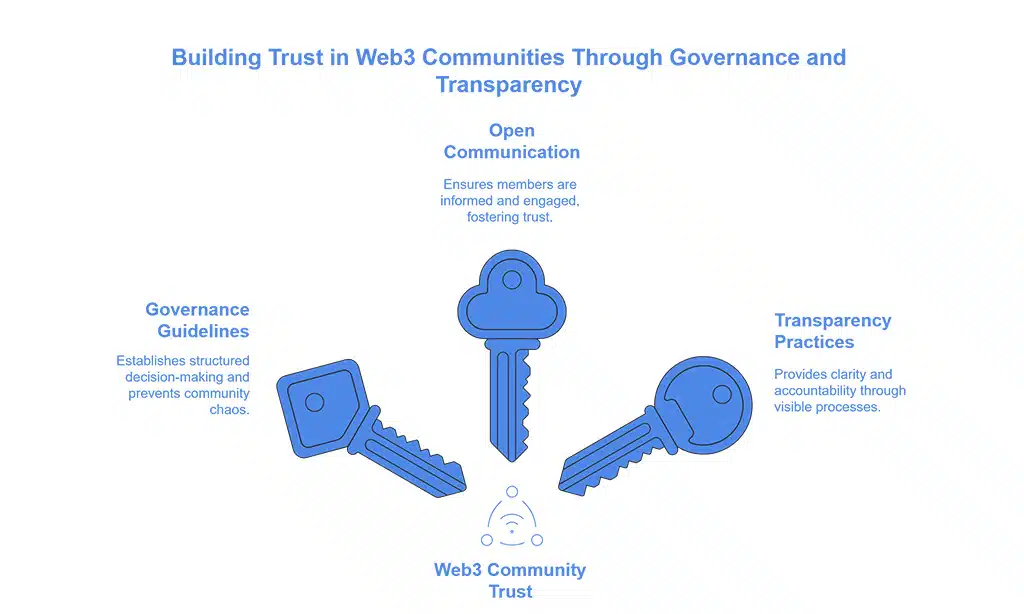
Trust and transparency are the backbone of any Web3 community. Users demand open communication, clear governance, and fair decision-making processes. The decentralized ethos of Web3 projects requires stakeholders to be actively involved in shaping the project’s future.
Establish Clear Governance and Guidelines
In creating a thriving community in Web3, establishing governance and clear guidelines is critical. Without structured governance, communities can face challenges such as misinformation, conflicts, and lack of direction. A well-defined governance framework ensures transparency, inclusivity, and efficiency in decision-making.
To maintain structure and prevent chaos, community guidelines should include:
- Code of conduct for respectful interactions.
- Moderation policies to prevent spam and misinformation.
- Decentralized governance frameworks, such as DAOs, to allow members to vote on key decisions.
- Transparent smart contracts that define governance and fund allocation.
Maintain Open Communication
In creating a thriving community in Web3, maintaining open communication is a fundamental pillar. A decentralized ecosystem thrives when members are well-informed, actively engaged, and feel their voices are heard. Transparent and consistent communication builds credibility, fosters collaboration, and enhances long-term trust between the community and project leaders.
Transparent communication strengthens credibility and long-term engagement. Methods include:
- Regular Project Updates – Weekly newsletters or Twitter Spaces.
- Town Hall Meetings – Live Q&A sessions with the core team.
- On-Chain Transparency – Publishing smart contract audits and financial reports.
4. Incentivize Participation and Loyalty
Rewards play a critical role in creating a thriving community in Web3. Users are more likely to participate when they feel valued and receive tangible benefits. Web3 projects should integrate incentives into their community-building strategy.
Implement Tokenomics and Rewards
A well-designed tokenomics model should incentivize participation through:
- Airdrops – Rewarding early adopters and active members.
- Staking Rewards – Allowing users to stake tokens for governance or yield.
- Exclusive NFTs & Perks – Providing special privileges to community members.
- Contribution-based Reputation Systems – Rewarding long-term engagement.
5. Scale and Sustain Long-Term Growth
Once a community is built, the focus should shift to scaling and sustaining it for long-term success. A growing Web3 community requires active leadership, adaptability, and ongoing incentives.
Leverage Partnerships and Cross-Promotion
In creating a thriving community in Web3, strategic partnerships and cross-promotion play a vital role. Collaborations allow communities to tap into new user bases, exchange knowledge, and increase visibility. By aligning with complementary projects and influencers, Web3 initiatives can accelerate their growth and foster stronger engagement.
Collaborating with other Web3 communities and projects can drive exponential growth. Tactics include:
- Partnering with DAOs – Expanding reach through shared governance initiatives.
- Co-hosting Events – Collaborating on AMAs, hackathons, and industry summits.
- Influencer & Thought Leader Partnerships – Leveraging Web3 influencers to grow the community.
- Grant Programs – Providing funding for developers to build on the platform.
Takeaways
Creating a thriving community in Web3 requires a combination of strategic engagement, transparency, incentives, and scalability.
By understanding the audience, fostering engagement, building trust, incentivizing participation, and planning for long-term growth, Web3 projects can cultivate sustainable and vibrant communities.
As Web3 continues to evolve, the power of community-driven ecosystems will define the future of decentralized technology. Are you ready to build a thriving Web3 community? Join the conversation and take the next step today!