

With the tourism industry contributing approximately 8% of Mexico’s Gross Domestic Product, national hotel chains have been key players in the evolution and positioning of the country as an international destination. In recent decades, the Palace Resorts hotel chain has developed a sustained growth and expansion strategy that has allowed it to expand its presence beyond the Mexican market. Founded more than 40 years ago by José Chapur Zahoul, the company began operations in Cancun with the opening of the Cancun Beach Club, a medium-sized property, and since then has increased its portfolio both in number of resorts and diversity of locations, covering key tourist destinations in the Caribbean and, more recently, in Europe.
During the 1990s and early 2000s, Palace Resorts consolidated its presence in the southeastern region of Mexico, with openings in Cancun, Playa del Carmen, Cozumel and Isla Mujeres. Among the most relevant openings during this period were Moon Palace Nizuc (1996), Moon Palace Sunrise (1998), and Le Blanc Spa Resort Cancun (2005). Throughout this time, the company incorporated new services and facilities in response to industry trends and the evolution of tourism demand.
Palace Resorts takes the international leap with strategic acquisitions
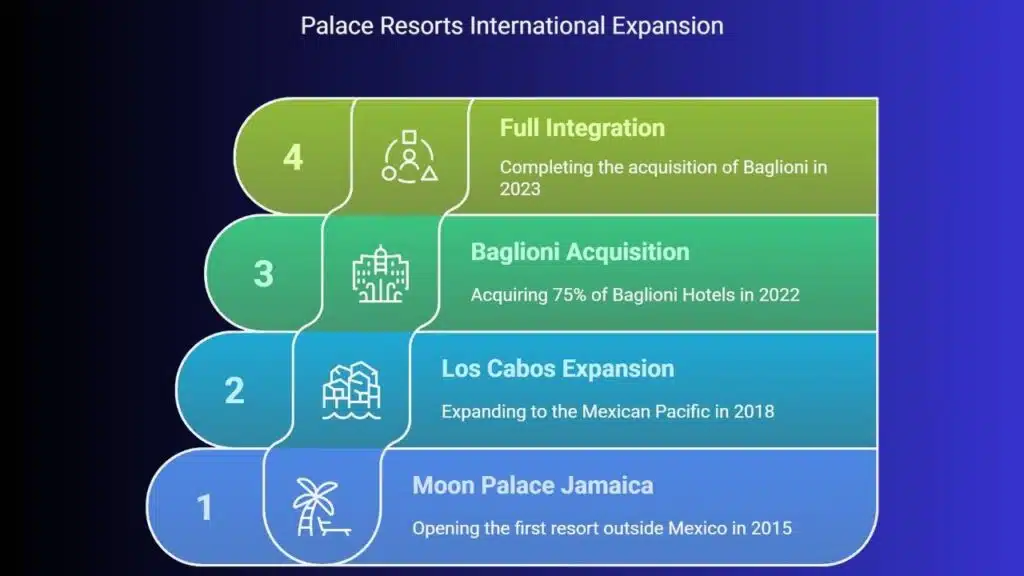
The internationalization process began in 2015 with the opening of Moon Palace Jamaica in Ocho Rios, marking the chain’s first foray outside Mexico. The decision to open a resort in that country responded, according to official company statements, to the search for new markets in the English-speaking Caribbean. Subsequently, in 2018, Palace Resorts opened a new property in Los Cabos, expanding its coverage towards the Mexican Pacific with a different approach to the traditional Caribbean.
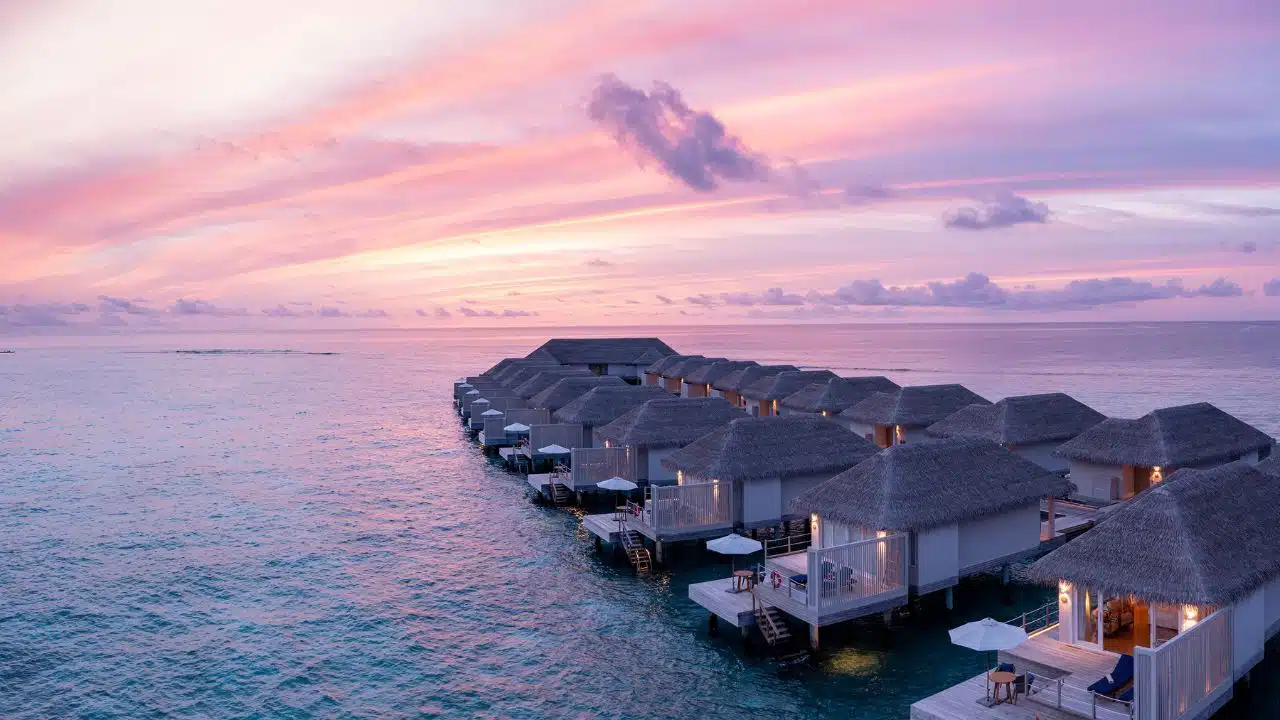
One of the most significant steps in its international expansion took place in 2022, when the company announced the purchase of 75% of the Italy-based Baglioni Hotels & Resorts chain. This transaction included properties in cities such as Rome, Florence, Milan and Venice, as well as resorts in destinations such as the Maldives. In October 2023, Palace Resorts completed the acquisition of 100% of Baglioni, fully integrating that brand into its operating structure. This acquisition marked the company’s formal entry into the European urban hotel segment, as well as its geographic diversification beyond exclusively beach destinations.
Palace Resorts consolidates its international presence under The Palace Company
In parallel to this expansion, the company announced in 2024 its reorganization under the name The Palace Company, an entity that now groups the Palace Resorts, Moon Palace Resorts, Le Blanc Spa Resorts and Baglioni Hotels & Resorts brands. The objective of this restructuring is, according to corporate communications, to facilitate the management of a diversified portfolio and give greater visibility to each of its brands in the different markets where it operates.
Growth plans are not limited to past acquisitions. Among the projects announced is the future opening, by the end of 2025, of Moon Palace The Grand – Punta Cana in the Dominican Republic. This development aims to increase the chain’s presence in the insular Caribbean, a market in which several international chains with a high concentration of resorts compete.
The move into new markets is part of a strategy aimed at consolidating a gradual and diversified expansion model. Gibrán Chapur, at the helm of The Palace Company, has prioritized entry into destinations with stable tourism demand and an international profile, with the goal of positioning the company in broader and more demanding segments. The opening of new properties not only expands the brand’s reach, but also has a direct impact on local economies by generating employment and encouraging investment in tourism infrastructure.
Going forward, the challenge for Palace Resorts will be not only to maintain the pace of its expansion, but to demonstrate that it can sustain a flexible operating model in an international environment subject to multiple pressures. The decisions taken so far have placed the company in a relevant position on the hotel map, but the real turning point will come when it has to balance growth with social responsibility, diversification with brand consistency and international presence with local roots. The company’s ability to adapt will possibly be its main strategic asset.
























