
The digital landscape is no longer a public square where merit earns a voice. It has been transformed into a series of gated estates where entry requires a recurring payment. In 2026, the dream of the organic viral success story has been replaced by the cold reality of the pay-to-exist economy. We are witnessing the final enclosure of the digital commons.
Marketing used to be about finding an audience through creativity and relevance. Now, it is about purchasing permission to be seen. Platforms have systematically dismantled the bridges between creators and their followers to create a toll-based infrastructure. This shift marks the definitive end of the open web as we once understood it.
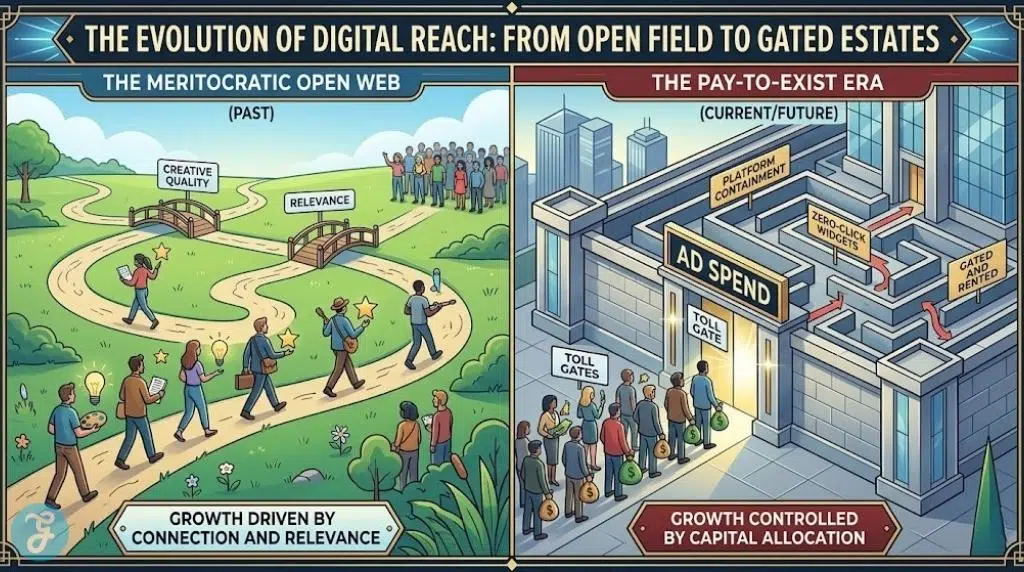
Perceived Optimization vs. Systematic Monetization
Understanding the true nature of this shift requires us to look past the marketing narratives provided by the platforms themselves.
From a surface level, platforms claim that algorithmic changes are designed to improve the user experience. They argue that by filtering content, they ensure that only the most relevant and high-quality posts reach a user’s feed. This creates an illusion of a curated and personalized digital world that supposedly benefits the consumer.
The reality seen through a more analytical lens is far more clinical. The removal of organic visibility is a financial strategy designed to force brands into a state of permanent dependency.
When a platform hides your content from the people who intentionally followed you, they are not improving the user experience. They are creating an artificial scarcity of attention that can only be resolved through a credit card transaction. This represents a fundamental shift from a meritocracy to a plutocracy in the digital space.
The Architecture of Containment
This technical evolution is not accidental but is a deliberate strategy to maximize platform revenue at the expense of creator autonomy.
The modern web is built on a model of containment rather than connection. Search engines and social networks have replaced the outbound link with native AI summaries and in-app widgets. This keeps the user within the platform ecosystem for the entire duration of their journey. Every minute a user spends on an external website is a minute of lost ad revenue for the hosting platform.
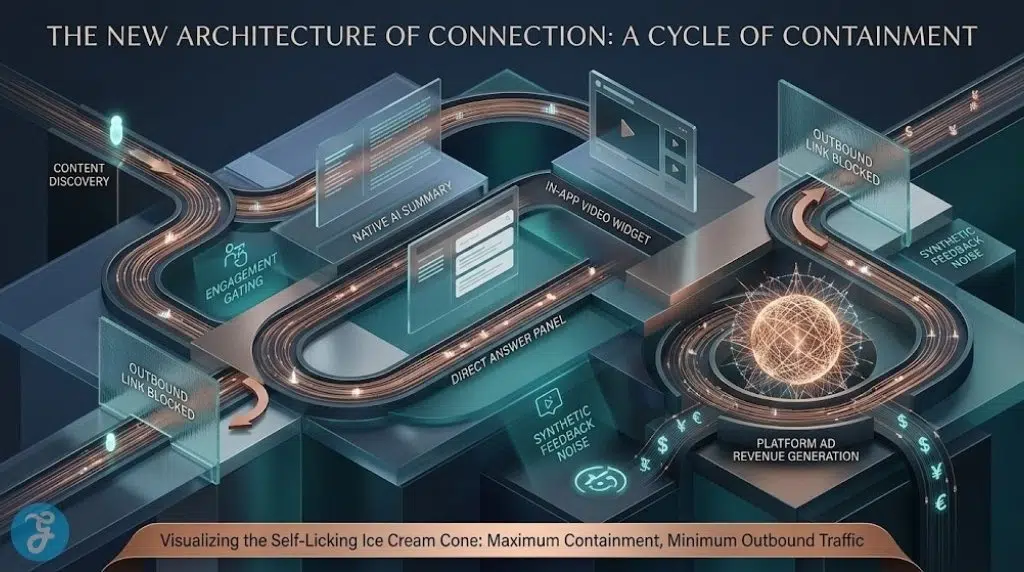
When a brand creates content today, they are essentially providing free training data for the very systems that will eventually replace their website. The goal of the algorithm is no longer to send traffic to your domain. The goal is to answer the user’s question on the platform itself.
This forces brands to pay for sponsored placements just to remind the audience that their actual website still exists. We are seeing the rise of a self-licking ice cream cone where platforms consume your data to sell you back the access to your own audience.
The Technical Autopsy Behind the Decline of Organic Reach
Examining the specific mechanisms of this decline reveals how the barrier to entry has been raised for everyone except the largest spenders.
1. The Downfall of the Follower Graph
Platforms shifted content distribution from follower counts to interest-based feeds. In the past, building an audience was a long-term investment that yielded consistent organic returns over many years.
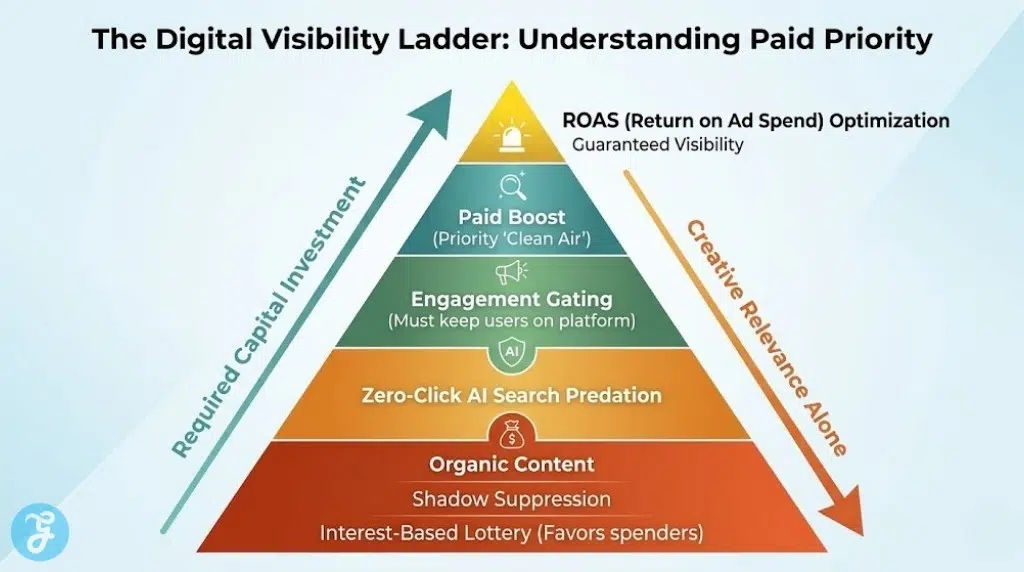
Today, having a million followers does not guarantee visibility for a single post. Every individual piece of content must now compete in a global lottery where the house heavily favors those who boost their reach with ad spend. This makes audience building a continuous expense rather than a permanent asset.
2. Zero-Click Saturation and AI Predation
The rise of generative AI in search results has decimated the click-through rate for informational and transactional queries. Users no longer need to visit a blog or a news site to get the facts they need because the AI provides the answer immediately.
This has turned organic search into a graveyard for content creators who are not paying for top-of-page prominence. The platforms are essentially harvesting the value of your content and presenting it as their own.
3. Engagement Gating and Shadow Suppression
Algorithms now prioritize dwell time and native engagement over all other metrics to keep users from leaving the app. If a piece of content encourages a user to leave the app or visit a third-party store, it is immediately suppressed.
This creates a paradox where the most valuable marketing action for a business is the one the platform punishes the most. You are forced to choose between visibility on their terms or obscurity on yours.
4. The Synthetic Feedback Loop
As organic reach drops, platforms are increasingly filled with AI-generated content designed specifically to trigger algorithmic engagement. This creates a noise-to-signal ratio that makes it impossible for authentic brand voices to break through without paid promotion. The environment has become a synthetic feedback loop where only those who pay for priority “clean air” can be heard above the automated din.
The Power Matrix
The following comparison highlights how the balance of influence has shifted over the last several years.
| Aspect | 2020 Landscape | 2026 Landscape |
| Primary Driver | Creative Relevance | Capital or Labor Allocation |
| Audience Relationship | Direct and Earned | Gated and Reciprocal |
| Traffic Model | Outbound Discovery | In-Platform Relationship Signals |
| Growth Strategy | Community Building | Algorithmic Appeasement |
| Success Metric | Organic Engagement | Connected Reach and ROAS |
| Platform Role | Traffic Distributor | Relationship Gatekeeper |
The Risk Forecast
Failing to adapt to this new architecture carries significant consequences for any organization relying on digital growth for their survival.
| Threat Level | Strategic Risk | Mitigation Action |
| Critical | Complete loss of audience access during ad budget cuts. | Immediate migration to owned email lists. |
| High | Exponentially increasing cost of customer acquisition. | Developing high-value gated lead magnets. |
| Moderate | Brand invisibility due to AI search summaries. | Transitioning to entity-based SEO and AEO. |
| Systemic | Platform decay and total algorithmic lockout. | Diversification across multiple protocol-based networks. |
The Data Governance Mandate
To navigate this environment, businesses must reclaim ownership of their relationships with their customers through direct infrastructure.
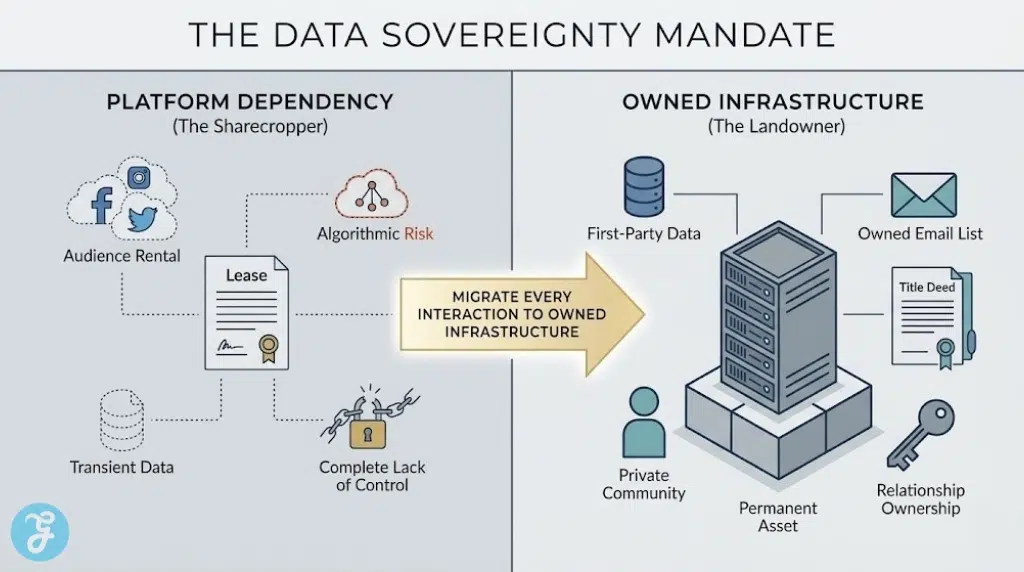
The only defense against a pay-to-exist economy is data sovereignty. Relying on a social platform for your business survival is the equivalent of building a factory on rented land where the landlord can change the locks at any moment. The decline of organic reach is a clear signal that the time for platform-native growth has passed. You must treat every social interaction as an opportunity to move the user into a space you control.
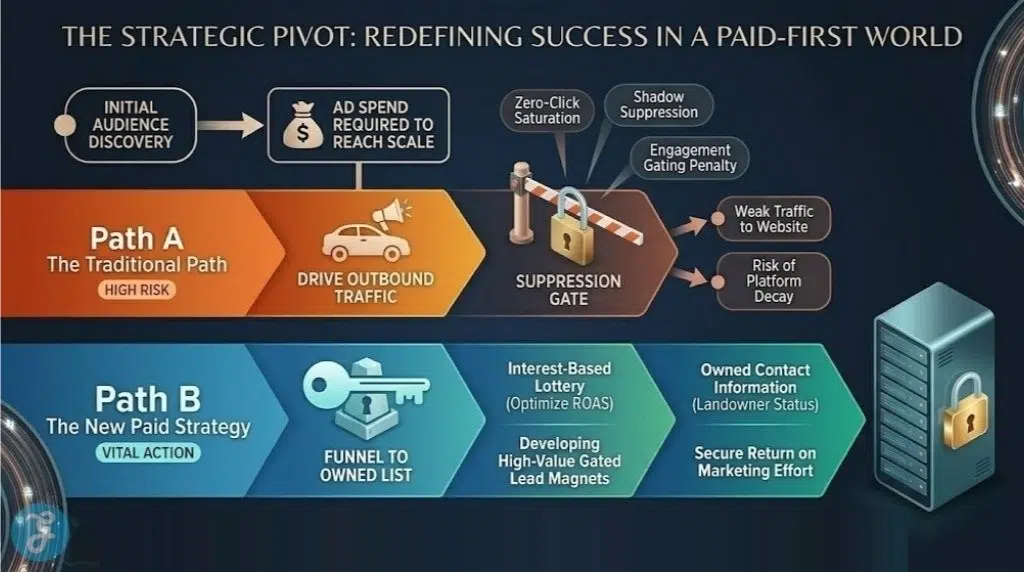
Organizations must prioritize the collection of first-party data through robust internal systems. This involves moving the conversation away from the public feed and into private communities, email newsletters, and direct messaging channels. When you own the contact information, you are no longer at the mercy of an algorithm that demands payment for every interaction. You transition from a sharecropper to a landowner in the digital economy.
The Path Forward
The digital economy has shifted from a meritocracy of content to a hierarchy of capital. Platforms have implemented technical barriers that make organic discovery nearly impossible for those without significant marketing budgets. To survive this transition, brands must stop viewing social media as a destination and start using it as a temporary funnel toward owned infrastructure.
Begin your transition today by auditing your current platform dependencies and redirecting a portion of your ad spend toward building a robust, first-party database.