

Denmark has become a thriving hub for tech startups, offering a highly supportive business environment, access to skilled talent, and robust government incentives. However, navigating the country’s tax system can be challenging for startups looking to optimize their financial strategy.
Effective Tax Planning Strategies for Tech Startups in Denmark can significantly impact profitability, cash flow, and long-term growth.
This guide outlines 10 essential Tax Planning Strategies for Tech Startups in Denmark, ensuring compliance while maximizing savings. Whether you are launching a new venture or scaling an existing one, understanding the tax landscape is crucial for sustainable success.
Understanding the Tax Landscape for Tech Startups in Denmark
Denmark’s tax laws are designed to foster innovation while ensuring compliance. Tech startups must be aware of the following key regulations:
- Corporate Tax Rate: 22% (flat rate for all corporations)
- Value-Added Tax (VAT): 25% on most goods and services
- R&D Tax Incentives: Eligible businesses can receive tax deductions on R&D expenditures
- Employee Stock Options Taxation: Special tax schemes for startup employees
- Payroll Taxes: Social security contributions and employment-related taxes
| Key Tax Regulation | Details |
| Corporate Tax Rate | 22% flat rate for all corporations |
| VAT | 25% on most goods and services |
| R&D Tax Incentives | Tax deductions on eligible R&D expenses |
| Employee Stock Options | Special schemes for startup employees |
| Payroll Taxes | Includes social security contributions and employment-related taxes |
Corporate Tax Rates and Incentives in Denmark
Danish startups benefit from various tax incentives aimed at fostering innovation and growth:
| Tax Category | Rate/Benefit | Description |
| Corporate Tax | 22% | Flat rate for all Danish businesses |
| R&D Tax Deduction | Up to 130% | Deductions on eligible R&D expenses |
| VAT | 25% | Charged on most goods and services |
| Employee Stock Option Tax | Special rates | Preferential tax treatment for startup employees |
VAT Rules and Compliance for Startups
VAT is an essential aspect of Tax Planning Strategies for Tech Startups in Denmark. Startups must register for VAT if their turnover exceeds DKK 50,000 per year.
Key VAT Considerations:
- Businesses can reclaim input VAT on business-related expenses
- Late VAT filings may result in penalties
- Some services (e.g., financial and educational services) are VAT-exempt
| VAT Requirement | Details |
| Registration Threshold | DKK 50,000 turnover per year |
| Standard VAT Rate | 25% |
| Input VAT Recovery | Allowed on business-related expenses |
| Exempt Services | Financial and educational services |
10 Essential Tax Planning Strategies for Danish Tech Startups
Effective tax planning is a key factor in ensuring the financial stability and growth of a startup. By strategically implementing Tax Planning Strategies for Tech Startups in Denmark, businesses can reduce tax liabilities, optimize cash flow, and take advantage of government incentives. Below, we explore ten crucial tax planning strategies to help tech startups in Denmark thrive.
1. Choosing the Right Business Structure for Tax Efficiency
Selecting the right business structure is one of the most crucial Tax Planning Strategies for Tech Startups in Denmark. A well-chosen structure not only helps in minimizing tax liabilities but also impacts compliance, scalability, and investor attractiveness. Understanding the legal and financial implications of each option is essential for long-term success. The common structures available include:
| Business Structure | Tax Implication | Best For |
| Sole Proprietorship | Subject to personal income tax rates | Small startups, freelancers |
| Private Limited Company (ApS) | 22% corporate tax, limited liability | Growing startups, VC-backed firms |
| Holding Company | Reduces taxation on foreign investments | Startups with international expansion plans |
2. Maximizing R&D Tax Credits and Innovation Grants

The Danish government offers generous tax incentives to encourage research and development, making it easier for tech startups to innovate and remain competitive. These incentives help startups lower their tax burden while investing in cutting-edge technologies, ultimately fostering a thriving ecosystem for growth.
By strategically utilizing available R&D tax credits and grants, startups can optimize their financial planning and reinvest savings into further development.
How to benefit:
- Claim 130% deductions on eligible R&D expenses
- Apply for Innovation Grants from organizations like Innovation Fund Denmark
- Ensure proper documentation of R&D projects to avoid compliance issues
| R&D Tax Incentive | Benefit |
| R&D Tax Deduction | Up to 130% deduction on eligible expenses |
| Innovation Grants | Financial aid from the government for innovation projects |
| Startup Denmark Program | Special tax incentives for innovative companies |
3. Leveraging Tax Deductions for Business Expenses
Startups can significantly lower their taxable income by identifying and deducting legitimate business expenses. By tracking and categorizing expenditures efficiently, startups can ensure they are not overpaying taxes while maintaining compliance with Danish tax regulations. Proper documentation and strategic planning in this area can lead to substantial savings and improved cash flow.
Common deductible expenses:
- Office rent and utilities
- Software subscriptions
- Business travel and accommodation
- Marketing and advertising costs
- Employee salaries and benefits
| Deductible Expense | Description |
| Office Rent | Workspace leasing and utilities |
| Software Costs | Subscriptions for essential business tools |
| Travel Expenses | Flights, accommodation for business travel |
| Salaries | Employee wages and benefits |
4. Optimizing Payroll Taxes and Employee Stock Options
Startups need efficient payroll management to attract top talent while minimizing tax burdens. Payroll management is not just about processing salaries; it involves structuring compensation packages strategically to ensure tax efficiency, compliance with labor laws, and employee satisfaction. Startups must balance competitive salaries with cost-effective tax strategies to maintain sustainability while fostering a motivated workforce.
- Equity-Based Compensation: Employees can benefit from preferential tax rates under Section 7P stock option schemes
- Payroll Optimization: Utilize gross salary agreements to minimize social security tax burdens
| Payroll Strategy | Tax Benefit |
| Stock Options (Section 7P) | Lower tax on employee equity compensation |
| Gross Salary Agreements | Minimizes employer tax contributions |
| Social Security Optimization | Leverage deductions and exemptions |
5. VAT Optimization Strategies for Startups
Proper VAT management is crucial to avoid penalties and improve cash flow. Startups must ensure accurate VAT reporting, timely filing, and efficient record-keeping to prevent unnecessary financial setbacks. Understanding the available VAT exemptions and refund mechanisms can also help optimize cash flow and reduce the tax burden. Implementing digital accounting tools can further streamline VAT compliance and reporting processes.
- Register for VAT early to reclaim input VAT
- Use reverse charge mechanisms for international transactions
- Ensure timely VAT reporting to avoid fines
| VAT Strategy | Benefit |
| Early Registration | Allows VAT input claims |
| Reverse Charge Mechanism | Reduces cross-border tax burdens |
| Quarterly Reporting | Ensures compliance, prevents fines |
6. Strategic International Tax Planning for Startups
Expanding internationally requires a strong understanding of tax obligations in different jurisdictions. Danish startups must consider varying corporate tax rates, VAT regulations, and withholding tax requirements in foreign markets.
Proper planning, such as leveraging international tax treaties, structuring subsidiaries effectively, and utilizing transfer pricing strategies, can help minimize double taxation and optimize global tax efficiency. Engaging tax professionals with expertise in international markets can provide valuable insights into reducing tax liabilities while ensuring compliance with cross-border tax laws.
| Strategy | Benefit |
| Utilize Double Taxation Treaties | Reduces tax burdens in cross-border operations |
| Establish a Foreign Subsidiary | Minimizes withholding taxes on international revenue |
| Use Transfer Pricing Documentation | Ensures compliance with international tax laws |
7. Tax Compliance and Filing Best Practices
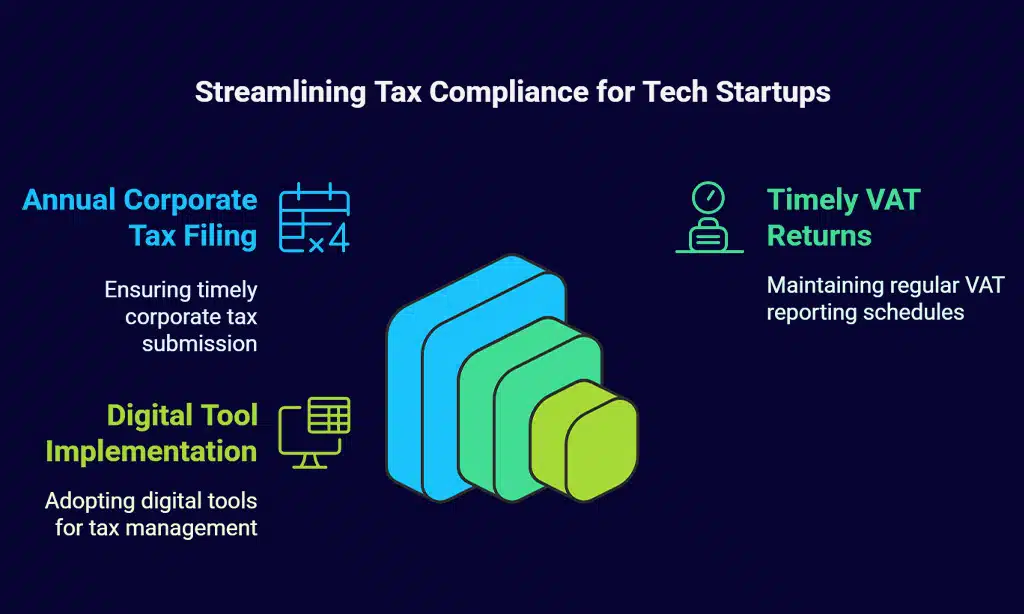
Staying compliant with Danish tax laws is essential for avoiding fines and legal issues. Tech startups should stay updated on tax regulation changes, utilize professional tax advisory services, and implement automated tools to ensure accurate reporting. Efficient tax filing practices not only guarantee financial stability but also enhance credibility with investors and stakeholders.
| Best Practice | Implementation |
| File Corporate Tax Annually | Due by July 1st every year |
| Submit VAT Returns on Time | Quarterly or monthly reporting |
| Use Digital Tax Management Tools | Automates tax tracking and compliance |
8. Utilizing Government Incentives and Startup-Friendly Policies
Denmark offers various tax incentives to support tech startups, providing financial relief and fostering innovation. These incentives include deductions on research and development expenses, grants for technology advancements, and startup-friendly policies that encourage growth. By leveraging these benefits, startups can ease financial burdens, optimize operational costs, and accelerate expansion in a competitive market.
| Incentive | Benefit |
| R&D Tax Credit | Up to 130% deduction on research expenses |
| Startup Denmark Program | Special tax benefits for innovative businesses |
| Digital Growth Grant | Financial support for technology development |
9. Managing Investor Taxation and Capital Gains
Investors play a crucial role in startup funding, and managing their tax implications can make fundraising more attractive.
| Investment Strategy | Tax Implication |
| Capital Gains Tax | 27% for gains up to DKK 58,900, 42% for amounts above |
| Angel Investor Tax Relief | Tax breaks for eligible startup investments |
| Exit Strategy Planning | Optimized tax-efficient buyouts or IPOs |
10. Partnering with Tax Professionals for Strategic Planning
A tax advisor can help startups navigate complex tax regulations and optimize planning for long-term financial stability.
| Why Work with a Tax Advisor? | Key Benefit |
| Startup-Specific Tax Expertise | Ensures compliance with Danish laws |
| International Tax Planning | Helps expand efficiently into new markets |
| Financial Forecasting | Optimizes future tax liabilities and cash flow |
By implementing these 10 Tax Planning Strategies for Tech Startups in Denmark, businesses can maximize tax savings, enhance compliance, and position themselves for sustainable growth in the Danish and international markets.
Wrap Up: Smart Tax Planning for Long-Term Growth
Implementing effective Tax Planning Strategies for Tech Startups in Denmark can significantly reduce tax liabilities, optimize cash flow, and ensure compliance. By leveraging R&D tax credits, VAT optimization, payroll strategies, and government incentives, startups can maximize profitability while staying compliant with Danish tax regulations.
By taking a proactive approach to Tax Planning Strategies for Tech Startups in Denmark, you can secure long-term financial sustainability and position your startup for success in the competitive tech industry.
Would you like further refinements or additional details on any section?





















