


Raising children is one of the most fulfilling yet financially demanding experiences for families. From daycare costs to educational expenses, the financial responsibilities of parenting can quickly add up. Thankfully, the Canadian government recognizes these challenges and provides a range of tax breaks for parents in Canada. These tax benefits are designed to ease the financial strain on families by offering credits, deductions, and incentives for essential costs like child care, education, and even adoption.
Whether you’re a working parent trying to manage daycare expenses or a single parent supporting a dependent, these tax breaks offer significant financial relief. Understanding and utilizing these benefits is crucial to maximizing your savings and ensuring you’re not leaving any money on the table.
In this guide, we’ll explore eight essential tax breaks for parents in Canada, helping you navigate the complex tax system with confidence and ease.
Top 8 Tax Breaks for Parents in Canada to Maximize Your Savings
Managing finances while raising a family can be challenging, but the Canadian tax system offers various ways to help parents save money. From monthly child benefits to deductions for education and child care, these tax breaks for parents in Canada are designed to alleviate financial stress and support families in meeting their needs. Each tax break offers unique advantages, ensuring that parents can optimize their savings while providing the best for their children.
1. Canada Child Benefit (CCB)
The Canada Child Benefit (CCB) is a tax-free monthly payment offered by the government to help families cover the costs of raising children. This benefit is one of the most significant supports available to Canadian parents.
Key Details:
- Eligibility: Families with children under the age of 18.
- Payment Amount: Based on household income, the number of children, and their ages.
- Tax-Free: Payments are not taxable, meaning you don’t need to report them as income.
Application Process:
To apply for the CCB, parents can register their child’s birth or apply through the Canada Revenue Agency (CRA). Ensure you file your income taxes annually to maintain eligibility.
At a Glance:
| Criteria | Details |
| Maximum Annual Payment | Up to $6,997 per child under six and $5,903 per child aged 6-17 (2025) |
| Income Threshold | Payments reduce as household income exceeds $32,797 |
| Application Method | Through CRA My Account or child birth registration |
Pro Tip:
Ensure both parents file their tax returns on time every year to avoid delays in receiving payments.
2. Child Care Expense Deduction
Child care is a significant expense for working parents. The Child Care Expense Deduction allows you to deduct eligible child care costs from your income, reducing the amount of tax you owe.
Eligible Expenses:
- Daycare centers, nannies, or babysitters.
- Before- and after-school programs.
- Day camps and overnight camps (with limits).
Deduction Limits:
| Child’s Age | Maximum Deduction per Child |
| Under 7 years | $8,000 |
| 7 to 16 years | $5,000 |
| Children with disabilities | $11,000 |
Claiming the Deduction:
The lower-income spouse in a household must claim the deduction, except in specific circumstances. Ensure you keep receipts for all child care expenses.
Pro Tip:
Use child care expense receipts to verify your claim during a tax audit.
3. Eligible Dependant Credit
The Eligible Dependant Credit is specifically designed to help single parents or guardians who support a dependent child. This non-refundable credit reduces the amount of tax you owe.
Eligibility Criteria:
- You are unmarried or separated and support a child under 18.
- The child lives with you in a shared residence.
- You are not claiming spousal or common-law partner credits.
Credit Value:
For the 2025 tax year, the maximum amount for the eligible dependant credit is approximately $15,000, which translates to significant tax savings when calculated at the federal rate.
At a Glance:
| Criteria | Details |
| Maximum Claim | Up to $2,350 (based on federal tax rate) |
| Eligible Dependants | Child under 18, elderly dependants |
| Exclusions | Cannot be claimed for a dependant with income |
4. Children’s Fitness and Arts Tax Credits (Provincial)

Although federal programs no longer offer these credits, some provinces still provide them. These tax credits encourage parents to enroll their children in physical activities and arts programs.
Provincial Programs:
- British Columbia: Offers up to $500 per child for eligible sports activities.
- Manitoba: Includes arts and cultural activities in its credits.
- Ontario: Offers similar credits at the provincial level.
Eligible Expenses:
- Sports such as swimming, hockey, or gymnastics.
- Artistic programs like music lessons or drama classes.
At a Glance:
| Province | Maximum Credit per Child | Eligible Activities |
| British Columbia | $500 | Physical activities |
| Manitoba | $500 | Arts and cultural programs |
| Ontario | $500 | Sports and arts |
Pro Tip:
Check your provincial government’s website for updates on available credits.
5. Adoption Expense Tax Credit
Adopting a child is a significant step for any family, and the government offers tax relief for adoption-related costs through the Adoption Expense Tax Credit.
Eligible Expenses:
- Agency fees.
- Travel expenses.
- Legal and administrative costs.
Maximum Claim:
Parents can claim up to $17,131 in eligible expenses for each adopted child (2025).
At a Glance:
| Criteria | Details |
| Maximum Claim | Up to $17,131 |
| Eligible Costs | Agency fees, travel, legal expenses |
| Timeframe for Claims | Within the adoption process period |
Pro Tip:
Keep all receipts and documentation related to the adoption process for tax filing purposes.
6. Tuition Transfer from Children
If your child attends a post-secondary institution and has unused tuition credits, they can transfer a portion to their parents. This transfer helps reduce your tax liability.
Transfer Amount:
Students can transfer up to $5,000 of unused tuition credits annually.
Eligibility:
- The student must first apply the credits to their own income tax.
- Unused credits can then be transferred to parents, grandparents, or a spouse.
At a Glance:
| Criteria | Details |
| Maximum Transfer Amount | $5,000 |
| Eligible Recipients | Parents, grandparents, spouse |
| Claim Process | Through the student’s T2202 certificate |
7. GST/HST Credit
The GST/HST Credit provides financial assistance to families with low or modest incomes to offset the cost of goods and services taxes.
Eligibility:
- Based on household income.
- Parents with children under 19 qualify for additional amounts.
Payment Amounts:
| Family Income | Quarterly Payment (2025) |
| Up to $39,826 | $496 per adult, $261 per child |
| Above $39,826 | Payments reduce gradually |
Pro Tip:
File your taxes annually, even if you have no income, to automatically qualify for this credit.
8. Home Accessibility Tax Credit (HATC)
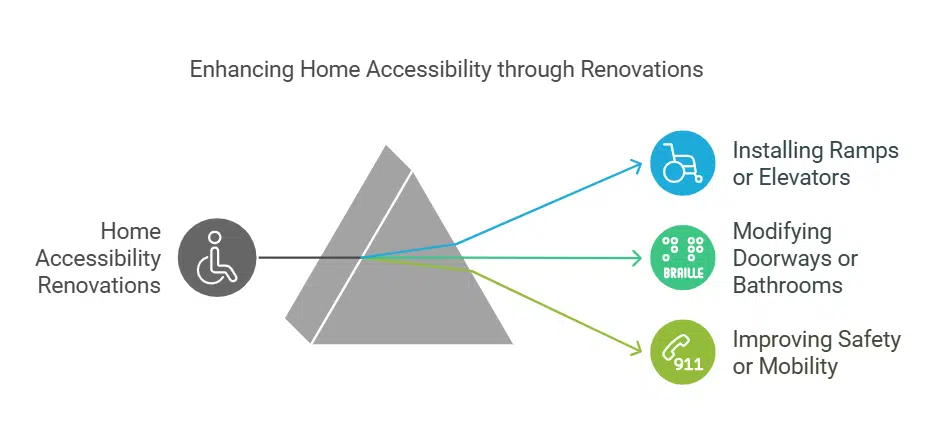
The Home Accessibility Tax Credit (HATC) supports families making eligible renovations to improve accessibility for children with disabilities.
Eligible Renovations:
- Installing ramps or elevators.
- Modifying doorways or bathrooms.
- Any changes that improve safety or mobility.
Maximum Claim:
Parents can claim up to $20,000 in renovation costs, with a tax credit of up to $3,000.
At a Glance:
| Criteria | Details |
| Maximum Claim | Up to $20,000 in renovation expenses |
| Credit Value | Up to $3,000 (15% of eligible expenses) |
| Eligible Expenses | Renovations for safety, mobility improvements |
Steps to Maximize Tax Breaks for Parents
Here are practical tips to ensure you’re making the most of available tax breaks:
- File Taxes on Time: Many credits require timely tax filings.
- Organize Receipts: Keep all relevant receipts and documentation.
- Use Tax Software: Leverage software to identify missed credits.
- Consult a Professional: A tax expert can guide you through complex deductions.
Takeaway
Navigating the tax system as a parent in Canada doesn’t have to be daunting, especially when you understand the various tax breaks for parents in Canada that are available to you. From the Canada Child Benefit to tuition transfers and credits for child care, these programs are specifically designed to help families manage the costs associated with raising children. They not only reduce financial burdens but also ensure that parents can focus on what truly matters—building strong, loving families.
To make the most of these opportunities, it’s essential to file your taxes on time, stay organized by keeping all relevant documentation, and stay updated on any changes to tax regulations. Consulting with a tax professional can further ensure that you’re optimizing your claims and accessing all the support you qualify for.
By taking full advantage of these tax breaks for parents in Canada, you can create a more secure financial future for your family, leaving more room to enjoy the joys of parenting and less time worrying about your expenses. Make the most of these benefits today and invest in both your children’s future and your family’s well-being.





















