

Your fleet may guzzle gas, cost more, and raise your carbon footprint. Sustainable fleet management can cut fuel consumption by up to 30%. This guide will show eco-driving techniques, route optimization, telematics tools, and preventive maintenance tips to save fuel and cut emissions.
Read on.
Key Takeaways
- Fleets can cut fuel use by up to 30% with eco-driving (steady 50 to 60 mph, no hard starts or stops) and route optimization.
- Telematics and AI tools track idle time, harsh braking, and engine data to coach drivers, cut CO₂ output, and lower repair costs.
- Preventive maintenance (oil checks, filter swaps, brake inspections) extends vehicle life, stops breakdowns, and trims emissions.
- Electric and hybrid vehicles slash greenhouse gas emissions, drop fuel bills, and unlock tax credits and rebates.
- Green procurement policies and scorecards aim to cut fleet emissions by 30% over five years using life-cycle analysis and low-rolling-resistance tires.
How Can Drivers Practice Eco-Driving Techniques?
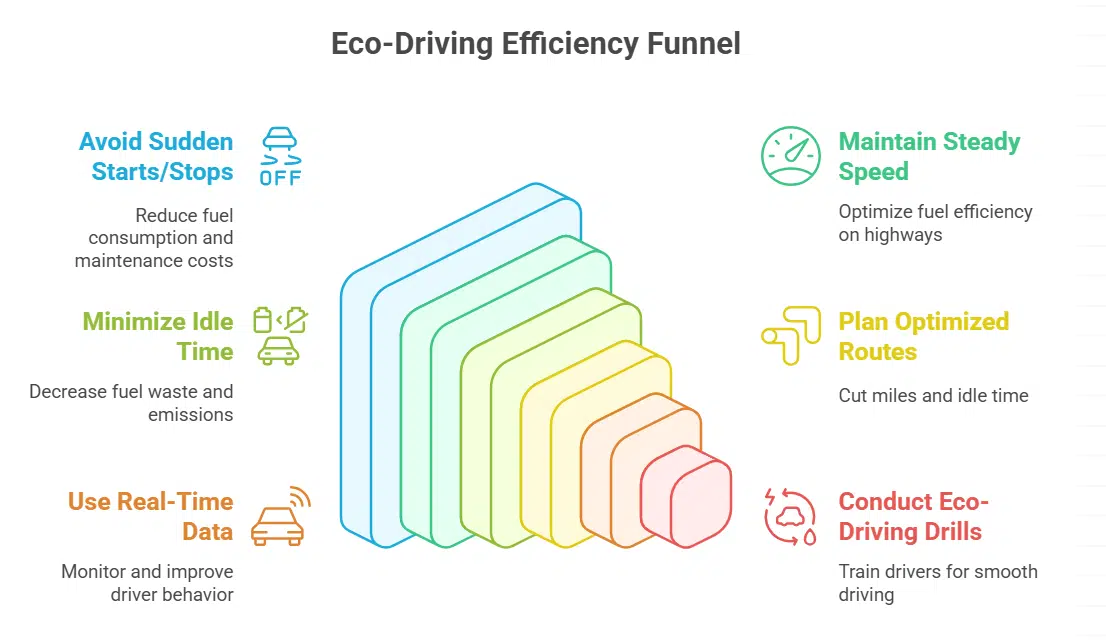
Drivers cut fuel use with smart moves. Simple tips lower carbon footprint and boost fuel economy.
- Steer clear of sudden starts and stops. Hard acceleration and fast braking spike fuel consumption, raise maintenance costs, and enlarge carbon footprint.
- Keep speed steady on highways. Engines run best at 50 to 60 mph. Drivers can save ten percent on fuel, says EPA.
- Slash engine idle time to minutes per stop. Engines burn fuel with no miles covered. This waste lifts emissions and burns cash.
- Plot optimized routes before departure. Route planning with fleet management software cuts miles and idle time. That trims fuel consumption and boosts operational efficiency.
- Harness real-time data from vehicle monitoring system. A smart device network tracks harsh braking or sudden acceleration and monitors driver behavior. Fleet managers can coach drivers, curb waste, and shrink carbon output.
- Hold regular eco-driving drills for your team. Short training fights bad habits like abrupt throttle or sudden stops. Drivers learn smooth moves, cut fuel use, and shrink your fleet’s carbon footprint.
Why Is Regular Vehicle Maintenance Important?
Regular tune-ups cut repair bills. Mechanics spot worn parts before they fail. This practice saves money on engine fixes, reduces fuel use, and trims the carbon footprint. Telematics tools send engine data to fleet management software.
Australia: Solutions like Netstar’s vehicle telematics provide real-time insights into vehicle performance, driver behavior, and maintenance needs — helping fleets cut costs and lower emissions.
US: Companies such as Verizon Connect offer fleet telematics platforms that optimize routes, monitor fuel use, and support predictive maintenance, making fleet operations more sustainable.
UK: Providers like Geotab deliver advanced telematics for compliance, driver safety, and sustainability reporting, helping businesses reduce emissions in line with UK regulations.
This alert system stops breakdowns and idle time. Fleets run smoother and show lower fuel consumption.
Regular oil checks, brake inspections, and filter swaps extend a vehicle’s life. Preventive maintenance fights wear, reducing downtime. Teams watch automated diagnostics on dashboards.
They spot leaks, engine faults, or sensor failures fast. State tests reward clean emissions. Meeting new EPA rules avoids fines. Fleet owners save on repair parts. They keep vehicles rolling longer.
How Do You Optimize Routes and Reduce Idle Time?
Fleets cut fuel costs and emissions with smart tools. They boost efficiency on every trip.
- Integrate satellite tracking with dynamic route optimization. This cuts miles driven, lowers idle time, and shrinks carbon footprint.
- Activate idle-time alarms in fleet management software. It highlights trucks that run long, so managers can coach drivers toward fuel efficiency.
- Use AI-based analytics for fuel consumption reports. This taps IoT sensors, predictive analytics and real-time data to catch waste fast.
- Plan routes around traffic forecasts and road closures. This step cuts needless stops, lowers emissions and boosts fleet sustainability.
- Sync telematics records with dispatch platforms. This links live vehicle stats, tweaks trips on the fly, and trims idle minutes.
What Are the Benefits of Electric and Hybrid Vehicles?
Electric and hybrid vehicles slash greenhouse gas emissions and curb fuel consumption. They cut carbon output for gasoline fleets and diesel rigs. Drivers swap fuel pumps for electric plugs and watch fuel costs drop.
Fleet electrification also unlocks tax credits and rebates. Shifting to zero-emission vehicles boosts your environmental record while trimming your budget.
Charging infrastructure keeps trucks rolling overnight at depot lots. Power hubs and wall sockets share electrons, not fumes. A vehicle data link shows battery life, range, and energy use in real time.
Satellite navigation and path planning tools guide drivers to the nearest port. Quiet motors hum past busy streets, turning long hauls into calm journeys.
How to Use Telematics and Fleet Management Software Effectively?
Telematics tools link fleets to a control center. They stream real-time data on fuel use, idle time, and emissions.
- Employ telematics technology with AI analytics to flag high idle time, track carbon footprint, and plan fuel-efficient routes.
- Use GPS tracking and IoT sensors to log fuel consumption, driver behavior, and CO2 output for clear insights.
- Review live metrics on a dashboard to tweak speed and throttle, boosting operational efficiency and fuel efficiency.
- Set up maintenance alerts in fleet management software to catch brake wear and oil issues, cutting downtime and repair costs.
- Analyze reports to guide driver training in eco-driving techniques, which lowers fuel consumption and carbon footprint.
- Adjust routes using real-time traffic and weather updates, slashing idle time and fuel waste.
- Feed data into visual reports for scope 3 emissions checks, driving data-driven decision making and compliance.
What Are Green Procurement Policies and How to Establish Them?

Procurement teams set guidelines that favor fuel-efficient vehicles. They pick models with high MPG ratings or electric and hybrid options. They include contract management rules that demand lower rolling resistance tires and alternative fuels.
They embed lifecycle analysis steps and renewable energy targets into selection criteria.
Managers build scorecards to track fuel consumption, carbon footprint, and compliance. They use supply chain management software and telematics technology for real-time data. They deploy GPS tracking to spot gaps.
They review policy each year. They aim to cut emissions by 30 percent over five years.
How Can You Monitor and Track Sustainability Metrics?
Fleet managers gather real-time data from IoT systems and GPS tracking units. They monitor fuel consumption and tailpipe emissions to track carbon footprint. Cloud dashboards display key metrics in seconds, helping teams spot trends fast.
Crew uses telematics technology to flag excess idle time.
Software platforms add deeper insights by tracking driver behavior and operational efficiency. Data-driven decision making cuts waste and boosts sustainable practices. Teams tune routes to lower fuel use and shrink greenhouse gas emissions.
Coverage across sustainable telematics and eco-fleet optimization resources consistently notes that fleets improving carbon intensity in 2025 are combining driver coaching, idle-time reduction, and EV transition planning with telematics-based emissions tracking — reducing fuel consumption, lowering Scope 1 outputs, and supporting ESG reporting without disrupting operational uptime.
Takeaways
Green driving habits save fuel and dollars. Teams hit the ground running with preventive maintenance checks. Route planning uses AI-powered insights and GPS tracking to cut idle minutes.
Telematics technology feeds live data into fleet management software to steer smart choices. EVs and hybrid vans curb carbon output, they help meet climate goals. Managers win praise, customers give a virtual high-five.
Your company stands out, it shows real environmental care.
FAQs on Sustainable Fleet Management Strategies
1. What is sustainable fleet management?
Sustainable fleet management blends green energy, cleaner technologies, and eco-driving techniques, to cut greenhouse gas emissions and improve operational efficiency. It guides fleet operations toward a sustainable future while meeting regulatory compliance and corporate environmental responsibility.
2. How do electric vehicles help fleet electrification?
Electric vehicles, plus hybrid vehicles, speed up carbon footprint reductions, and they run on renewable energy or renewable fuels. Adding charging infrastructure and smart data-driven decision making turns your fleet into an all-electric powerhouse, without skipping a beat in reliability.
3. How can I reduce fuel consumption and boost fuel efficiency?
Train drivers in eco-driving techniques, monitor driver behavior, and swap fuel-efficient vehicles into your fleet. These steps can slash fuel consumption fast, curb your carbon footprints, and save you money at the pump.
4. Why is route optimization vital for fleet efficiency?
Route optimization uses gps tracking, real-time data, and telematics technology, to plan the fastest, greenest paths. It cuts idle time, lowers fuel consumption, and keeps vehicles moving like clockwork.
5. How does preventive maintenance support sustainability goals?
Regular vehicle maintenance, backed by fleet management software, stops small issues from becoming big repairs, and it extends vehicle life. This hands-on upkeep shrinks waste at disposal time, and keeps your fleet running smooth as silk.
6. What role does telematics technology play in data-driven decision making?
Telematics technology, via iot sensors and real-time tracking, feeds you instant data on speed, fuel use, and carbon footprint. That information lets you tweak routes, adjust driver training, and push your fleet closer to peak performance.






















