You love space news, but it can get confusing. One day, you track a lunar lander, next you hear about the solar wind magnetosphere ionosphere link explorer, and it feels like juggling moon rocks.
China plans a crewed lunar mission by 2030 as part of Space Missions China Plans For The Next 20 Years. This post shows you the ten biggest missions, from the Tianwen-2 asteroid probe and a new carrier rocket, to Tiangong space station upgrades.
We break each plan into plain words, so you can follow along. Read on.
Key Takeaways
- China will land astronauts on the Moon by 2030 using the Long March 10 rocket.This rocket will lift 27 tonnes to lunar transfer orbit (up from 8.2 tonnes) and 70 tonnes to low Earth orbit.Crews will ride in the Mengzhou capsule and use a Lanyue lander.
- China and partners will build an International Lunar Research Station (ILRS).Long March 9 will carry 140 tonnes to low Earth orbit and 50 tonnes to lunar transfer orbit.Chang’e-7 and Chang’e-8 will test habitats, 3D-print lunar shelters, and involve BRICS, BRI, European, and Thai teams.
- Tianwen-2 will launch in 2025 on a superheavy rocket to sample asteroid 2016 HO3 and fly by comet 311P.Chief designer Zhang Rongqiao will use Beidou navigation and a robotic arm for dust.Tianwen-3 will follow on Long March 9 to haul 35 tonnes to Mars transfer orbit and return rock samples.
- The Taiji Program will begin in 2025 with three probes in a million-kilometer triangle to detect gravitational waves by laser interferometry.Long March 9 rockets will launch the probes, and China, Europe, and Asia will share data and precision tools.
- In 2025, China will expand Tiangong with Shenzhou-20, Shenzhou-21, and Tianzhou-9 cargo runs.The ASO-S solar observatory will map solar wind and flares from geostationary orbit.By 2028, a deep-space telescope will map dark matter and energy.Teams will also send Jupiter probes and build BRICS Earth-observation satellites for climate and disaster monitoring.
Manned Lunar Mission by 2030
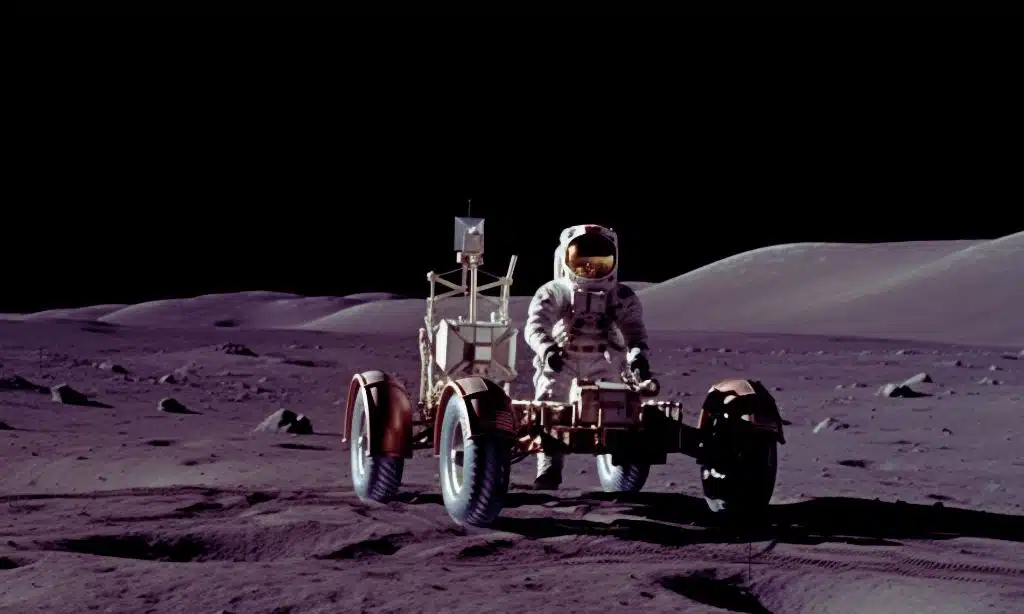
The China Manned Space Agency aims to land astronauts on the Moon by 2030. They build the Long March 10 super rocket. It can send 27 tonnes to lunar transfer orbit, up from 8.2 tonnes.
This giant rocket lifts 70 tonnes into low Earth orbit for crews and cargo spacecraft. Engineers compare the jump from 8.2 to 27 tonnes to trading a hatchback for a semi-trailer, no moving trucks in orbit yet.
New strength will feed the Mengzhou crewed capsule and habitat modules.
Mission plans include docking a Lanyue lunar lander near the lunar surface. Teams map paths through a cislunar route and interplanetary space. SMILE magnetosphere explorer will ride solar wind on the way to the Moon.
Astronaut pairs will walk on dust, test spacesuits, and set up tools. The expedition will spark a fresh race alongside NASA’s Artemis III.
Deployment of a Lunar Research Station
China Manned Space Agency and Chinese Academy of Sciences plan an International Lunar Research Station in cooperation with Belt and Road Initiative, BRICS nations, and European partners.
They will host an ILRS developers meeting to share progress, swap experiences, and discuss collaborative lunar exploration models. Engineers in Thailand will build payloads for Chang’e-7 and Chang’e-8 lunar missions.
Launch crews will send hardware with Long March-9 from Wenchang space launch site. That heavy-lift rocket can carry 140 tonnes to low Earth orbit and 50 tonnes to lunar transfer orbit.
Lunar habitat modules, solar panels, and lunar lander prototypes reach the surface for space science and extravehicular activities. Lunar landing tests confirm descent profiles for crewed missions and robotic rovers.
Tianwen-2: Asteroid Sample Return Mission
Tianwen-2 will lift off in 2025 on a superheavy rocket. Engineers plan a close flyby of near-Earth asteroid 2016 HO3 to grab pebbles and dust for asteroid exploration. Scientists want to map jets on comet 311P in the main asteroid belt next.
The craft will store all picks in a reentry capsule for a sample return mission to Earth. Mission leaders call it a bold step in the nation’s planetary exploration saga.
Zhang Rongqiao heads the project as chief designer at the Chinese Academy of Sciences. He led the design with help from the China Manned Space Agency. Teams will use the Beidou satellite navigation system to guide the orbiter.
Engineers added a tiny robotic arm and sealed capsule to grab and lock space dust. Success here may inspire future Martian exploration trips to bring back rock fragments.
Tianwen-3: Mars Sample Return Mission
China’s manned space agency leads the Tianwen-3 Mars sample return mission. It will ride on the Long March-9 heavy-lift launch vehicle. The rocket can haul 35 tonnes to Mars transfer orbit.
A lander will scoop rocks and seal them in a container. An ascent vehicle will push the payload back into orbit.
A return capsule will fly Earthward with the Martian cache. Scientists will sift the pebbles for water and life clues, like treasure hunters digging in a sandbox. Engineers will also trial space-based solar power station gear in deep space.
Chang’e-7 and Chang’e-8: Advanced Lunar Exploration
Chang’e-7 will launch around 2026, after China and Thailand mark 50 years of ties in 2025. The Chinese Academy of Sciences leads the orbiter, rover, and lander trio. Engineers pack a radar sounder, spectrometer, and magnetometer to scan polar craters for water ice.
Thai scientists design payload modules in a joint satellite development program. Mission teams share remote sensing data with Thai partners to boost lunar exploration science.
Chang’e-8 will test new space technology, like 3D printing with lunar soil to build small shelters for future astronauts. A rover and lander collect rock and dust samples near the south pole.
Teams return a sealed container to Earth where labs will study the material. Thai experts craft a micro-sensor to track solar wind magnetosphere ionosphere link explorer effects. Beidou navigation and microsatellites guide the probe and relay data for space science.
Taiji Program: Space-Based Gravitational Wave Detection
China plans the Taiji Program in 2025 to detect gravitational waves in space. It will use three probe units in a million-kilometer triangle, working as a laser interferometer. The China Manned Space Agency and Chinese Academy of Sciences run the missions.
The team will launch mission gear on a Long March-9 rocket. New satellite systems will keep the units in place for precise readings. This push in space science marks a bold step in China’s space exploration.
Research labs from Europe and Asia will share data and precision tools. Teams will train in satellite guidance and space technology tests. The mission taps heavy-lift power and top talent in China’s space industry.
The budget will hit billions, showing China’s full drive to expand astrophysical research.
Next-Generation Space Station Expansion
Teams will add a module to the Tiangong space station in 2025. Shenzhou-20 and Shenzhou-21 will ferry astronauts to the new segment. The Tianzhou-9 cargo craft will dock for routine resupply.
Qingzhou will launch in September 2025 with 27 cubic meters of space and two tonnes of freight. Its integrated single-capsule design speeds up cargo delivery and retrieval.
Researchers will use a robotic arm to install science racks. Experiments on magnetosphere and ionosphere will run nonstop. A Solar Wind Magnetosphere Ionosphere Link Explorer probe will beam data on solar wind impacts.
The Chinese Academy of Sciences will oversee space science tests. Crew will test hardware for future lunar exploration.
Solar Exploration with ASO-S Observatory
The Advanced Space-based Solar Observatory flies in geostationary orbit. Scientists at the Chinese Academy of Sciences steer this solar mission, one of many in China’s space program.
The observatory maps solar wind, coronal mass ejections and flare events. It tracks how bursts shape space weather across the magnetosphere and ionosphere. Operators share readings with the solar wind magnetosphere ionosphere link explorer, SMILE, from ESA.
China invites Belt and Road Initiative countries to share observatory data. Researchers use these measurements to push space technology and refine climate monitoring. The China Space Conference in April 2025 will showcase fresh mission updates.
Deep-Space Telescope for Dark Matter and Energy Studies
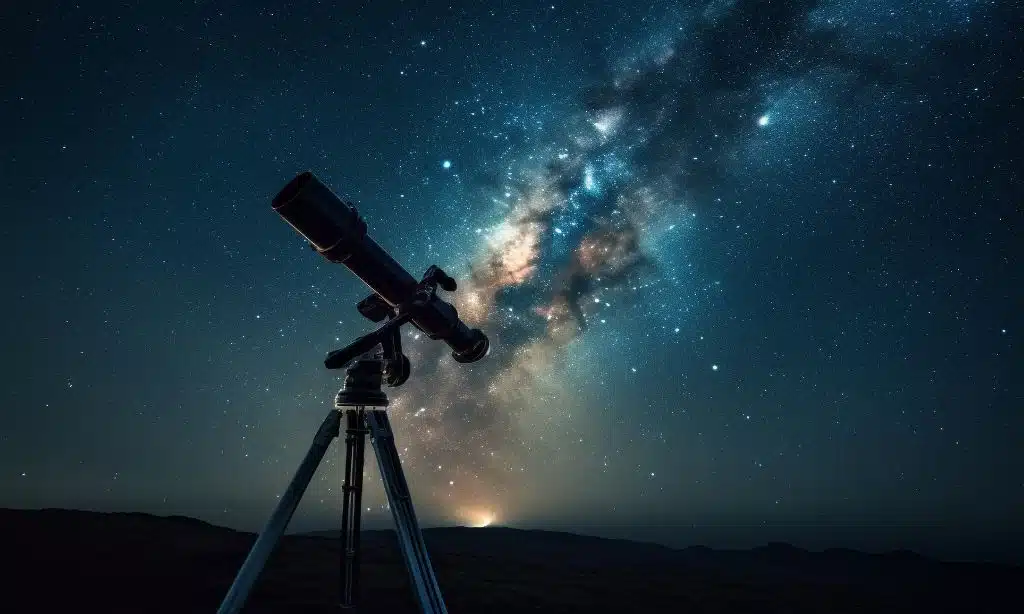
China will send a deep-space telescope. Engineers will fit it with a large mirror, high-resolution sensor, and spectrometer. Scientists at the Chinese Academy of Sciences will lead prototype development by 2028.
They plan to use reusable rockets and the Beidou system. Smart algorithms will map dark matter and dark energy across distant galaxies.
Data will flow through satellite internet service, linking ground teams with orbiting labs. Lessons from the solar wind magnetosphere ionosphere link explorer and jupiter probes will guide mission design.
China’s space technology drive taps the space race spirit and newer space science. The European Space Agency may share instruments and techniques. Amateur astronomers could watch cosmic events in real time.
Missions to Jupiter and Its Moons
Jupiter’s massive magnetosphere opens a wild dance with the solar wind. A probe will skim the planet’s ionosphere to map charged particles. Scientists plan to study magnetic storms and auroras like a cosmic light show.
A plasma drive could speed the craft through the system. Engineers will use a flyby booster near Venus then Earth to save fuel.
A lander might drop near Europa to check the icy shell. The chinese academy of sciences will lead the instrument suite. Teams will test a radiation detector to cope with harsh belts.
Missions like this push space exploration and space technology ahead. Researchers hope to spot clues for extraterrestrial life beneath frozen layers.
Earth Observation and Climate Monitoring Satellites
China plans a BRICS remote sensing satellite constellation. The network will share disaster emergency data. It will provide satellite services to BRI partner nations for sustainable agriculture, disaster prevention, and smart city initiatives.
Engineers will upgrade weather satellites from 2025 to 2035. They study the Fengyun 5 satellite in polar orbit and the Fengyun 6 satellite in geostationary orbit.
A global forum in April 2025 will bring 41 countries to discuss carbon monitoring satellite development, launch, and applications. The Solar wind Magnetosphere Ionosphere Link Explorer will map magnetosphere storms and track solar wind effects on the ionosphere.
Takeaways
Get ready for a thrilling launch into the unknown. We will push orbital mechanics to its limits with bold tests. Each probe will carry a telescope and sensor to map deep space. Teams will guide the craft with ground stations and robotic systems.
Kids and adults will cheer when new data lights up our screens. Big dreams about humans on the moon will grow with each mission.
FAQs on Space Missions China Plans For The Next 20 Years
1. What lunar exploration missions does China plan in the next 20 years?
It will send new lunar landers to the moon. Crew will ride the Mengzhou crewed spacecraft. They aim to walk on the moon. The Chinese Academy of Sciences will lead the work. This effort echoes the Artemis programme.
2. How will China study the sun-Earth link?
It will launch SMILE. SMILE is the solar wind magnetosphere ionosphere link explorer. It will chase charged particles near Earth. It will track the sun’s activity cycle. It uses new space technology. Scientists will use the data for space science.
3. Will China expand its space station efforts?
Yes. It will add more modules to the Tiangong space station’s lab. The new parts will host crewed spacecraft and landers. They will test tools for space science. Engineers will use this hub to try out new space technology. It will boost manned spaceflight skills.
4. How will China boost satellite networks?
It plans new geostationary satellites for communication, plus meteorological satellites to track weather. It will build satellite internet constellations. It also will test a spacesail constellation for solar system exploration. This mix will sharpen its space exploration edge.
5. What prototype development does China plan?
The China Manned Space Agency will test designs for crewed spacecraft. It will refine lunar landers and try engines on test flights. Prototype development will shape future space launches. Teams will learn from each run, like a trial by fire.
6. How do these missions fit China’s space programme?
They link lunar exploration, manned spaceflight, and space station’s growth. They tie into smart cities tech on Earth and the Belt and Road Initiative. China aims to lead in global space exploration.