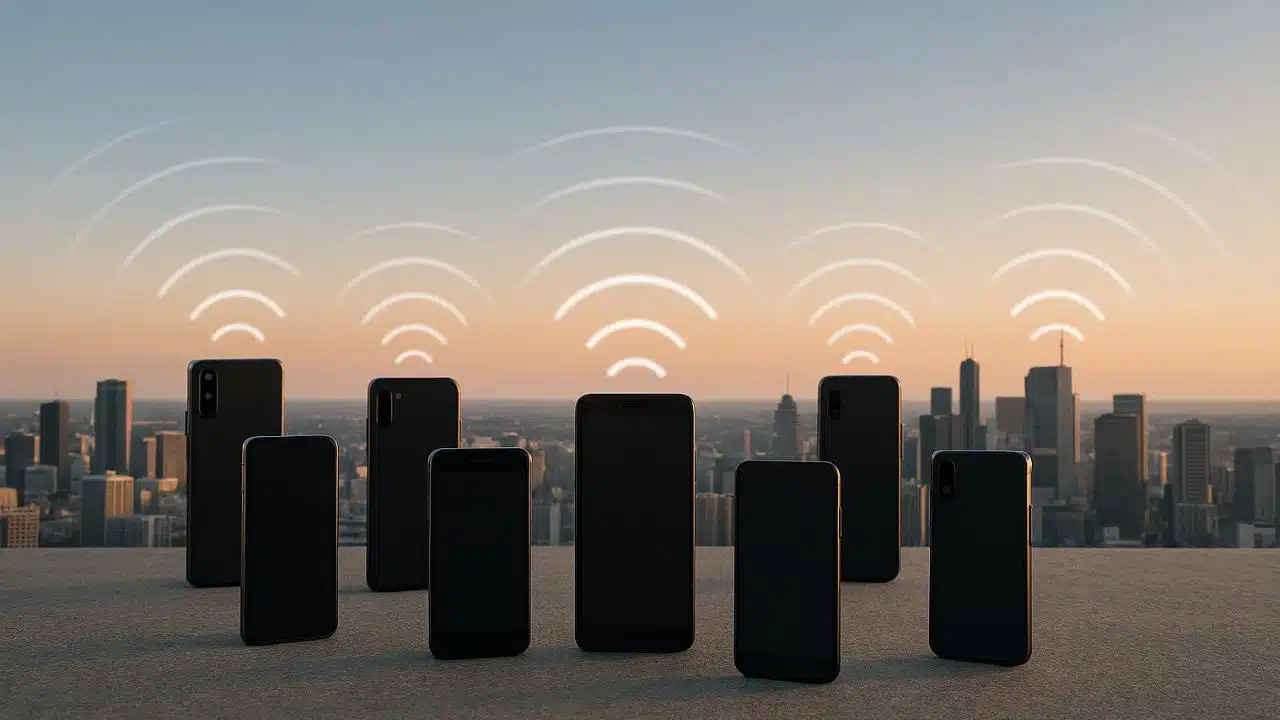
Smartphone radiation has become a renewed topic of discussion in 2025 as more consumers try to understand the potential long-term impact of electromagnetic field (EMF) exposure. Although all modern phones must comply with strict safety limits, their radiation output varies dramatically from model to model. This year’s updated testing data — especially SAR measurements from major regulatory bodies and independent labs — offers one of the clearest pictures yet of which devices produce the highest emissions when used next to the head and body.
Radiation concerns have grown due to the rise in 5G networks, heavier data use, and longer daily screen time. Many are now actively searching for lower-radiation phones, while others simply want to know whether their current device is on the high-SAR list. The following expanded guide breaks down what SAR ratings mean, how to interpret them correctly, which models currently sit at the top of the radiation charts, and what you can do to minimize exposure regardless of the phone you use.
Understanding SAR Ratings and Why They Matter
SAR — or Specific Absorption Rate — measures how much radio-frequency (RF) energy the human body absorbs when exposed to a device such as a smartphone. It is expressed in watts per kilogram and is commonly tested in two positions: against the ear during calls and against the body when placed in pockets or close to clothing. Regulatory agencies set strict SAR limits to ensure consumer safety. Although devices on the market cannot surpass these limits, SAR values help consumers understand relative exposure levels between different phones.
The FCC standard in the United States limits phones to 1.6 W/kg averaged over 1 gram of tissue, while many international standards allow up to 2.0 W/kg averaged over 10 grams. Even within these limits, SAR values differ widely. For example, recent FCC test data shows that the lowest head SAR recorded is about 0.13 W/kg, while the highest reaches 1.79 W/kg — a difference of more than twelvefold. This massive gap highlights why SAR data remains relevant.
SAR does not measure overall health risk or real-world usage exposure, and it does not represent an average value. It reflects the maximum that could be absorbed during the harshest conditions a phone might create. This makes SAR a helpful comparative tool but not a complete indicator of the health effects of RF energy. Nonetheless, for consumers wanting lower emissions, SAR is one of the most transparent ways to compare models.
Ear SAR vs Body SAR: What the Numbers Tell You
Most consumers only see one SAR number listed in a smartphone’s specifications, but modern testing actually evaluates two distinct metrics: Ear SAR and Body SAR.
Ear SAR measurements simulate a phone pressed directly against the ear during a voice call. Since call mode requires consistent transmission, ear SAR highlights how much radiation is present in the most traditional and prolonged form of phone use. Phones with high ear SAR generally pose greater exposure during long calls.
Body SAR is measured when the phone is placed against the torso, often simulating storage in a front pants pocket, shirt pocket, belt holster, or tight clothing. Body SAR often exceeds ear SAR, especially in 5G devices, because modern antenna systems work harder when the phone is confined or close to the body. For many users, body SAR is actually more important than ear SAR because phones spend far more time sitting against the body than against the ear.
Interestingly, some of the phones with the lowest radiation during calls — such as models with unusually low ear SAR — show extremely high body SAR values. This suggests that while they are safe to press against the head, they may not be the best choice for those who keep a phone in their pocket all day.
On the opposite end, certain smartphones have high radiation output in both head and body positions, making them consistently higher-emitting devices regardless of how they are used.
Smartphones With the Highest Radiation in 2025
The list below compiles devices tested in recent laboratory assessments and judged by their SAR values. Every phone listed meets legal safety standards, but these models stand out for relatively higher emissions compared to others. The expanded descriptions provide clearer insight into how each device performs in both ear and body SAR categories.
TCL 50 NXTPAPER 5G
- Ear SAR: 1.69
- Body SAR: 1.62
This device emits notably high radiation during phone calls, with ear SAR close to regulatory limits. Body radiation is slightly lower but still firmly in the high range, making it one of the stronger overall emitters in both categories.
Wiko VIEW PRIME
- Ear SAR: 0.19
- Body SAR: 1.62
Despite an extremely low ear SAR — making calls almost emission-free compared to other phones — its body SAR spikes dramatically. This imbalance means it is safe for long conversations but potentially concerning for pocket storage.
Nubia Neo 2 5G
- Ear SAR: 1.26
- Body SAR: 1.63
This model places in the middle-to-high range, with both ear and body SAR moderately elevated. While not the highest on the list, it remains a noticeable emitter.
Wiko Y61
- Ear SAR: 0.61
- Body SAR: 1.63
Another phone with moderate ear SAR but high body SAR. It is safer for calls but not ideal for those who wear their phone on the body throughout the day.
TCL 505
- Ear SAR: 1.27
- Body SAR: 1.65
This phone’s radiation output is balanced but consistently high, particularly during pocket use.
Nubia Focus Pro 5G
- Ear SAR: 1.39
- Body SAR: 1.67
A strong performer in both emission categories, this model remains on the higher end no matter how it’s used.
Doro 2404
- Ear SAR: 0.58
- Body SAR: 1.67
Relatively low emissions during calls, but significantly higher when placed near the torso.
Doro 361
- Ear SAR: 0.49
- Body SAR: 1.67
Similar to the Doro 2404, safe for calls yet high for body contact.
Motorola Edge
- Ear SAR: 1.79
- Body SAR: 1.68
This smartphone has one of the highest recorded ear SAR values, making it particularly strong-emitting during calls. Its body SAR is only slightly lower.
Motorola Moto G8
- Ear SAR: 0.62
- Body SAR: 1.68
With moderate ear emissions and high body SAR, this model lands in the mid-to-high radiation tier.
Wiko VIEW4
- Ear SAR: 0.38
- Body SAR: 1.69
Safe for head use but heavy on body emissions.
Motorola Edge Plus
- Ear SAR: 0.90
- Body SAR: 1.72
A fairly high-emitting phone with consistent values across both testing positions.
Motorola Moto G Pro
- Ear SAR: 0.90
- Body SAR: 1.72
Its SAR pattern matches the Edge Plus almost identically, placing it in the same moderate-high category.
Wiko TOMMY2
- Ear SAR: 0.59
- Body SAR: 1.73
Low-moderate during calls but noticeably high for body exposure.
Sharp Aquos C10 (SH-Z01)
- Ear SAR: 0.35
- Body SAR: 1.73
Extremely safe for calls but strong emissions when carried near the body.
Motorola Moto G7 Plus
- Ear SAR: 0.78
- Body SAR: 1.73
A balanced but high-range device overall.
Doro 5516
- Ear SAR: 1.03
- Body SAR: 1.74
Leans toward higher output, especially in pocket placement.
Wiko FREDDY
- Ear SAR: 0.60
- Body SAR: 1.77
Low for calls, high for body exposure.
HMD Global Nokia 6300
- Ear SAR: 1.09
- Body SAR: 1.77
A moderately high emitter across both measurement types.
Motorola Moto E6 Play
- Ear SAR: 0.55
- Body SAR: 1.78
Safe for head use but notably high against the torso.
Motorola One Fusion
- Ear SAR: 0.40
- Body SAR: 1.78
A phone that shifts from low to very high depending on use position.
Motorola Moto G8 Power
- Ear SAR: 0.91
- Body SAR: 1.79
High emissions overall, particularly when stored in pockets.
Doro 6520
- Ear SAR: 0.79
- Body SAR: 1.79
Balanced but high-emitting across both categories.
Wiko TOMMY
- Ear SAR: 0.75
- Body SAR: 1.81
Moderate against the ear, high against the body.
Wiko VIEW GO
- Ear SAR: 0.37
- Body SAR: 1.81
Low for calls, high for on-body storage.
Mobistel Cynus E8
- Ear SAR: 0.68
- Body SAR: 1.82
Moderate for calls, high for body contact.
ZTE Blade V70
- Ear SAR: 1.47
- Body SAR: 1.87
One of the highest-emitting models in terms of combined radiation.
Telekom T Phone Pro
- Ear SAR: 1.76
- Body SAR: 1.87
Another consistently high-emitting device, close to upper limits.
Gigaset GL7
- Ear SAR: 0.16
- Body SAR: 1.89
Almost zero emission during calls, but among the highest SAR readings ever recorded for on-body placement.
Nubia Z70S Ultra
- Ear SAR: 1.57
- Body SAR: 1.96
This model stands at the top of the 2025 list as one of the highest overall emitters, with particularly extreme body SAR.
How to Reduce Radiation Exposure Even If You Use a High-SAR Phone
Even if your phone appears on this high-radiation list, your habits significantly influence how much RF energy your body actually absorbs. Distance is the most effective protective factor. Keeping the phone away from your head and torso can dramatically reduce exposure. Using speakerphone, wired earphones, or a short-range Bluetooth accessory can help lower risk during long calls.
Avoiding prolonged storage of your phone in pants pockets, bra straps, or waistbands can reduce body SAR exposure. When signal strength is weak, phones automatically increase transmitting power, so limiting use in areas with poor reception can also reduce exposure.
Many users also activate airplane mode during sleep or while carrying the phone in a bag to eliminate unnecessary background transmissions. Simple adjustments like these often have a greater effect on daily exposure than choosing one phone over another.