Ever catch yourself scrolling on your phone with no real reason? Maybe you feel jittery when your device battery dips low. You might wake up and check social media sites before even getting out of bed.
These habits are common, but they can hurt your mental health and mood.
Studies show that too much screen time affects sleep quality, focus, and even self-esteem. This blog will call out ten signs it may be time for a digital detox. It also gives simple tips to break old technology habits—without feeling lost or bored.
Want to find better work-life balance today? Keep reading—you’ll spot some signs you didn’t know about!
Key Takeaways
- Many people touch their phones over 2,600 times each day and almost 80% check devices before getting out of bed. Too much screen time can hurt sleep, focus, mood, and self-esteem (2022 studies).
- Signs you need a digital detox include checking your phone often, feeling anxious when offline or with low battery, trouble focusing on tasks, poor sleep from blue light, skipping real-life talks for texting, less exercise, and using devices to avoid feelings.
- Over 60% of teens text instead of talking in person (Pew Research Center). About 36% of adults use devices to escape stress (Pew Research study from 2022).
- To start a digital detox: set device-free zones at home (like bedrooms), turn off extra notifications (people get over 60 alerts per day), replace screens with hobbies or outdoor fun like walking or reading physical books. Use tracking apps like Freedom or Apple Screen Time.
- Small steps help the most: try a screen-free morning or meal first. Even cutting just 30 minutes from daily device use boosts work-life balance and improves mental health fast.
10 Signs You Need a Digital Detox

Ever find yourself stuck scrolling through TikTok or swapping from one app to the next on your iPhone, Android, or tablet? If you keep falling down rabbit holes of social media sites and battle that itch for constant updates, it might be time to check your digital habits.
Constantly checking your phone
Grabbing your phone every few minutes? You are not alone. Many users, both Android and iPhone owners, feel a constant urge to peek at their screens. This habit has a name—The Just Checking Habit.
It is widespread on social media sites like Facebook and Instagram. People often check for new likes, texts or updates without even thinking about it.
It can also show up as Phantom Vibration Syndrome. You might sense your device buzzing when it isn’t! These short checks break focus during work or study time, leading to information overload and weak time management.
Studies say Americans touch their phones over 2,600 times each day, making digital habits hard to break. This non-stop screen time chips away at mental health and affects work-life balance too—sometimes in ways we do not notice until much later.
Feeling anxious when offline
Sweaty palms hit quick, right after the phone loses its signal. Thoughts run wild. You might wonder if someone needs you, or worry about missing posts on social media sites. FOMO (Fear of Missing Out) is real — studies show many people feel anxious even after a few minutes offline.
Heart racing and stress spike if you can’t find your device.
Social pressure from technology use gets heavy fast. Many people grab their phones, out of habit, every ten minutes just to check for messages or doom scrolling on TikTok and Instagram.
IOS users see “no service” and might panic about missing group chats or updates from friends. Low battery anxiety adds more stress, making hearts beat faster over each lost bar of power.
Experts link this online worry to mental health issues like low self-esteem and sadness caused by too much screen time correction: Technology shouldn’t control happiness—balance helps clear the mind and boost work-life balance in daily life.
Struggling to focus on tasks
Struggling to focus can feel like trying to read during a parade. Your brain jumps from one thing to the next, often because digital habits have shrunk your attention span. Each ping or buzz pulls you away, making it hard to finish even simple tasks.
This common effect of too much screen time shows up everywhere these days.
Endless scrolling on social media sites floods your mind with new facts every second. Information overload does more than slow you down—it can make everyday choices tough and leave you feeling anxious or stressed.
Procrastinating becomes easier than ever as alerts steal your focus away from school work, chores, or art projects. Take back control by being mindful of technology use; even small limits help clear the fog in your head and boost time management skills.
Experiencing sleep disturbances
Blue light from screens messes with your brain. Staring at your phone or tablet late at night tells your body to stay awake, even if you feel tired. A study in 2022 showed a strong link between social media sites and poor sleep quality.
Checking digital devices in bed can keep you tossing and turning for hours.
Scrolling TikTok or Instagram is not just harmless fun—it hurts rest time badly. You may wake up feeling exhausted, foggy, and cranky the whole day. Using technology before bedtime breaks healthy sleep cycles too fast.
Cut back on screen time to help both physical health and mental health rebound while you snooze.
Reaching for your phone first thing in the morning
Grabbing your phone as soon as you wake up can zap your focus. Instead of talking to family, or even thinking about what you are grateful for, your mind jumps straight to emails and social media sites.
Studies show that almost 80% of people check their devices before getting out of bed.
This habit increases screen time and hurts work-life balance right from the start. Swapping swiping for a few deep breaths or a quick stretch boosts mental health through the day. Small steps like leaving your device across the room make it easier to build new digital habits.
Feeling low battery anxiety
You watch your phone battery drop below 20 percent, and your heart races. Fear creeps in. What if it dies and you miss an important call or a message from friends on social media sites? You rush to find a charger, maybe stash a portable power bank in your bag every day—just in case.
Low battery anxiety can make screen time feel more like a chore than fun.
This panic is real for many people today, thanks to endless texts and alerts. Even short trips outside turn stressful without access to power outlets. Your digital habits get shaped by the need for constant connection, pushing work-life balance out of reach.
If running on low makes you sweat bullets, it’s time to pause and reflect on how much technology controls your peace of mind and mental health.
Using devices to avoid emotions
Many people reach for their phone, tablet, or laptop when sad, bored, or upset. Technology can act like a security blanket. Instead of facing hard feelings head-on, screens give us an easy way out.
Scrolling through social media sites for hours becomes normal. A Pew Research study from 2022 shows that 36 percent of adults check devices to escape stress.
Apps and games pull you away from uncomfortable emotions fast. Notifications ding and grab your attention before worry has a chance to grow roots in your mind. It feels easier than talking about worries with friends or family face-to-face.
Digital habits build up over time until avoiding feelings seems natural—almost like turning on autopilot after a tough day at school or work.
Social media sites like Instagram, TikTok, and Facebook show highlight reels. People snap their best moments, filter them, and post only the brightest smiles or most exciting trips.
It’s easy to fall into the “compare and despair” trap by scrolling these feeds late at night. You see someone else’s vacation or fancy gadget and start thinking you are not good enough.
Studies link this habit to low self-esteem, envy, shame, depression, and anxiety. Even big names like Essena O’Neill left platforms for mental health reasons back in 2015. Doom scrolling on your device can make you feel alone while sitting right next to friends or family.
Pausing social media can help break that feeling of always competing with strangers online—your screen time really shapes your mood more than you think!
Neglecting physical activity
Sitting with a device in your hand for hours can turn you into a couch potato before you know it. Scientists say too much screen time often replaces exercise, which hurts your health and mood.
The American Heart Association warns that kids and teens need at least 60 minutes of active play each day, but scrolling social media sites or playing games eats up those minutes fast.
Phones, tablets, and laptops creep into every part of the day—even breaks are spent online instead of moving around. This habit can lead to weight gain, sore muscles, tired eyes, and even lower energy levels.
Work-life balance goes out the window when connected devices fill personal time. If stretching or a quick walk sounds rare compared to daily scroll sessions—that’s not just bad luck; it’s proof digital habits have taken over physical activity almost completely.
Texting feels easier, yet real talks with friends and family slip away. Most times, screens steal our focus during dinner or even a quick chat at the table. People check their devices while loved ones sit inches away.
Today’s digital habits lead to less face-to-face time. Some folks now prefer sending emojis over showing a real smile.
Research by the Pew Research Center shows more than 60% of teens say they often text instead of talking in person. Staring at your screen cuts down on laughs you share with others in person, no matter how many online “likes” appear.
You might notice meals turn quiet as everyone keeps phones nearby, checking alerts between bites. These small choices can chip away at deep connections faster than you think—one notification after another steals moments that matter most.
How to Start Your Digital Detox
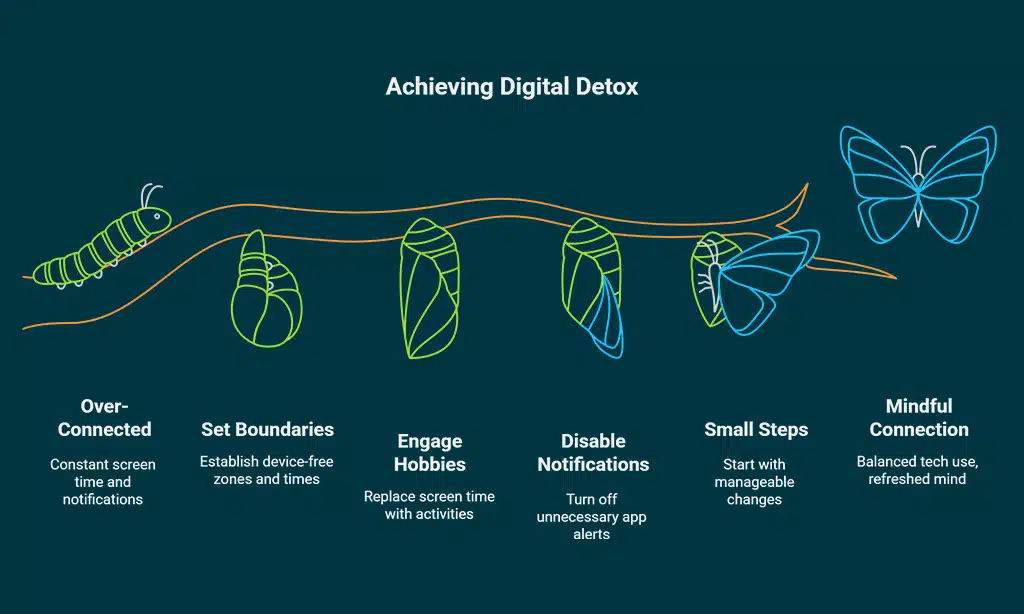
Starting your digital detox can feel like rebooting a slow computer—small changes, like using the Forest app or spending time with family outside, make it easier to pull the plug on screen time and refresh your mind, so read on for quick wins.
Set device-free times or zones
Make clear zones in your home where no devices are allowed. Try eating every meal without gadgets at the table. Many families see better conversations this way, and food tastes more real, too.
Leave phones outside bedrooms to help you sleep better. Studies show blue light can mess with rest. Give your brain a break from screen time before bed. Your mind will thank you, and so will your pillow—or maybe even your pet if they snooze beside you! Setting device-free times helps everyone focus on real-life connections, not just social media likes or messages that never end.
Replace screen time with hobbies or outdoor activities
Swap screen time for a walk in your local park, or pick up a real book and get lost in the pages. Nature walks clear your mind and put some pep in your step—no WiFi needed. Try reading physical books; flip each page instead of scrolling with your thumb.
Grab a notebook and journal about your day, or make doodles if words aren’t enough.
Learn new skills like baking cookies or planting sunflowers out back—your phone won’t grow flowers anyway! Jump into group activities, like soccer at the rec center or sidewalk chalk art with kids next door.
Each hour away from screens gives you more energy for hobbies that don’t need charging cables. Build memories outside, not just another streak on an app.
Turn off unnecessary notifications
Buzz, ping, ding—those pop-ups can break your focus and crank up stress. Disable push notifications on apps you do not need every hour. For example, leave alerts for calls or texts from close friends but silence shopping deals, game invites, and social media updates.
Studies in 2022 show the average person gets over 60 smartphone alerts each day. That is too much noise for peace.
Apple iPhones and Android phones let you manage which apps send alerts in their Settings menus. It only takes a minute to turn off these distractions. Your attention span will thank you later, seriously.
This step is key if you want your digital detox to work well right from the start!
Take small, manageable steps
Start with bite-sized changes. Give yourself a screen-free morning, then grow to phone-free meals or even a full device-free day. Use tools like Freedom or Apple Screen Time to track how many minutes you’re staring at your phone, and set clear limits.
Create simple goals, such as no social media before breakfast, turning off extra notifications, or putting your tablet in another room during dinner. Most people spend about 3 hours per day on their devices—just shaving off 30 minutes can make a difference.
Small steps build momentum fast—it’s like climbing stairs instead of jumping to the top floor.
Takeaways
Screens can zap your focus and tire you out. Spotting these warning signs means it’s time to pause. A digital detox can help refresh your mind, spark old passions, and bring friends closer.
Share your own tips or funny “phone fails” below—many folks are in the same boat! Unplug a little today; see how different tomorrow feels.
FAQs on Signs You Need a Digital Detox
1. How do I know if I need a digital detox?
If you can’t stop checking your phone, even when nothing’s new, that’s one sign. Trouble sleeping, feeling stressed after scrolling social media, or losing track of time online are more hints. If screens distract you from real life—friends, family, meals—it might be time.
2. What are the first steps to start a digital detox today?
Start simple: pick one hour each day and put your device away. Tell others what you’re doing so they don’t worry if you vanish for a bit. Try reading or taking a walk instead of watching videos or texting.
3. Will unplugging from devices help my mood and sleep?
Yes, it often does! Less screen time before bed helps many people fall asleep faster and wake up rested. Without constant buzzing notifications, your mind gets some peace too.
4. Is it hard to keep up with work during a digital detox?
You can still get things done—just set limits on work emails and calls outside office hours if possible. Let coworkers know about your plan so they understand why replies may take longer at night or on weekends.