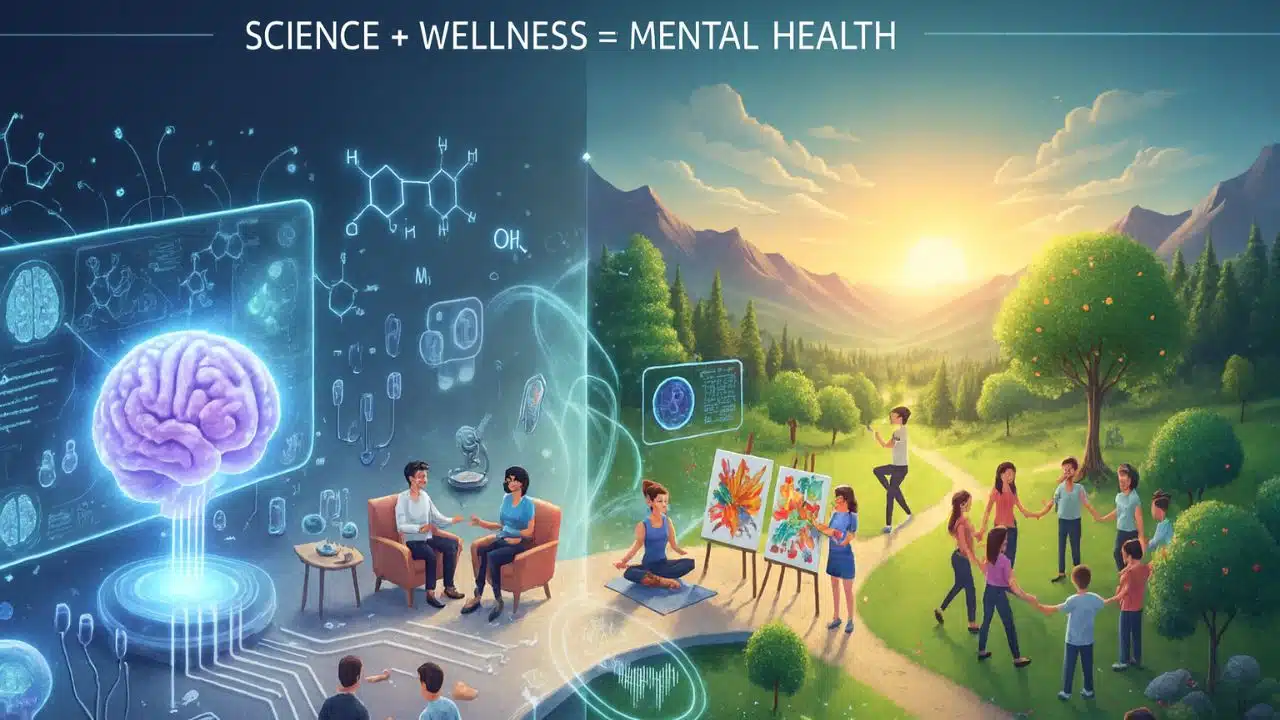
The way we talk about mental health has changed dramatically in a single generation. What was once whispered about in the margins has moved into the open, and along with that shift has come an explosion of new approaches to care. The familiar pairing of medication and talk therapy still forms the backbone, but researchers are probing deeper into the biology of emotion, the chemistry of resilience, and even the electricity of thought. We’re learning that mental health isn’t one road with one map but a network of paths, some ancient and some emerging, that can support people in ways more precise and personal than ever before.
The Evolving Role of Traditional Care
Talk therapy has always been about more than conversation. At its best, it’s a relationship that makes the invisible visible, offering structure for untangling the loops of thought that keep people stuck. For many, it’s the first and most enduring line of defense. Antidepressants and other medications have also reshaped lives, giving people the ability to stabilize enough to get through the day and reengage with work, family, and the simple rhythms of life. Yet these approaches aren’t universal cures. Medications can cause side effects that feel like a second illness layered on top of the first, and therapy often takes time to yield change, which can feel unbearable when someone is already overwhelmed.
That doesn’t diminish their importance. Instead, it underscores why mental health care is moving toward a more layered approach. Where one method may fall short, another can step in. A person might rely on medication to find balance, then use therapy to build insight and resilience, and later turn to lifestyle adjustments that lock in long-term stability. What’s emerging is less about discarding the old tools and more about expanding the set.
When Emotion Becomes Physical
The line between mental and physical health has always been thinner than we like to admit. Stress manifests as headaches or chest tightness, while anxiety can tangle digestion or sleep. Grief is a powerful example. People experiencing loss often describe not just emotional heaviness but physical symptoms that make daily life harder. Researchers are increasingly connecting the dots between grief and mental health, showing that prolonged grief doesn’t just live in the heart but alters brain circuits and stress hormones.
This biological perspective doesn’t diminish the personal meaning of grief. Instead, it highlights why some people feel trapped in their mourning while others eventually adapt. For those stuck in prolonged cycles, the problem isn’t lack of willpower or weak character but a nervous system caught in a pattern it can’t escape. This insight opens new doors for treatments that go beyond simply “talking it out.” When loss rewrites the body as much as the mind, care has to address both.
Technology as a New Ally
The past decade has brought a surge of interest in non-drug therapies that work directly with the brain. Transcranial magnetic stimulation, or TMS, is one that’s moved from research labs into clinics worldwide. The benefits of TMS therapy lie in its precision. By sending magnetic pulses into specific brain regions, it can help reactivate circuits dulled by depression. Patients often describe the sensation as light tapping, not painful, and many report improvement after a course of sessions.
TMS isn’t alone. Researchers are also studying transcranial direct current stimulation, which uses weak electrical currents, and deep brain stimulation, which involves surgically implanted electrodes for severe cases. Even vagus nerve stimulation, which taps into the body’s stress-control highway, has gained attention. None of these are cure-alls, and they’re not first-line treatments, but they represent a growing recognition that the brain can be influenced in ways beyond chemistry. For people who haven’t found relief through medication or therapy, these technologies can be a bridge back to stability.
The Rise of Lifestyle Medicine
While machines and devices grab headlines, quieter revolutions are happening in daily routines. Nutrition, exercise, and sleep hygiene are no longer treated as fringe topics in psychiatry but as core parts of treatment plans. A consistent sleep schedule can stabilize mood more effectively than some prescriptions, while aerobic exercise has been shown to rival antidepressants for mild to moderate depression. Nutrition plays a role too, with studies linking gut health to neurotransmitter balance.
These lifestyle-based strategies aren’t just add-ons, they can form the scaffolding that keeps other treatments in place. A person who commits to exercise may find therapy sessions more effective because their brain chemistry is already primed for plasticity. Someone who stabilizes their sleep may need a lower dose of medication, reducing side effects. The beauty of lifestyle medicine is its accessibility. It requires effort, but not always a prescription pad or high-tech equipment.
A Broader Definition of Healing
One of the most significant cultural changes in mental health care is the recognition that healing doesn’t look the same for everyone. For some, success means reducing symptoms enough to function again. For others, it means regaining joy, energy, and a sense of connection. Spiritual practices, community involvement, and creative expression are increasingly seen as legitimate parts of care. These elements can’t be measured in brain scans, but they help people integrate treatment into the fabric of life.
This broader definition matters because it moves the focus away from “fixing” a problem and toward supporting a whole person. Someone who paints through their sadness or volunteers as part of recovery isn’t sidestepping medical care, they’re complementing it. This shift aligns with what many clinicians are saying: that progress comes from weaving together medical, psychological, social, and personal threads.
Where the Future Points
The frontier of mental health treatment is moving in two directions at once. On one side, neuroscience is unlocking new ways to directly influence the brain’s wiring. On the other, everyday health practices are being elevated from optional extras to central strategies. The common thread is choice. People no longer have to settle for a single path. They can combine therapy, medication, brain stimulation, nutrition, exercise, and community, crafting an approach that reflects not just their diagnosis but their individuality.
It’s worth noting that stigma has diminished, though it hasn’t disappeared. Talking openly about depression or grief is no longer as taboo as it once was, and that openness is part of what allows these treatments to flourish. As culture normalizes the idea that mental health is health, demand for innovation will only grow, and with it, the chances that more people will find care that truly works for them.
Mental health care is no longer a narrow lane with limited options. It’s widening into a landscape where science, technology, and human experience converge. From the intimate conversations of therapy to the quiet hum of a TMS machine, from the discipline of exercise to the solace of community, every tool offers its own kind of relief. The future isn’t about replacing one method with another but about weaving them together, so each person can find a path that feels not just bearable but genuinely hopeful.