

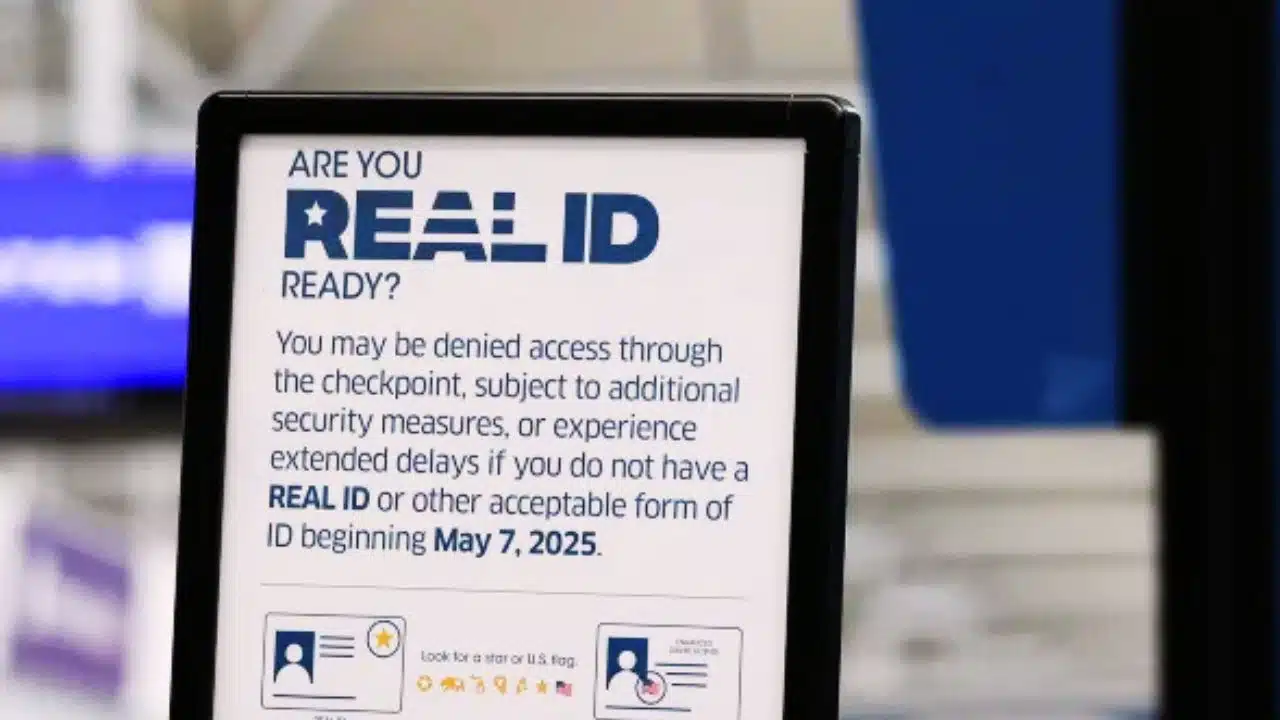
Starting Wednesday, May 7, 2025, the United States officially enforces the long-postponed REAL ID requirements for air travel. This policy affects millions of travelers nationwide and introduces a significant shift in what documents are acceptable for boarding domestic flights and entering certain federal facilities. Here’s a complete breakdown of what this means, what documents are accepted, and how travelers should prepare to avoid delays.
What Is REAL ID and Why Is It Being Enforced Now?
REAL ID is a federally mandated identification standard passed as part of the REAL ID Act of 2005. The law was introduced based on recommendations from the 9/11 Commission to enhance the security of state-issued identification cards and driver’s licenses.
A REAL ID is easily recognizable by a star symbol located in the upper right-hand corner of the card, no matter which U.S. state issued it. Some states issue Enhanced Driver’s Licenses (EDLs) that are also compliant, even though they display a U.S. flag instead of a star.
These IDs have stricter identity verification requirements than standard state-issued licenses and are considered valid for the following:
-
Boarding domestic flights within the U.S.
-
Entering certain secure federal buildings
-
Accessing military bases and nuclear power plants
What Changes on Wednesday, May 7, 2025?
While May 7 is not a deadline to obtain a REAL ID, it marks the start of enforcement nationwide. This means TSA officers at every airport in the U.S. will begin checking for REAL ID-compliant identification for travelers 18 and older.
If you don’t yet have a REAL ID, you can still fly, but there are a few important caveats:
-
You will not be turned away at security checkpoints, according to TSA officials.
-
You may, however, be subjected to additional screening, including identity verification and more detailed inspection processes.
Steve Lorincz, TSA’s Deputy Executive Assistant Administrator for Security Operations, clarified this point in a recent interview with CNN:
“We will process you, and you will not be turned away. It might take some additional time, but we’re going to do it efficiently. We are fully staffed at all locations across the country.”
Why Has the REAL ID Deadline Been Delayed for So Long?
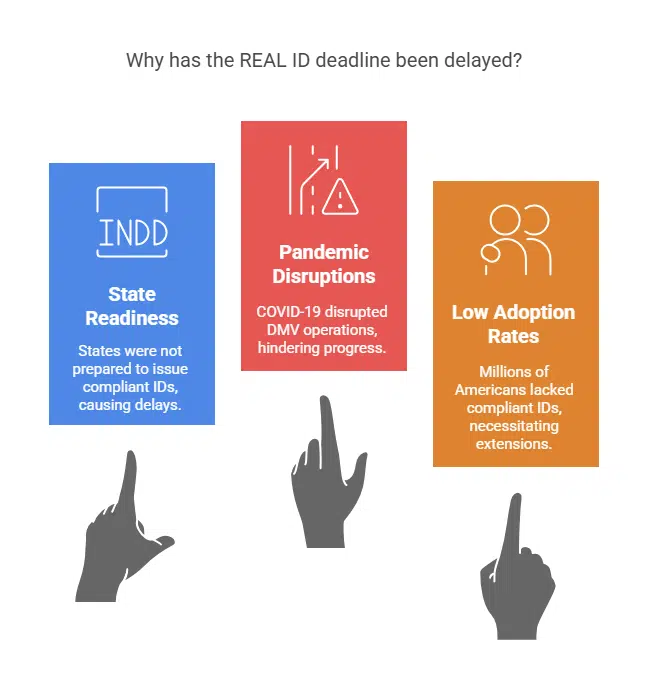
The REAL ID Act was passed in 2005, yet its enforcement has been delayed multiple times due to logistical challenges and public readiness. Initial deadlines were extended due to:
-
States not being ready to issue compliant IDs.
-
COVID-19 pandemic disruptions in DMV operations.
-
Low adoption rates, with millions of Americans still not in possession of compliant IDs.
Even now, in 2025, the TSA estimates that about 19% of domestic travelers still do not have a REAL ID-compliant identification, leaving a significant portion of the population at risk of airport delays.
Other IDs Accepted at TSA Checkpoints
If you don’t yet have a REAL ID, all is not lost. TSA still accepts several alternative forms of valid identification, including:
-
U.S. passport or U.S. passport card
-
Permanent Resident Card (Green Card)
-
DHS Trusted Traveler cards (Global Entry, NEXUS, SENTRI, FAST)
-
Border Crossing Card
-
State-issued Enhanced Driver’s License
-
U.S. military ID (active duty or retired)
-
Veteran Health Identification Card (VHIC)
-
Transportation Worker Identification Credential (TWIC)
If you arrive without any valid ID, TSA will attempt to verify your identity through publicly available databases. If successful, you’ll be permitted to proceed but should expect more intensive screening.
More details are available at: tsa.gov/travel/security-screening/identification
Airport Readiness and Staff Support
TSA has confirmed it is fully staffed across all major airports, including high-traffic hubs such as JFK, LAX, ATL, O’Hare, and Newark. Additionally, airports will have designated staff at checkpoints to assist travelers with ID questions and to guide those needing extra screening.
Some airports may introduce dedicated lines for passengers without REAL IDs, aiming to keep the process smooth and organized.
The TSA reiterated its message on social media:
“Plan ahead, arrive early, and arrive prepared.”
Officials also urged travelers to use TSA’s interactive REAL ID readiness tool to check their compliance status before arriving at the airport.
How to Get a REAL ID: Step-by-Step
Each state has its own process for issuing REAL IDs, but the general documentation requirements are:
-
Proof of identity (e.g., valid U.S. passport or birth certificate)
-
Proof of Social Security number (e.g., Social Security card or W-2 form)
-
Two documents proving state residency (e.g., utility bills, lease agreements)
-
Proof of lawful status in the U.S. (if not a citizen)
The application fee varies by state but typically aligns with standard license renewal or replacement costs. Some states also offer online pre-application portals to speed up the process.
Important tip: TSA does not accept temporary paper IDs as valid identification for flying.
How States Are Preparing for the REAL ID Surge
States are adjusting their DMV operations to handle the increased demand:
-
California DMV has extended weekday hours and opened select offices on Saturdays.
-
New York DMV warns of increased foot traffic and advises early scheduling for appointments.
-
Oklahoma DMV is encouraging applicants to apply at least four weeks ahead of their travel dates.
What Travelers Should Do Now
With the new rules in effect, here’s what TSA recommends:
- Arrive at least 2.5 to 3 hours early, especially if you’re unsure about your ID
- Bring a backup form of identification, like a passport, if you haven’t received your REAL ID
- Avoid temporary IDs, which TSA does not recognize
- Visit your state DMV’s website to learn what documents you need and how long it may take to receive your REAL ID by mail
Final Reminder: No One Gets Turned Away on Day One
Despite the official enforcement date being May 7, TSA and DHS have made it clear that no traveler will be denied entry or turned away from flights on day one of the enforcement rollout. Instead, the agency is focusing on:
-
Educating the public
-
Streamlining airport operations
-
Encouraging long-term compliance with federal security standards
But enforcement will gradually become more stringent over time. So while the grace may be temporary, the rule is here to stay.

























