

Have you ever heard someone say personal injury claims are just a way to make quick money? Maybe you’ve even believed it yourself. The truth is, there’s a lot of misinformation out there about personal injury law in Australia.
These myths can leave people confused, frustrated, and even hesitant to seek the compensation they deserve.
You might be surprised to learn that most personal injury cases settle without ever going to trial. Yet, many still think lawsuits are long, messy battles in court. This blog will clear up 10 common myths about personal injury claims so you can understand your rights better.
Are you prepared to distinguish fact from fiction? Keep reading!
Debunking Myth 1: Personal Injury Claims Are Frivolous
Many people think personal injury claims are frivolous or abused for quick payouts. This is far from the truth. Most claims are filed to hold responsible parties accountable for negligence.
They help victims recover medical expenses, lost wages, and emotional distress caused by accidents. Personal injury law promotes safety and prevents future harm by ensuring accountability.
Claims often involve serious injuries, not minor disputes. Insurance companies scrutinize claims thoroughly, making it unlikely for baseless cases to succeed. Compensation supports recovery, not greed.
Debunking Myth 2: All Personal Injury Cases Require a Trial
Not every personal injury case ends up in a courtroom. In fact, most cases are resolved through negotiation and settlement. Trials can be lengthy and expensive, making settlements the preferred option for both parties involved.
Experienced personal injury lawyers often work to reach fair agreements without stepping into a courtroom.
Insurance companies usually aim to avoid trials, as they prefer efficient resolutions. Lawyers use their expertise to assess claim value and negotiate with responsible parties. This process saves time and reduces stress for everyone involved.
Settlements also allow injured individuals to receive compensation faster, helping them cover medical expenses or lost wages sooner rather than later.
Debunking Myth 3: Managing Personal Injury Claims Without Legal Help
Handling personal injury claims without legal help is like walking into a storm without an umbrella. Insurance companies have skilled lawyers working to minimize payouts. Without professional representation, you risk settling for less than your claim is worth.
Lawyers protect your rights and assess the true value of your case, including medical expenses, lost wages, and emotional distress. They gather evidence like medical records, witness statements, and police reports to build a strong case.
Legal expertise ensures you avoid costly mistakes during negotiations or court trials. Trying to manage it alone often leads to frustration and unfair settlements.
Debunking Myth 4: No Time Limit to File Personal Injury Claims
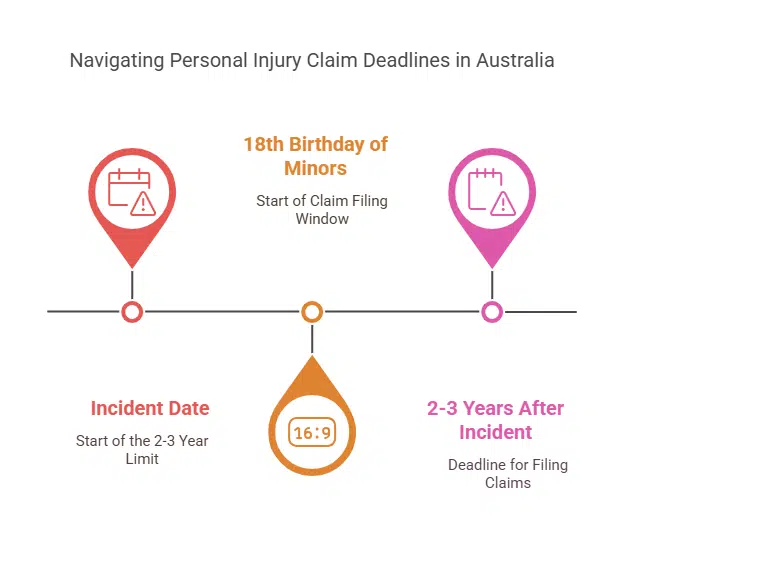
Many people think there’s no rush to file personal injury claims. That’s not true. Every state in Australia has a statute of limitations, a strict deadline for filing claims. Typically, you have 2–3 years from the date of the incident to take legal action.
Missing this window means losing your right to compensation completely.
The clock begins to tick for minors on their 18th birthday. Minors have a limited time to file claims after turning 18. Insurance companies and responsible parties rely on these deadlines to avoid paying out old claims.
Gathering evidence like medical records or witness statements early increases your chances of a fair settlement. Acting fast protects your rights and ensures you don’t miss out on what you deserve.
Debunking Myth 5: Quick and Easy Resolution of Personal Injury Claims
The idea that personal injury claims resolve quickly and easily is a common misconception. These cases often involve complex liability issues, detailed evidence gathering, and lengthy negotiations with insurance companies.
Severity of injuries plays a big role too—more serious cases take more time to assess medical records, witness statements, and police reports.
Legal expertise is crucial here. Experienced personal injury lawyers know how to navigate the process efficiently but still set realistic expectations for clients. Even minor injuries can drag on if there’s disagreement over who’s at fault or what constitutes fair settlement terms.
Quick resolutions are rare; patience and thorough preparation are key to achieving favorable outcomes in these claims.
Debunking Myth 6: Compensation Is Only for Physical Injuries
Many people think personal injury claims only cover physical harm, but that’s far from true. Emotional distress, psychological trauma, and even the loss of enjoyment of life are also compensable.
For example, if an accident leaves you dealing with anxiety or depression, those emotional struggles can be part of your claim. Medical expenses and lost wages are common, but pain and suffering, or punitive damages for gross negligence, show how broad compensation can be.
Insurance companies often downplay these non-physical aspects, yet they’re just as valid. Don’t let anyone tell you your mental health struggles don’t count.
Debunking Myth 7: The High Cost of Personal Injury Lawyers
Think personal injury lawyers will drain your bank account? Think again. Many law firms work on a “no win, no fee” basis. This means you pay nothing upfront. Legal fees only come into play after they secure your compensation.
No upfront costs reduce financial stress. This arrangement makes legal help accessible, no matter your financial situation. Experienced personal injury lawyers focus on getting you a fair settlement.
They handle negotiations, liability issues, and legal processes, so you don’t have to.
Debunking Myth 8: Guaranteed Compensation in Personal Injury Cases
Many people assume that filing a personal injury claim guarantees a payout. That’s far from the truth. Compensation depends on the specifics of your case, like the severity of injuries, the evidence presented, and liability issues.
Insurance companies often work hard to minimize payouts, which can leave you with less than you deserve. No two cases are the same, and there’s no one-size-fits-all outcome. A fair settlement isn’t handed over on a silver platter.
It takes negotiation, legal expertise, and sometimes, a court trial. Even with strong evidence, there’s no promise of quick or large financial gains. Hiring an experienced personal injury lawyer can help level the playing field, but it doesn’t ensure a win.
Compensation covers medical expenses, lost wages, and pain and suffering, but it’s not automatic. Don’t fall for the myth that every claim equals a guaranteed payday.
Debunking Myth 9: Tax Implications on Personal Injury Settlements
Personal injury settlements in Australia are often tax-free. The Australian Tax Office (ATO) treats compensation for physical injuries, pain and suffering, or emotional distress as non-taxable income.
This includes amounts received for medical expenses and loss of enjoyment of life.
However, specific parts of a settlement may attract taxes. Punitive damages or interest earned on the settlement could be taxable. It’s vital to consult a personal injury lawyer or tax professional to clarify any grey areas and avoid unexpected surprises with the ATO rules.
Debunking Myth 10: Filing a Claim Damages Relationships
Many fear filing a personal injury claim will wreck relationships with employers or acquaintances. This isn’t always true. Most claims aim to hold responsible parties accountable, not blame individuals directly.
Insurance companies often handle settlements, keeping emotions at bay.
Clear communication and professionalism help maintain respect during the process. Many find that addressing issues through legal channels strengthens mutual understanding rather than causing harm.
Legal guidance ensures fairness without damaging connections unnecessarily.
Understanding the Impact of Personal Injury Law
Personal injury law plays a vital role in holding negligent parties accountable. It ensures victims receive fair compensation for their losses, like medical expenses and lost wages.
This legal framework helps injured individuals recover and promotes safety standards across communities by discouraging reckless behavior.
Most personal injury cases are resolved through negotiation with insurance companies rather than court trials. Legal expertise is crucial here to assess claim value accurately and navigate liability issues.
A skilled personal injury lawyer can guide you through gathering evidence, such as medical records or witness statements, ensuring your rights remain protected throughout the process.
Essential Factors in Personal Injury Claims

Time limits, evidence, and deadlines shape your claim’s success—click to learn why they matter.
Time Limits and Legal Deadlines
In Australia, personal injury claims have strict time limits. You typically have three years from the injury date to file a claim. Missing this deadline can mean losing your right to compensation.
Evidence collection should start early, as medical records, witness statements, and police reports are crucial. Legal professionals help you navigate these deadlines, ensuring your claim stays on track.
Always act promptly to protect your rights and seek a fair settlement.
Importance of Evidence and Documentation
Evidence and documentation are the backbone of personal injury claims. Medical records, incident photographs, and witness statements strengthen your case. Proper documentation supports your claim and helps track medical treatment.
Clear photographic evidence of the scene provides compelling proof. Collecting evidence promptly avoids loss or destruction. Strong documentation can make or break your claim, especially when dealing with insurance companies.
Accurate records ensure a fair settlement, covering medical expenses, lost wages, and emotional distress. Without solid evidence, proving pain and suffering or loss of enjoyment of life becomes challenging.
Documentation also helps assess the claim’s value and handle liability issues effectively.
The Necessity of Legal Expertise in Personal Injury Cases
Personal injury cases often involve detailed legal processes that can be hard to handle alone. Without a lawyer, assessing damages, gathering evidence like medical records and witness statements, or negotiating with insurance companies becomes tricky.
Lawyers bring expertise in evaluating claims for fair settlements covering medical expenses, lost wages, and even emotional distress. Studies show having legal representation leads to higher compensation payouts.
They also identify liability issues and ensure deadlines are met under the statute of limitations. Handling these cases alone risks losing out on rightful compensation or making costly errors during negotiations or trials.
Experienced personal injury attorneys provide the guidance needed for a favorable outcome while reducing stress on the claimant.
Negotiating a settlement in a personal injury claim can feel like walking a tightrope. Insurance companies often aim to minimize payouts, making it tough to secure a fair settlement without legal help.
Many law firms offer “no win, no fee” arrangements, reducing financial stress for claimants. Settlements are usually faster and less expensive than going to court. Evidence like medical records, witness statements, and police reports strengthens your case.
Lawyers use this proof to assess claim value and tackle liability issues. Emotional distress, pain and suffering, and lost wages are all factored into compensation. Alternative dispute resolution methods, like mediation, are encouraged before lawsuits.
Legal guidance ensures you understand your rights and maximizes your payout.
Circumstances Leading to Court Trials in Personal Injury Cases
Court trials in personal injury cases are rare but can happen. Most claims settle outside court through negotiation or mediation. Trials occur when parties cannot agree on fault, compensation, or liability issues.
Insurance companies may dispute the claim’s value, leaving no choice but to proceed to trial.
Complex cases often involve multiple responsible parties or unclear evidence. If negligence is disputed, a judge or jury will decide. Severe injuries with long-term effects, like chronic health conditions or loss of enjoyment of life, may also lead to trials.
In such cases, expert testimony and thorough documentation are critical for a favorable outcome.
Pro Tips to Avoid Mistakes in Personal Injury Claims
Filing a personal injury claim can feel like walking through a maze blindfolded. Avoid common pitfalls with these practical tips to protect your rights.
- Act quickly to meet the statute of limitations. Missing deadlines can ruin your chance at a fair settlement.
- Gather evidence immediately. Take photos, collect witness statements, and secure police reports.
- Keep detailed medical records. Document all treatments, expenses, and how injuries affect daily life.
- Avoid talking to insurance companies alone. They often try to minimize payouts.
- Hire an experienced personal injury lawyer. Legal expertise can make or break your case.
- Don’t settle too fast. Quick offers rarely cover long-term medical expenses or lost wages.
- Be honest about your injuries. Exaggerating claims can hurt credibility and outcomes.
- Track all financial losses. Include medical bills, missed work, and even emotional distress.
- Avoid social media posts about your case. Insurers may use them against you.
- Don’t ignore minor injuries. They can worsen over time and impact your claim value.
- Understand liability issues. Knowing who’s at fault strengthens your position in negotiations.
- Stay organized with documentation. Keep receipts, bills, and correspondence in one place.
- Don’t sign anything without legal advice. Contracts may limit future claims or rights.
- File a claim even if you’re partly at fault. Comparative negligence laws may still allow compensation.
- Don’t skip medical appointments. Gaps in treatment can suggest your injuries aren’t serious.
- Be cautious about recorded statements. They can be twisted to reduce your settlement offer.
- Choose law firms offering free consultations. It ensures you get guidance without upfront costs.
Takeaways
Personal injury claims are more than just legal battles—they’re about getting what you deserve. Many myths cloud the truth, making victims hesitant or misinformed. Debunking these misconceptions is key to understanding your rights and options.
Seeking a skilled personal injury lawyer can turn the tide in your favor. Time limits, evidence collection, and fair negotiations all play a role. Don’t let false beliefs stop you from pursuing justice.
Take control of your claim today and secure the compensation you need.






















