

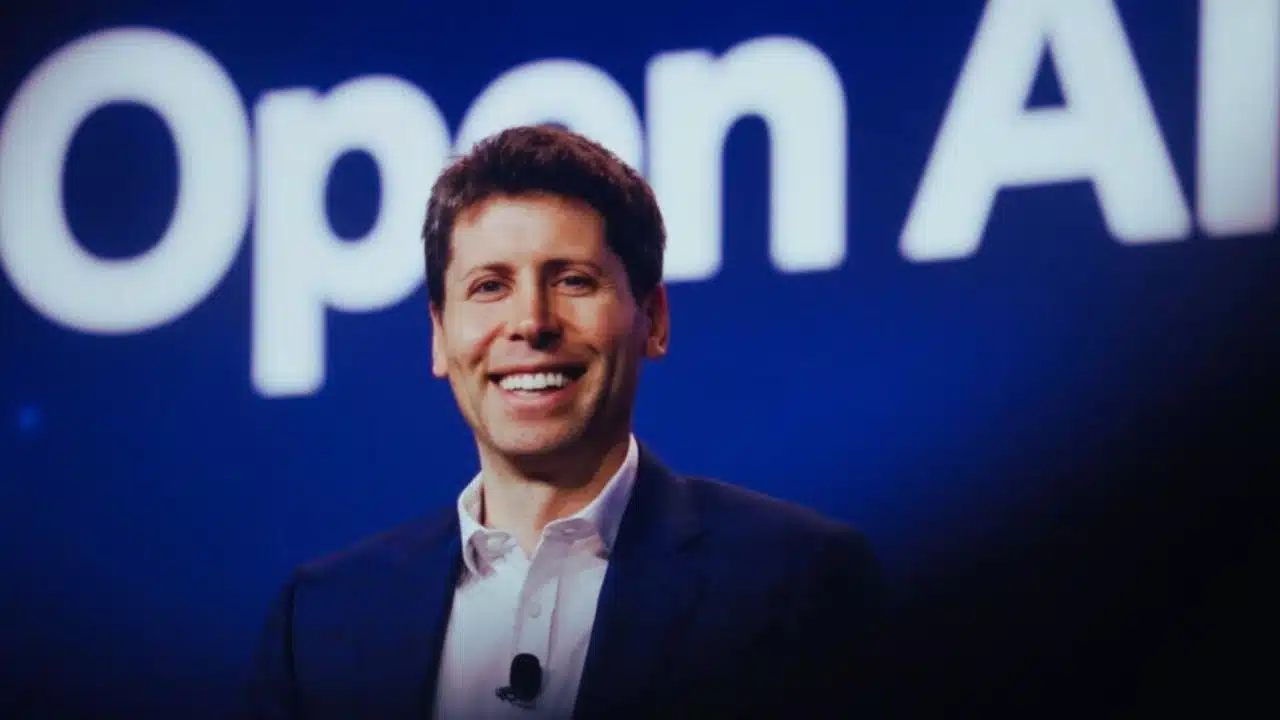
OpenAI, the artificial intelligence powerhouse behind ChatGPT, confronts an unprecedented financial challenge as it attempts to scale its ambitious infrastructure expansion plans. According to a recent analysis by HSBC Global Investment Research, the company faces a staggering $207 billion funding shortfall by 2030, threatening not only its own survival but potentially impacting the broader technology ecosystem that has bet heavily on its success.
The Astronomical Costs of AI Dominance
The San Francisco-based AI leader has committed to cloud computing contracts on a scale never before seen in the technology industry. OpenAI has locked in $300 billion with Oracle, $250 billion with Microsoft, and $38 billion with Amazon Web Services for computing services—deals that reflect CEO Sam Altman’s vision of building the world’s most powerful AI infrastructure. However, these commitments have created what HSBC analysts describe as a structural “compute funding hole” that threatens the company’s financial viability.
HSBC estimates that OpenAI’s cloud and AI infrastructure costs will reach $792 billion between late 2025 and 2030, with total computing commitments projected to hit a mind-boggling $1.4 trillion by 2033. The sheer magnitude of these expenses reflects the cash-intensive nature of modern AI development, which requires unprecedented levels of computational power to train and operate increasingly sophisticated models.
Revenue Falls Far Short of Expenses
Despite ChatGPT’s meteoric rise to 800 million users worldwide, OpenAI remains deeply unprofitable. The company generated $4.3 billion in revenue during the first half of 2025 but recorded a $7.8 billion loss due to research and development costs and operational expenses. The fundamental problem lies in conversion rates—only 5 percent of ChatGPT’s user base, approximately 40 million people, currently pay for subscriptions.
Even with optimistic projections that account for growing the subscriber base to 3 billion users by 2030—representing 44 percent of adults aged 15 and older globally—OpenAI would generate an estimated $213 billion in revenue. Yet this figure still leaves the company $207 billion short of what it needs to execute its expansion plans, according to HSBC’s analysis. Current revenue estimates suggest OpenAI is operating at an annual run rate of approximately $10 to $12 billion as of mid-2025, nowhere near sufficient to cover a $60 billion annual compute bill.
The Stargate Project and Global Expansion
Central to OpenAI’s strategy is the vertically integrated “Stargate” project, a collaboration with Oracle and SoftBank to invest up to $500 billion in global data centers. The company has announced five sites in Texas and New Mexico, with additional centers under development in the United Arab Emirates, India, the United Kingdom, and South Korea. The total announced data center capacity exceeds 12 gigawatts, requiring an estimated $50 billion to $60 billion per gigawatt to build.
Altman recently informed employees that OpenAI plans to secure 250 gigawatts of computing capacity by 2033, which would require an astronomical $12.5 trillion to $15 trillion in total investment. Beyond data centers, OpenAI has signed large-scale GPU supply agreements with NVIDIA and AMD while simultaneously developing its own custom chips with Broadcom, slated for deployment from the second half of 2026 through 2029.
Industry Skepticism Grows
The technology industry increasingly questions the feasibility of OpenAI’s infrastructure ambitions. Unlike established Big Tech giants such as Microsoft, Google, or Amazon, OpenAI lacks the financial reserves and diversified revenue streams necessary to weather prolonged periods of negative cash flow. The company relies entirely on external funding, making it vulnerable to shifts in investor sentiment or macroeconomic conditions.
HSBC projects that OpenAI’s cumulative free cash flow will remain negative through 2030, meaning the company will burn cash for at least the next five years under current trajectories. This assessment has raised concerns among investors and partners who have already committed billions to the AI leader. Credit rating agencies have also flagged risks, with Moody’s warning that Oracle’s massive deal with OpenAI could stress its own finances due to counterparty risk and increased leverage.
Potential Pathways to Close the Gap
HSBC analysts have identified several potential strategies OpenAI could pursue to bridge the funding shortfall. The company could dramatically improve its conversion rates—doubling the proportion of paid subscribers from 10 percent to 20 percent could add $194 billion in revenue. Another half-billion users beyond current projections would generate an additional $36 billion boost.
OpenAI could also diversify its revenue streams by capturing a larger share of digital advertising spending, similar to how Google monetizes its search platform. The company might extract extraordinary efficiencies from its computing operations, reducing costs while maintaining performance. Additionally, OpenAI could raise more capital from existing shareholders like Microsoft and SoftBank, increase external debt through bond issuances, or seek sovereign-level capital backing from governments interested in AI leadership.
Implications for the Broader Tech Ecosystem
OpenAI’s financial challenges carry significant implications beyond the company itself. Major technology companies including Microsoft, Amazon, Oracle, NVIDIA, and AMD have made substantial bets on OpenAI’s success through cloud contracts, equity investments, and hardware supply deals. Microsoft, which has invested heavily in OpenAI and integrated its technology across Office and Bing, faces particular exposure.
If OpenAI cannot secure the necessary funding, it may need to scale back its commitments to cloud providers, potentially leaving Oracle with underutilized data center capacity built specifically for this partnership. The $300 billion Oracle deal beginning in 2027 represents such a large portion of Oracle’s revenue pipeline that analysts have identified it as a material risk to the cloud provider’s financial health. Similarly, NVIDIA and AMD could see demand for high-end AI chips soften if OpenAI reduces its infrastructure buildout.
The Profitability Question
The fundamental question facing OpenAI is whether its business model can ever generate sufficient returns to justify the massive capital investments required. Unlike previous technology trends such as cloud computing or social media, AI infrastructure operates at a scale that demands continuous, enormous capital infusions just to maintain competitive positioning. Training cutting-edge models requires thousands of advanced GPUs running for extended periods, with each training run potentially costing tens of millions of dollars.
Even under bullish scenarios where OpenAI successfully converts millions of additional users to paid subscriptions, captures advertising revenue, and improves operational efficiency, HSBC suggests the company would still need fresh capital injections beyond 2030 to sustain its growth trajectory. This reality raises questions about whether the current AI business model is fundamentally sustainable or if the industry needs to discover new monetization approaches that better align revenue with costs.
Risks and Uncertainties Ahead
OpenAI faces numerous risks beyond pure financing challenges. The company operates in an unproven market where revenue models remain experimental and subject to rapid change. Potential market saturation for AI subscriptions could limit growth if competitors offer similar capabilities at lower prices or for free. Regulatory scrutiny from governments concerned about AI safety, data privacy, and market concentration could impose additional compliance costs or restrict certain business practices.
The company must also contend with intense competition from well-funded rivals including Google’s DeepMind, Anthropic, and emerging open-source alternatives that could commoditize AI capabilities. If AI technology becomes widely available at minimal cost, OpenAI’s ability to charge premium prices for subscriptions and API access would be severely undermined. Additionally, technical challenges such as hitting plateaus in model performance or discovering that scaling beyond current levels yields diminishing returns could force the company to reconsider its infrastructure-heavy strategy.
What One Unknown Parameter Means
HSBC’s analysis includes an important caveat about “one unknown parameter”—the flexibility OpenAI may have to adjust its commitments versus effective demand or financial capacity. This suggests that the cloud computing contracts, while announced at massive dollar figures, may contain provisions allowing OpenAI to scale usage based on actual needs and available funding. If these agreements include flexibility clauses, OpenAI could potentially reduce its near-term spending without breaching contractual obligations, providing breathing room to align expenses with revenue growth.
However, such flexibility likely comes with tradeoffs. Reducing cloud usage could limit OpenAI’s ability to train new models, serve existing users, or expand into new markets, potentially ceding competitive ground to rivals. Cloud providers structured these massive deals assuming certain usage levels, and significant reductions could trigger price increases or other unfavorable terms.
The Path Forward
As OpenAI navigates this unprecedented financial landscape, the company appears to be pursuing a multi-pronged approach. Confirmed investments total $160 billion, including $100 billion from NVIDIA and $40 billion from SoftBank, providing some near-term runway. The company continues developing proprietary chips to reduce long-term dependence on expensive third-party GPUs. OpenAI is also exploring new product categories and enterprise services that could command higher prices than consumer subscriptions.
The coming years will test whether Altman’s ambitious vision of building transformative artificial general intelligence can be reconciled with the financial realities of running a sustainable business. With total free cash flow projected to remain negative through 2030, OpenAI must either convince investors that profitability awaits beyond that horizon or fundamentally restructure its approach to align costs with achievable revenues. The $207 billion funding gap represents not just a financial challenge but a referendum on whether the current AI development paradigm can deliver returns commensurate with the extraordinary capital it consumes.





















