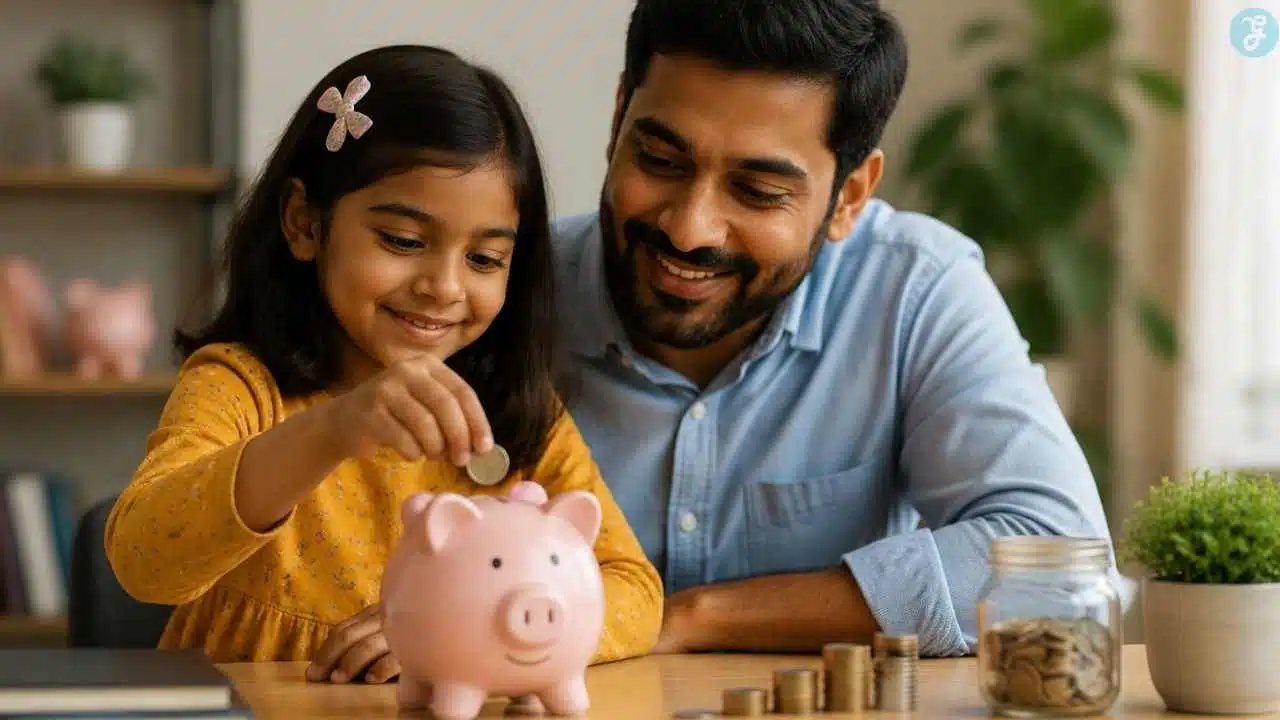
As you shape your child’s core values and skills for a brighter future, financial literacy plays a crucial role. Whether it is pocket money or gifts from grandparents, a savings account helps children learn money management at an early age. It brings structure to managing their savings to prepare them for financial planning in adulthood. Learn how starting early pays off in this blog about a bank account for kids.
What is a bank account for kids?
A bank account for kids, often called a minor savings account, is designed for children to save and manage money under the supervision of a parent or guardian. Some banks like IDFC FIRST Bank have a self-operated savings account option for kids aged 10 years and above.
A savings account introduces kids to basic banking services. They learn basics about how to store money, transact, and earn interest on the balance. These aspects help them understand money management practically.
How opening a bank account early helps your child
Handling money at a young age teaches kids the value of saving and financial planning. Financial habits are built easily when you open savings account early. Here’s how a kids’ bank account makes a difference:
Promotes learning through experience
Since children get to practically see the difference their saving habits and money management make, they learn better. The hands-on exposure makes learning financial planning exciting.
Allows stress-free exploration
Childhood offers a low-risk environment to build savings and manage money. The stakes are lower due to no financial responsibilities. With smaller amounts and parental supervision, children can build confidence without the stress of a greater impact on finances.
Encourages goal-based thinking
Disciplined saving can connect to specific financial goals such as buying a toy, a bicycle, a gadget, or a birthday gift. It teaches the impact of patience and financial planning. This supports their investment strategy in adulthood.
Creates familiarity with banking
Using a savings account introduces children to how banking works early on. They learn about the account opening process, the use of debit cards, the convenience of mobile banking, and more.
Introduces the concept of growing money
Unlike keeping cash in a piggy bank, money in a savings account earns interest. Banks like IDFC FIRST Bank offer an interest rate of up to 6.50% with monthly interest credits. This helps children understand the impact of interest rate and compounding on savings.
Financial benefits of a savings account beyond learning
Besides building financial awareness in children, a kids’ bank account also creates value over time. When you open a savings account for them, you unlock these benefits:
Safer than traditional storage
Keeping money in a bank account is far more secure than storing it at home. It protects the savings your child makes from being lost or misplaced.
Dedicated fund for future needs
A minor savings account helps you set aside money for planned milestones like school fees, hobby classes, books, and future education goals.
Helps build a financial cushion
Regular deposits in a savings account create a buffer. They come in handy for planned and unplanned expenses, such as school trips, urgent purchases, or activity fees, without affecting your monthly cash flow.
Separates child-focused savings
Keeping your child’s savings in a dedicated account prevents it from getting mixed with household spending. This makes budgeting for your family easier.
Final words
Teaching children about money starts with something as simple as helping them save. A savings account creates a good foundation. It provides a place to park your child’s savings and funds related to their future. They can understand the value of discipline and responsible money management. Opening a bank account for them early helps leverage their curiosity to learn. These lessons lead to stronger financial decisions in the future. They can work around their savings and financial responsibilities with greater confidence.