History is never just a sequence of dates on a calendar; it is a living, breathing tapestry of human triumphs, tragedies, revolutions, and quiet moments of genius. September 5 is a remarkable day that encapsulates the full spectrum of the human experience. On this exact date, empires have clashed, treaties have reshaped the world map, brilliant minds have entered the world, and legendary figures have departed.
Whether it is the birth of philosophical giants in the Indian subcontinent, the tragedy of the Munich Olympics, or the launch of a spacecraft that would eventually leave our solar system, September 5 holds profound significance across multiple eras and geographies.
This comprehensive guide takes you on a journey through time, exploring the most pivotal moments that occurred on September 5. We will delve into the Bangalee sphere, traverse global history, honor the births and deaths of iconic individuals, and uncover fascinating trivia that continues to shape our modern world.
The Bangalee Sphere
The Indian subcontinent, with its rich, tumultuous, and profoundly influential history, has seen some of its most pivotal moments on September 5. From the sacrifices of the Bangladesh Liberation War to the birth of modern philosophical thought in India, this date resonates deeply across the region.
Historical Events
-
The Battle of Goalhati (1971): During the nine-month Bangladesh Liberation War, an estimated 3 million Bengalis were murdered in a genocide perpetrated by West Pakistan. Amidst this horrific backdrop, the spirit of resistance burned fiercely. On September 5, 1971, the Battle of Goalhati took place in Jessore. Lance Nayek Nur Mohammad Sheikh, a soldier of the East Pakistan Rifles who had defected to join the Mukti Bahini (liberation forces), demonstrated unimaginable bravery. While patrolling, his team was ambushed by the Pakistani army. Despite being mortally wounded by a mortar shell, Nur Mohammad Sheikh provided covering fire with a light machine gun, allowing his comrades to retreat safely. He fought until his last breath. For his ultimate sacrifice, he was posthumously awarded the Bir Sreshtho, the highest military honor in Bangladesh. His legacy remains a cornerstone of Bangladeshi national identity, symbolizing the unyielding courage of a people fighting for their language, culture, and sovereignty.
-
The AITUC Resolution (1947): Just weeks after the partition of India, the labor movement in the region was undergoing a massive shift. On September 5, 1947, the All India Trade Union Congress (AITUC) General Council met in Mumbai and adopted a resolution that would eventually lead to the establishment of the East Pakistan Trade Union Federation (EPTUF) in Narayanganj. This was a critical moment for workers’ rights in what is now Bangladesh, laying the groundwork for organized labor movements in the newly formed, geographically divided nation.
-
The One-Month Mark of the “July Revolution” (2024): In contemporary Bangladeshi history, September 5 has taken on new meaning. It marks exactly one month since the mass student-led uprising—often referred to as the “July Revolution”—that ousted Prime Minister Sheikh Hasina, ending her 15-year dictatorial rule on August 5, 2024. This date has become a solemn time of remembrance for the martyrs who faced down deadly force, and a renewed commitment to rebuilding a democratic, equitable Bangladesh free from the shadows of enforced disappearances and corruption.
Famous Births
-
Dr. Sarvepalli Radhakrishnan (1888): Born in a Telugu-speaking family in the Chittoor District of the erstwhile Madras Presidency, Radhakrishnan became one of India’s most distinguished twentieth-century scholars of comparative religion and philosophy. He served as the first Vice President of India (1952–1962) and the second President of India (1962–1967). Rather than celebrating his own birth, he requested that the day be dedicated to honoring the nation’s educators. His profound belief that “teachers should be the best minds in the country” continues to influence Indian educational philosophy today.
-
Najib Tareque (1970): Born in Dinajpur, Bangladesh, Tareque emerged as a pioneering figure in the South Asian digital art space. As a prominent Bengali artist, printmaker, and writer, he is celebrated for conceptualizing and launching one of the first online art galleries in Bangladesh, bridging traditional Bengali artistic motifs with the global digital frontier.
Famous Deaths
-
M. Saifur Rahman (2009): A towering figure in Bangladeshi economics and politics, Rahman served as the Finance Minister of Bangladesh for a record 12 budgets. A professional chartered accountant, he is credited with opening up the Bangladeshi economy through free-market reforms in the late 1970s and early 1990s, including the crucial implementation of the Value Added Tax (VAT) in 1992. He was also a veteran of the 1952 Language Movement, for which he received the prestigious Ekushey Padak. He died tragically in a car accident on the Dhaka-Sylhet highway.
-
Neerja Bhanot (1986): A senior flight purser for Pan Am, Bhanot died on September 5, 1986, while saving passengers on Pan Am Flight 73, which had been hijacked by terrorists during a stopover in Karachi, Pakistan. Her quick thinking and unparalleled bravery saved hundreds of lives. She was posthumously awarded the Ashok Chakra, India’s highest peacetime gallantry award, becoming its youngest recipient.
Cultural/Festivals
-
Teachers’ Day (India): Celebrated annually on September 5 since 1962, this day is a nationwide tribute to the educators who shape the future of the country. It is directly tied to the birth anniversary of Dr. Sarvepalli Radhakrishnan. Across India, schools and universities host special events, and students express their gratitude to their mentors, acknowledging the foundational role teachers play in nation-building and societal progress.
International Observances & Holidays
Beyond specific historical events, September 5 is a day earmarked by international organizations and global communities to raise awareness, promote charity, and celebrate cultural quirks.
| Observance | Origin/Sponsor | Purpose & Significance |
| International Day of Charity | United Nations | Commemorates the anniversary of the passing of Mother Teresa (who died on Sept 5, 1997). It aims to mobilize people, NGOs, and stakeholders globally to help others through volunteer and philanthropic activities. |
| World Samosa Day | Cultural/Global | A culinary celebration dedicated to the triangular, savory, stuffed pastry that has conquered palates across South Asia, the Middle East, and Africa. It highlights how food migration shapes global culture. |
| National Cheese Pizza Day (USA) | Cultural/USA | A fun, unofficial culinary holiday in the United States celebrating the simplest, yet most beloved, form of pizza. |
Global History
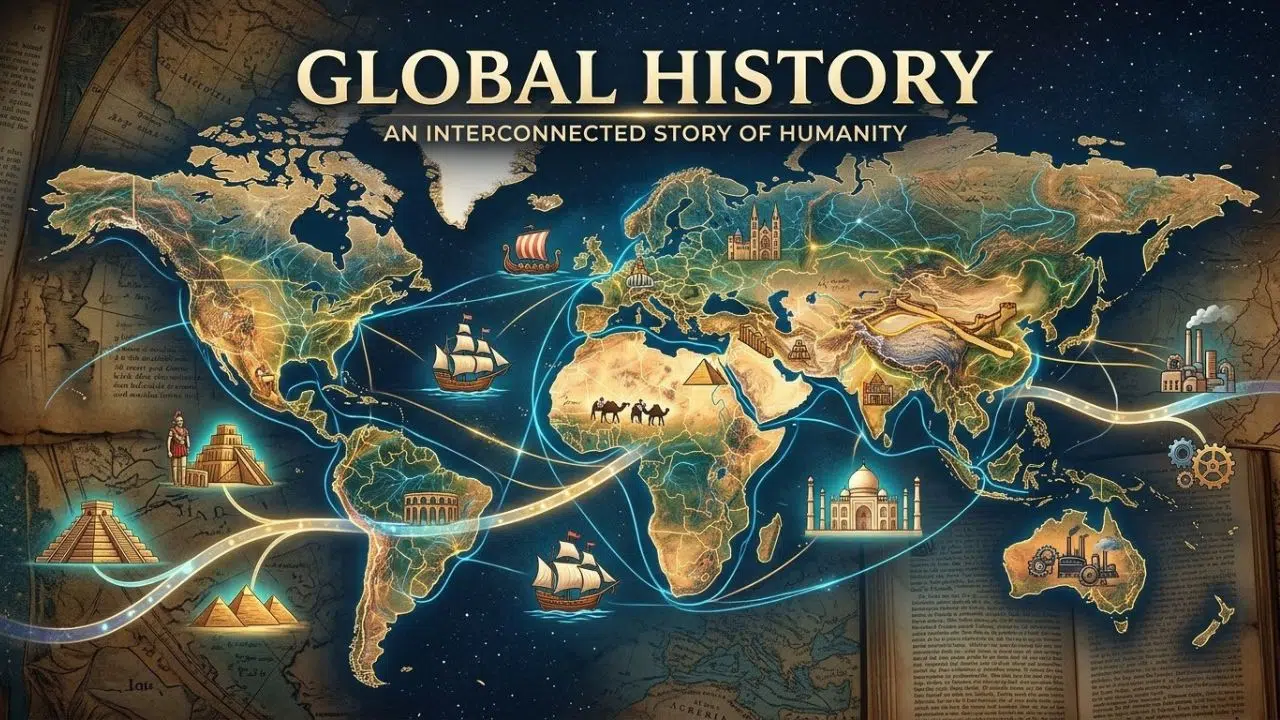
History is inherently interconnected. What happens in one hemisphere often ripples across the globe. September 5 has been the backdrop for political unions, acts of terror, and leaps in human exploration.
United States
-
The First Continental Congress Convenes (1774): In response to the British Parliament’s punitive Intolerable Acts, fifty-six delegates from twelve of the thirteen American colonies (Georgia abstained) gathered at Carpenters’ Hall in Philadelphia. Figures like George Washington, John Adams, and Patrick Henry debated their response to British tyranny. This historic assembly laid the foundational groundwork for the American Revolution and the eventual drafting of the Declaration of Independence.
-
Sam Houston Elected President of Texas (1836): Following the Texian victory over Mexican forces at the Battle of San Jacinto, the Republic of Texas became an independent sovereign nation. On this day, Sam Houston, the military hero of the revolution, was elected as its first President.
-
Assassination Attempt on President Gerald Ford (1975): Lynette “Squeaky” Fromme, a devout follower of the infamous cult leader Charles Manson, attempted to assassinate U.S. President Gerald Ford in Sacramento, California. She pointed a loaded M1911 pistol at the President at point-blank range, but the weapon misfired. This event highlighted severe flaws in presidential security protocols during the 1970s.
-
Launch of Voyager 1 (1977): In one of humanity’s greatest scientific achievements, NASA launched the Voyager 1 space probe. Designed to study the outer Solar System, it carried the “Golden Record”—a phonograph record containing sounds and images selected to portray the diversity of life and culture on Earth, intended for any intelligent extraterrestrial life form. Today, Voyager 1 is the farthest human-made object in existence, having crossed into interstellar space.
Europe & The United Kingdom
-
The Reign of Terror Begins (1793): The French Revolution took its darkest turn when the National Convention, heavily influenced by Maximilien Robespierre and the Committee of Public Safety, officially declared that “terror is the order of the day.” This marked the beginning of a brutal period of state-sanctioned violence and mass executions by guillotine of anyone suspected of being an enemy of the revolution. It fundamentally altered European political philosophy regarding state power and civil liberties.
-
The Formation of Benelux (1944): As World War II was nearing its end in Europe, the governments-in-exile of Belgium, the Netherlands, and Luxembourg signed an agreement in London to establish a customs union. This agreement, which officially went into effect in 1948, was a crucial precursor to European economic integration, laying the structural blueprint for what would eventually become the European Union.
-
The Munich Olympics Massacre (1972): The world watched in horror as the deeply entrenched Israeli-Palestinian conflict violently spilled over onto the international sports stage. Members of the Palestinian militant group “Black September” infiltrated the Olympic Village in Munich, West Germany, taking eleven Israeli athletes and coaches hostage. They demanded the release of over 200 Palestinian prisoners held in Israel. The ensuing standoff culminated in a botched rescue attempt at a military airport, resulting in the tragic deaths of all eleven Israeli hostages, a West German police officer, and five of the terrorists. This event drastically changed global counter-terrorism strategies and the security apparatus of all future international events.
Rest of World
-
The Treaty of Portsmouth Ends the Russo-Japanese War (1905): Signed at the Portsmouth Naval Shipyard in Maine, USA, this treaty formally ended the bloody conflict between the Russian and Japanese empires over rival imperial ambitions in Manchuria and Korea. Mediated by U.S. President Theodore Roosevelt (who won the Nobel Peace Prize for his efforts), the treaty marked the first time in modern history that an Asian power decisively defeated a European power. It cemented Japan’s status as a formidable global power and catalyzed internal unrest in Russia, foreshadowing the 1917 Russian Revolution.
-
Muhammad Ali Wins Olympic Gold (1960): At the Summer Olympics in Rome, an 18-year-old American boxer named Cassius Clay (who would later change his name to Muhammad Ali and become a global icon) won the gold medal in the light heavyweight division. This victory launched the career of the man who would become known simply as “The Greatest,” deeply impacting not just sports, but the global civil rights movement.
Notable Births & Deaths (Global)
History is shaped by individuals who push boundaries in art, science, politics, and humanity. September 5 has seen the arrival and departure of some of the most influential figures in modern history.
Famous Births
| Name | Year | Nationality | Legacy / Key Contribution |
| Louis XIV | 1638 | French | Known as the “Sun King,” he ruled France for 72 years (the longest recorded of any monarch of a sovereign country). He centralized power, built the Palace of Versailles, and oversaw a golden age of French culture and military power. |
| Jesse James | 1847 | American | A notorious outlaw, bank and train robber, and Confederate guerrilla. He became a legendary, highly romanticized figure of the American Wild West. |
| Freddie Mercury | 1946 | British (born in Zanzibar) | The flamboyant, transcendent lead vocalist of the rock band Queen. Known for his four-octave vocal range and theatrical stage persona, he redefined rock music performance. |
| Werner Herzog | 1942 | German | Visionary film director, screenwriter, and pioneer of New German Cinema, known for his unique, often dangerous, approach to documentary and narrative filmmaking (Fitzcarraldo, Grizzly Man). |
| Michael Keaton | 1951 | American | Highly acclaimed, versatile actor famous for bridging intense drama and comedy, renowned for his roles in Batman, Beetlejuice, and his Oscar-nominated performance in Birdman. |
Famous Deaths
| Name | Year | Nationality | Cause / Lasting Legacy |
| Crazy Horse | 1877 | Native American (Oglala Lakota) | A legendary war leader who fiercely resisted the U.S. federal government’s encroachment on Native territories, famously leading warriors at the Battle of the Little Bighorn. He was fatally bayoneted by a military guard after surrendering. |
| Ludwig Boltzmann | 1906 | Austrian | A revolutionary physicist and philosopher whose greatest achievement was the development of statistical mechanics. He took his own life, tragically believing his atomic theories had been rejected by the scientific community. |
| Mother Teresa | 1997 | Albanian-Indian | A Catholic nun who dedicated her life to caring for the destitute and dying in the slums of Calcutta (Kolkata). She founded the Missionaries of Charity and was awarded the 1979 Nobel Peace Prize for her humanitarian work. |
| Jochen Rindt | 1970 | Austrian (born German) | A brilliant Formula One driver who was killed during practice for the Italian Grand Prix. Because he had amassed a massive points lead before his death, he remains the only driver to be posthumously awarded the Formula One World Championship. |
“Did You Know?” Trivia
To add a layer of intrigue to your historical knowledge, here are three lesser-known, fascinating facts related to September 5 that make for excellent conversation starters:
-
The Earliest Hollywood Sex Scandal: The modern concept of the “celebrity scandal” essentially began on September 5, 1921. A wild, prohibition-era party hosted by the incredibly popular silent film star Roscoe “Fatty” Arbuckle ended in the mysterious death of young actress Virginia Rappe. The ensuing media circus and murder trials destroyed Arbuckle’s career and prompted Hollywood to establish its first strict moral censorship guidelines (the Hays Code).
-
A Tax on Facial Hair: In an aggressive push to Westernize and modernize Russian society, Tsar Peter the Great instituted a literal “beard tax” on September 5, 1698. Any man who wished to keep his facial hair had to pay a steep fee and carry a copper token proving he had paid the tax; otherwise, he risked being forcibly shaved by the police in the street.
-
The Farthest Human Artifact: When Voyager 1 launched on September 5, 1977, few could comprehend how far it would go. Today, it is hurtling through interstellar space at roughly 38,000 miles per hour, billions of miles away from Earth. If it encounters another civilization, they will find a gold-plated copper disk containing greetings in 55 languages, the sounds of a human heartbeat, and a recording of a mother kissing her child.
Quote of the Day
“The true teachers are those who help us think for ourselves.”
— Dr. Sarvepalli Radhakrishnan (Born on September 5, 1888)
Final Thoughts
September 5 is a microcosm of human history. It is a date marked by profound loss, from the battlefields of Bangladesh to the Olympic village in Munich. Yet, it is equally defined by staggering progress—the launch of a probe into the cosmic void, the founding of economic unions that brought peace to Europe, and the birth of minds that reshaped our understanding of the universe and ourselves.
By looking back at “On This Day,” we do not merely study the past; we gain the context necessary to navigate the future. Whether we are honoring the sacrifice of revolutionary martyrs, thanking a teacher who changed our trajectory, or looking up at the night sky wondering where Voyager 1 is right now, September 5 reminds us that every day holds the potential for world-altering events. History is not static; it is being written right now, by us, every single day.