History is not just a collection of dates; it is a continuously weaving tapestry of human triumph, tragedy, art, and revolution. When we peel back the layers of a single day—like September 21—we find a breathtaking cross-section of the human experience. On this exact calendar date across different centuries, empires fell, visionary authors brought new worlds to life, nations celebrated their newfound sovereignty, and groundbreaking pioneers took their first breath.
From the shifting political tides of the Indian subcontinent and the tragic fall of the Mughal Empire to the publication of The Hobbit and the confirmation of the first female U.S. Supreme Court Justice, September 21 is a powerhouse of historical significance.
Whether you are an avid history buff, a student doing research, or just someone looking for fascinating dinner table conversation about the day you were born, this comprehensive guide explores everything you need to know about the events of September 21.
The Bangalee Sphere & The Indian Subcontinent
The history of South Asia is rich with tales of anti-colonial resistance, deep cultural traditions, and massive political shifts. September 21 holds several critical milestones that shaped the modern history of India and the surrounding regions.
At a Glance: Subcontinent History
| Event / Person | Year | Category | Significance |
| Surrender of Bahadur Shah Zafar | 1857 | Historical Event | Marked the definitive end of the Mughal Empire in India. |
| Madras Occupied | 1746 | Historical Event | French forces took over Madras during the First Carnatic War. |
| Mandal Commission Ruling | 1990 | Political Event | The Indian Supreme Court refused to stay the job quota implementation. |
| Kareena Kapoor Khan | 1980 | Famous Birth | One of Bollywood’s most highly paid and decorated actresses. |
| Feroze Gandhi | 1912 | Famous Birth | Prominent Indian freedom fighter, journalist, and politician. |
| Annie Besant | 1933 | Famous Death | British socialist and women’s rights activist who championed Indian self-rule. |
The Fall of the Mughal Empire (1857): One of the most monumental shifts in Indian history occurred on September 21, 1857. Following the Indian Rebellion (often called the Sepoy Mutiny), the British forces under Captain William Hodson captured Bahadur Shah Zafar II, the last Mughal Emperor, in Delhi. This day effectively marked the end of the Mughal Dynasty, which had ruled vast swaths of the subcontinent for over three centuries. It paved the way for the direct rule of the British Crown (the British Raj).
The Mandal Commission Aftermath (1990): Fast forward to modern India; September 21, 1990, was a defining moment for civil rights and social justice in the country. The Supreme Court of India refused to halt the implementation of the Mandal Commission’s recommendations, which mandated a 27% quota for Other Backward Classes (OBCs) in government jobs. This decision deeply polarized the nation but ultimately transformed the socio-political landscape of India, bringing marginalized communities into mainstream administrative power.
The Legacy of Annie Besant (Died 1933): Though born in Britain, Annie Besant’s soul belonged to the Indian independence movement. Passing away on this day in 1933, she left behind a legacy as a fierce advocate for Indian self-rule. She became the first female president of the Indian National Congress in 1917 and helped establish the Home Rule League, actively lobbying the British government to grant India dominion status.
International Observances & Global Holidays
September 21 is celebrated globally as a day of peace, reflection, and national pride for several newly independent nations.
At a Glance: Global Observances
| Observance / Holiday | Region | Purpose |
| International Day of Peace | Global (UN) | Dedicated to world peace and the absence of war/violence. |
| World Alzheimer’s Day | Global | Raising awareness and fighting the stigma surrounding dementia. |
| World Gratitude Day | Global | A day to express appreciation and foster a positive mindset. |
| Independence Day (Belize) | Belize | Celebrates full independence from the United Kingdom (1981). |
| Independence Day (Malta) | Malta | Commemorates independence from the UK in 1964. |
| Independence Day (Armenia) | Armenia | Marks separation from the Soviet Union in 1991. |
The International Day of Peace: Sanctioned by the United Nations, this day is more than just a symbolic gesture. Historically, the UN calls for a 24-hour period of global ceasefire and non-violence. In conflict zones around the world, this day is often used to establish humanitarian corridors, allowing aid workers to deliver food, medicine, and supplies to vulnerable civilian populations.
A Wave of Independence: It is fascinating that three distinct nations—Belize (Central America), Malta (Mediterranean/Europe), and Armenia (Eurasia)—all celebrate their independence on this exact date. Belize and Malta broke away from the British Empire in 1981 and 1964, respectively, showcasing the rapid decolonization of the late 20th century. Armenia’s independence in 1991 was a direct result of the dramatic collapse of the Soviet Union, marking a new era for Eastern Europe and the Caucasus.
Global History
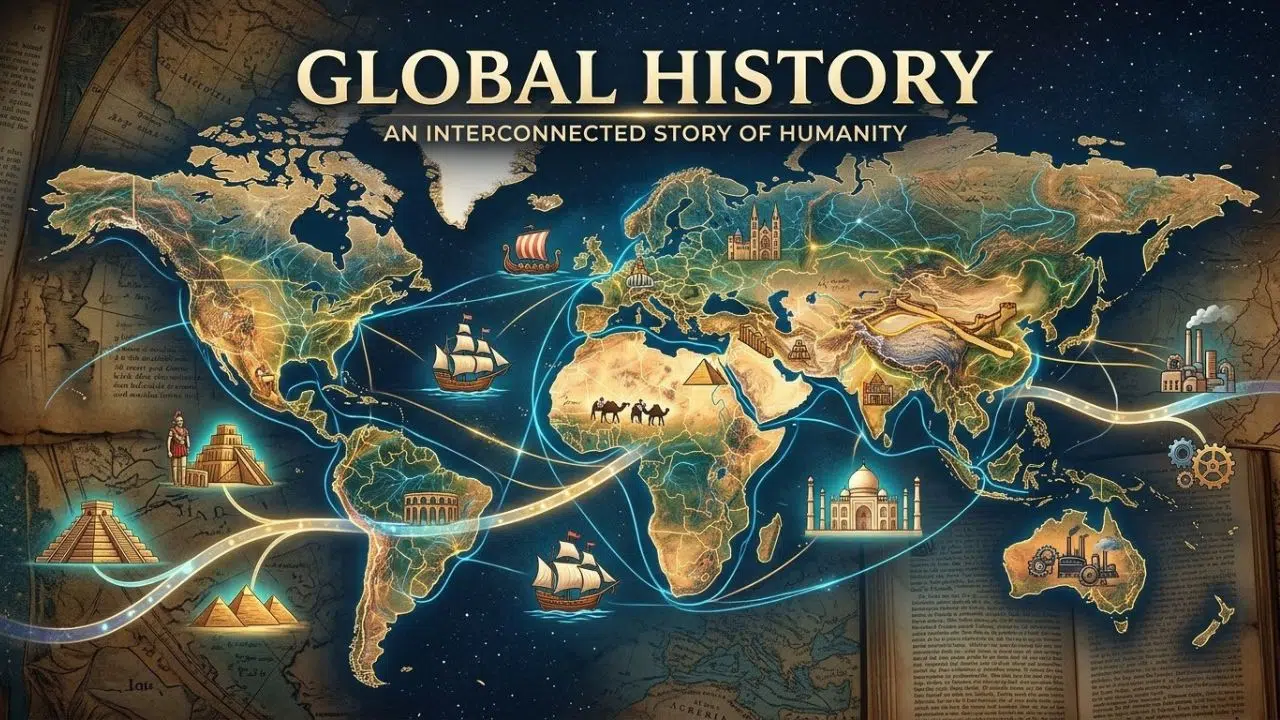
History is made in parliament halls, on battlefields, and in the quiet studies of great authors. September 21 has seen the map of Europe redrawn, literary masterpieces born, and massive shifts in global governance.
At a Glance: Key Global Events
| Year | Region | Event Summary |
| 1792 | France | The French National Convention votes to abolish the monarchy. |
| 1937 | United Kingdom | J.R.R. Tolkien publishes his fantasy masterpiece, The Hobbit. |
| 1949 | China | Mao Zedong declares the founding of the People’s Republic of China (PRC). |
| 1972 | Philippines | President Ferdinand Marcos declares Martial Law, cementing his dictatorship. |
| 1981 | United States | Sandra Day O’Connor becomes the first female Supreme Court Justice. |
| 1993 | Russia | President Boris Yeltsin triggers a constitutional crisis by dissolving parliament. |
| 1999 | Taiwan | The devastating 7.3 magnitude Chi-Chi earthquake strikes. |
Europe: The Fall of the French Monarchy (1792)
The French Revolution sent shockwaves through the royal courts of Europe. On September 21, 1792, the newly formed National Convention officially abolished the French monarchy, stripping King Louis XVI of all his titles and powers. France was declared a Republic. This wasn’t just a change in management; it was a radical ideological shift that declared that the power of a nation comes from its people, not from divine right.
United Kingdom: Welcome to Middle-earth (1937)
On a quieter note, but one that deeply influenced global culture, September 21 marks the initial publication of The Hobbit by British professor J.R.R. Tolkien. With an initial print run of just 1,500 copies, the book introduced readers to Bilbo Baggins, Gandalf, and a magical ring. It essentially birthed the modern “high fantasy” genre, eventually leading to The Lord of the Rings and shaping literature, film, and pop culture for a century to come.
China: A New Era Begins (1949)
During the opening address at the Chinese People’s Political Consultative Conference on September 21, 1949, Communist leader Mao Zedong proclaimed, “The Chinese people have stood up.” While the official founding ceremony happened on October 1, this speech functionally declared the birth of the People’s Republic of China, concluding decades of bloody civil war and shifting the balance of power in the Cold War era.
United States: Smashing the Glass Ceiling (1981)
For nearly 200 years, the United States Supreme Court was an exclusively male institution. That changed on September 21, 1981, when the U.S. Senate unanimously confirmed Sandra Day O’Connor (by a vote of 99-0) as the first female justice. Nominated by President Ronald Reagan, O’Connor became a crucial moderate swing vote on the court, profoundly influencing American jurisprudence on issues ranging from civil rights to election law.
Russia: The 1993 Constitutional Crisis
Following the fall of the Soviet Union, the newly formed Russian Federation was highly unstable. On this day in 1993, President Boris Yeltsin unconstitutionally dissolved the country’s legislature (the Supreme Soviet), which had opposed his economic reforms. In response, lawmakers barricaded themselves inside the parliament building and impeached him. This led to a brief but deadly armed conflict in the streets of Moscow, resulting in hundreds of deaths and forever altering modern Russian politics.
Notable Births & Deaths (Global)
September 21 has welcomed visionary leaders, legendary storytellers, and artistic geniuses into the world, while also bidding farewell to ancient philosophers and modern icons.
Famous Births on September 21
| Name | Year | Nationality | Known For |
| H.G. Wells | 1866 | English | Father of science fiction (The Time Machine, War of the Worlds). |
| Chuck Jones | 1912 | American | Legendary animator and creator of Looney Tunes characters. |
| Leonard Cohen | 1934 | Canadian | Legendary singer-songwriter, poet, and creator of “Hallelujah”. |
| Stephen King | 1947 | American | Prolific, best-selling author known as the “King of Horror”. |
| Bill Murray | 1950 | American | Iconic comedic and dramatic actor (Ghostbusters, Lost in Translation). |
| Shinzo Abe | 1954 | Japanese | The longest-serving Prime Minister in the history of Japan. |
| Kevin Rudd | 1957 | Australian | Former Prime Minister of Australia and diplomat. |
Spotlight on Births
-
H.G. Wells (1866): Long before space travel or modern computing existed, Herbert George Wells was conceptualizing time travel, alien invasions, and invisible men. His incredible imagination laid the groundwork for modern science fiction.
-
Stephen King (1947): With over 350 million copies of his books sold worldwide, King redefined horror and suspense for the 20th and 21st centuries. From The Shining to It, his stories tap into the deepest fears of the human psyche.
-
Leonard Cohen (1934): A poet first and a musician second, Cohen’s deeply melancholic and spiritual voice captured the hearts of millions. His song “Hallelujah” remains one of the most covered tracks in music history.
-
Shinzo Abe (1954): A towering figure in modern Asian politics, Abe championed “Abenomics”—a sweeping economic policy meant to pull Japan out of decades of deflation. Though his life ended tragically via assassination in 2022, his legacy on September 21 is remembered worldwide.
Famous Deaths on September 21
| Name | Year | Nationality | Known For |
| Virgil | 19 BC | Roman | Ancient poet who authored the epic Aeneid. |
| Sir Walter Scott | 1832 | Scottish | Historical novelist and poet (Ivanhoe, Rob Roy). |
| Arthur Schopenhauer | 1860 | German | Prominent philosopher noted for his theory of the will. |
| Chief Joseph | 1904 | Native American | Leader of the Nez Perce tribe, famous for his eloquent resistance. |
| Jaco Pastorius | 1987 | American | Influential jazz bassist known for his complex, melodic style. |
| Florence Griffith Joyner | 1998 | American | Olympic sprinter and “the fastest woman of all time”. |
Spotlight on Deaths
-
Virgil (19 BC): The ancient world mourned the loss of Publius Vergilius Maro. His epic poem, the Aeneid, became the foundational myth of Rome and heavily influenced Western literature, including Dante’s Inferno, where Virgil famously appears as a guide through Hell.
-
Arthur Schopenhauer (1860): A deeply pessimistic yet profoundly insightful German philosopher. His masterwork, The World as Will and Representation, argued that the universe is driven by a chaotic, directionless “will”—a concept that deeply influenced later thinkers like Nietzsche and Freud.
-
Florence Griffith Joyner (1998): Known affectionately as “Flo-Jo,” she completely revolutionized women’s track and field. Her 100m and 200m world records set in 1988 still stand unbroken today. Her sudden death at the age of 38 sent shockwaves through the sports world.
“Did You Know?” Fascinating September 21 Trivia
Looking for some quick, captivating facts to share? Here are three obscure but fascinating things that happened on this day:
-
“Yes, Virginia, there is a Santa Claus”: One of the most famous pieces of American journalism was printed on September 21, 1897. The New York Sun published an editorial answering eight-year-old Virginia O’Hanlon’s question about the existence of Santa Claus. It remains the most reprinted newspaper editorial in the English language.
-
The Demise of Galileo (The Spacecraft, Not the Man): On September 21, 2003, NASA intentionally crashed the Galileo space probe into the crushing atmosphere of Jupiter. After a 14-year mission studying the gas giant and its moons, scientists destroyed the probe to ensure it wouldn’t accidentally crash into and contaminate Jupiter’s moon Europa, which is believed to harbor a subsurface ocean.
-
The Birth of Monday Night Football: Sports broadcasting changed forever on September 21, 1970, when ABC aired the very first broadcast of Monday Night Football. The game featured the Cleveland Browns defeating the New York Jets 31-21, ushering in an era of primetime sports entertainment.
Quote of the Day
To summarize the creative and intellectual energy of September 21, we look to the words of one of the greatest minds born on this exact date.
“We all have our time machines. Some take us back, they’re called memories. Some take us forward, they’re called dreams.”
— H.G. Wells (Born September 21, 1866)
Final Thoughts
From the shifting borders of empires in the Indian subcontinent to the pages of magical fantasy novels in Britain, September 21 is a date deeply ingrained in the human story. It is a day that saw the end of the Mughal lineage and the violent birth of the French Republic. It brought us the chilling horror of Stephen King, the soulful melodies of Leonard Cohen, and the groundbreaking legal mind of Sandra Day O’Connor.
As we reflect on these historical events, births, and deaths, it becomes clear that every single day holds the potential to change the world forever. Whether it’s signing a treaty of independence or publishing a novel that captures the imagination of millions, the history of September 21 reminds us of humanity’s boundless capacity for change, creation, and resilience.