

Every day on the calendar holds a hidden tapestry of human triumph, tragedy, and transformation, but few dates carry the sheer historical weight of April 14. From the frosty, perilous waters of the North Atlantic to the dimly lit box of a Washington D.C. theater, this date has repeatedly served as a profound turning point for the modern world. Whether you are a dedicated historian, a trivia enthusiast, or simply a curious reader looking to understand the forces that shaped our present reality, diving into the archives of this day offers a breathtaking glimpse into the human experience. We will journey across continents, exploring the monumental political shifts, the devastating natural disasters, and the brilliant minds that entered and departed this world on this specific date.
To provide a bird’s-eye view of this remarkable date before we dive into the deep narrative history, the following table summarizes some of the most pivotal global milestones that have occurred on April 14.
A Quick Glance at April 14 Historical Milestones
| Year | Event Category | Historical Event Summary |
| 1629 | Birth | Christiaan Huygens, pioneering Dutch mathematician and astronomer, is born. |
| 1828 | Literature | Noah Webster publishes the first edition of his American Dictionary. |
| 1865 | Assassination | President Abraham Lincoln is shot by John Wilkes Booth at Ford’s Theatre. |
| 1891 | Birth | B.R. Ambedkar, chief architect of the Indian Constitution, is born. |
| 1912 | Maritime Disaster | The RMS Titanic strikes an iceberg in the North Atlantic at 11:40 PM. |
| 1964 | Death | Rachel Carson, groundbreaking environmentalist and author, passes away. |
| 1986 | Natural Disaster | The Gopalganj district in Bangladesh is struck by the heaviest recorded hail. |
| 1988 | Politics/War | The Soviet Union signs the Geneva Accords to withdraw from Afghanistan. |
| 2014 | Human Rights | Boko Haram kidnaps 276 schoolgirls in Chibok, Nigeria. |
Moving from our brief overview into the rich, detailed corridors of the past, let us examine the specific global events that permanently altered the course of human history.
World-Changing Historical Events on April 14
History is rarely made quietly. The events that unfolded on this day sent shockwaves through their respective eras, leaving legacies that we still study, debate, and feel today.
The RMS Titanic Strikes the Iceberg (1912)
While the world officially mourns the sinking of the RMS Titanic on April 15, the actual catastrophe was set into motion late on the evening of April 14. At precisely 11:40 PM, the “unsinkable” luxury ocean liner, carrying over 2,200 passengers and crew on its maiden voyage from Southampton to New York City, sideswiped a massive iceberg in the freezing, pitch-black waters of the North Atlantic. The impact buckled the ship’s starboard hull, popping rivets and opening five of her sixteen purportedly watertight compartments to the sea.
The sheer hubris of the Gilded Age was shattered in those late-night hours. Captain Edward Smith and shipbuilder Thomas Andrews quickly realized the vessel was doomed. Over the next few hours, the agonizing realization that the ship was equipped with only enough lifeboats for about half the people on board led to widespread panic, heroism, and immense tragedy. The nearby SS Californian famously ignored the Titanic’s distress flares, compounding the disaster. This horrific event remains the most famous maritime disaster in history and fundamentally changed international maritime safety laws, directly leading to the creation of the International Convention for the Safety of Life at Sea (SOLAS), which still governs maritime safety protocols today.
The Assassination of Abraham Lincoln (1865)
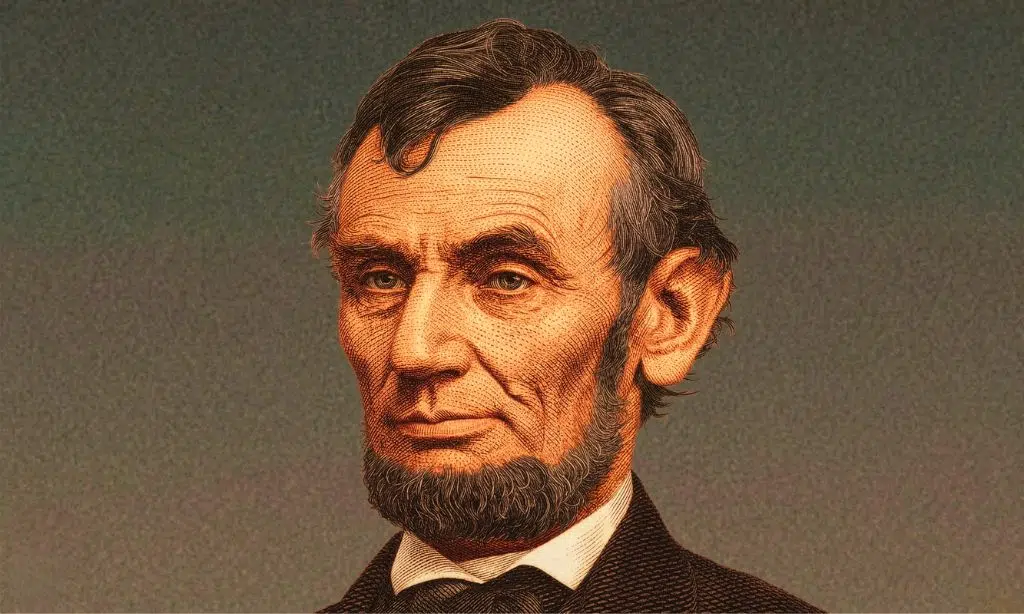
Just five days after Confederate General Robert E. Lee surrendered at Appomattox Court House, effectively ending the bloody American Civil War, a much more localized tragedy struck the United States. President Abraham Lincoln, seeking a moment of respite, was attending a performance of the comedic play Our American Cousin at Ford’s Theatre in Washington, D.C. During the third act, taking advantage of a moment of loud audience laughter, Confederate sympathizer and well-known actor John Wilkes Booth slipped into the Presidential Box and shot Lincoln in the back of the head.
Booth’s action was part of a larger, coordinated conspiracy. His original plan was a simultaneous strike to assassinate Lincoln, Vice President Andrew Johnson, and Secretary of State William H. Seward to completely decapitate the Union government. While the other plots failed or were aborted, Lincoln’s assassination threw a nation already fractured by years of brutal conflict into deep mourning and political chaos. Lincoln passed away the following morning, leaving the deeply complex, contentious, and fragile process of Reconstruction in the hands of his successor, Andrew Johnson, forever altering the post-Civil War trajectory of the United States.
The Devastating Gopalganj Hailstorm (1986)
Nature’s fury was unleashed upon the Indian subcontinent on this day in a manner never before documented by modern science. The Gopalganj district of Bangladesh, a region frequently vulnerable to severe weather during the pre-monsoon season, experienced what remains the heaviest hailstone fall in recorded meteorological history. Giant hailstones, some officially verified to weigh up to 1 kilogram (2.2 pounds), plummeted from the sky with terrifying, lethal velocity.
The freak storm decimated local infrastructure in a matter of minutes. It destroyed crops instantly, leveled homes, and tragically resulted in the deaths of 92 people who were caught without adequate shelter. This terrifying atmospheric anomaly stands as a grim reminder of the extreme, unpredictable power of localized weather systems, and the socioeconomic impact of such disasters in agrarian economies often lasts for decades.
Noah Webster Standardizes American English (1828)
On this day, the cultural and intellectual landscape of the United States took a massive step toward independence with the publication of Noah Webster’s An American Dictionary of the English Language. Webster, a fiercely patriotic lexicographer and educator, believed that America needed to declare its cultural and linguistic independence from Britain just as it had declared its political independence.
He intentionally altered traditional British spellings to create a distinctly American linguistic identity. He changed “colour” to “color,” “musick” to “music,” and “centre” to “center,” arguing that the American variations were more logical and phonetically accurate. The dictionary was the culmination of over two decades of obsessive work. Webster learned 26 languages, including Anglo-Saxon and Sanskrit, to properly research the etymology of the 70,000 words he included. His monumental achievement revolutionized education and communication in the young nation, codifying the differences between American and British English that persist globally today.
The Geneva Accords and Soviet Withdrawal from Afghanistan (1988)
In a monumental geopolitical shift that signaled the waning days of the Cold War, the Soviet Union signed the Geneva Accords on April 14, 1988. This international agreement, painstakingly brokered by the United Nations and signed by Afghanistan, Pakistan, the USSR, and the United States, established a formal framework for the withdrawal of Soviet troops from Afghanistan.
The Soviet-Afghan War had raged for nine grueling years, earning the moniker of the “Soviet Vietnam.” It bled the Soviet economy dry, resulted in immense loss of life, and drew massive international condemnation. The introduction of US-supplied Stinger missiles to the Mujahideen had turned the tide against Soviet air superiority. The withdrawal was a massive geopolitical victory for the Western bloc and a precursor to the eventual collapse of the Soviet Union itself. However, the power vacuum left behind in Afghanistan ultimately contributed to a devastating civil war, the rise of the Taliban, and set the stage for major 21st-century global conflicts.
Having explored the massive events that shaped nations and borders, it is equally important to look at the remarkable individuals who were born on this day and went on to change the world in their own right.
Iconic Birthdays: Legends Born on April 14
The people born on this date span a wide spectrum of human achievement, from pioneering scientists and vital social reformers to groundbreaking artists and entertainers who redefined their fields.
Dr. B.R. Ambedkar (Born 1891)
Born into the marginalized Mahar caste in India, Bhimrao Ramji Ambedkar rose against insurmountable odds and systemic oppression to become a towering intellectual, jurist, and social reformer. Armed with doctorates from both Columbia University and the London School of Economics, Dr. Ambedkar became the principal architect of the Constitution of India.
His entire life was a relentless, courageous crusade against the deeply entrenched social discrimination of the Hindu caste system. By fighting fiercely for the fundamental rights of the Dalit community, women, and labor, his legacy remains a foundational pillar of modern Indian democracy. Later in life, he inspired the Dalit Buddhist movement by converting to Buddhism alongside half a million of his followers. His birthday, known as Ambedkar Jayanti, is observed today as a major public holiday in India dedicated strictly to reflection on social justice and equality.
Christiaan Huygens (Born 1629)
In an era dominated by the early scientific revolution, this brilliant Dutch polymath made discoveries that fundamentally pushed the boundaries of human understanding regarding the cosmos and physics. Huygens was a mathematician, physicist, and astronomer who invented the pendulum clock in 1656, marking a massive leap forward in horology and making accurate, reliable timekeeping a reality for the first time.
Turning his advanced, custom-built telescopes to the heavens, he discovered Titan, the largest moon of Saturn, and was the very first astronomer to correctly identify that Saturn was surrounded by a solid, unattached ring system. Furthermore, his wave theory of light laid critical, foundational groundwork for modern optics, bridging the scientific gap between the eras of Galileo and Isaac Newton. To honor his legacy, the European Space Agency’s probe that successfully landed on Titan in 2005 was appropriately named the Huygens probe.
Anne Sullivan (Born 1866)
Known famously throughout history as the “Miracle Worker,” Anne Sullivan was an American educator who overcame her own severe visual impairments and a deeply impoverished, traumatic childhood in a state almshouse to achieve greatness. She is universally celebrated for her lifelong, transformative role as the teacher and companion to Helen Keller.
Through profound patience, emotional resilience, and highly innovative tactile teaching methods, Sullivan broke through Keller’s dark, silent isolation. She famously taught Keller the word “water” while pumping water over her hand, unlocking Keller’s understanding of language. Sullivan taught the deafblind child to communicate, read Braille, write, and eventually graduate from Radcliffe College. Sullivan’s empathetic methodologies, heavily informed by her own struggles with trachoma, completely revolutionized special education worldwide and proved that severe sensory disabilities are not a barrier to profound intellectual achievement.
Loretta Lynn (Born 1932)
Born a coal miner’s daughter in a remote, rural Kentucky cabin in Butcher Holler, Loretta Lynn transformed her raw, lived experiences into the very bedrock of American country music. Married at the age of 15 and a mother of four by the time she was 20, Lynn began writing songs on a $17 guitar her husband bought her.
Over a prolific career spanning six decades, Lynn wrote unapologetic, groundbreaking songs that tackled controversial issues rarely discussed in conservative country music at the time. She sang openly about the stigma of divorce, birth control, double standards, and the intense struggles of working-class women. With massive hits like “Fist City,” “Don’t Come Home A-Drinkin’ (With Lovin’ on Your Mind),” and “The Pill,” she became a fiercely independent feminist icon in a heavily male-dominated industry. She shattered ceilings, notably becoming the first woman to be named Entertainer of the Year by the Country Music Association in 1972.
While we celebrate the brilliant lives that began on this day, we must also acknowledge the profound losses the world has experienced on April 14. Before detailing their individual legacies, the following table provides a quick reference to some of the most notable figures who passed away on this date.
Notable Deaths on April 14
| Year of Death | Name | Nationality | Field/Legacy |
| 1759 | George Frideric Handel | German-British | Baroque Composer (Messiah) |
| 1917 | L. L. Zamenhof | Polish | Linguist, Creator of Esperanto |
| 1950 | Ramana Maharshi | Indian | Hindu Sage and Spiritual Leader |
| 1964 | Rachel Carson | American | Marine Biologist, Environmentalist |
| 1986 | Simone de Beauvoir | French | Philosopher, Feminist Theorist |
Let us delve deeper into the impact of these individuals whose final day fell on April 14, exploring why their legacies and life works continue to echo powerfully through modern society.
Remembering the Fallen: Notable Deaths on April 14
The individuals we lost on this day profoundly shaped our spiritual, intellectual, artistic, and environmental landscapes. Their contributions have outlived them by decades, and in some cases, centuries.
Rachel Carson (Died 1964)
Marine biologist, conservationist, and incredibly gifted author Rachel Carson fundamentally shifted how humanity views its relationship with the natural world. Having worked for years in the U.S. Bureau of Fisheries, Carson combined rigorous science with poetic prose. Her 1962 magnum opus, Silent Spring, courageously exposed the devastating environmental and human health consequences of the indiscriminate, widespread use of synthetic pesticides, specifically DDT.
She detailed how these chemicals were thinning bird eggshells and poisoning the food chain. Despite facing vicious, well-funded smear campaigns and relentless attacks from the massive chemical industry attempting to discredit her science, Carson stood firm. Her meticulous research sparked a massive, global grassroots environmental movement that ultimately led to the creation of the U.S. Environmental Protection Agency (EPA) and a nationwide ban on DDT. She passed away from breast cancer on this day, completely validated by John F. Kennedy’s Science Advisory Committee, having essentially birthed the modern environmental movement.
Simone de Beauvoir (Died 1986)
A towering titan of 20th-century philosophy, Simone de Beauvoir was a French existentialist, prolific writer, and revolutionary feminist theorist. Her massive, groundbreaking 1949 treatise, The Second Sex, provided a meticulously detailed historical and philosophical analysis of women’s oppression and served as a foundational, indispensable text for contemporary feminism.
Her famous, paradigm-shifting assertion that “one is not born, but rather becomes, a woman” directly challenged the deeply rooted essentialist notions of gender, separating biological sex from societal gender roles. This concept completely revolutionized sociological thought across the globe. Although the Vatican placed the book on its Index of Prohibited Books, its influence only grew. She maintained a lifelong, complex, and highly intellectually productive open partnership with fellow existentialist Jean-Paul Sartre, and she remained a fierce political activist until her death in Paris.
George Frideric Handel (Died 1759)
Universally recognized as one of the greatest composers of the Baroque era, George Frideric Handel passed away in London on this day at the age of 74. Born in Germany but spending the bulk of his career in Britain, Handel was famous for his breathtaking operas, dramatic oratorios, and majestic concerti grossi. His compositions are characterized by their profound emotional depth, regal grandeur, and brilliant, complex choral writing.
Despite suffering from a stroke earlier in his life and going completely blind in his final years, his creative output was staggering. His 1741 masterpiece, Messiah—which includes the globally iconic and instantly recognizable “Hallelujah” chorus—was originally composed for a modest charity premiere in Dublin. Today, it remains one of the most frequently performed pieces of choral music in the entirely of the Western world. He was deeply respected, given a grand state funeral attended by over 3,000 people, and buried in Westminster Abbey.
Ramana Maharshi (Died 1950)
Ramana Maharshi was a highly revered Indian Hindu sage and Jivanmukta (a fully liberated soul) whose profound teachings on silent self-enquiry drew earnest spiritual seekers from all corners of the globe to his humble ashram at the base of the sacred Arunachala hill in Tiruvannamalai, India. Following a profound death-experience at the age of 16 that spontaneously awakened him to a state of non-dual awareness, he spent years in deep, silent meditation in caves.
He later emphasized the simple but piercing practice of constantly asking the internal question “Who am I?” as the most direct, unclouded path to self-realization and spiritual liberation. His profound, peaceful presence and highly accessible teachings heavily influenced the transmission of Eastern non-dualistic philosophy (Advaita Vedanta) to the Western world, popularized in part by Paul Brunton’s writings. His ashram, Sri Ramanasramam, remains a thriving, global center for meditation and spiritual study today.
Beyond individual triumphs and historical tragedies, April 14 is also marked by contemporary nations and international bodies as a vital day of observance, global health awareness, and rich cultural celebration. Before detailing these specific observances, here is a breakdown of the global events celebrated today.
International Observances, Holidays, and Global Events
Across arbitrary borders and distinct cultures, April 14 serves as a unifying focal point for historical remembrance, critical health awareness, and the passionate preservation of indigenous culture.
World Chagas Disease Day
Officially established by the World Health Organization (WHO) at the 72nd World Health Assembly, this relatively new global health day is dedicated to bringing urgent attention to a severely neglected tropical disease. Chagas disease, caused by the parasite Trypanosoma cruzi and transmitted primarily by the feces of the triatomine bug (often called the “kissing bug”), affects millions of people, mostly in impoverished, rural areas of Latin America. It is tragically referred to as a “silent and silenced” disease because the vast majority of infected individuals present absolutely no symptoms during the early, highly treatable stages. However, if left unchecked, the parasite can lead to fatal, irreversible cardiac and digestive complications decades later. This day is crucial for mobilizing international resources for early detection, comprehensive vector control, and widespread treatment.
Pan American Day
Celebrated vibrantly across the member states of the Organization of American States (OAS), Pan American Day commemorates the First International Conference of American States held in Washington, D.C., in 1890. This massive diplomatic gathering paved the way for the modern inter-American system. This observance serves as a powerful, enduring symbol of continental solidarity, mutual diplomatic respect, and the shared commitment to peace, economic cooperation, and national sovereignty among the diverse nations of North, Central, and South America, as well as the Caribbean basin.
Preparation for Pohela Boishakh & Vaisakhi
In the culturally rich Bangalee sphere, April 14 often marks the feverish, joyful final preparations for (or the exact day of, depending on the specific solar calendar alignments in Bangladesh and the Indian state of West Bengal) Pohela Boishakh, the magnificent Bengali New Year. It is a time of immense, unifying cultural pride, marked by the Mangal Shobhajatra—a vibrant, colorful, and highly symbolic parade that was rightfully declared an Intangible Cultural Heritage of Humanity by UNESCO. Simultaneously, in the northern Punjab region of the subcontinent, April 14 marks Vaisakhi. This is a deeply historical, joyous harvest festival that also critically commemorates the formal establishment of the Khalsa panth of initiated warriors under the leadership of Guru Gobind Singh in 1699, blending agricultural gratitude with profound religious identity.
The Enduring Tapestry of April 14
From the freezing, chaotic tragedy of the Titanic’s late-night collision to the brilliant birth of individuals who would draft national constitutions and accurately map the cosmos, April 14 stands as a brilliant testament to the unpredictable, profoundly complex nature of human history. It is a day that sharply reminds us of our innate vulnerability to the forces of nature, as seen in the Gopalganj skies, and our immense capacity to heal and protect the planet, as passionately championed by Rachel Carson. By looking back at the myriad of events of this single day, we gain a much clearer, exponentially richer understanding of the political, cultural, and environmental currents that continue to relentlessly carry us forward into the future. Every single date on the calendar holds a story, but April 14 clearly holds a vast, unparalleled library of human endeavor.






















