


Ohio, like many other states, has Good Samaritan laws in place to encourage this altruistic behavior by providing some legal protection to those who offer help in good faith. Understanding how these laws operate and how they may intersect with negligence claims is crucial for those offering aid and those injured. A knowledgeable Personal Injury Lawyer Dayton Ohio can clarify these matters.
Understanding Ohio’s Good Samaritan Laws
Ohio’s Good Samaritan laws are designed to shield individuals from liability for unintentional harm they may cause while providing emergency care at the scene of an accident or emergency. The primary goal of these laws is to remove the fear of potential lawsuits, thereby encouraging people to step forward and assist those in need without hesitation. This protection generally applies as long as the assistance is rendered in good faith and without reckless disregard for the injured person’s safety.
It’s important to note that Good Samaritan laws typically do not protect individuals who are already obligated to provide care, such as medical professionals acting within their professional capacity or emergency responders on duty. The protection is generally intended for ordinary citizens who voluntarily offer aid in an emergency. The specific provisions and limitations of Ohio’s Good Samaritan laws are detailed in the state’s statutes.
Protection Against Negligence Claims
Ohio’s Good Samaritan laws offer core protection against claims of ordinary negligence. This means that if a volunteer assisting makes an unintentional mistake that inadvertently worsens the injured person’s condition, they are generally shielded from liability. For instance, if someone attempts to administer first aid with the best of intentions but makes an error due to a lack of formal training, the Good Samaritan law would likely offer protection against a negligence lawsuit.
However, this protection is not absolute. It does not extend to acts of gross negligence or willful and wanton misconduct. If a person offering assistance acts recklessly or intentionally causes harm, they can still be held liable for the resulting injuries. The line between ordinary negligence and gross negligence can be a critical point of contention in legal cases involving Good Samaritan actions.
The Intersection With Underlying Negligence
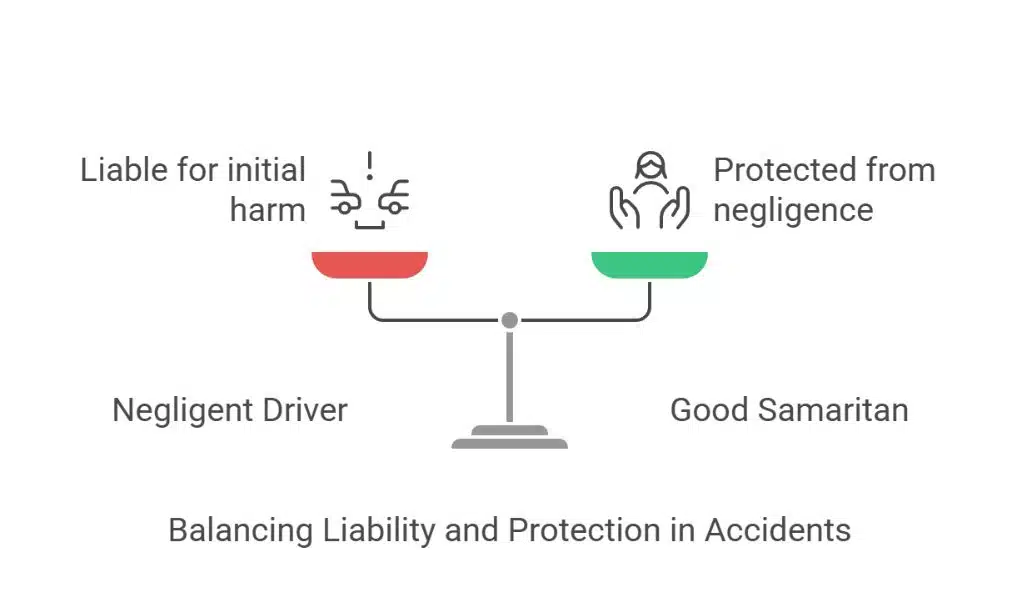
While Good Samaritan laws protect those offering aid, they do not absolve the individual or entity whose initial negligence caused the accident and the resulting injuries. For example, suppose a driver’s reckless behavior causes a car accident. In that case, the fact that a Good Samaritan attempts to help the injured parties does not shield the negligent driver from liability for the initial harm. The Good Samaritan’s actions are a response to a situation already created by someone else’s negligence.
Therefore, an injured party can still pursue a claim against the at-fault party whose negligence led to the accident, regardless of any assistance provided by a Good Samaritan. The focus of that claim remains on the actions that caused the initial injury. The Good Samaritan’s involvement is a separate issue addressed by different legal principles.
Limitations Of Good Samaritan Protection
It’s crucial to understand the limitations of Ohio’s Good Samaritan laws. As mentioned earlier, the protection typically does not apply to those with a pre-existing duty to provide care. Additionally, if the person offering assistance expects or receives compensation for their services, the Good Samaritan protection may not apply. The law intends to encourage voluntary, uncompensated aid in emergencies.
Furthermore, the protection generally extends only to providing emergency care at the emergency scene. Once the injured person has been transferred to the care of qualified medical professionals, the Good Samaritan protection typically no longer applies to subsequent actions taken by the Good Samaritan. Understanding these limitations is crucial for both those offering assistance and those who have received it.
Impact On Injury Claims
For individuals injured in an accident where a Good Samaritan assisted, these laws generally do not hinder their ability to pursue a claim against the party responsible for the initial injury. Their claim will focus on the negligence that caused the accident, not on the actions of the well-meaning bystander. However, if a Good Samaritan’s grossly negligent actions worsen the injured person’s condition, a separate, albeit likely challenging, claim against the Good Samaritan might theoretically be possible.
In most cases, the Good Samaritan’s involvement is a separate issue from the at-fault party’s liability. Personal Injury Lawyer Dayton, Ohio, can help injured individuals understand their rights and pursue claims against those whose negligence caused their injuries, while also appreciating the role of those who offer assistance in good faith. The legal focus remains on the actions that created the initial emergency.
Conclusion
Ohio’s Good Samaritan laws play a vital role in encouraging individuals to offer assistance at accident scenes without fear of liability for unintentional harm. These laws primarily protect volunteers from claims of ordinary negligence; however, they do not shield them against claims of gross negligence or willful misconduct. Importantly, they also do not absolve the at-fault party from liability for causing the initial injuries.
























