

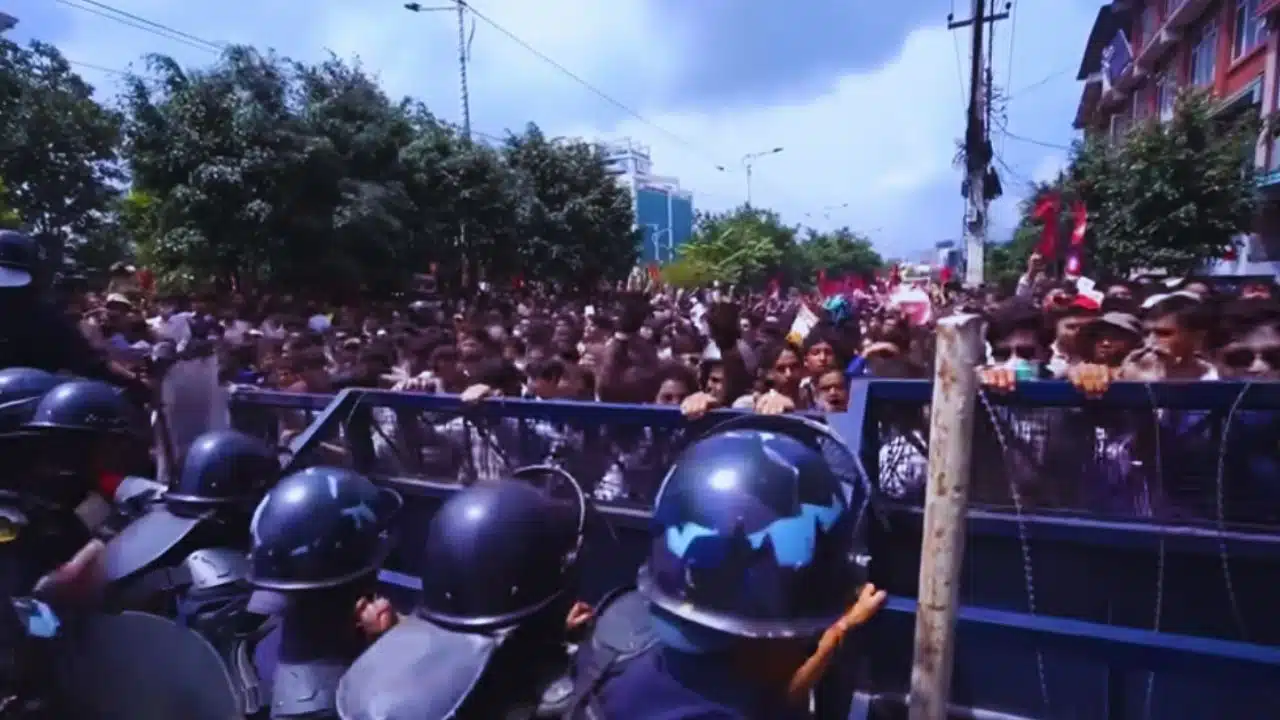
Nepal has officially lifted its controversial social media ban following one of the deadliest waves of protests the country has seen in recent years. The unrest, led mostly by young people—often referred to as “Generation Z”—turned violent after police cracked down on demonstrators demanding the restoration of online platforms and stronger action against corruption. At least 19 people were killed and more than 100 were injured, forcing the government to reverse its policy within days of imposing it.
Background: Why the Ban Was Imposed
The government had announced a sudden decision on September 4, 2025, to block 26 major social media platforms, including Facebook, Instagram, YouTube, WhatsApp, X (formerly Twitter), LinkedIn, Snapchat, Signal, Reddit, and Telegram. Officials justified the move as an attempt to combat fake news, hate speech, cyber fraud, and disinformation, arguing that these platforms had failed to comply with Nepal’s legal requirement to register with the Ministry of Communications and Information Technology and appoint a local representative.
However, the public—especially young users—saw this move differently. Social media is deeply embedded in Nepal’s communication system, serving not only as a source of entertainment but also as a platform for news sharing, education, business promotion, and activism. The ban was widely perceived as an attack on free speech and democratic rights, fueling suspicion that it was an attempt by the government to silence dissent and criticism.
The Spark: Gen Z Takes to the Streets
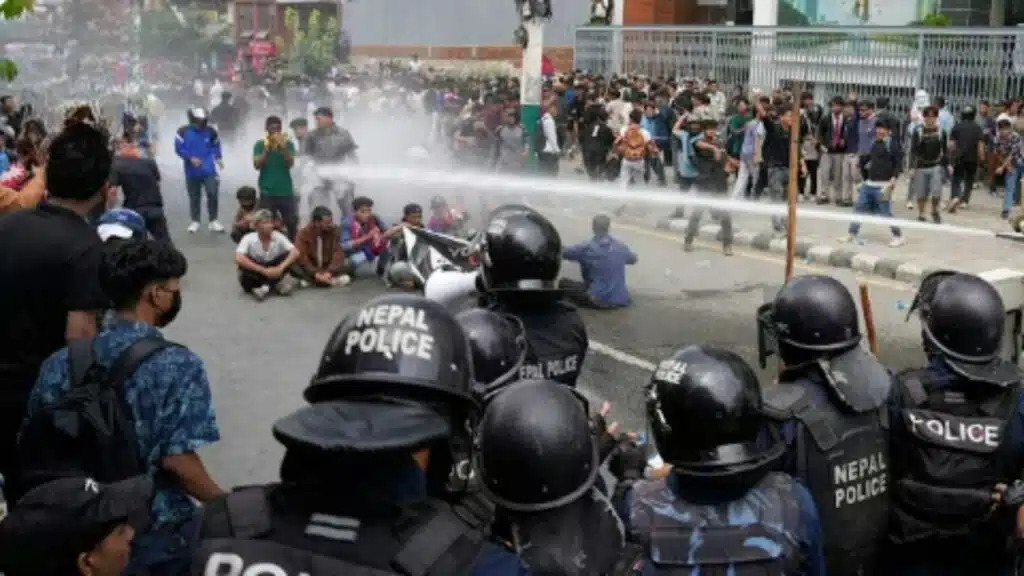
On September 8, 2025, tens of thousands of mostly young people poured into the streets of Kathmandu and several towns outside the capital. Protesters marched towards the parliament building carrying placards with slogans such as:
- “Enough is enough”
- “Stop corruption, not social media”
- “We want our country back”
Many young demonstrators said the ban was “just the reason” to gather, but their anger was mainly directed at systemic corruption, government inaction, and authoritarian attitudes. Social media had become a symbol of freedom, and its ban represented the larger frustrations of a generation already burdened by unemployment, inflation, and political instability.
Violence and Clashes With Police
As crowds swelled in Kathmandu’s Maitighar and outside the parliament compound, police attempted to disperse them using:
- Water cannons
- Tear gas
- Rubber bullets
- Batons
In several cases, protesters reported that live ammunition was also fired. Demonstrators broke through security barricades, and clashes spread into nearby towns such as Itahari.
The outcome was devastating:
- 19 protesters killed (17 in Kathmandu, 2 in Itahari)
- Over 100 people injured (some reports claim as many as 300–350 casualties, including police officers)
Eyewitnesses described chaotic scenes, with young people rushing to hospitals with bullet wounds and baton injuries, while others shielded themselves with makeshift barricades against tear gas and rubber bullets.
Political Fallout: A Minister Resigns
The political impact was immediate. Home Minister Ramesh Lekhak, who oversaw internal security, resigned later that evening amid growing outrage over the excessive use of force. His resignation highlighted the government’s deepening crisis, as officials were accused of mishandling youth anger and escalating tensions instead of addressing grievances.
Emergency Cabinet Meeting and Ban Reversal
Facing nationwide backlash, the government convened an emergency cabinet meeting late on September 8. Early the next morning, Communications and Information Minister Prithvi Subba Gurung announced that the ban was being lifted. He admitted the decision was made to “address the demands of Generation Z” and prevent further escalation of violence.
Prime Minister KP Sharma Oli also addressed the nation, expressing sorrow over the deaths and injuries. He announced:
- Compensation packages for the victims’ families
- Free medical treatment for those injured
- The creation of a special investigation panel, tasked with submitting recommendations within 15 days
- Temporary curfews and school closures in Kathmandu and other towns to maintain order
Oli blamed “infiltration from selfish political centres” for escalating the protests but acknowledged the urgency of listening to youth voices.
Why Social Media Matters in Nepal
The protests revealed how central digital platforms have become in Nepalese society:
- Business: Thousands of small entrepreneurs rely on Instagram, Facebook, and TikTok for sales and marketing.
- News & Activism: Young activists use X, Facebook, and YouTube to spread information and challenge corruption.
- Community: Platforms help connect millions of Nepalese living abroad with their families back home.
By targeting these tools, the government unintentionally provoked the very generation most dependent on them.
Larger Context: Youth, Corruption, and Governance
The Gen Z protests go beyond the ban itself. Nepal has been struggling with deep-rooted corruption, frequent changes in leadership, and political instability since the end of its monarchy in 2008. Young Nepalese feel particularly disillusioned, facing high unemployment, low wages, and limited opportunities.
For many, the social media ban was not just a technical restriction but a symbol of government arrogance and suppression of free expression. The protests mark a generational shift, where young people are no longer willing to stay silent in the face of corruption and authoritarian policies.
The Road Ahead
While the immediate crisis has subsided with the lifting of the ban, Nepal’s government still faces:
- Demands for accountability over the killings and injuries
- Skepticism from a younger population increasingly critical of traditional politics
- Pressure from global human rights organizations to ensure freedom of expression
The coming weeks will test whether the investigation panel delivers meaningful reforms or whether the cycle of protests and repression continues.
The lifting of the social media ban in Nepal is a reminder of the power of digital platforms in modern democracy. What began as a government effort to regulate online spaces ended up triggering one of the bloodiest crackdowns in recent Nepalese history. The protests have exposed a deeper crisis—youth frustration with corruption and governance.
For Nepal, the challenge now lies in proving that it can respect digital freedoms, listen to its younger citizens, and rebuild trust between government and people in a rapidly changing society.
The Information is collected from Sky News and MSN.






















