

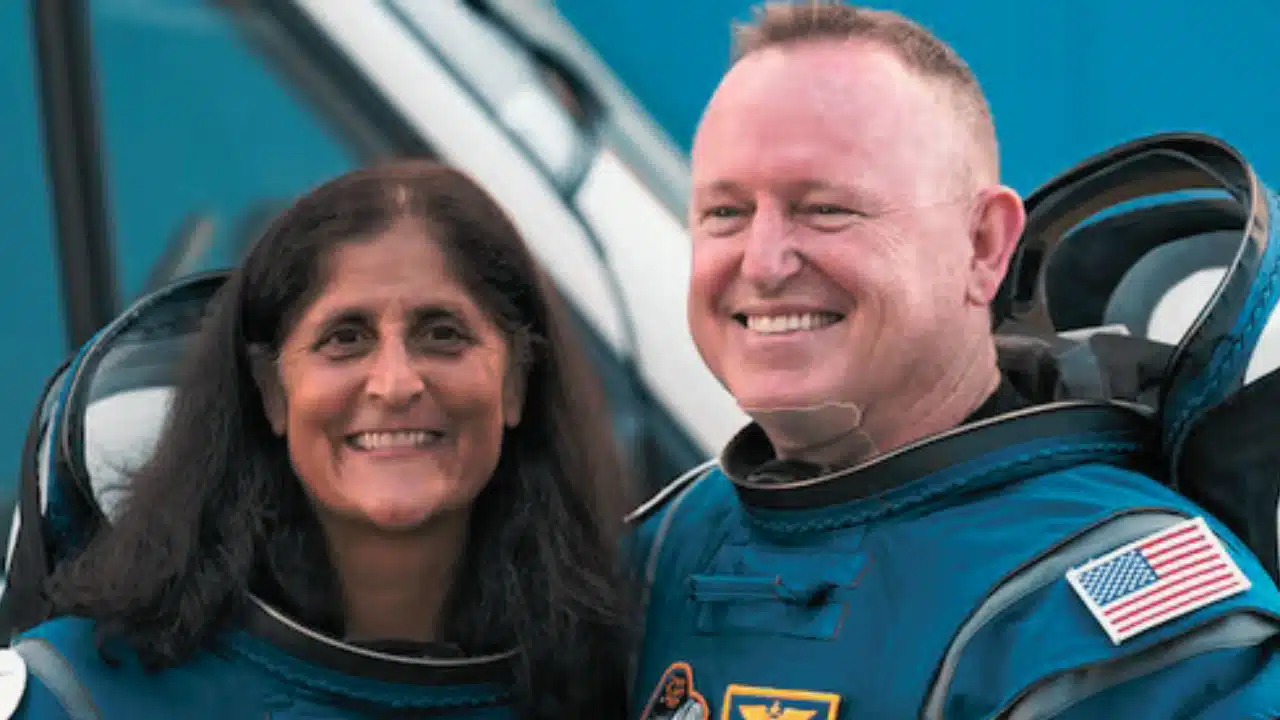
NASA astronauts Barry “Butch” Wilmore and Sunita “Suni” Williams are preparing to return to Earth after spending more than nine months aboard the International Space Station (ISS), far longer than their original mission plan. Their prolonged stay resulted from unexpected technical issues with the Boeing Starliner spacecraft, which was initially meant to transport them back after a short visit.
Unexpected Mission Extension Due to Spacecraft Issues
Wilmore and Williams launched to the ISS in June 2024 aboard Boeing’s Starliner on what was intended to be an eight-day test flight. The mission was part of NASA’s Commercial Crew Program, aimed at increasing the number of vehicles capable of transporting astronauts to and from the ISS. However, shortly after arrival, NASA engineers identified propulsion system issues in the Starliner, making it unsafe for the astronauts’ return journey.
After extensive analysis, NASA decided to bring the Starliner back to Earth uncrewed in September 2024. This left Wilmore and Williams without a return spacecraft, forcing them to stay on the ISS for months longer than planned. Their extended stay marks one of the longest unexpected mission extensions for NASA astronauts in modern spaceflight.
SpaceX Crew-10 Mission to the Rescue
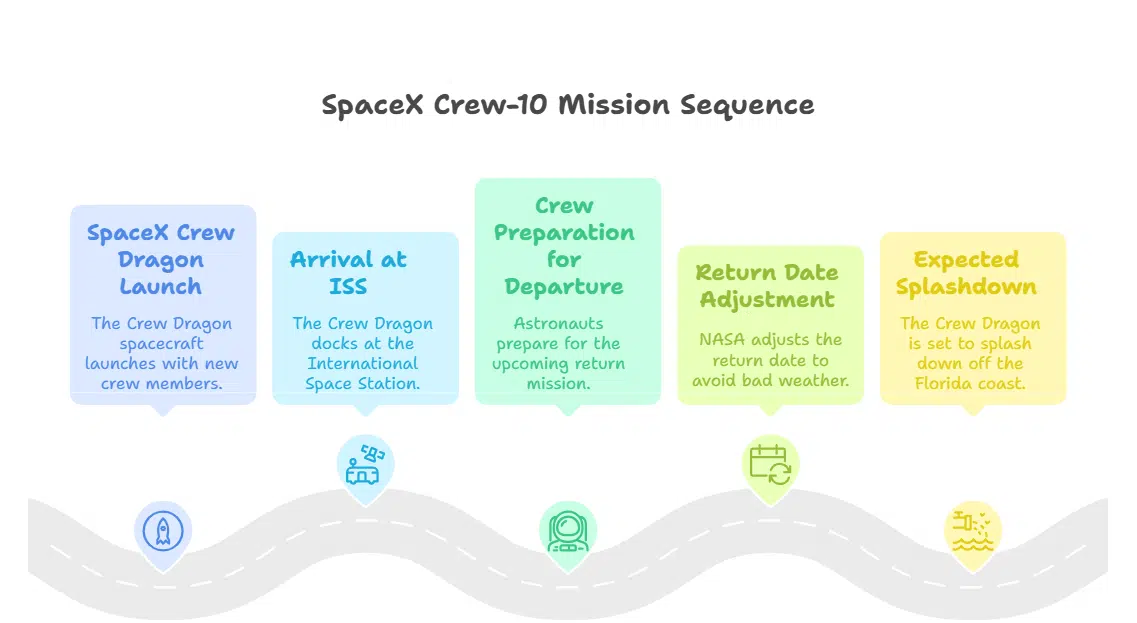
To facilitate the astronauts’ return, NASA coordinated with SpaceX, which has been operating successful crewed flights to and from the ISS for years. The SpaceX Crew Dragon spacecraft, part of the Crew-10 mission, launched recently carrying four new crew members: NASA astronauts Anne McClain and Nichole Ayers, Japan’s Takuya Onishi, and Russian cosmonaut Kirill Peskov. Their arrival at the ISS early Sunday provided the opportunity for Wilmore and Williams, along with NASA astronaut Nick Hague and Russian cosmonaut Aleksandr Gorbunov, to prepare for departure.
NASA initially scheduled their return for Wednesday but later moved it forward to Tuesday to avoid worsening weather conditions. The Crew Dragon is expected to splash down off the Florida coast at approximately 5:57 p.m. EDT (2157 GMT).
Challenges and Adaptation in Space
Despite the challenges of their prolonged stay, Wilmore and Williams continued their mission duties, participating in scientific experiments, ISS maintenance, and spacewalk preparations. Their extended mission was physically and emotionally demanding, as they had to adjust to an unexpected timeline away from their families and homes. NASA had to send additional clothing and personal care items since they hadn’t packed for such a long stay.
Suni Williams, a veteran astronaut, reflected on the psychological aspect of the delay. “The hardest thing has been knowing when we’ll actually get back. Our families have been incredibly patient, and we are looking forward to seeing them again,” she said in a NASA briefing.
How This Compares to Other Extended Space Missions
While Wilmore and Williams’ nine-month stay is unusual, it is not the longest continuous mission in space. The typical ISS rotation lasts about six months. However, NASA astronaut Frank Rubio holds the U.S. record for the longest time in space at 371 consecutive days, set in 2023. The world record belongs to Russian cosmonaut Valeri Polyakov, who spent 437 days aboard the Mir space station in the 1990s.
Lessons Learned and Future Missions
The unexpected extension of this mission provides NASA with valuable insights into long-duration spaceflight, especially as plans for future lunar and Mars missions continue. Adjusting to extended stays, maintaining astronaut health, and dealing with unplanned contingencies are all critical aspects of human spaceflight beyond Earth orbit.
NASA’s Commercial Crew Program continues to evolve, with ongoing efforts to ensure reliability in both the SpaceX and Boeing spacecraft. Boeing is still working on resolving the Starliner’s issues before it can be certified for routine astronaut transport missions.
For Wilmore and Williams, their return marks the end of an unplanned but historic mission. As they prepare for reentry, NASA and space enthusiasts worldwide eagerly await their safe return, closing a remarkable chapter in human spaceflight history.






















