

Do your shipments stall at customs? You juggle supply chain risks, HS codes, and changing rules every day. You need to know the Key Compliance Requirements In Global Logistics. You aim to cut delays and fees, but rules feel like a maze.
Logistics is the flow of goods, services, and data to meet customer needs. This post will guide you through customs rules, tariffs, documentation, safety, and more. You will learn how to use compliance management software, ICS2, and blockchain technology to gain supply chain visibility and cut risks.
Keep reading.
Key Takeaways
- Use HS codes, ICS2 alerts, and trade pacts like USMCA (50% cut on 30,000 auto parts) and RCEP (90% tariff cut for 15 nations, 2.3 billion people since Nov 2020) to clear customs fast and cut fees.
- File full docs—commercial invoices, bills of lading, and certificates of origin—in software with blockchain locks; use predictive analytics to spot missing papers and cut returns by 40%.
- Meet ISO 14001 and IMO rules to track emissions, swap foam wrap for recycled paper, and slash fuel use and carbon output by 30%.
- Follow ILO rules in 164 nations, log worker rights, and guard data with AI and encrypted vaults after a 2021 Brazil audit fined $2 million.
- Run 10 audit checks with ICS2 on customs, tariffs, environment, and safety; host 2-hour monthly HS-code webinars, spend $50K yearly on workshops, and reach 100% staff to cut breaches by 30% in six months.
Adherence to Customs and Import/Export Regulations
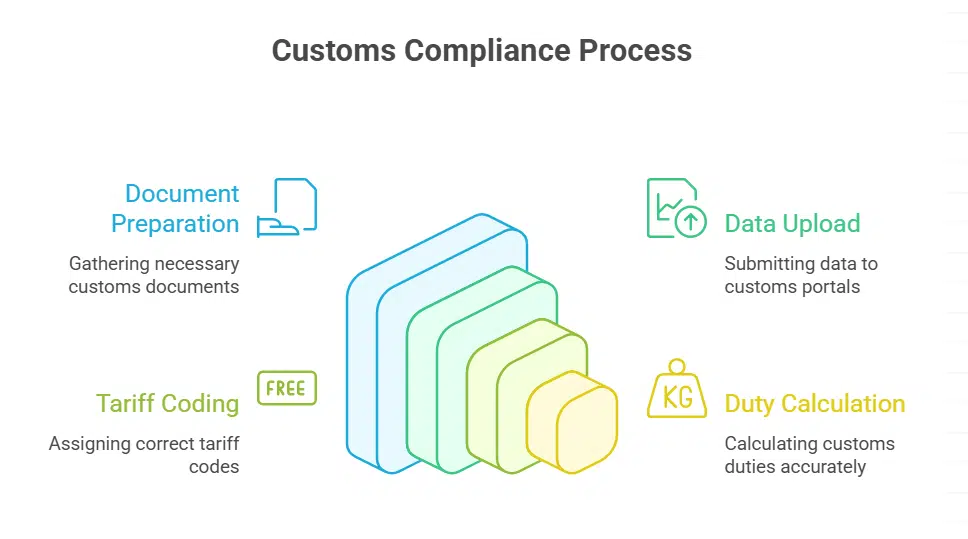
Logistics pros follow the Council of Logistics Management plan from origin to consumption. They file a customs declaration with HS codes, certificates of origin, import permits and duty rates.
A customs broker uploads data to ICS2 or CBP portals. Teams tag every item with the right tariff code. They list correct customs duties to avoid fee shocks. A missing form line hits your schedule like a curveball.
Compliance with Tariffs, Duties, and Trade Agreements
Tariffs vary by trade agreement. Customs brokers apply HS codes for each item. The USMCA cut auto duties by 50% on 30,000 parts. The RCEP pact in Nov 2020 covers 2.3 billion people and cuts 90% of tariffs on goods among 15 nations.
Freight forwarders file certificates of origin to tap deals. ICS2 alerts EU customs about imports in real time. Duty and tax rates must enter every invoice before customs clearance.
Supply chain managers check VAT on top. Active use of trade agreements cuts costs.
Market trends can shift overnight. One 10% tariff hike adds $50,000 to a $500,000 shipment. CFOs track expenses, incomes, and competitor moves. Blockchain ledgers boost supply chain visibility.
Predictive analytics flag duty spikes well ahead. This risk management plan holds 7 Rs like Right Price and Right Time. Route changes on a dime if a pact shifts. Workers learn Incoterms 2020 and customs procedures in training.
Teams dodge delays with smart compliance.
Accurate and Complete Documentation Requirements
Customs brokers collect commercial invoices, bills of lading, and certificates of origin before each shipment moves. Logistics teams file import and export permits, supply chain records, environmental reports, and customs declarations in compliance management software.
They tag each record with HS codes for easy traceability. A bill of lading serves as a travel ticket for cargo and logs shipper, consignee, and vessel details. Some teams add blockchain technology to lock docs and fight tampering; then they link each file to Import Control System 2 and customs archives.
Accurate address and route planning appear on each shipping record, so carriers know exactly where to stop. WareIQ uses video documentation, label verification, and repackaging steps to fight dubious claims on returns.
Supply chain visibility tools tie media evidence to returned goods, cutting rejection rates. Staff use predictive analytics to flag missing papers and alert brokers before audits spot gaps.
Environmental Compliance and Sustainability Standards
Logistics teams meet environmental regulations on emissions, waste disposal, and sustainable practices. Staff file ISO 14001 reports to match standards from the International Maritime Organization.
Teams feed data into Import Control System 2 or compliance management software. Systems track fuel burns and check green packaging with blockchain tech. They log scraps and hazardous materials in digital ledgers to match rules in 15 regions.
Route changes cut carbon output by 30 percent this year. Predictive analytics in supply chain management helps slash fuel use. Operators swap foam wrap for recycled paper packing. Companies buy carbon offset credits for major shipments.
This balance of profit and environmental care drives global logistics.
Safety and Handling Regulations for Cargo and Hazardous Materials
Cargo teams must follow strict rules for packing dangerous goods. They apply standards from the International Maritime Organization; they tag each box with proper HS codes for chemicals.
Crews seal drums with tamper proof locks and log weight in customs procedures. Trucks fit smart sensors to track cold chain for live cells and vaccines. Workers obey environmental regulations to cut risk of spills.
Robust quality control cuts product returns by 40%, it boosts brand reputation.
Haulers team up with carriers to meet safety standards. Staff train on Food and Drug Administration checks for drug shipments and safe handling rules for hazmat. Operations tap blockchain ledgers to link each crate to its paperwork.
Sensors stream live data into compliance management software, it flags issues fast. Employees scan packages and store digital recordings for return claims. Partnerships and tech combine to boost supply chain security in transport.
Ethical Labor Practices and Worker Rights
Logistics managers track working conditions with compliance management software, using predictive analytics to flag long shifts. A 2021 audit in Brazil fined one carrier two million dollars after inspectors found staff living on site without a day off.
Firms trading under free on board rules must follow local labor laws, from wage rates in Germany to rest breaks in Mexico. They must give all staff safe, clean spaces and pay fair rates.
These steps aid supply chain visibility and logistics compliance across borders.
About 164 nations follow ILO rules that ban forced labor, making audits a must for all logistics providers. Supply chain risk mitigation starts at the warehouse door, where auditors check for proof of contracts and hours.
Companies link certificates of origin to worker rights records in blockchain ledgers, so suppliers cannot hide forced labor. Worker rights sit next to safety standards and environmental standards as core audit items.
Firms that fly goods by air or ship by sea use ICS2 data and customs preclearance to back up ethical labor reports.
Data Privacy and Secure Information Management
Data privacy ranks high on global logistics checklists. Companies use compliance software to block open access to commercial invoices and customs clearance files. Artificial intelligence and distributed ledger help guard against wrong hands reading shipment details or ICS2 feeds.
Digital vaults encrypt every byte, so hackers can’t grab a manifest or tax data. Strong systems track imports, exports, and audits in real time.
Different countries set varied data privacy rules, so teams map regulations for each hub. A document management system blocks unauthorized users, logs every move, and supports risk management.
Secure records, like certificates of origin, stand up in audit trails and support supply chain visibility. Freight forwarders and customs brokerage firms count on tight security to cut delays and stop fines.
Data analytics drive smarter routes, but only if data stays safe.
Use of Technology for Compliance Automation and Tracking

AI tools scan harmonized system codes, match HS codes to terms like free carrier or delivered duty paid, then flag duty free or VAT rules. A blockchain ledger logs certificates of origin and commercial invoices on a shared network, boosting supply chain security and aiding U.S. Customs and Border Protection audits.
Real-time tracking systems feed data to compliance management software at each distribution center and on each truck. This software pulls ICS2 alerts and custom rules, cutting manual checks.
WareIQ plug and play integration ties to Amazon, Flipkart, and Shopify. Video logs at docks stop fraud and digital returns management stops claims mishaps in global shipping. Predictive analytics spot shifts in trade agreements and tariffs, helping logistics providers mitigate risk and keep environmental regulations and safety standards.
Regular Audits and Risk Management Procedures
Regular audits catch small gaps fast. Risk checks cut shipment delays and losses.
- Plan audits across regions using ICS2 to spot customs clearance issues.
- Review all commercial invoices, HS codes and certificates of origin against customs procedures.
- Check customs declarations, tariff codes, and trade agreements like USMCA and RCEP.
- Match environmental reports to regulations on emissions and waste at distribution centers.
- Track key performance indicators such as on-time delivery and order accuracy for operational efficiency.
- Analyze data with predictive analytics to flag supply chain security threats early.
- Deploy compliance management software to handle noncompliance, VAT rules, and dangerous goods regulations.
- Log incidents from natural disasters, political shifts, or port strikes to boost risk mitigation.
- Test business continuity plans and freight forwarding steps at terminals and carriage paid to sites.
- Share audit results to drive continuous improvement and reinforce resilience in global logistics.
Training Programs for Staff on Regulatory Updates
Staff need fresh training to meet new customs clearance and environmental regulations. We update our lesson plans every quarter to match trade agreements and safety standards.
- Schedule 2-hour webinars each month on HS codes, certificates of origin, and customs procedures to stay current with global logistics rules.
- Spend $50,000 yearly on interactive workshops that cover environmental regulations, IMO safety standards, and value-added tax shifts, driving supply chain sustainability.
- Use compliance tracking apps, shipment tracking tools, and forecast tools to demo Import Control System 2 alerts, USMCA terms, and de minimis exemptions live.
- Invite an FDA auditor and an IMO inspector to run hands-on drills for hazardous cargo handling, workplace safety, and free alongside ship checks.
- Include data privacy drills plus a segment on blockchain technology to guard sensitive customs regulations data and boost operational efficiency.
- Assign short quizzes on USMCA highlights, trade agreement updates, and VAT import one-stop shop rules to sharpen team skills.
- Gather continuous feedback after each session, tweak content within 48 hours, and boost adaptability in a fast-moving global supply chain.
- Track 100% staff participation, set KPIs on risk mitigation, and use compliance training to cut regulatory breaches by 30% within six months.
Takeaways
Customs rules, ICS2 checks, and HS codes guide each cargo move. Trade pacts, green standards, and safe handling steps add more checkpoints. Data privacy steps and blockchain tracking boost supply chain visibility.
Regular audits and staff training seal up risk holes.
FAQs on Key Compliance Requirements In Global Logistics
1. What is customs compliance in global logistics?
Customs compliance means following customs regulations and procedures at every border. You need the right HS codes, certificates of origin, and commercial invoices, to clear goods fast. Skip them, and you may hit shipment delays, like a car stuck in traffic.
2. How do environmental regulations affect supply chains?
Environmental regulations can feel like a maze, but they keep our planet safe. You must meet environmental standards, waste rules, safety standards, and IMO rules, for ships. A miss can cost time, fines, or worse, jam whole supply chains, in port.
3. Why are trade agreements and shipping terms important?
Trade agreements, like the United States-Mexico-Canada Agreement, are free trade pacts that cut tariffs. De minimis shipments can skip small duties. Shipping uses terms like cost and freight, cost, insurance, and freight, carriage and insurance paid to, delivered at terminal, delivered at place. These terms spell out who pays what. All that cuts red tape, so international shipping runs smooth.
4. What role does blockchain technology play in logistics compliance?
Think of blockchain technology as a high security vault for data. It logs every step of your goods. That boosts supply chain security, and gives real-time supply chain visibility. It also helps with logistics compliance.
5. How do companies use predictive analytics to avoid shipment delays?
Predictive analytics is like a crystal ball, but for shipping. It looks at past data to spot risks, like storms, customs hold-ups, or bad routes. Logistics providers tweak plans, for risk mitigation, so goods arrive on time. It cuts shipment delays.
6. How does compliance management software help with global regulations?
Compliance management software is the all in one hub, for global regulations. It tracks ICS2 Import Control System 2, taxation, regional comprehensive economic partnerships, and Food and Drug Administration rules. It drives digital transformation, cuts manual work, and ups operational efficiency. It can even log inspection data for customs compliance, and track overall regulatory compliance.
























